Europe is filled with modern capitals and bustling cities, but scattered across the continent are towns that feel untouched by centuries of change. These places have preserved their medieval streets, stone walls, and ancient traditions so completely that walking through them feels like stepping into another era. Unlike heavily commercialized tourist hubs, many of these towns remain deeply connected to their history, architecture, and slower pace of life. For travelers seeking authenticity, atmosphere, and timeless beauty, these medieval towns offer something modern cities simply cannot replicate.
What makes these destinations especially compelling is not just their appearance, but how naturally history still lives within them. Locals go about their daily routines inside centuries-old walls, shops operate in buildings older than entire nations, and traditions are passed down with remarkable continuity. These towns are not theme parks or reconstructed villages; they are living, breathing places shaped by time rather than redesigned for tourism. Here are eight medieval European towns that feel genuinely frozen in time.
Rothenburg ob der Tauber, Germany

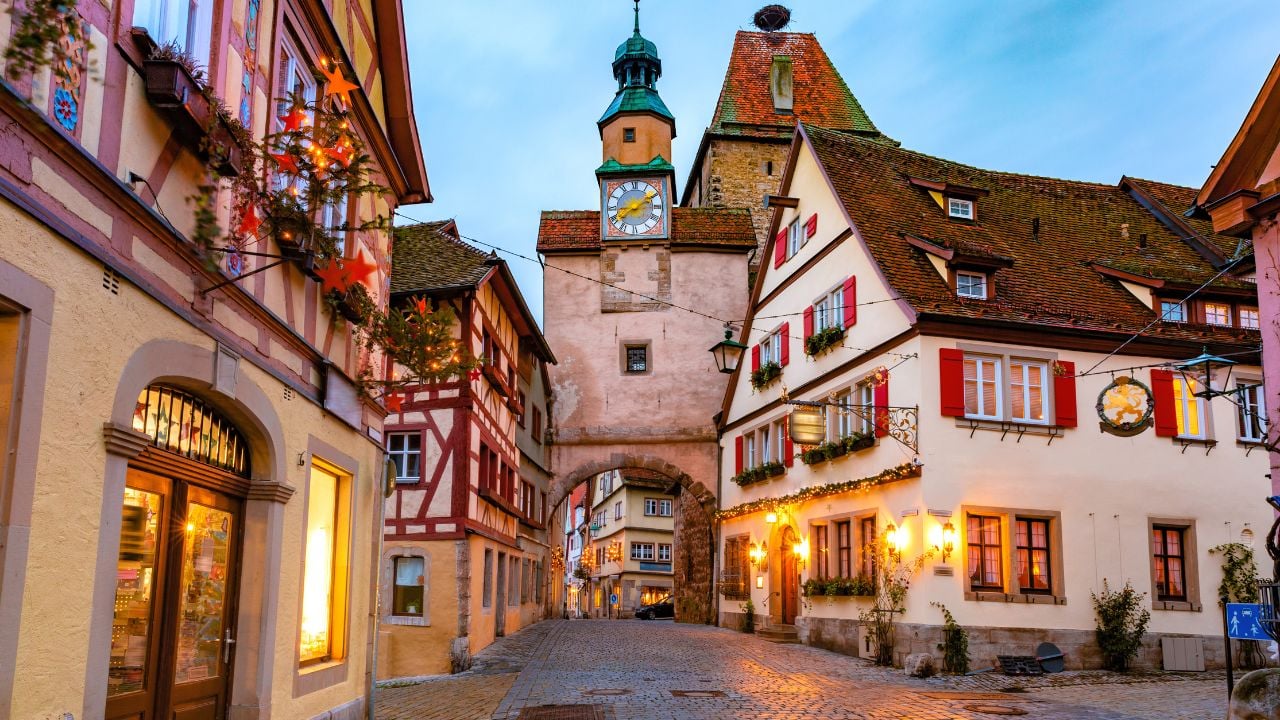
Rothenburg ob der Tauber is one of the most perfectly preserved medieval towns in Europe, with intact city walls, watchtowers, and half-timbered houses lining narrow cobblestone streets. The town’s layout has remained largely unchanged since the Middle Ages, allowing visitors to experience a true medieval cityscape without modern intrusions. Every corner feels carefully preserved, from ancient gates to stone bridges crossing quiet valleys. The overall atmosphere feels cinematic, yet deeply authentic.
Walking through Rothenburg feels like entering a storybook that never needed updating. Shops occupy centuries-old buildings, while town squares still function as gathering points just as they did hundreds of years ago. Even everyday details, such as lanterns, signage, and rooftops, reflect medieval design rather than modern convenience. The town’s scale encourages slow exploration, reinforcing its timeless character.
Unlike many tourist-heavy destinations, Rothenburg retains a strong sense of local identity beneath its popularity. Residents live within the walls, maintain traditions, and treat history as a lived reality rather than a display. Seasonal festivals and night watchman tours deepen the connection to the past. Rothenburg remains one of Europe’s clearest examples of medieval life preserved through continuity rather than reinvention.
Český Krumlov, Czech Republic

Český Krumlov appears almost unchanged since the 13th century, with its castle complex dominating a maze of winding streets below. The town follows the curves of the Vltava River, creating a natural defensive shape that defined medieval planning. Colorful Renaissance facades sit atop Gothic foundations, blending eras without losing historical coherence. Modern infrastructure remains discreet, allowing the old town to maintain its medieval feel.
The streets are intentionally narrow, curved, and sometimes confusing, a design meant to slow invaders centuries ago. Today, that same design encourages wandering and discovery rather than efficiency. Small courtyards, hidden staircases, and river views reveal themselves gradually. Every step reinforces the sense that the town evolved organically rather than being planned for tourism.
Despite its beauty, Český Krumlov remains deeply connected to everyday life. Locals use historic spaces naturally, and traditional crafts still exist alongside cafés and guesthouses. Cultural events take place in medieval courtyards and castle halls, not modern venues. The town feels preserved not because it stopped living, but because it never abandoned its past.
Carcassonne, France

Carcassonne stands as one of Europe’s most dramatic fortified towns, encircled by double stone walls and dozens of watchtowers. Its skyline of pointed roofs and battlements feels untouched by time, dominating the surrounding landscape as it did centuries ago. The fortified city reflects medieval military architecture at its most ambitious and enduring. From a distance, it looks more like a legend than a real place.
Inside the walls, the town maintains a medieval layout of narrow streets, stone buildings, and small squares. Modern elements are minimal, allowing architecture to remain the dominant feature. Walking through the gates feels like crossing into a different century, where the rhythm of life follows older patterns. The sense of enclosure reinforces the town’s historical identity.
Carcassonne’s survival is not accidental but intentional, preserved through careful restoration and respect for historical accuracy. While visitors are numerous, the town never feels artificial or staged. Cultural events, markets, and daily routines unfold within medieval settings without breaking immersion. Carcassonne remains a powerful example of how fortification and history can coexist with modern life.
San Gimignano, Italy

San Gimignano rises from the Tuscan countryside with its medieval towers still piercing the skyline, just as they did during the town’s peak. Once symbols of wealth and power, these towers remain standing because development never erased them. The town’s stone buildings and fortified walls preserve its medieval identity with remarkable consistency. Even distant views reflect the same silhouette seen centuries ago.
Within the town, streets remain narrow and paved with stone worn smooth by generations of footsteps. Buildings retain their original proportions, with little alteration to accommodate modern demands. Shops and homes exist side by side inside medieval structures, creating a seamless blend of past and present. Time seems to slow naturally within the walls.
San Gimignano’s preservation is rooted in continuity rather than isolation. Locals maintain traditions, cuisine, and community life that reflect centuries-old rhythms. Tourism exists but does not dominate the town’s character. San Gimignano feels lived-in, historic, and proud of its medieval soul.
Dubrovnik, Croatia

Dubrovnik’s massive stone walls encircle an old town that has remained architecturally consistent for hundreds of years. Built as a powerful maritime republic, the city reflects medieval wealth, independence, and defensive ingenuity. Limestone streets, baroque buildings, and fortified towers remain intact despite earthquakes and conflict. The city’s structure reflects resilience rather than reinvention.
Inside the walls, daily life unfolds among medieval surroundings. Shops, cafés, and homes occupy historic buildings without altering their character. Streets are polished by centuries of use, reinforcing a sense of continuity. Modern elements remain carefully controlled to preserve the town’s identity.
Dubrovnik’s preservation is deeply tied to civic pride. Restoration efforts focus on maintaining authenticity rather than modernizing appearance. Cultural traditions and festivals still take place within medieval spaces. Dubrovnik remains one of Europe’s strongest examples of a fortified city that never surrendered its past.
Mdina, Malta

Mdina is often called the “Silent City,” and its atmosphere feels almost untouched by modern life. Enclosed by thick stone walls, the town has remained largely unchanged for centuries. Narrow streets, medieval palaces, and limestone buildings dominate the landscape. The absence of heavy traffic enhances the sense of timelessness.
Walking through Mdina feels intimate and introspective, as sound echoes softly through stone corridors. The town’s layout reflects medieval priorities of defense and privacy. Every doorway and archway carries signs of age and continuity. Modern distractions feel distant once inside the walls.
Mdina is not abandoned or preserved as a museum; it is still home to residents. Life moves slowly and deliberately, reinforcing the town’s ancient rhythm. Religious traditions and local customs remain central to daily life. Mdina feels frozen not because time stopped, but because it was never rushed forward.
Tallin Old Town, Estonia

Tallinn’s Old Town preserves medieval Northern Europe with extraordinary completeness. Its city walls, merchant houses, and Gothic churches reflect centuries of trade and independence. The town’s layout has survived wars, occupations, and political change with minimal alteration. Medieval design still shapes everyday movement.
Cobblestone streets wind between merchant buildings that once served the Hanseatic League. Public squares still function as meeting places rather than tourist-only zones. Architectural consistency creates a unified medieval atmosphere rarely found elsewhere. Even modern businesses operate within historic constraints.
Tallinn’s success lies in balancing preservation with livability. The old town remains functional, not frozen in display. Locals live, work, and socialize within medieval spaces. Tallinn proves that historical continuity and modern life can coexist naturally.
Óbidos, Portugal

Óbidos remains enclosed by medieval walls that define both its physical and cultural boundaries. Whitewashed houses with blue and yellow trim line narrow streets unchanged since the Middle Ages. The town’s castle still towers above daily life rather than serving only as a monument. Scale and proportion remain distinctly medieval.
Inside the walls, movement is slow and deliberate, shaped by centuries-old design. Buildings were never widened or modernized to accommodate vehicles or crowds. Everyday life fits naturally within ancient architecture. The town feels cohesive rather than curated.
Óbidos maintains its medieval character through restraint rather than isolation. Festivals, traditions, and local businesses operate within historic limits. Preservation is part of daily life, not an external effort. Óbidos feels authentically medieval because it never tried to become anything else.