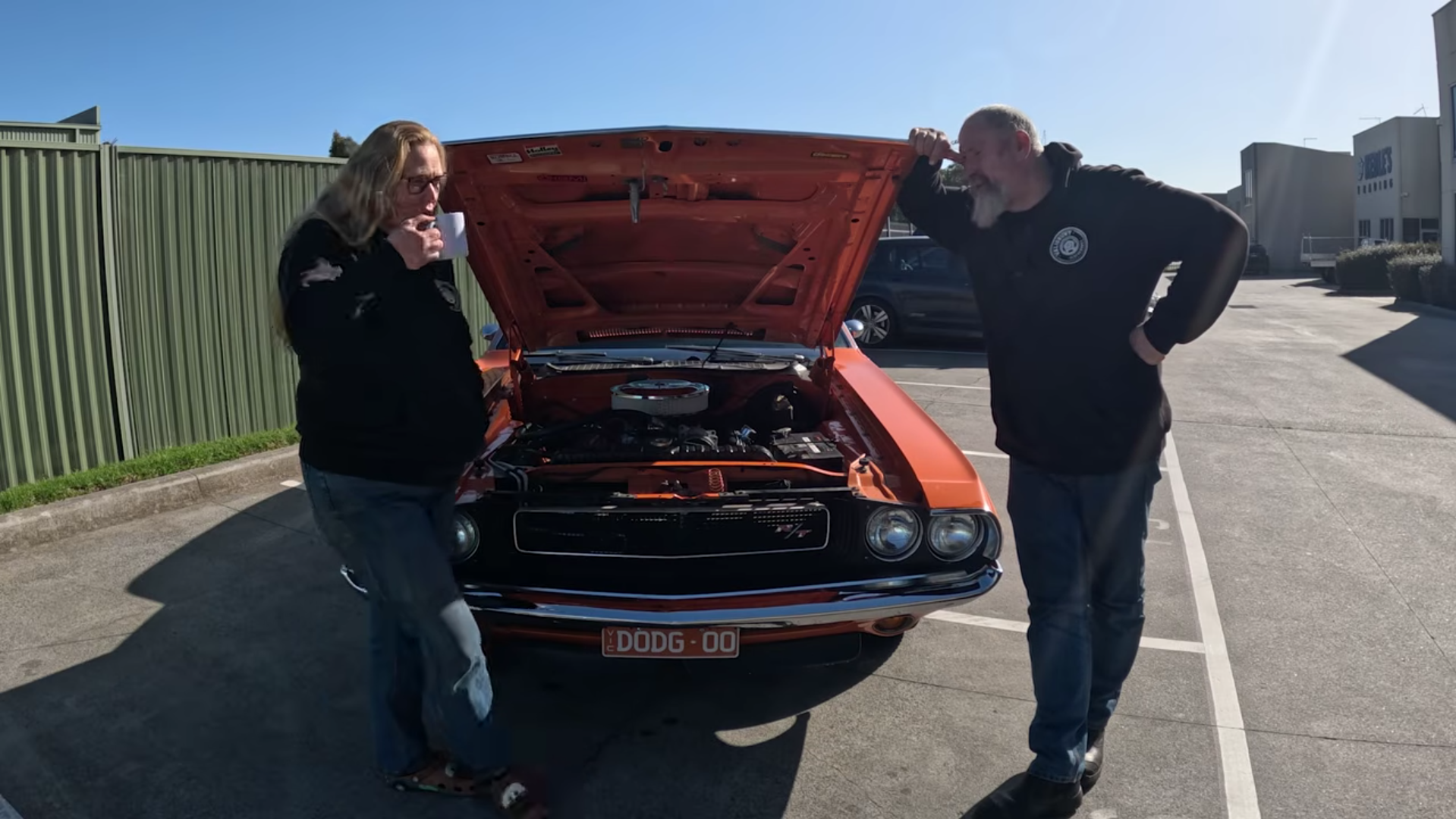
A 1970 Dodge Challenger R/T with a 440-cubic-inch V8 should have enough muscle to make its rear tires tremble with fear. After all, Dodge’s legendary 440 Magnum was rated at 375 horsepower when new, making it one of the nastiest engines available in the original Challenger.
Unfortunately, one bright orange example in Australia had lost much of its fighting spirit. Despite looking every bit the classic Mopar bruiser, its low-compression replacement 440 V8 was only delivering a rather disappointing 232 horsepower at the rear wheels.
The owner brought the Challenger to Australian performance specialist Shane Withers, whose team documented the transformation on the ValigruntPerformance YouTube channel. What followed was an impressive demonstration of how much power can be hiding inside a poorly breathing engine.
The goal wasn’t to build an expensive, all-out racing motor or chase ridiculous horsepower figures. Instead, Withers wanted to wake up the existing 440 without tearing apart its bottom end, and the results exceeded even his expectations.
A 440 V8 With Almost No Compression
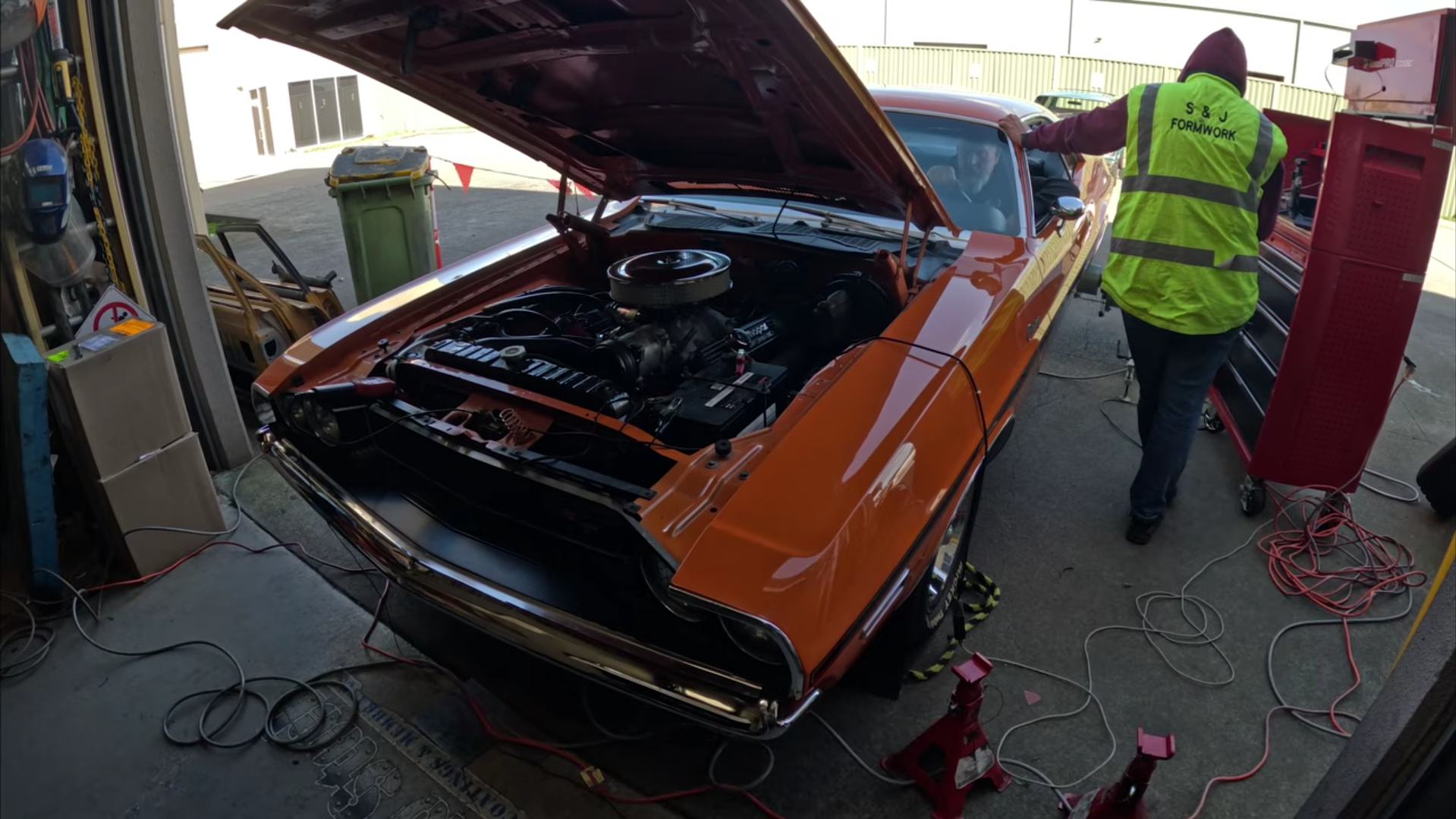
The problem became obvious once Withers removed the cylinder heads. The pistons sat approximately 0.100 inch below the block’s deck surface, contributing to an extremely low compression ratio.
Rather than rebuilding the entire engine, he installed CNC-ported 440 Source cylinder heads with smaller combustion chambers and thinner Cometic head gaskets. These changes raised the estimated compression ratio to around 8.9:1.
Better Breathing, Stronger Spark
The engine also received Harland Sharp roller rockers with a 1.7:1 ratio, increasing valve lift without replacing the camshaft. An Edelbrock Performer Air-Gap intake manifold and MSD Ready-to-Run ignition completed the top-end upgrades.
The difference was immediately obvious during a test drive, with the Challenger lighting up its rear tires in first gear. Unfortunately, the newfound torque overwhelmed its existing clutch, which had a badly warped pressure plate and was promptly replaced with a McLeod unit.
From 232 to 412 Horsepower
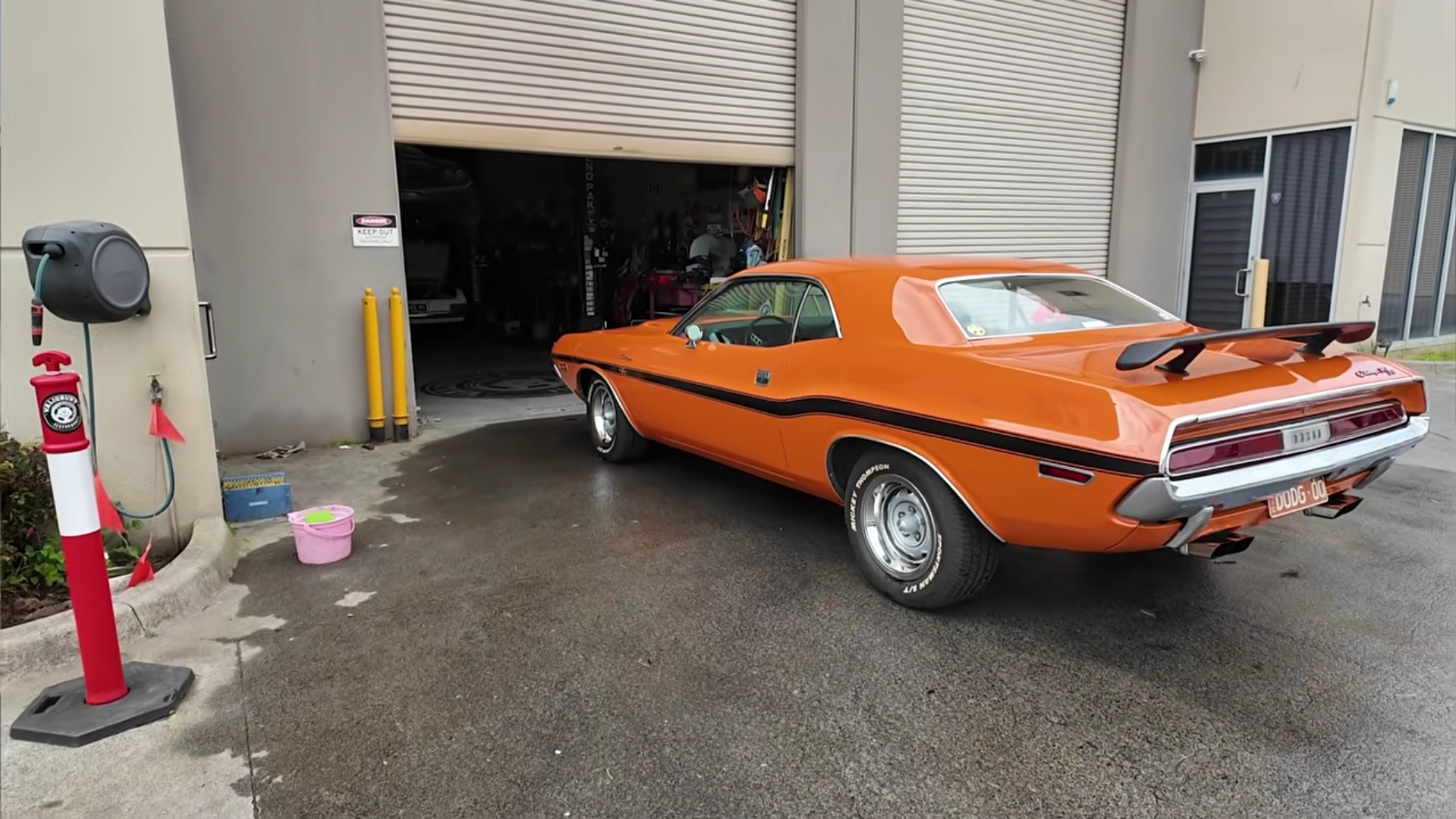
With the clutch sorted, Withers strapped the Challenger to a hub dynamometer and began fine-tuning the ignition timing. After experimenting with different settings and distributor advance springs, the 440 delivered an impressive 412.1 horsepower and 551.7 lb-ft of torque.
That’s a gain of roughly 180 horsepower and 85 lb-ft over the original figures. However, the initial 232-horsepower reading came from a rolling-road dyno, while the final result was recorded on a hub dyno, so the figures aren’t 100% comparable, but they provide a rough guide.
There’s Still More Power to Find
Despite the improvement, the Challenger still uses its restrictive factory-style cast-iron exhaust manifolds. Withers believes upgrading the exhaust system could release additional power without requiring major engine work.
The team also addressed the car’s overly light power steering, but the aging tires and noisy fan belts remained in place for now. Even so, the transformation is substantial, turning a tired 440-powered Challenger into a genuinely muscular machine with enough torque to keep its driver entertained.