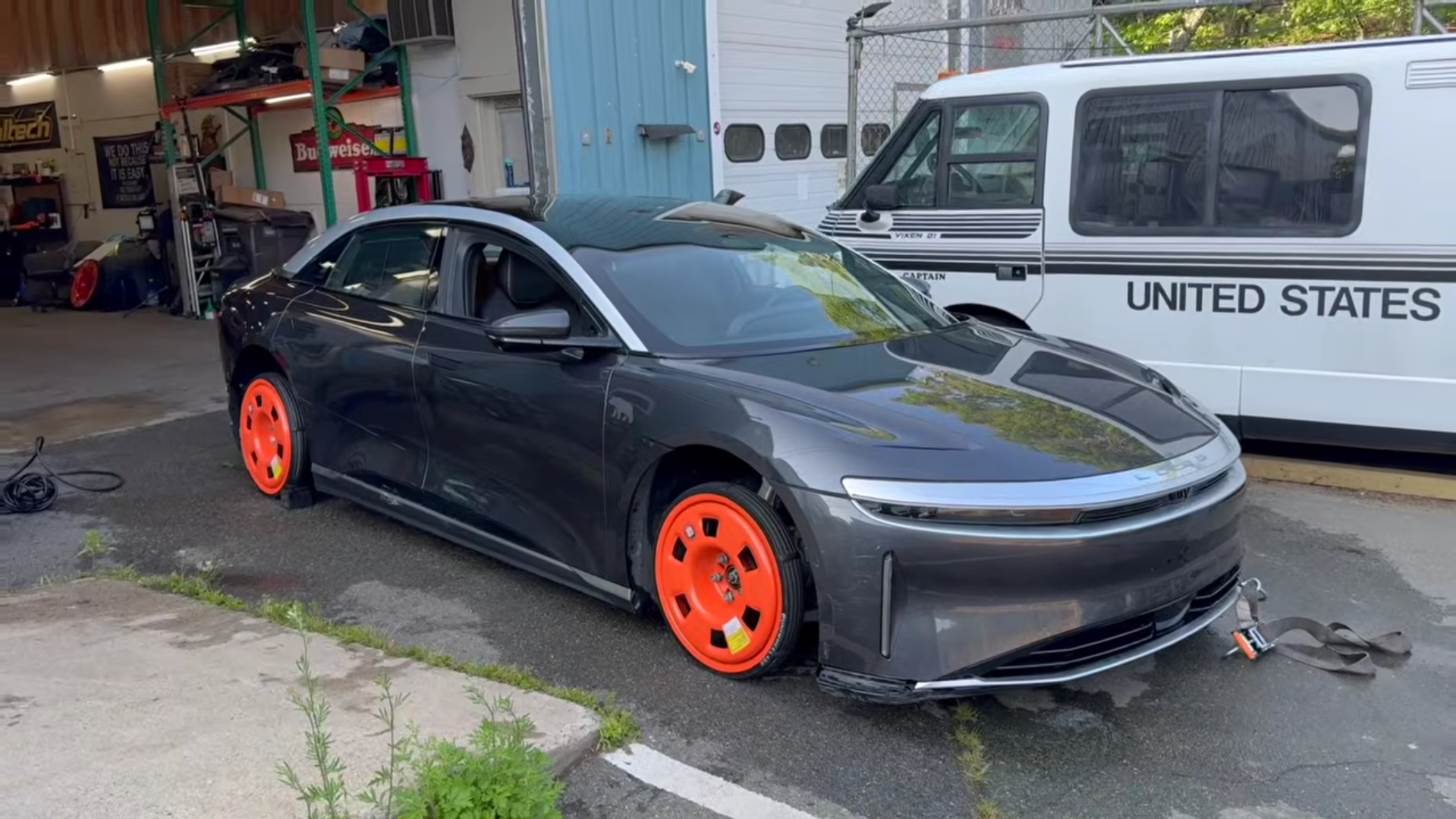
Buying a heavily damaged luxury EV at auction is always a gamble, but YouTuber Rich Benoit of Rich Rebuilds decided to take the risk after purchasing a wrecked Lucid Air that originally sold for around $140,000. His winning bid? Just $4,100.
The car arrived in rough shape, refusing to power on and with its rear wheels locked, forcing hours of work just to unload it into the workshop. After finally getting it inside, Benoit began the process of determining whether the bargain purchase could actually be saved.
What started as a routine salvage rebuild quickly turned into something much larger. Along the way, Benoit uncovered engineering details he admired, but also raised concerns about repairability, software restrictions, and what owners of damaged EVs may face after an accident.
The latest installment of the rebuild series combines hands-on mechanical work with a broader discussion about the growing role manufacturers play in determining whether modern vehicles can realistically be repaired.
Freeing The Locked Lucid
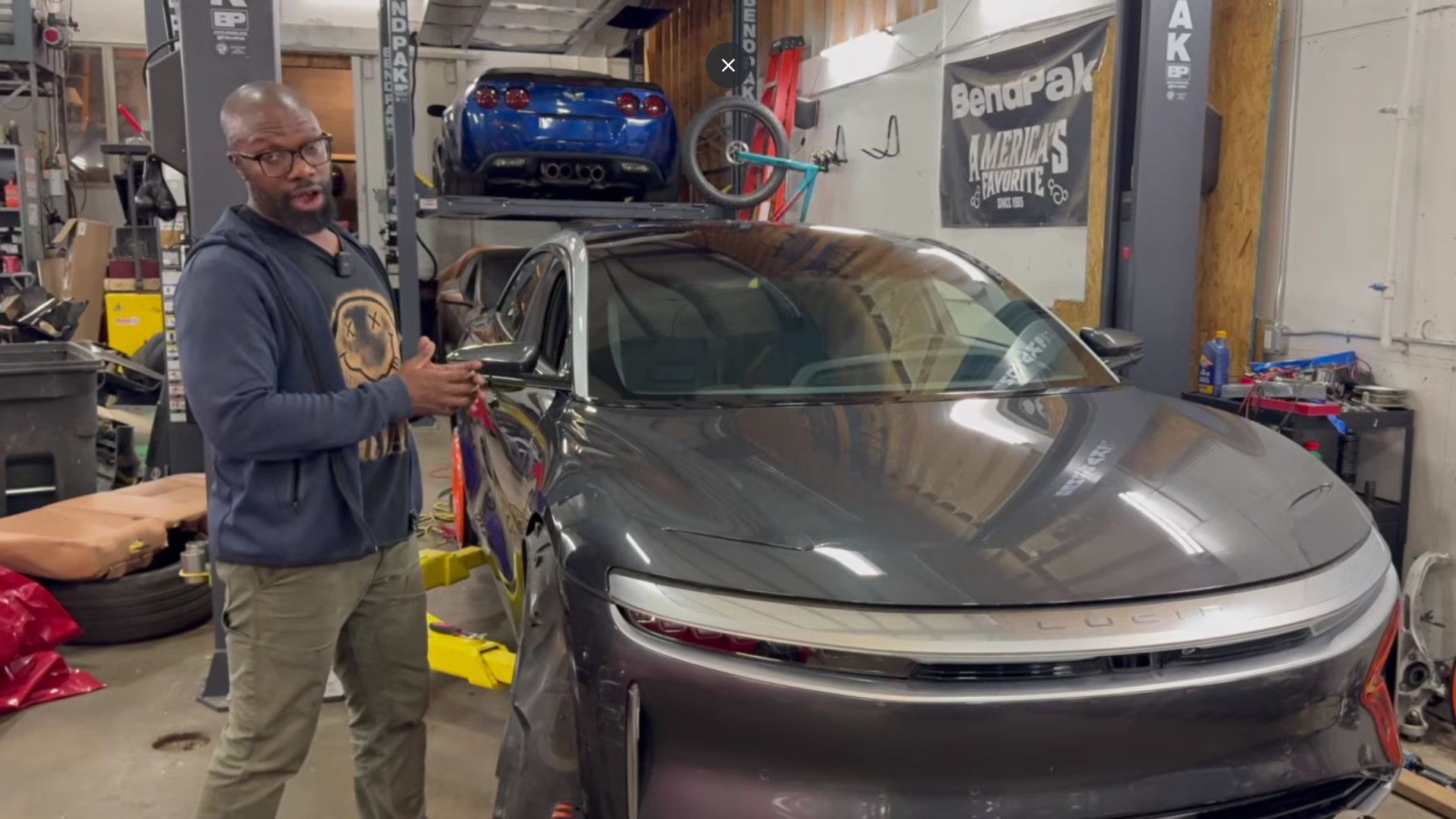
One of the first problems involved the Lucid’s electronic parking brake, which had locked the rear wheels and prevented the car from rolling. By applying 12-volt power directly to the parking brake motor, Benoit was able to release the brakes without needing factory software.
With the car finally mobile, the team rolled it outside for its first wash. The cleanup wasn’t just cosmetic, as it allowed them to inspect the panoramic glass roof and windshield for cracks that could become expensive headaches later in the project.
Fortunately, the roof remained watertight despite the crash damage. Benoit also praised the Lucid’s overall build quality, noting the impressive fit and finish throughout the vehicle.
Damage Appears Manageable
Once the Lucid was cleaned, the teardown began in earnest. Inspection underneath the car revealed suspension damage and broken coolant lines, although the high-voltage battery enclosure appeared to have escaped without significant damage.
Benoit believes the damaged cooling system may explain why the vehicle refuses to power up, as many electric vehicles enter protective fault modes when coolant pressure or fluid levels fall below acceptable thresholds.
Despite the collision damage, he repeatedly commented that the vehicle appeared surprisingly well engineered. Stainless steel brake lines, carefully packaged suspension components, and extensive aerodynamic detailing all left a positive impression during the teardown.
Repairing The Car May Be Easier Than Getting Permission
The mechanical work soon changed focus toward a larger issue affecting salvage Lucids. Benoit visited another owner whose lightly damaged Lucid Air has reportedly remained off the road after difficulties obtaining factory support.
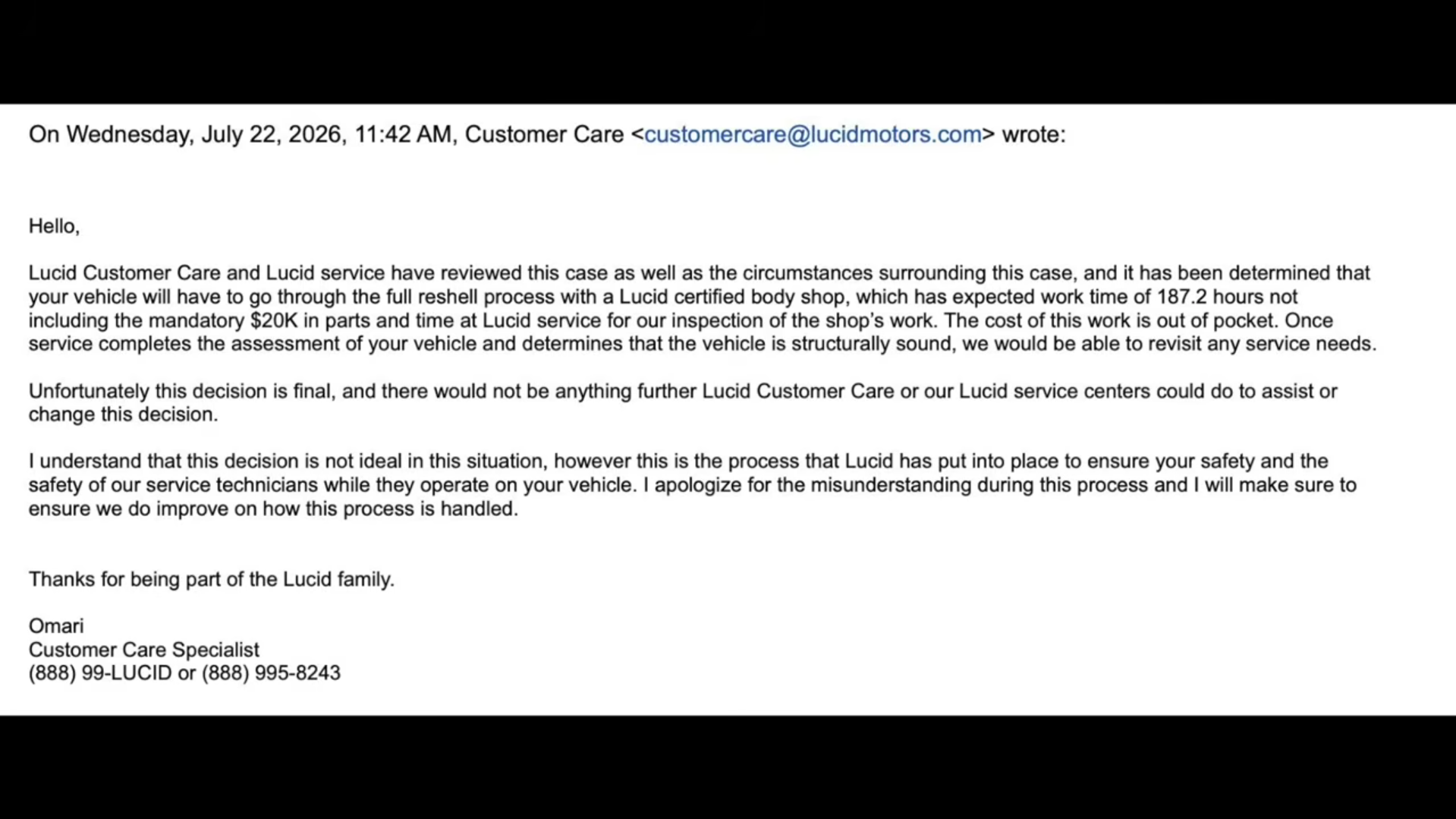
According to the owner, Lucid initially identified replacement parts and even confirmed availability before later refusing to supply them after determining the vehicle carried a salvage title. The owner claims the company eventually required a complete body shell replacement before restoring full functionality.
The quoted repair reportedly included roughly $20,000 in mandatory parts and nearly 190 hours of labor, pushing the estimated cost close to $50,000. Benoit noted that the vehicle had not yet undergone a physical inspection when those estimates were issued, while acknowledging that Lucid may have additional engineering or safety information not visible from an exterior inspection alone.
Software Has Become Part Of The Repair Process
Beyond physical repairs, Benoit expressed concern over the increasing dependence on manufacturer software. The salvage Lucid he examined remained locked in a limited “service mode” that restricted driving speed to approximately 5 mph until factory procedures were completed.
He argued that software access has become just as important as mechanical repairs for modern electric vehicles. Even if owners successfully replace damaged components themselves, manufacturer authorization may still determine whether the vehicle can return to normal operation.
Benoit also questioned policies that reportedly prevent some salvage vehicles from receiving future software updates. While manufacturers often cite safety considerations for these restrictions, he suggested that missing critical updates could eventually create additional concerns for long-term owners.
The Rebuild Is Only Beginning
Back at the workshop, Benoit continued investigating why his own Lucid remained completely unresponsive. After locating multiple low-voltage batteries hidden throughout the vehicle, he discovered they still retained enough voltage to suggest the larger high-voltage battery may be the real source of the problem.
The episode ended just as the Lucid finally began showing signs of life after additional power was applied, setting up the next stage of the rebuild.
Although Benoit remains impressed by Lucid’s engineering, he believes the biggest obstacle may not be repairing the car itself. Instead, the long-term success of the project could depend on whether software access and manufacturer support prove as obtainable as replacement parts.