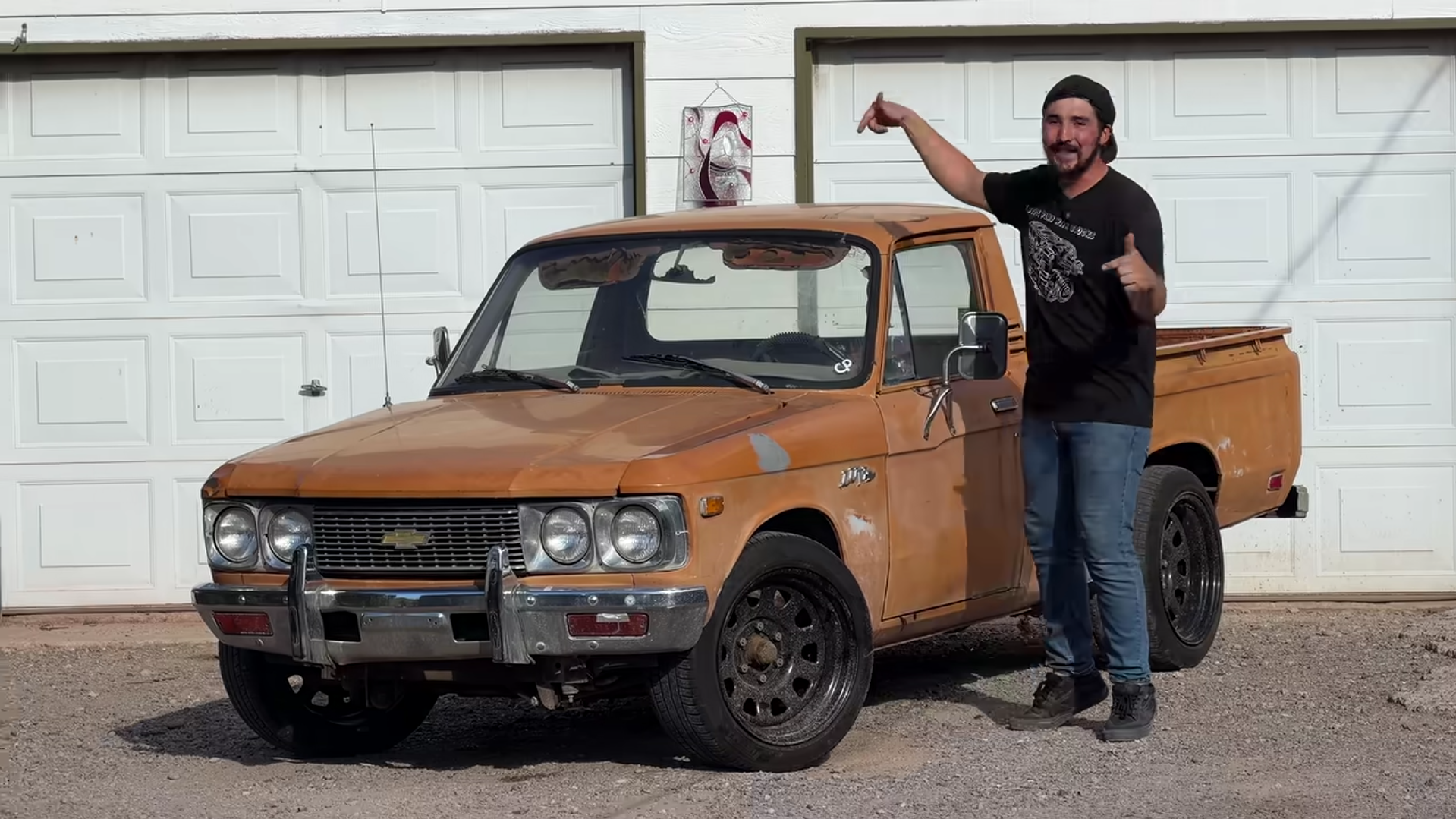
A 1976 Chevrolet LUV with a Toyota performance engine and a six-speed manual transmission has all the ingredients for an entertaining little pickup. Unfortunately, buying somebody else’s unfinished engine swap also means inheriting every shortcut, questionable modification, and problem they left behind.
That’s exactly what Nikolas McCelvey, the man behind the Redline Ranch YouTube channel, discovered after purchasing this unusual mini truck through Facebook Marketplace. Its biggest attraction was a Toyota 3S-GE BEAMS four-cylinder engine from a JDM Toyota Altezza, capable of revving to around 8,000 rpm and producing roughly three times the power of the Chevy’s original engine.
The combination promised a lightweight, rear-wheel-drive truck with the character of a Japanese sports car. Getting there would require sorting the engine installation, transmission mounting, fuel delivery, and electrical systems before the pickup could be trusted on the road.
Then, just as the project neared its first proper drive, a testing mistake caused a violent mechanical failure underneath the truck. What began as an ambitious engine-swap rescue suddenly threatened to become a much more expensive undertaking.
A Japanese Performance Engine in an American Mini Truck
McCelvey paid just $2,000 for the 1976 Chevy LUV, a modest pickup originally equipped with a four-cylinder engine producing approximately 75 horsepower. Its replacement was a 2.0-liter Toyota 3S-GE BEAMS engine rated at around 207 horsepower, paired with a six-speed manual transmission.
Unfortunately, the bargain came with some alarming surprises. The engine and transmission weren’t properly bolted together, several engine-mount bolts were loose, and the previous builder had removed the driver’s-side torsion bar because it interfered with the exhaust.
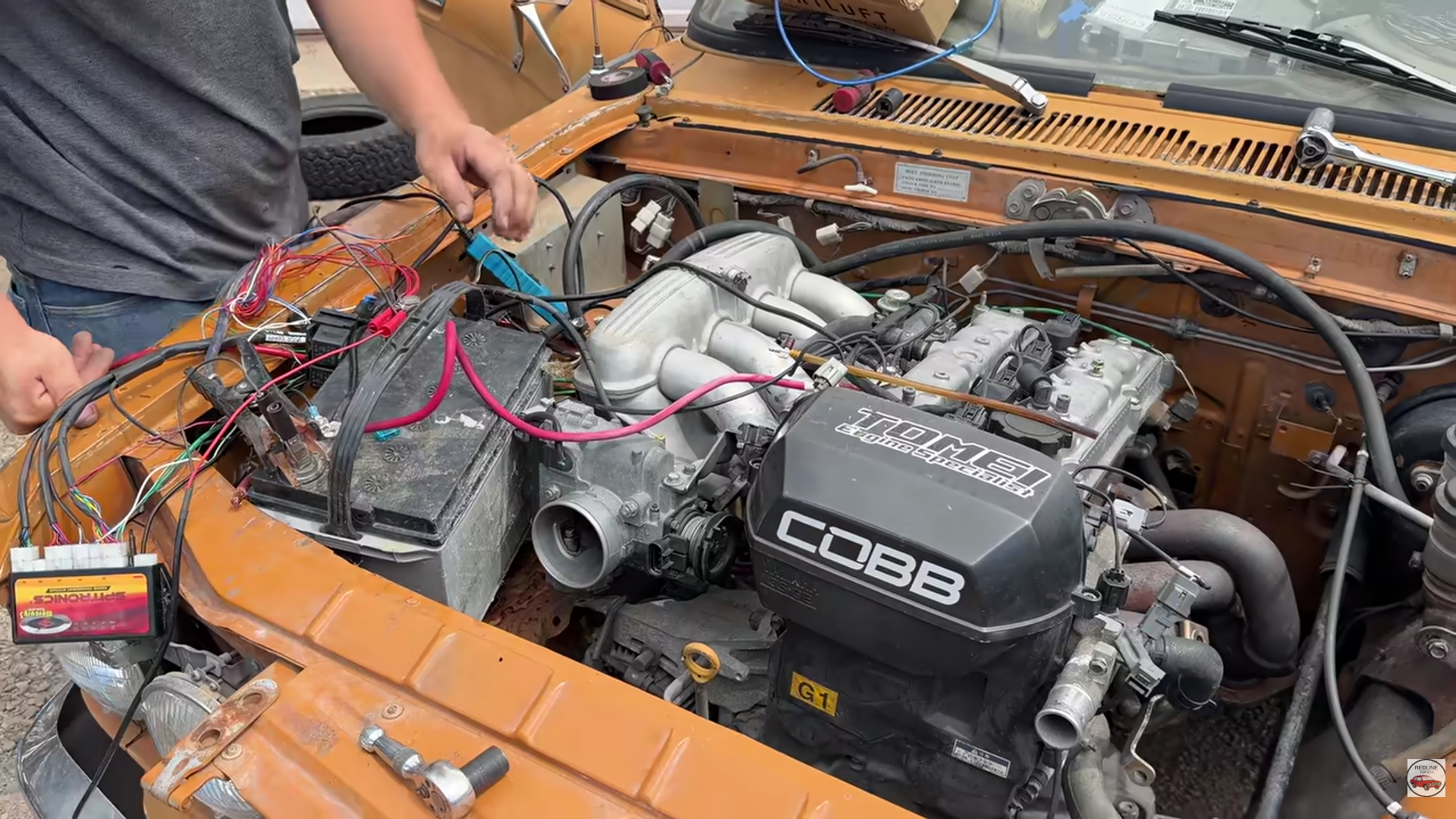
Getting the engine running presented another challenge. After sorting through the wiring and fuel system, McCelvey discovered that a faulty manifold absolute pressure (MAP) sensor was preventing the Toyota four-cylinder from revving beyond approximately 1,500 rpm.
Replacing the sensor finally allowed the engine to rev freely, and the Chevy eventually moved under its own power. However, the homemade driveshaft and questionable fabrication underneath the truck suggested that getting it running was only the beginning.
One Testing Mistake Causes a Driveshaft Explosion
The project’s biggest setback arrived during a high-rpm test with the truck’s wheels unloaded. The driveshaft failed violently, twisting out of shape and striking components underneath the pickup.
The resulting damage extended to the exhaust, transmission crossmember, fuel lines, and fuel-pump wiring. Worse, the damaged driveshaft would no longer slide into the transmission, raising fears that the rare imported gearbox had suffered serious internal damage.
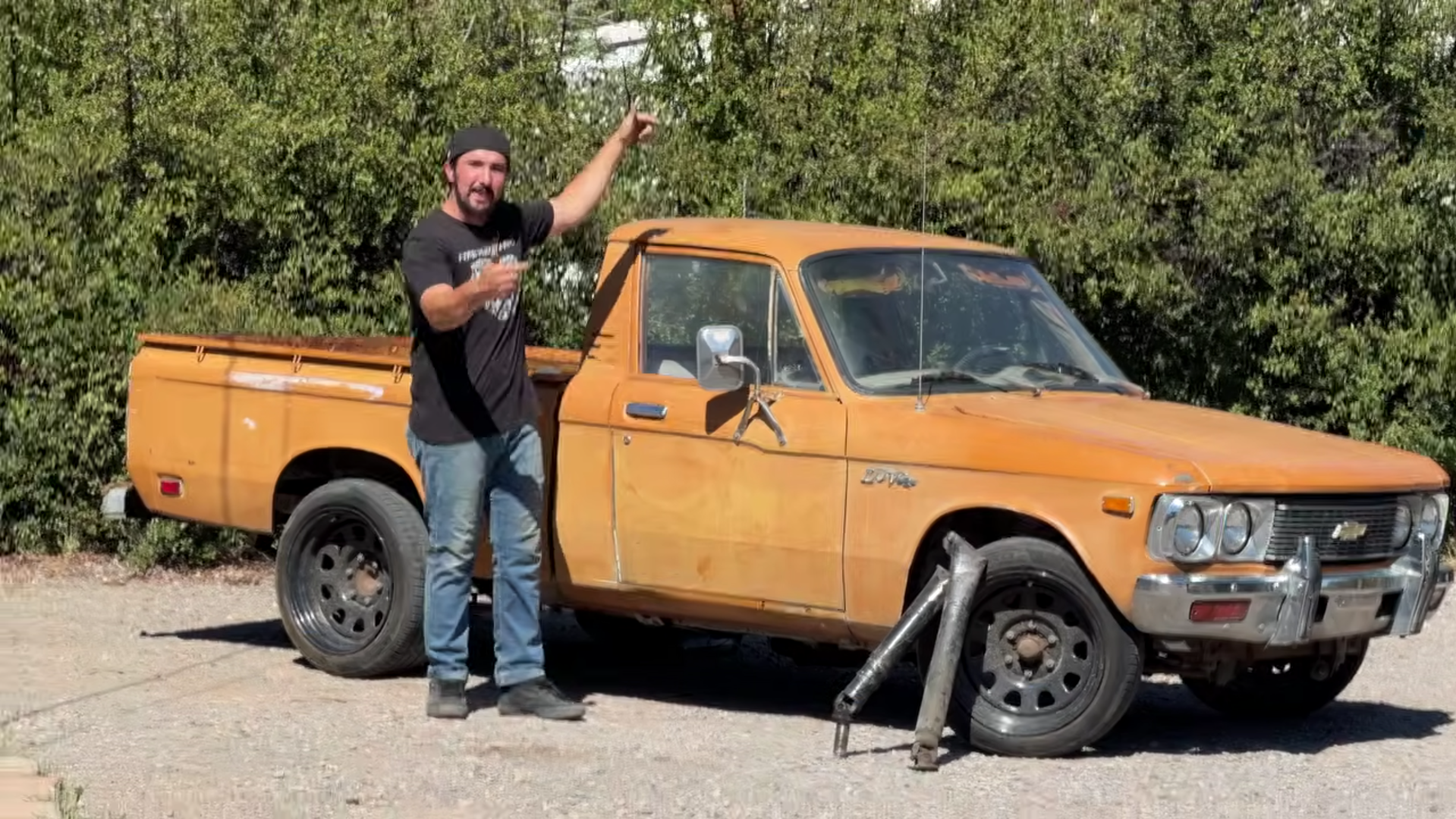
Replacing the J160 wouldn’t be a pleasant experience, as McCelvey estimated that another transmission could cost as much as the entire truck. Rather than abandon the project or immediately source another gearbox, he decided to remove and inspect the existing unit.
A local driveline shop was also commissioned to produce a correctly measured and balanced replacement driveshaft. That $250 component would eliminate one major uncertainty when the truck eventually returned to the road.
A $20 Bushing Prevents a Costly Transmission Replacement
Removing the six-speed proved manageable despite warnings that the engine might have to come out first. Once the gearbox was on the bench, the damage turned out to be concentrated around a badly distorted bushing inside the transmission’s tail housing.
That was encouraging news because the output shaft and other visible components appeared to have escaped serious damage. The builder dismantled the rear housing and fashioned a bushing-removal tool from a socket modified on his lathe.
His first replacement, borrowed from another transmission, looked similar but had the wrong dimensions and lacked the original bushing’s oil-drain opening. A correctly specified part cost approximately $20, although installing it introduced another complication when the driveshaft refused to slide freely into place.
After additional fitting work, the shaft finally moved in and out of the housing, and the transmission could be reassembled. All six gears appeared to engage correctly, although the improvised fitting process left a question about how the repair would hold up over time.
The First Drive Exposes More Unfinished Work
With the gearbox back in the Chevy, attention turned to repairing the damage underneath. McCelvey replaced damaged sections of the fuel-return line, repaired the fuel-pump wiring, fitted the professionally balanced driveshaft, and relocated the battery to the pickup bed.
Starting the engine again was not straightforward, with a blown fuel-pump fuse, fuel leaks, and crankshaft-position signal errors complicating matters. Fuel pressure and tuning adjustments eventually helped get the Toyota four-cylinder running well enough for a proper test.
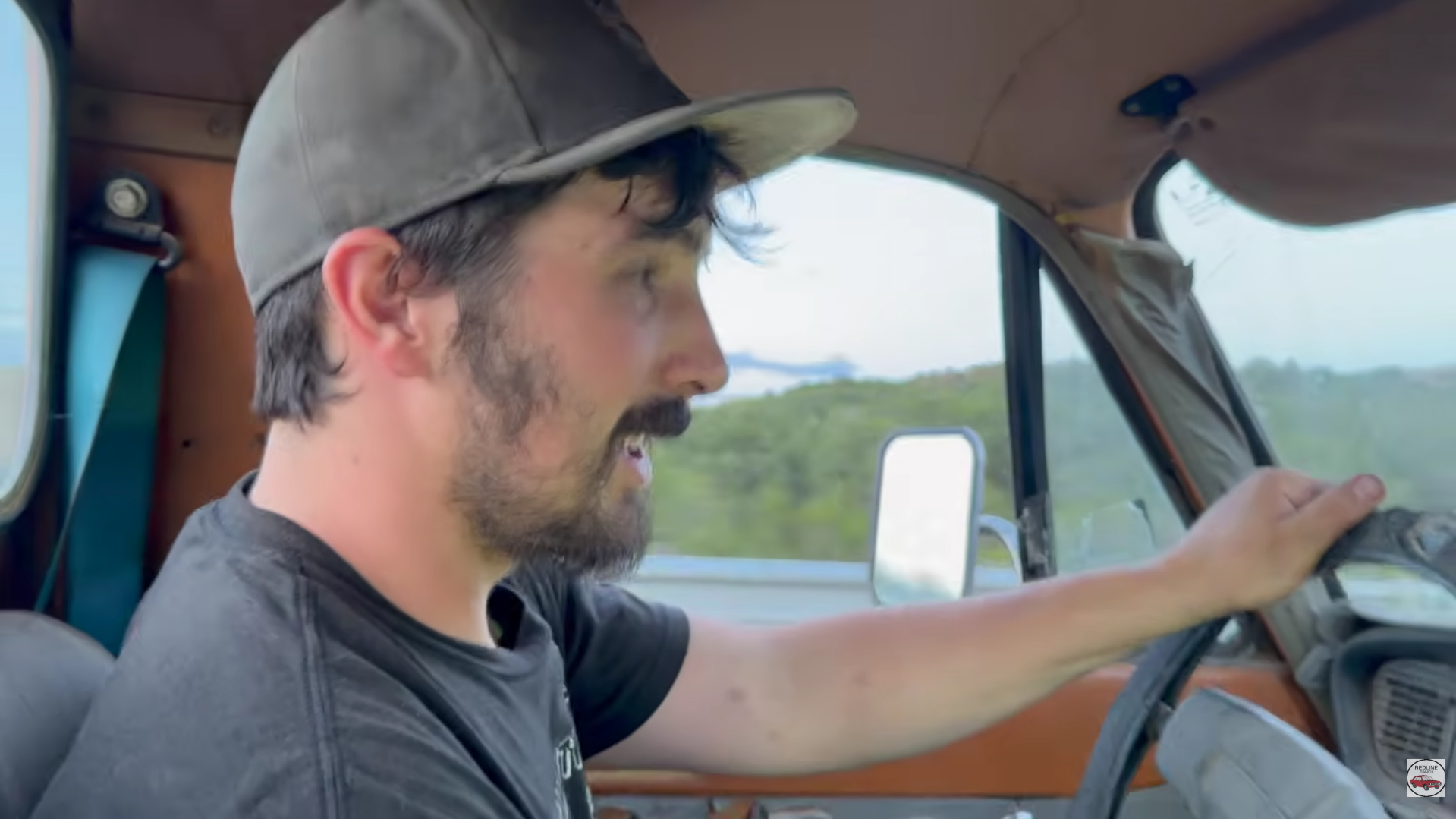
The first proper drive after the repairs delivered the sound McCelvey had been waiting for, with the engine screaming toward 7,500 rpm and the rear tires breaking traction. The experience was less impressive in other respects: the steering wandered, acceleration felt underwhelming, and coolant temperature climbed to approximately 109 degrees Celsius.
A leaking temporary radiator and the absence of a functioning cooling fan made the overheating problem unsurprising. The truck could move under its own power, but it still needed attention before repeated hard driving made sense.
The Chevy LUV Finally Becomes a Usable Toy
The cooling solution came from McCelvey’s existing parts collection rather than an expensive custom order. A Toyota four-cylinder radiator was adapted to the cramped engine bay, joined by a compact electric fan and a proper air filter.
Fresh oil, electrical repairs, and further tuning helped complete the mechanical work. During the next drive, the six-speed shifted properly, the replacement driveshaft behaved itself, and coolant temperature stayed around 89 degrees Celsius even after burnouts and aggressive driving.
Reinstalling the Chevy’s forward-hinged hood provided the finishing touch, concealing the Japanese engine beneath the pickup’s weathered bodywork. McCelvey also cleaned out the interior and bed, giving the once-abandoned project the feel of a finished vehicle.
The LUV wasn’t quite the rocket McCelvey had imagined, and its wandering steering still needed attention. Nevertheless, the $2,000 project had survived an unfinished engine swap, a catastrophic driveshaft failure, and a transmission repair to become a running, driving mini truck that could finally deliver the tire-spinning fun he wanted.