A family dispute brought police to the phone of an Indiana sheriff’s deputy, but the investigation soon moved from threatening text messages to more than a year of searches through a law-enforcement license-plate camera network.
James Joseph Heneghan IV, 33, was a Hancock County Sheriff’s Office deputy when a relative went to McCordsville Police in March and reported messages that included a warning that the relative’s “kids will suffer.” The complaint eventually reached Indiana State Police, which began examining his use of Flock, a system that allows officers to search vehicle detections collected by automated license-plate readers.
Court records obtained from Hancock Superior Court 2 attribute 6,196 Flock searches to Heneghan between December 1, 2024, and March 16, 2026. Hundreds of searches involved vehicles connected to people in his personal life, including his wife, a man who had known her, a former girlfriend, and members of that woman’s family.
One Complaint Led Somewhere Else
Among Hancock County Sheriff’s Office users, Heneghan recorded the highest number of Flock searches in every month reviewed and accounted for more than one-fifth of the department’s activity during the period examined.
In May 2025 alone, he allegedly ran 1,033 searches, about 70% of all department Flock use that month and 12 times as many as the next-highest user. More than 3,600 searches over the full period occurred while he was listed as off duty, with another 350-plus while he was on paid time off and more than 100 while using comp time.
For approximately 5,353 searches, the entered reason was “invest.” About 508 others were labeled “Driving Under the Influence (DUI/DWI/OWI/OVI) – Traffic Study.” Department records showed Heneghan was working during only about 40 of those DUI-related queries.
The Same Vehicles Kept Reappearing
One plate belonged to a man who told police he barely knew Heneghan and would not recognize him. The man had previously known Heneghan’s wife, and his vehicle was queried 922 times across May 2025, August 2025 and February 2026.
Heneghan’s wife’s vehicle drew another 901 searches during those same months. The affidavits describe periods when queries involving the two plates occurred close together, sometimes within the same minute, while the account was frequently being accessed from a mobile device.
A separate cluster involved a woman who said she had dated Heneghan in high school but had little or no ordinary contact with him for roughly 11 years. More than 200 searches involved vehicles associated with her family, and after one received a replacement plate, the new tag eventually began appearing in the search history too.
One of those vehicles later crossed paths with Heneghan on the road. The former girlfriend’s stepdaughter told police he followed closely behind her while she was driving it, accelerating and slowing down before stopping her for speeding.
By then, the vehicle had been searched nine times through Flock and its motor-vehicle record accessed five times, according to the affidavit. It also had a broken taillight, providing an independent basis for the stop.
The Safeguards Did Not Find It
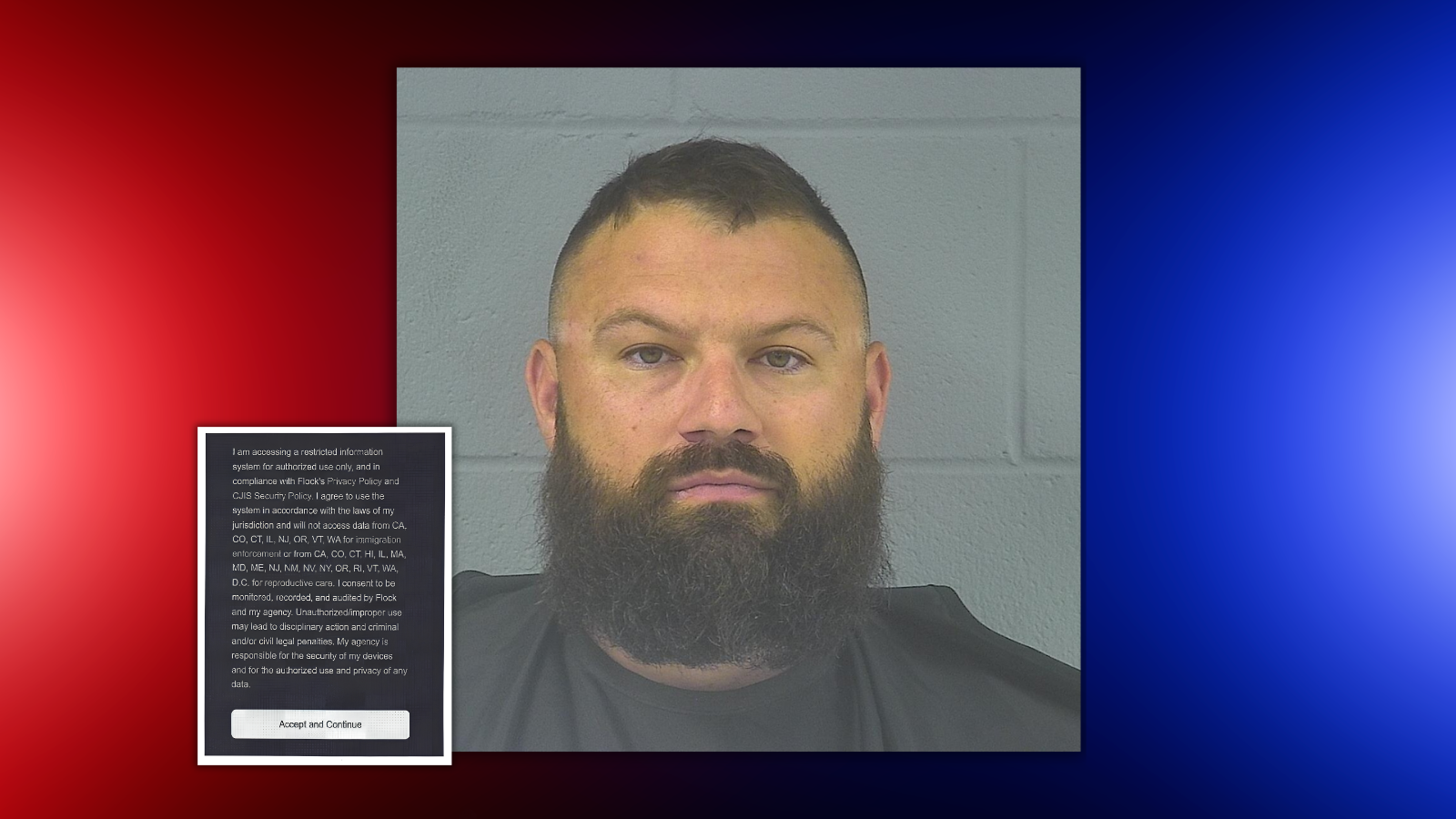
Flock displayed a warning at login stating that access was restricted to authorized purposes and that activity could be monitored, recorded, and audited. The sheriff’s office also said users were already required to enter search reasons and case numbers before Flock later made those fields mandatory.
No internal audit, automated alert, supervisor, or other internal control flagged the reported activity before the intimidation complaint prompted a closer look, according to the department.
Indiana State Police later obtained official records directly from Flock and compared them with data supplied by Hancock County. Duplicate dates and other discrepancies appeared in the agency material, so detectives relied on Flock’s records to establish the totals used in the criminal cases.
Florida Investigators Found Another Kind of Misuse
A separate Florida case involving former Highway Patrol Trooper Alain Fernandez raised a similar problem.
FDLE alleges Fernandez disclosed restricted law-enforcement information to private individuals, including Flock screenshots involving a white Tesla. He also allegedly warned a man under investigation that vehicles associated with an address had been “hot listed” and would eventually be stopped.
That conduct surfaced during another investigation rather than through a Flock alert.
Flock has since introduced additional auditing tools intended to identify unusual activity. Hancock County says it now uses the company’s Audit Assistance feature daily.
Heneghan lost access to Flock and other restricted databases on March 26. The sheriff placed him on paid leave four days later and moved him to unpaid leave after his arrest.
He faces 220 fraud counts, 220 official-misconduct counts, and one intimidation count. When the sheriff’s office responded to questions about his status, Heneghan was awaiting a termination hearing before the merit board.
All parties are presumed innocent unless and until proven guilty in a court of law.