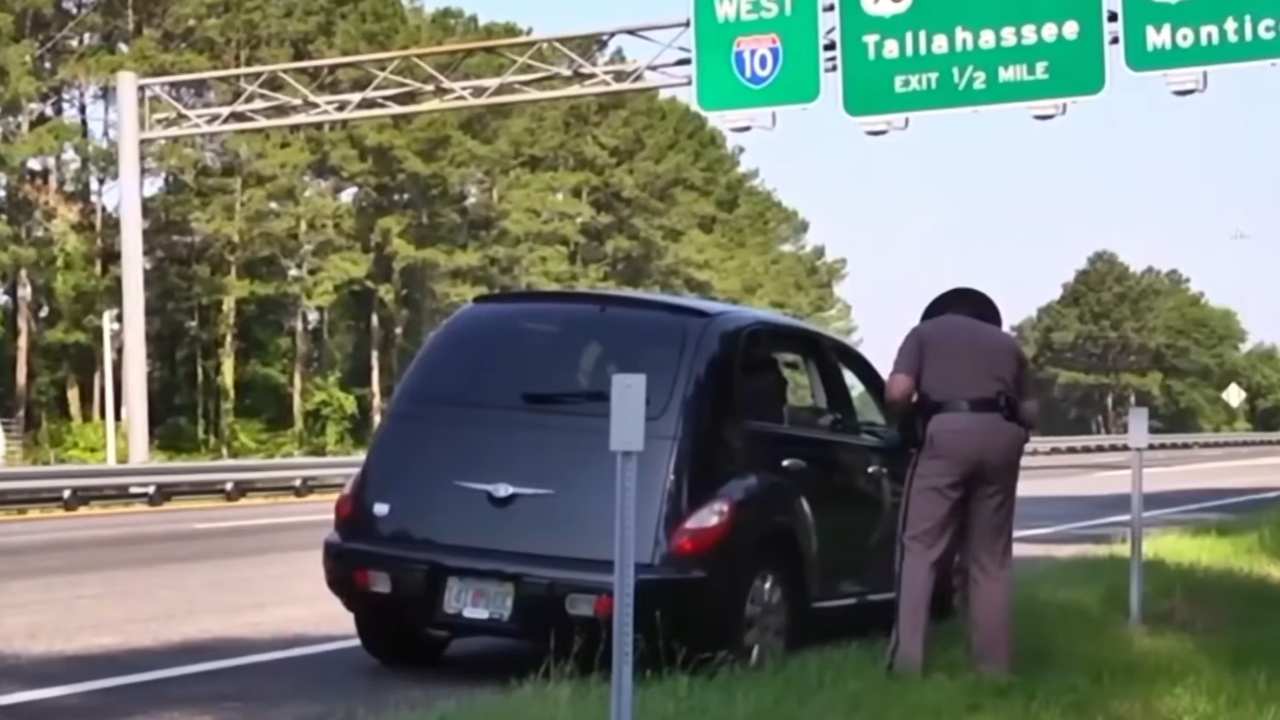
Six people died in one Orange County, Florida, crash. A state trooper was badly hurt in another four days later. Now, a retired Florida Highway Patrol chief wants tougher penalties for drivers who fail to make room.
Retired FHP Chief Joe Lopez spoke to WKMG News 6 on Oct. 28. Asked if lawmakers should go further, he said, “Stiffer penalties, yes, that always wakes people up.”
Lopez also called for more work to teach drivers the law. He pointed to out-of-state visitors who may not know Florida’s rules. His examples included people changing tires so close to traffic that they were in the road.
He also recalled a trooper killed in 2010, when another vehicle rear-ended the trooper’s car during a traffic stop. Lopez had to bury him.
Days Apart
On Oct. 23, a Road Ranger was helping another driver on Florida’s Turnpike near Wetherbee Road. The truck’s lights were on when an SUV hit it. Both vehicles caught fire, and six people died.
Four days later, a Toyota Tundra hit the rear of a marked patrol car on SR 429 in Bay Lake. The car was stopped at a lane closure in a road work zone. Its emergency lights were on. FHP blamed the pickup driver for failing to move over, WFTV reported.
The trooper was badly hurt and flown to a hospital. In the Oct. 28 update, he was in stable condition.
Give Them Room
On roads with at least two lanes going your way, Florida’s Move Over law says to leave the lane next to a covered roadside vehicle. Make that move when it is safe. If you cannot, slow down.
For a posted limit of 25 mph or more, slow to 20 mph below that limit. On a 70 mph road, that means 50 mph. If the limit is 20 mph or less, drive at 5 mph. The slowdown rule also applies on two-lane roads.
Stopped emergency vehicles with their warning lights on are covered. For tow trucks, the law covers roadside loading or recovery with flashing amber lights. It also covers utility and trash trucks doing roadside work.
Stopped disabled vehicles qualify if warning or hazard lights are on, emergency flares or signs are out, or someone is visibly present. Those protections took effect Jan. 1, 2024.
The state’s fine law sets a $30 base fine for a Move Over violation. Fees add to the bill. A conviction can also mean three points on a driver’s license. If a moving violation of this kind results in a crash, it carries four points.