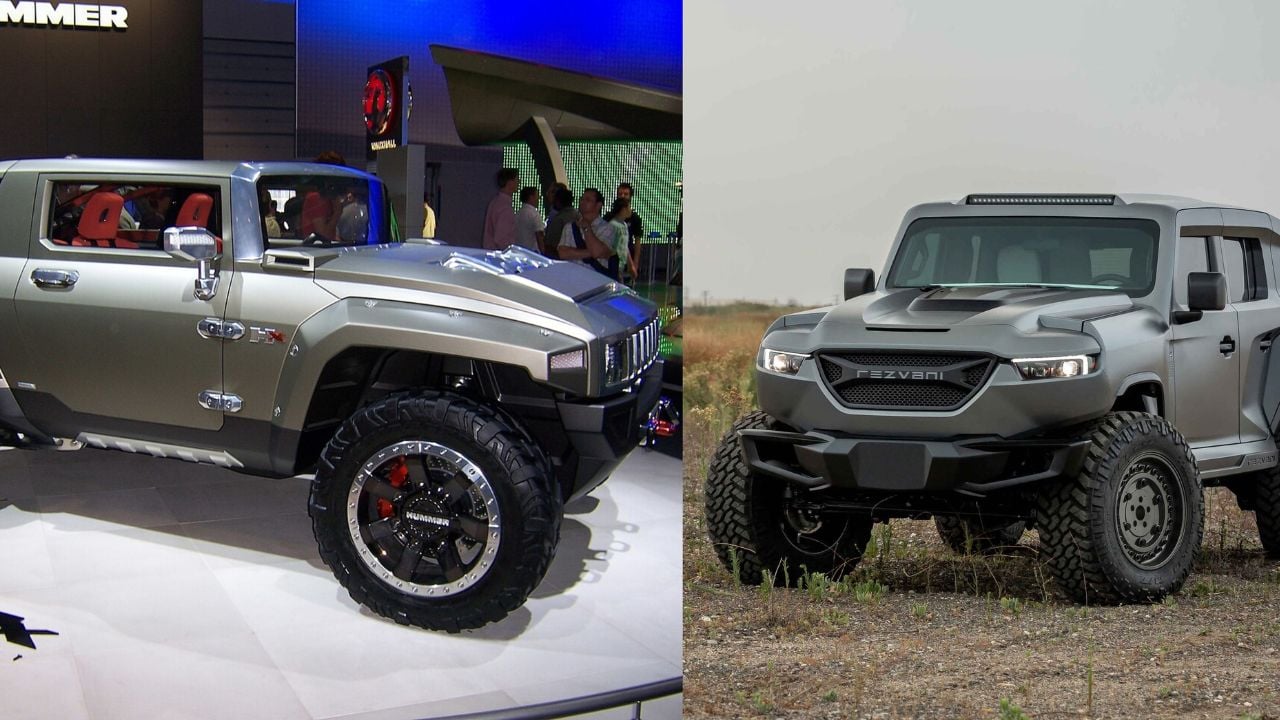

The Rezvani Tank lineup has long made a strong impression on me. The lineup reads like an alternate history of American off-road design, one where a bold prototype never faded into obscurity but instead evolved into a production-ready machine.
I just saw the 2008 Hummer concept and it immediately hit me: Rezvani’s aggressive, armor-ready design is, in many ways, the spiritual continuation of the Hummer HX Concept that GMC unveiled to great fanfare but never brought to market.
When the HX Concept debuted in 2008, it signaled a dramatic shift in how Hummer could reinterpret itself. Smaller, more agile, and unapologetically youthful, the HX ditched the sheer bulk of the H2 and H3 in favor of a compact footprint and open-air flexibility.
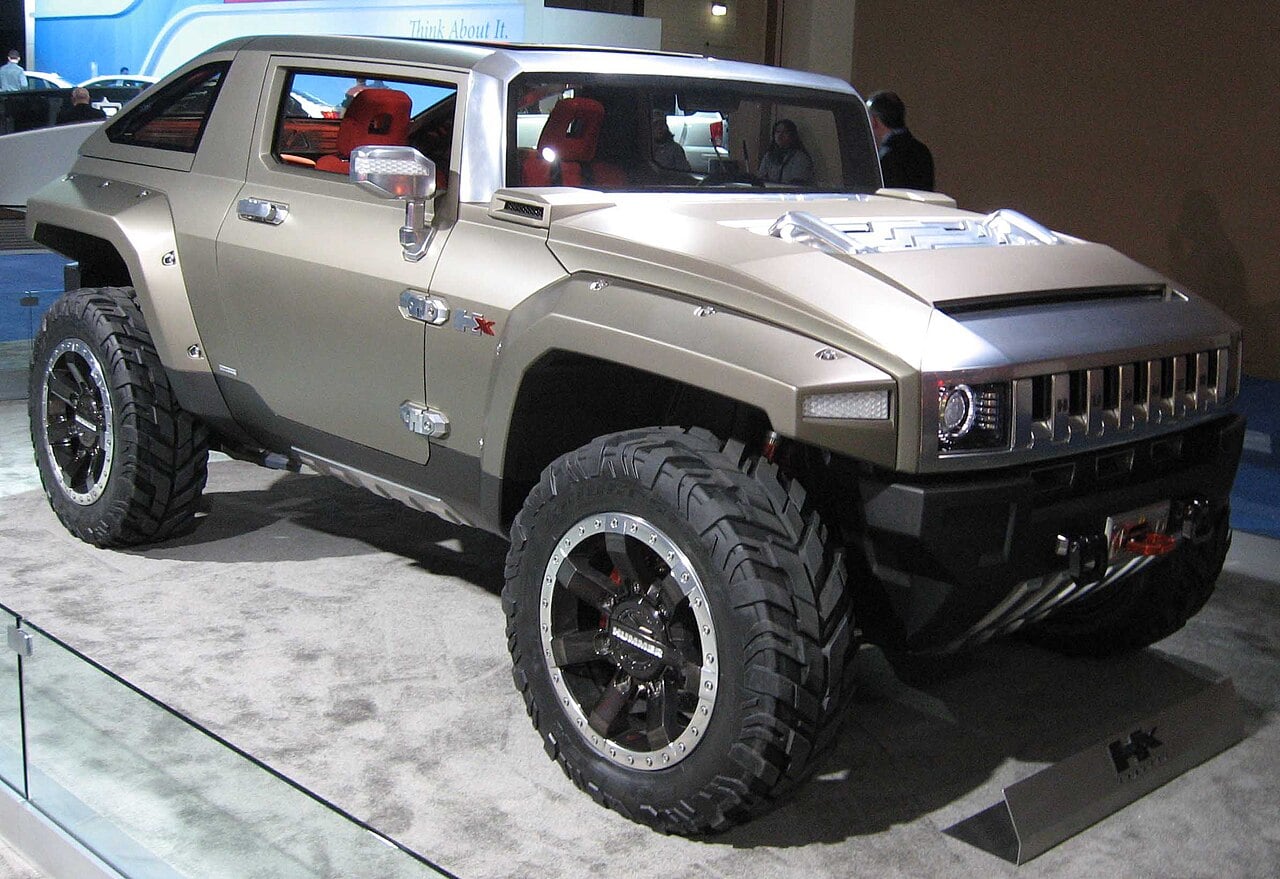
Removable roof panels, exposed hinges, and a minimalist interior gave it a modular, almost tactical personality.
It was built on a shortened platform derived from the H3, powered by a 3.6-liter V6, and engineered with serious off-road intent including locking differentials and substantial ground clearance.
The design language leaned heavily into angular surfacing and high-mounted lighting, creating a vehicle that said “bring it on” to urban streets and desert trails.
Timing Kills the Dream
Yet timing worked against the HX.
The global financial crisis forced General Motors into restructuring, and the Hummer brand itself was eventually shelved before later being revived as an electric sub-brand under GMC.
The HX Concept, despite its strong reception, never transitioned into a production vehicle. Its ideas, apparently, did not disappear. They lingered as a blueprint for what a modern, compact, aggressively styled off-roader could become.
Enter Rezvani Motors. Founded in California, the company carved a niche by blending exotic car performance with military-inspired aesthetics.

The Rezvani Tank, first introduced in 2017, took a donor platform from the Jeep Wrangler and transformed it into something far more extreme.
Its sharply faceted body panels, slit-like windows, and towering stance echo the HX Concept’s visual DNA, but push it into far more aggressive territory. Where the HX hinted at militaristic cues, the Tank embraces them outright.
Under the skin, the similarities continue in philosophy if not in execution.
The HX Concept envisioned a compact, capable off-roader that could appeal to a new generation of enthusiasts. The Tank delivers on that idea with modern hardware.
Depending on the variant, it offers powertrains ranging from a V6 to a supercharged V8 producing over 700 horsepower. Advanced off-road systems, reinforced suspension components, and optional beadlock wheels ensure that capability is not sacrificed for style.
Beyond the Concept
What truly cements the connection is the Tank’s modular, almost customizable nature.
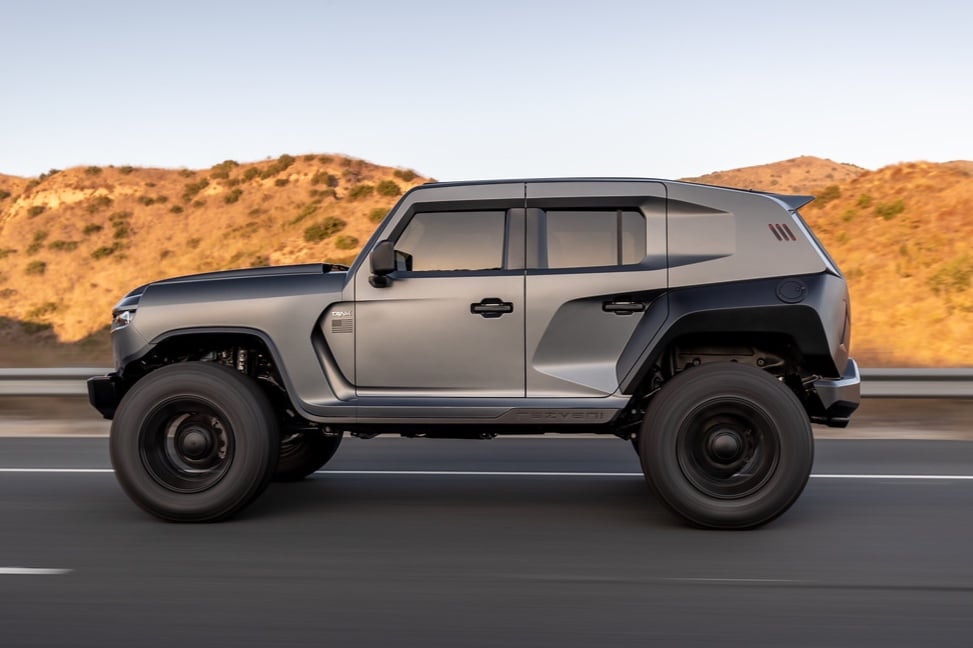
Buyers can spec features that blur the line between civilian SUV and tactical vehicle. Bulletproof glass, underbody explosive protection, thermal night vision, and electromagnetic pulse shielding are available for those seeking maximum security.
While these features go far beyond anything envisioned for the HX, they build on the same core idea of adaptability and purpose-driven design.
Design-wise, the lineage is even harder to deny.
By tapering the roofline and exaggerating the rear proportions, these vehicles project a sense of muscular readiness, as if braced for impact. On the HX, the sloped rear gave the compact SUV a youthful, almost rally-inspired silhouette, balancing agility with toughness.
Rezvani takes that cue and amplifies it: the Tank’s rear quarters rise high and angular, creating a fortress-like profile that emphasizes protection and dominance.
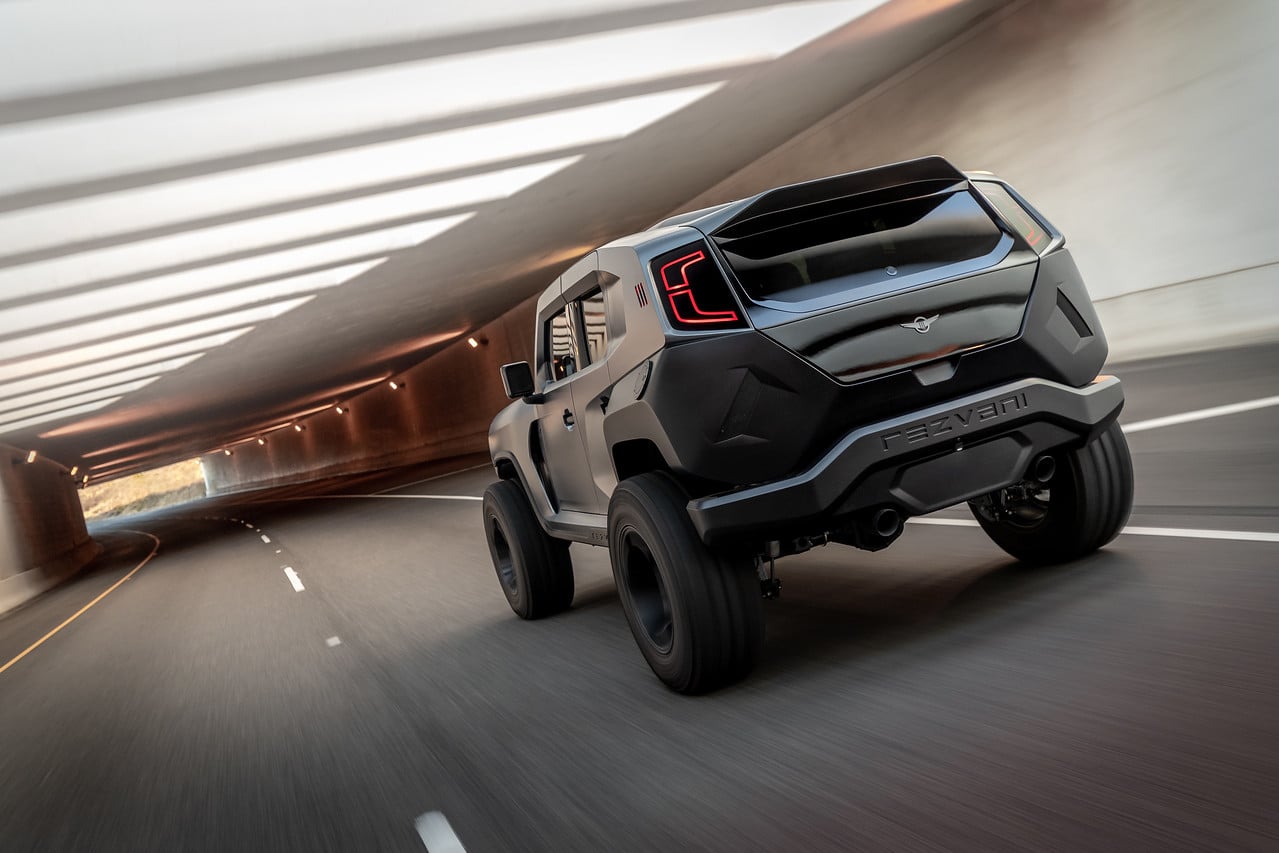
Functionally, this design enhances departure angles for off-road use, while visually it conveys a tactical, armored personality.
The hunchback form rejects the conventional upright SUV tailgate, instead sculpting a rear stance that feels aggressive, purposeful, and unmistakably unique. It’s a design language that bridges concept-car experimentation with production-level audacity.
Raw Geometry, Different Intent
The HX Concept’s chopped proportions, upright windshield, and exposed hardware elements find echoes in the Tank’s exaggerated form. Both vehicles reject smooth, aerodynamic styling in favor of rugged geometry.

Both prioritize presence and identity over subtlety. The difference lies in intent. The HX aimed to reinterpret Hummer for a changing market. The Tank exists as a statement piece, unconcerned with mass appeal and focused instead on delivering an uncompromising vision.
In another timeline, GMC could have refined the HX Concept into a production model that sat below the modern GMC Hummer EV, offering a lighter, more accessible entry point into the brand’s off-road ethos.
It might have balanced efficiency, capability, and distinctive design in a way that reshaped the segment. Instead, Rezvani stepped into that creative vacuum, building a machine that captures the raw spirit of the HX while amplifying every extreme. Including extreme price tags.
The result is a fascinating case of automotive evolution by proxy. The Rezvani Tank does not merely resemble the Hummer Concept; it embodies the path that concept hinted at but never traveled. It is, to me, a fully realized interpretation of an idea that was shelved. Indeed, bold designs rarely disappear; they simply wait for the right builder to bring them to life.