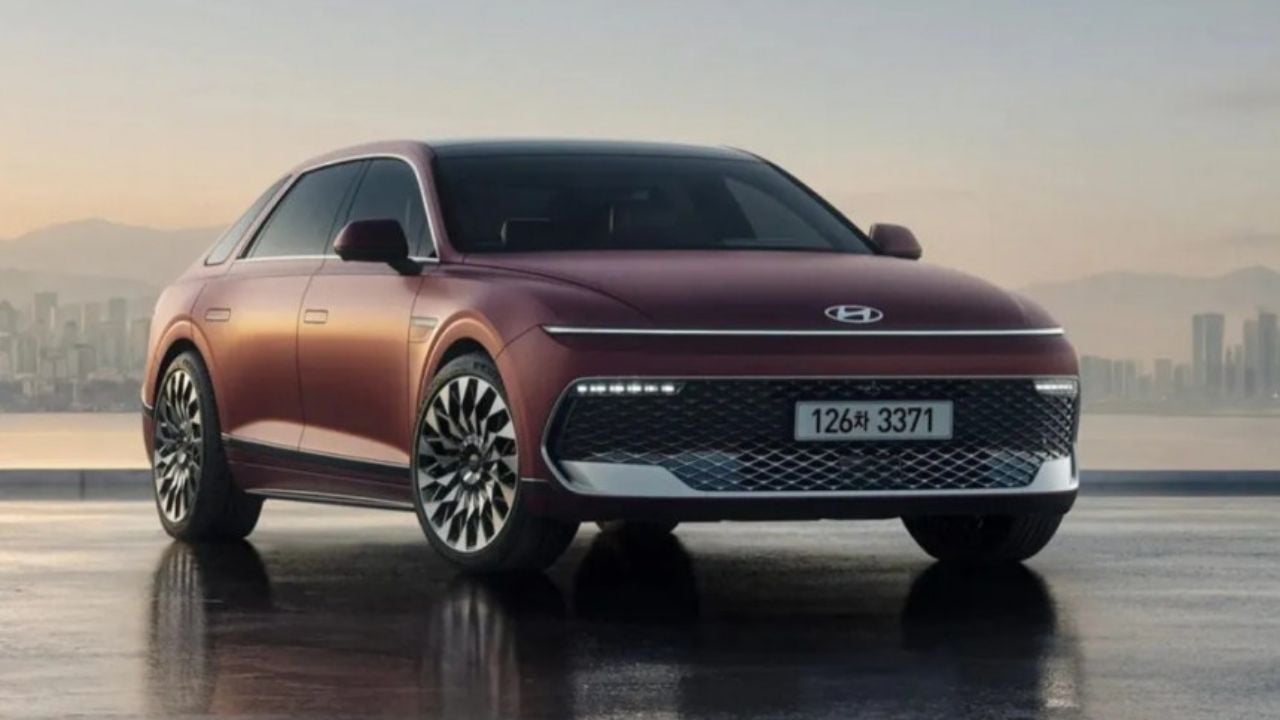
The seventh-generation Hyundai Grandeur debuted four years ago and, like its predecessors, quickly became a major success in South Korea. Even with its upscale positioning and relatively high price, the large sedan repeatedly ranked as the country’s best-selling sedan during the year and was often the second most popular vehicle overall, trailing only the Kia Sorento crossover.
In 2025, however, the Grandeur slipped to fifth place. It lost its second-place position and its title as Korea’s most popular passenger car to the cheaper Hyundai Avante, which is known as the Elantra in many markets.
To regain momentum, Hyundai has prepared a facelift for the Grandeur. The update also arrives right on schedule, matching the regular mid-cycle refresh timing for the model.
A New Front End Leads the Exterior Changes
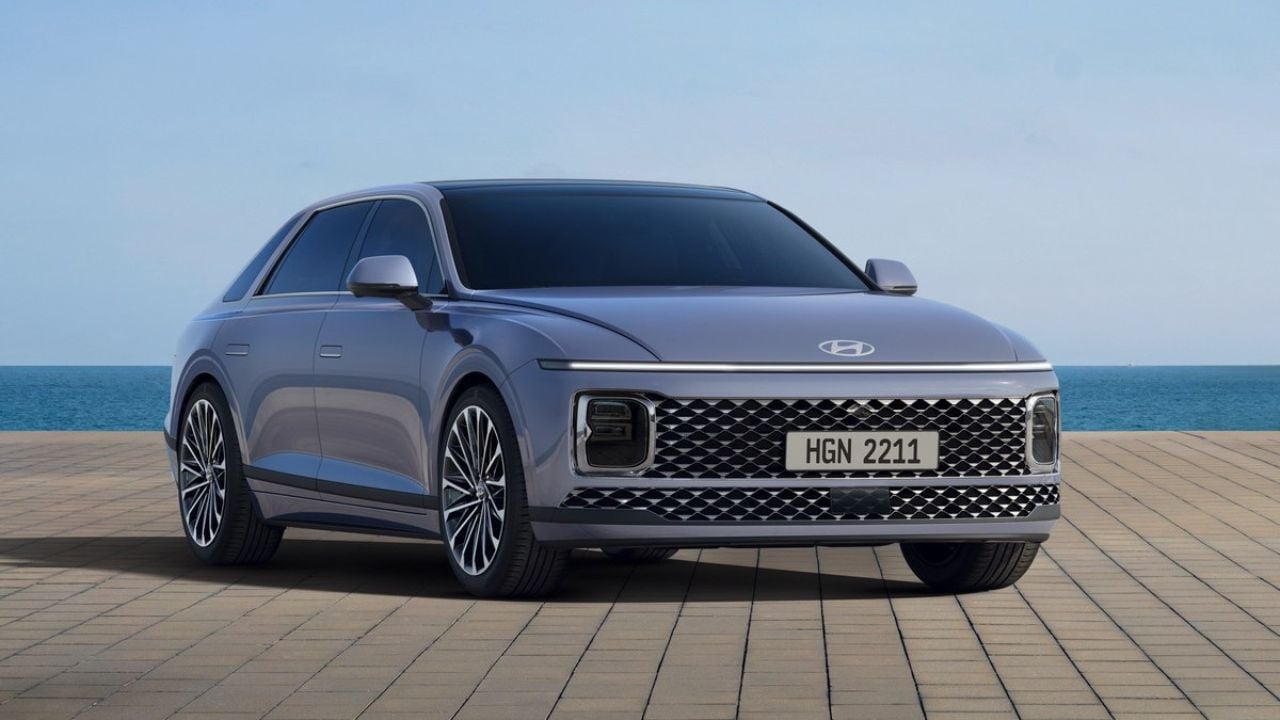
The main exterior changes are concentrated at the front. Hyundai has replaced the previous dual lighting blocks with new narrow headlight strips, while keeping the continuous daytime running light bar that stretches across the full width of the nose.
The grille still uses a honeycomb pattern, but the central crosspiece is gone, and larger silver inserts now give it a more defined look. The new front bumper has a stronger lower lip, while the rear bumper adds silver trim details.
The side profile remains unchanged, which makes sense for a refresh rather than a full redesign. Hyundai has also expanded the exterior color palette with new body colors and introduced fresh wheel designs.
Because of the revised body elements, the facelifted Grandeur is now 0.6 inch longer than before. Its total length is 198.8 inches. Hyundai has not released the rest of the updated dimensions, which likely means they remain close to the previous model: 74.0 inches wide, 57.5 inches tall, and 114.0 inches between the axles.
A Much Bigger Change Inside
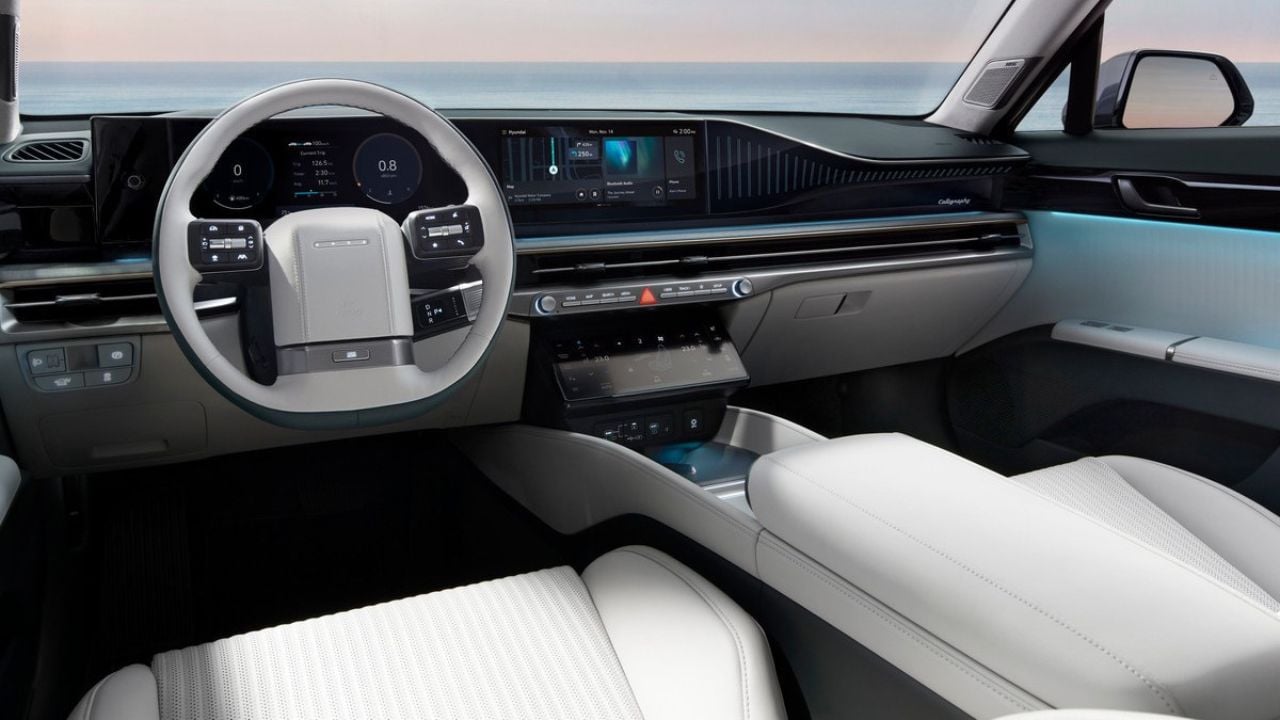
The interior has changed far more than the exterior. Hyundai has introduced a completely new dashboard layout with separate screens for the instrument cluster and infotainment system.
The previous single-panel arrangement has been replaced by a new design that includes a large 17-inch multimedia display. Instead of the previous touch-sensitive climate control panel, the facelifted Grandeur now uses a row of physical buttons and rotary controls.
That change should make everyday operation easier, especially for drivers who prefer direct controls for temperature and ventilation settings. The updated cabin also gets a new three-spoke steering wheel, redesigned door panels, revised seat upholstery, and a reworked center tunnel.
Hyundai has also added a panoramic roof with electrochromic glass to the options list. That feature allows the glass to change tint, giving passengers more control over sunlight entering the cabin.
The Powertrain Lineup Is Expected To Carry Over

Hyundai has not yet announced technical changes for the facelifted Grandeur. The outgoing model is offered with several powertrain choices in South Korea.
The base gasoline engine is a 152 cubic inch naturally aspirated GDI four-cylinder producing 198 hp and 183 lb ft of torque. Above it sits a 214 cubic inch V6 GDI engine with 300 hp and 265 lb-ft.
There is also an LPG version of the V6, rated at 240 hp and 232 lb ft. All of these versions use an eight-speed automatic transmission, while gasoline V6 models can also be ordered with Hyundai’s HTRAC all-wheel drive system.
The hybrid version remains especially important. It combines a 98 cubic inch turbocharged four-cylinder engine with 180 hp and 195 lb ft of torque with an electric motor rated at 60 hp and 195 lb ft. The electric motor is integrated into a six-speed automatic transmission, and total system output is 230 hp.
The Azera Name Will Return To Export Markets
Based on the first reveal, the official South Korean debut appears to be close. Hyundai has not yet announced prices or the exact start of sales.
The facelifted Grandeur is expected to reach additional markets later under its export name, Hyundai Azera. That name will be more familiar to buyers outside Korea, where the Grandeur badge has not always carried the same recognition.
For Hyundai, the update is clearly about more than routine styling changes. The Grandeur still has a strong reputation at home, but the sales slip in 2025 shows that even successful sedans need fresh technology, sharper design, and a more modern cabin to hold attention in a market increasingly shaped by crossovers and electrified models.
This article originally appeared on Autorepublika.com and has been republished with permission by Guessing Headlights. AI-assisted translation was used, followed by human editing and review.