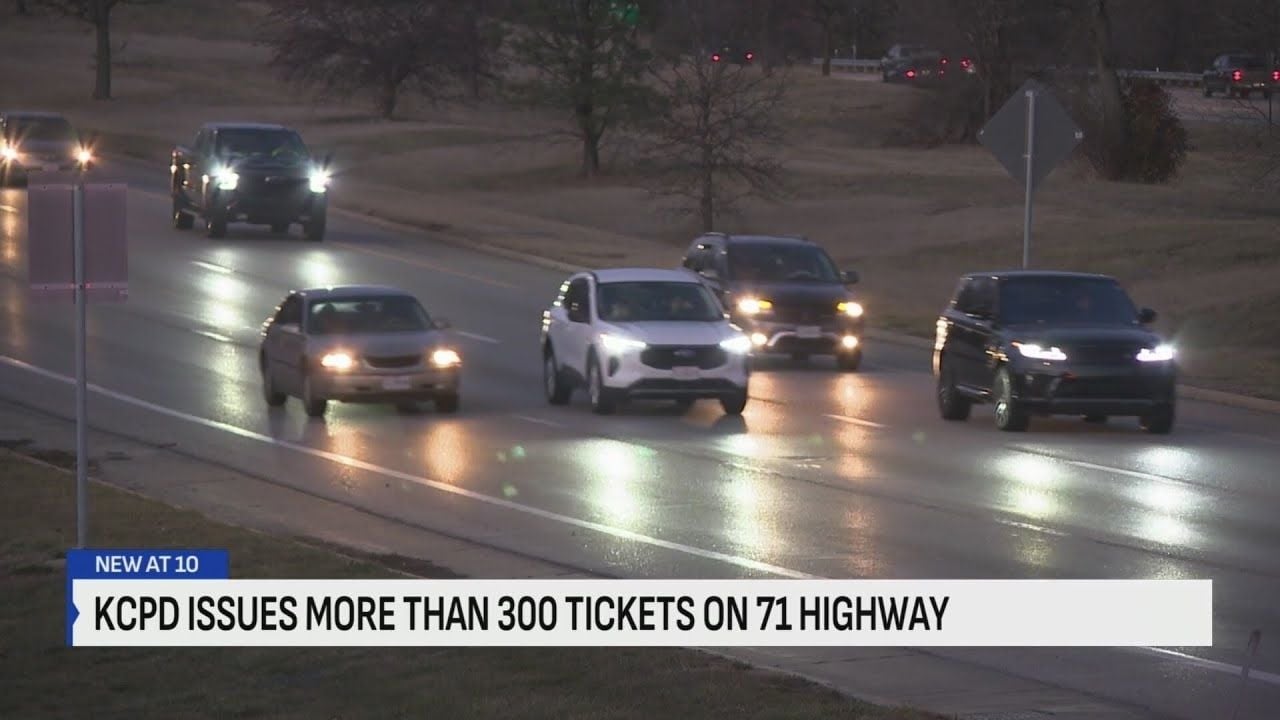

On a chilly Tuesday morning in Kansas City, Missouri, long stretches of U.S. Highway 71 turned into something many drivers had never seen on their daily commute: an unfolding traffic enforcement operation that wrapped dozens of patrol cars, hundreds of pulled-over vehicles, and a long line of drivers waiting for citations, warnings, or answers.
A routine drive to work suddenly became a vivid example of law enforcement’s response to a growing concern about safety on America’s roads.
According to the Kansas City Police Department, this was no random crack down. It was part of a larger enforcement strategy to curb a disturbing trend of crashes and ongoing complaints from residents and commuters, who have seen speeds climb and collisions rise on one of the city’s busiest north-south corridors. The department reported that officers stopped hundreds of vehicles during the daylong effort.
By the Numbers
When the dust settled, the numbers gave a snapshot of what officers found. Seven drivers were cited for operating with suspended or revoked licenses. More than 200 drivers received citations or warnings for hazardous moving violations such as speeding or unsafe lane changes. Over 100 others were issued citations or warnings for non-moving violations that range from broken lights to improperly secured loads.
For many drivers who were stopped, the experience jolted them back to the reality that much of American traffic enforcement is built around individual behavior and judgment. You might be cruising along at what feels like a reasonable speed in the right lane, but radar and officer judgment can paint a very different picture. And when officers see an unusual cluster of speeding or unsafe behavior, they act. That was the premise behind Tuesday’s operation.
City officials insist these kinds of efforts are about more than tickets and citations. They say the primary goal is to reduce crashes and promote safer travel. The department and local leaders are also pushing longer-term tools, including the return of red-light and speed cameras to Kansas City streets after nearly a decade without them.
We previously reported a poll of Washington City residents that showed a majority supports a proposed legislation to remove speed cameras from the city entirely. These automated systems are intended to catch dangerous behavior even when officers are not present, part of a strategy seen in many cities that want to move beyond traditional pullover enforcement alone.
Highway 71 and the National Conversation on Policing
If you drive regularly through Kansas City, this might feel like deja vu. Residents on social media pointed out what seemed like an unusually heavy police presence on U.S. 71 that morning, with multiple vehicles stopped alongside the highway and additional officers waiting in patrol cars nearby.
Cops pulling over tons of people at once
byu/rydehn inkansascity
Some drivers wondered whether it was an attempt to raise revenue through fines as much as improve safety. Others said the stretch had become genuinely dangerous, especially late at night or during rush hour. One Redditor asked, “Can’t they do this when the street racing gangs are flying around every weekend. Why go after ppl who are trying to go to work?”
This incident on U.S. 71 also highlights a broader national conversation about traffic enforcement and public safety that has been simmering in cities from coast to coast. Traffic stops are one of the most common points of contact between police and the public in the United States, and they touch daily life in ways drivers rarely think about until they happen to them.
Millions of drivers are pulled over every year for violations small and large. Data from legal and policy research suggests that many stops are for minor equipment or paperwork issues that have little to do with reducing serious crashes. Critics argue this can erode public trust and distract officers from focusing on the worst roadway threats.
The Enforcement Spectrum
At the same time, police departments in some cities have reevaluated how traffic enforcement intersects with community relations. Denver, for example, saw its traffic stops drop sharply after introducing policies that restrict stops for low-level infractions, shifting officer attention toward behaviors more closely tied to serious harm on the road.
The message from Kansas City is simple but powerful. When police make high-visibility enforcement moves like last week’s, they want to send a message that the days of routine speeding and risky driving can no longer be ignored. Whether the result is safer roads or frustrated commuters, what happens behind the wheel matters, not just to you but to the community that shares the asphalt.
Sources: Yahoo