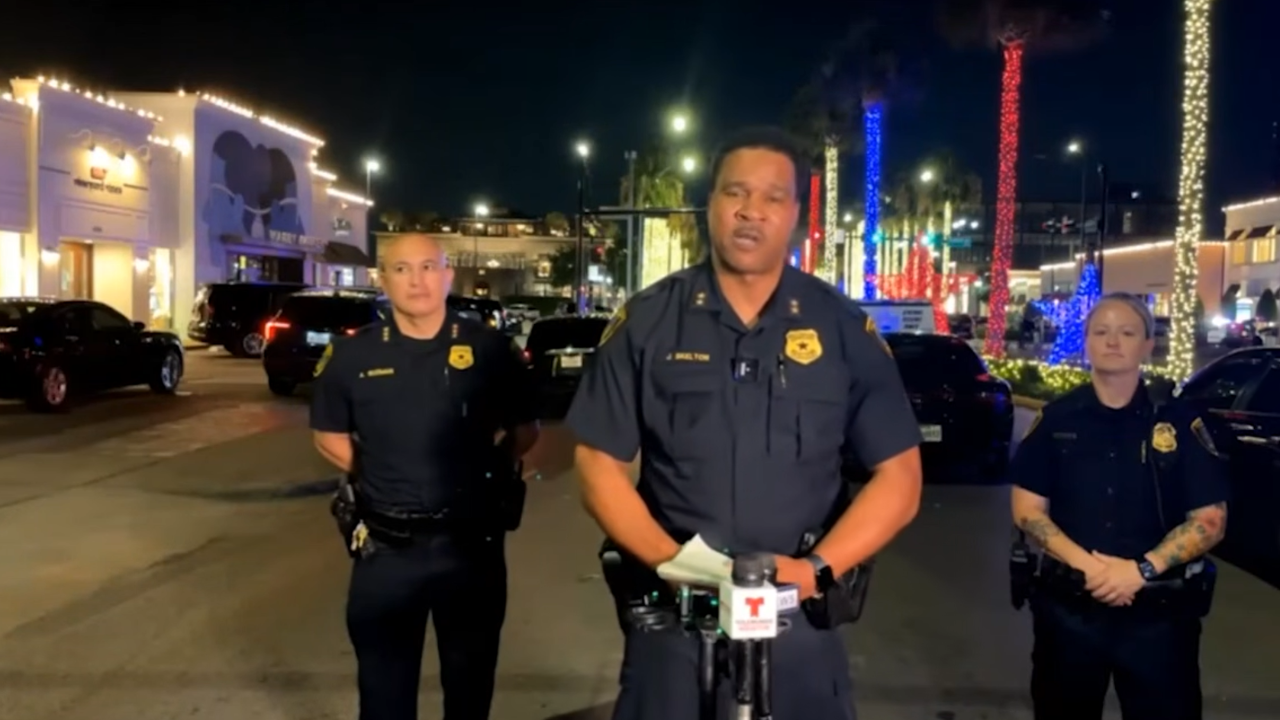
A University of Houston student went to work on July 6 and left her Nissan Altima parked outside. By the end of the night, the car had been caught in a barrage of Houston police gunfire during a standoff in a busy shopping center.
Abigail Trujillo, 20, estimates her Altima was struck about 40 times. She told ABC13 that repairs were estimated at roughly $20,000, leaving her making payments on a car she could no longer drive while borrowing a friend’s vehicle for school and work.
When Trujillo asked the City of Houston to cover the damage, she received a denial. The city cited governmental immunity and told her it was not legally liable.
That answer did not last untouched. After the case received news coverage, Mayor John Whitmire stepped in, said the city would review some claims from innocent bystanders whose property was damaged during law-enforcement operations and announced that he had worked with the police union to get Trujillo another car.
The dispute also lands against a surprisingly specific body of Texas law. More than four decades ago, the Texas Supreme Court considered another case in which Houston police destroyed an innocent person’s property while trying to apprehend dangerous suspects — and held that governmental immunity did not automatically leave the property owners bearing the loss.
Caught in the Middle
Embedded media follows; please allow a moment to load.
The July confrontation began after an off-duty Houston police officer working an extra job spotted a vehicle in the 4000 block of Westheimer Road. The Houston Police Department said the vehicle had been reported stolen in Fort Bend County and was connected to an assault.
Uniformed officers arrived and repeatedly ordered the man inside, Jamarcus Oneal Spates, to get out. Police said he remained in the vehicle for an extended period before officers made a coordinated approach.
HPD said officers believed Spates pushed open the driver’s door and extended his arm in a shooting position. A sergeant and eight officers discharged their weapons. Spates was grazed by a bullet and survived.
Police subsequently charged Spates with unauthorized use of a motor vehicle in Harris County’s 482nd Criminal District Court. HPD said its Special Investigations Unit and Internal Affairs Division were reviewing the shooting along with the Harris County District Attorney’s Office.
Trujillo was not part of that confrontation. Her car was simply parked beside the vehicle officers were approaching.
She told ABC13 that her Altima was later towed as evidence and that she paid another $200 to retrieve it from an HPD impound lot about a week later.
Not a Tort
The distinction between whether officers acted improperly and whether an innocent owner should be compensated for property they damaged matters under Texas law.
Jeffrey Redfern, a senior attorney with the Institute for Justice, told ABC13 that Trujillo’s situation should not be viewed simply as a tort claim accusing police of wrongdoing.
The relevant precedent dates to 1980.
In Steele v. City of Houston, Houston police were trying to capture escaped prisoners who had taken refuge in a home. The property owners alleged police intentionally caused the house to burn.
The Texas Supreme Court held that the owners had stated a viable claim under Article I, Section 17 of the Texas Constitution, which protects private property from being taken, damaged or destroyed for public use without adequate compensation.
The court specifically rejected Houston’s argument that governmental immunity automatically blocked the claim. It also drew a line between finding fault with police tactics and requiring the public to compensate an innocent property owner for the cost of those tactics.
That principle received another significant test this year.
In May, the U.S. Court of Appeals for the Fifth Circuit upheld a judgment for Vicki Baker, whose McKinney, Texas, home was badly damaged by police during a 2020 standoff with an armed fugitive.
The federal appeals court treated Baker’s federal and Texas constitutional claims differently. Her federal takings claim had previously failed, but the court held that Texas law provided broader protection and said Steele controlled the state-law dispute.
The circumstances are not identical to Trujillo’s case, and no court has ruled on her claim. But the decisions show why a governmental-immunity denial does not necessarily end the legal analysis when police intentionally damage an innocent third party’s property during an operation.
A Change of Course
ABC13 reported that roughly 300 claims alleging property damage tied to HPD activity were filed from 2024 through the first months of 2025. About one-quarter were paid.
The station’s questions about Trujillo produced a rapid shift at City Hall.
The mayor’s office first said Whitmire had personally become involved and that her case had been “initially mishandled due to a technicality.” A subsequent statement supplied to the station removed that description.
By Thursday, Whitmire told ABC13 the city would look more broadly at claims involving innocent bystanders and review its policies rather than automatically denying them.
“She got caught up in the crossfire and bureaucracy lost their sense,” Whitmire said.
Whitmire maintained that Houston can legally deny claims in appropriate circumstances and said officials had not yet settled on how they would determine which cases deserve payment.
He also said he worked with the police union to provide Trujillo with another car.
The review may extend beyond her case. Whitmire said Houston would examine other claims already filed, while questions remain about whether previously denied claims will be reopened and what standard the city will use to decide who gets compensated.