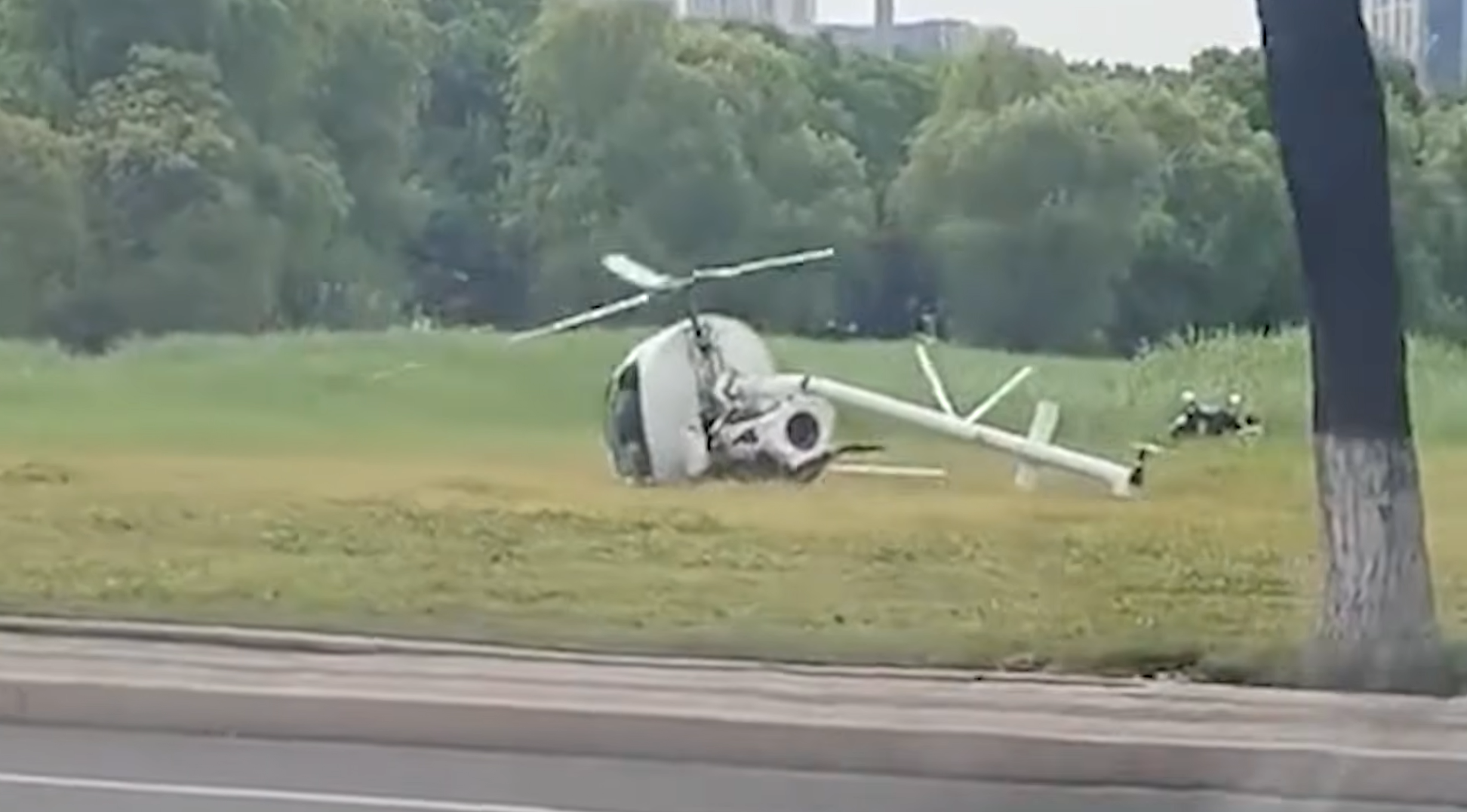
A dramatic piece of cockpit footage out of China is making the rounds this week, and it’s the kind of video that reminds you why test pilots get paid what they do. On June 11, a helicopter operating out of Changzhou experienced a catastrophic tail failure mid-flight, forcing an emergency landing that went about as smoothly as one might expect when a major structural component of the aircraft decides to separate from the rest of it. Both the pilot and a passenger were thrown violently around the cabin as the helicopter whipped and spun during the uncontrolled touchdown, with onlookers getting an unfiltered look at just how quickly things can go wrong in rotary-wing aviation.
What makes this footage particularly striking is not just the chaos of the moment, but the mechanical clarity of what happened. When a helicopter loses its tail assembly, it is not a situation that allows for deliberation. The tail rotor is responsible for countering the main rotor’s torque, and without it, the aircraft will begin spinning in the opposite direction of its main rotor with no polite request for pilot input. The only viable response is to get the machine on the ground immediately, by whatever means the terrain and altitude allow. In Changzhou, that meant a rough field landing that left the airframe bouncing and the occupants ragdolled in their seats.
Remarkably, both individuals survived the incident. The fact that they walked away at all speaks either to the pilot’s competence under extreme pressure, a measure of luck, or more likely some combination of both. Aviation professionals who study tail rotor failures often note that the window between “something is wrong” and “we are now in an unrecoverable situation” can be measured in seconds rather than minutes. That anyone can react correctly and execute a survivable emergency landing in that window is a testament to the kind of training that rarely gets acknowledged until something like this surfaces on the internet.
The video has been circulating widely across social media and news outlets in the past 24 hours, drawing the kind of attention that only footage of real mechanical failure can produce. For those who follow aviation with the same critical eye they bring to mechanical engineering broadly, this incident raises the usual questions about maintenance intervals, component inspection regimens, and what exactly preceded the failure in the air over Jiangsu Province.
What Tail Rotor Failure Actually Looks Like
The tail rotor, sometimes called the anti-torque rotor, is the small vertical propeller mounted at the rear of a conventional helicopter. It exists for one reason: to keep the helicopter from spinning. When the main rotor turns, it generates enormous torque that would otherwise rotate the fuselage in the opposite direction. The tail rotor generates lateral thrust to counteract that force, allowing the pilot to maintain directional control.
When that component fails, or in this case when the tail structure itself separates from the airframe, the physics become immediately unforgiving. Aviation experts note that losing the tail rotor is an extremely rare occurrence that becomes an immediate crisis for the pilot, who must reduce torque and get the helicopter on the ground as quickly as possible. There is no workaround, no secondary system, and no time to consult a manual.
A Consistent Pattern in Helicopter Incidents
Tail rotor failures have appeared in multiple NTSB investigations in recent years. In one documented case in Huntington Beach, California, a disconnected tail rotor pitch link caused a Bell 222 helicopter to spin out of control just as the pilot was preparing to land, resulting in a crash that injured five people. In a separate Pennsylvania case involving a medical helicopter, investigators found the tail rotor at a different location from where the aircraft made its emergency landing, indicating mid-flight separation.
The pattern across these incidents is consistent: tail rotor failures give pilots almost no time and almost no options. The Changzhou incident fits squarely into that category, and the fact that cameras captured the full sequence in the cockpit gives investigators and the public an unusually complete picture of what the experience actually looks like from inside the cabin.
China’s Expanding General Aviation Sector
The Changzhou incident also arrives at an interesting moment for Chinese general aviation. The country has been actively developing its light aircraft and helicopter manufacturing sector, with companies like Changzhou Zhonglian Aviation Technology producing domestic rotorcraft for civilian and commercial use. Rapid expansion of any aviation sector historically correlates with increased scrutiny on maintenance standards and component reliability, particularly as newer operators and newer aircraft accumulate flight hours.
China’s civil aviation authority, the CAAC, maintains its own investigation and reporting framework separate from the U.S. NTSB, and full details on what preceded the Changzhou failure may take time to surface publicly. What the video does show unambiguously is the physical outcome of a structural failure at landing, which will likely prompt questions about inspection protocols for the aircraft type involved.
What the Footage Does and Does Not Tell Us
The viral spread of this video has generated plenty of commentary, not all of it technically informed. What the footage confirms: the tail separated, the helicopter went into a violent spin during touchdown, and both occupants were thrown around the cabin with considerable force. What it does not tell us is the altitude at which the failure occurred, whether any warning preceded it, what maintenance history the aircraft had, or whether human factors played any role.
Investigators examining similar incidents have noted that aircraft logbooks can reveal whether a failure stemmed from metal fatigue or a maintenance oversight, and the same methodology will presumably apply here. Until that information becomes available, the footage stands on its own as a vivid document of what helicopter emergency procedures look like when they are actually needed, and a reminder that the engineering behind rotary-wing flight leaves very little margin when something goes wrong at the wrong moment.