A New Hampshire woman reportedly faced a repair bill approaching $4,000 for a Honda Insight that hadn’t run in three years. When the dealership offered to haul the car away for free, she chose another option: selling it on Facebook Marketplace for $350.
YouTuber Rich Rebuilds saw an opportunity in the nonrunning 2000 hybrid. His latest project wasn’t a high-performance sports car or an expensive electric vehicle. It was a tiny, 26-year-old Honda with a manual transmission and a reputation for remarkable fuel economy.
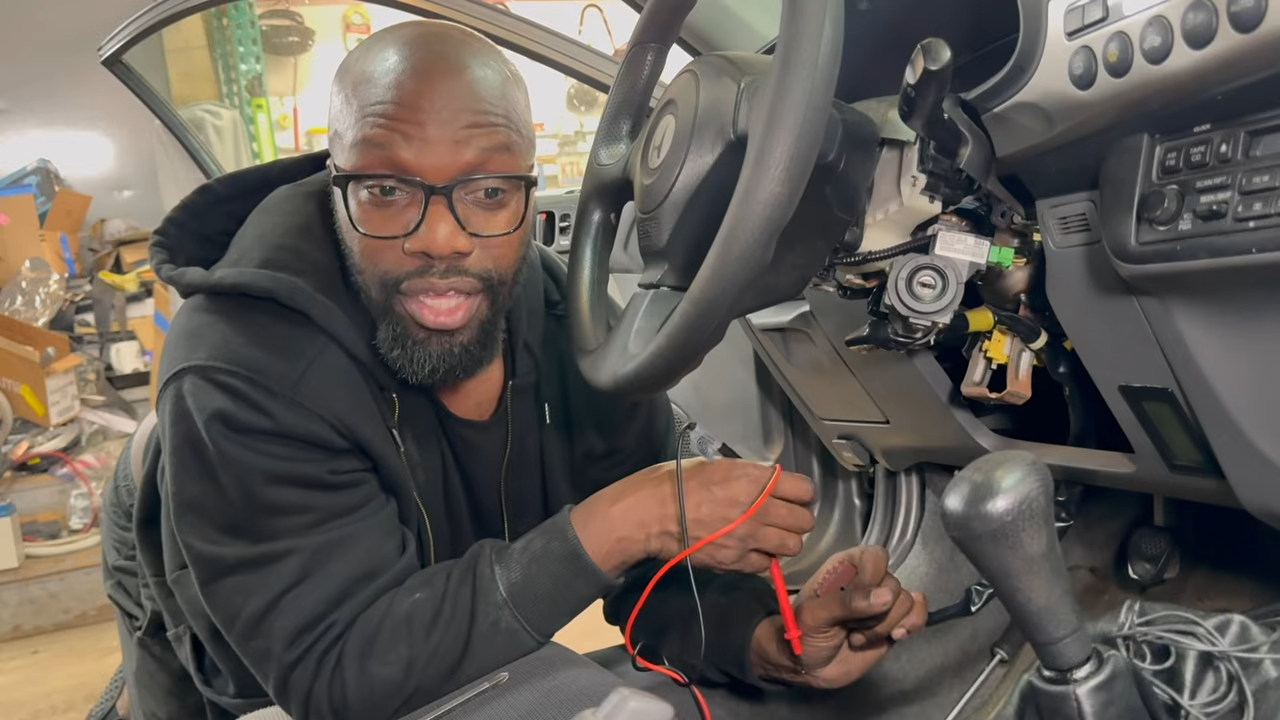
The November 22 video follows Rich and his friend Joey as they investigate why the car stopped working. The inspection uncovers leaking gasoline, damaged wiring, worn suspension components, and electrical faults. Even getting the engine started proves more complicated than expected.
Rich’s goal was to make the Insight a dependable commuter capable of approaching 70 miles per gallon without spending anything close to the dealership’s quoted repair cost. That meant finding out which problems actually required expensive replacements and which could be addressed for considerably less.
A $350 Gamble
Embedded media follows; please allow a moment to load.
The original 2000 Honda Insight received EPA ratings of 61 mpg city and 70 mpg highway when it was introduced. Its lightweight aluminum construction, aerodynamic body, and 1.0-liter three-cylinder engine helped make it one of the most efficient gasoline-powered cars available in America.
The EPA has since revised those estimates to 49 mpg city, 61 highway, and 53 combined under updated testing calculations. Even by those figures, the Insight remains an impressively economical car.
Rich’s example looked surprisingly presentable inside, although the tires and suspension had seen better days. The problems became more concerning when the team discovered that the engine had no coolant and that gasoline was leaking from a deteriorated hose.
A diagnostic scan also identified an engine misfire, an anti-lock braking system fault, and a problem involving the hybrid battery. Clearing the error codes accomplished little. The car still refused to start.
One Problem After Another
The investigation eventually led to the clutch safety switch, which prevents the engine from starting unless the clutch pedal is depressed. Testing revealed that the switch wasn’t functioning. Bypassing it temporarily allowed the engine to turn over, but the Honda wouldn’t remain running.
Rich then investigated the fuel system, replacing a cracked hose and examining the fuel pump wiring. What he found suggested that someone had previously attempted repairs using improvised connections and considerable amounts of sealant. Several wires and connectors were damaged.
Even after restoring the fuel gauge and addressing those problems, the engine wouldn’t cooperate. The breakthrough came when the team discovered badly deteriorated electrical grounding connections.
They installed replacement ground straps, and the Insight finally ran. That victory exposed another problem: the suspension was badly worn, and replacement shock absorbers weren’t especially cheap. Rich ultimately spent approximately $600 on shocks before attempting the car’s first proper road test.
Not Quite Roadworthy
The drive initially offered some encouragement. The hybrid’s dashboard displayed fuel economy approaching 80 mpg at one point, although that wasn’t a sustained trip average.
Then warning lights began illuminating. The electrical system behaved erratically, power steering assistance became intermittent, and the car struggled to accelerate. Eventually, it lost power and forced the pair to pull over.
They managed to get home with additional help from a 12-volt battery, but the experience exposed a serious issue with the Insight’s aging hybrid system.
Unlike a conventional gasoline car, the original Insight doesn’t use a standard alternator to maintain its 12-volt electrical system. It relies on a DC-to-DC converter associated with the high-voltage hybrid system. Rich concluded that problems with the hybrid battery were interfering with the car’s ability to maintain its electrical supply.
Further diagnostics pointed toward an imbalance in the battery pack. That brought the project back to the expensive component Honda had reportedly identified at the beginning.
A Cheaper Alternative
Rather than purchasing a replacement hybrid battery, Rich spent $175 on an aftermarket grid charger designed to charge and balance the existing pack.
Installing it required access to the battery compartment, where the team found evidence of rodents and additional damaged wiring. After addressing those issues, Rich connected the charger and allowed the battery to complete its charging procedure.
The result was encouraging. With the hybrid system operating again and a different set of lightweight wheels fitted, the Honda returned to the road.
On a subsequent 15-mile commute, Rich reported an average of 72 mpg according to the car’s dashboard display. That’s an onboard estimate rather than a separately verified fuel-consumption test, but it demonstrated the kind of efficiency that made the original Insight famous.
Rich calculated his total investment at approximately $1,200, including the purchase, charger, suspension, and brake work. That figure doesn’t account for the considerable labor involved.
He also acknowledged that Honda’s original diagnosis wasn’t necessarily wrong. The battery remained old, and balancing its cells didn’t restore them to new condition. The treatment could extend its useful life, but nobody could guarantee for how long.
Two weeks later, Rich admitted that he’d become the kind of Insight owner he previously enjoyed teasing: someone constantly looking for another way to squeeze more mileage out of an already economical car. He was still driving the $350 Honda to work and looking for opportunities to reduce its fuel consumption even further.