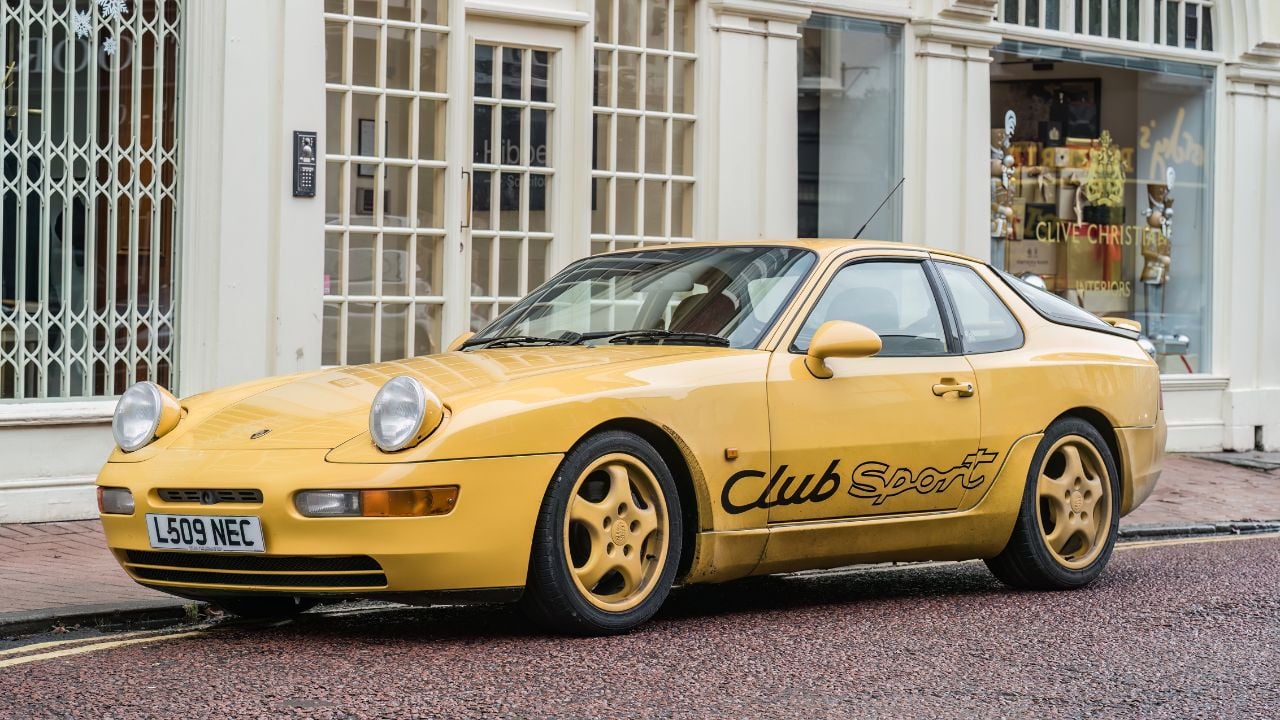
The Porsche 911 might be the poster car for the brand, but its front-engine siblings have their own story to tell. It’s one of daring design, surprising performance, and wild engineering detours. From the entry-level 924 that sparked a new era in the ’70s to today’s Panamera and Cayenne pushing luxury-sport boundaries, these models prove Porsche never stops rewriting the playbook.
In this article, we’ll dive into standout front-engine Porsches, unpacking their evolution, driving quirks, and why collectors and weekend warriors alike can’t get enough. You’ll get the inside scoop on specs that still impress, styling cues that broke the mold, and why these underdog machines deserve a spot in your garage, or at least on your wish list. Let’s hit the road.
Porsche 924

The 924 made waves in 1976 as Porsche’s first production road-going front-engine model, swapping tradition for a balanced rear-transaxle design that delivered near-ideal weight distribution. According to Wikipedia, this chassis layout gave it handling sharp enough to rival its pricier siblings. By offering a lightweight, affordable entry into the Porsche world, the 924 opened the brand up to a new generation of enthusiasts.
Today, its clean lines and straightforward engineering make it a rewarding classic for drivers who value driving purity over gadgetry.
Porsche 928

When the 928 arrived in 1978, Porsche stunned the world by fitting a front-mounted V8 into a grand tourer with a galvanized steel body shell and aluminum doors, hood, and front fenders. According to Wikipedia, its pioneering Weissach rear suspension and balanced chassis offered luxury-car comfort alongside genuine sports-car agility.
It rewrote expectations for what a Porsche could be, seating four in plush leather without sacrificing cornering precision. Collectors now prize the 928 for its daring design and the way it blurred the line between GT cruiser and track-ready machine.
Porsche 944

Building on the 924’s DNA, the 944 debuted in 1982 with refined suspension tuning and a sleeker coupe profile that still turns heads today. According to Wikipedia, its chassis tweaks and transaxle architecture delivered one of the most dynamically balanced sports cars of the era.
It became one of Porsche’s most successful sports cars, with over 163,000 produced, by marrying daily-drive comfort with incisive handling and easier maintenance. Enthusiasts care about the 944 because it proves that accessible performance and long-term reliability can go hand-in-hand.
Porsche 968

As the swan song of the 924/944 lineage, the 968 arrived in 1992 with VarioCam variable-valve timing and subtle aerodynamic upgrades that sharpened throttle response and stability. According to Wikipedia, its VarioCam system and updated brakes marked a high point in front-engine refinement.
The 968 delivers a surprisingly modern driving experience, with crisp steering feedback and a well-appointed cabin. Its limited production run gives it cachet among collectors who appreciate a true driver’s car with everyday usability.
Porsche Panamera

Since its 2009 debut, the Panamera has shown that a four-door Porsche can still feel like a thoroughbred sports car. According to Porsche, its sophisticated chassis and available rear- or all-wheel-drive systems blend sporty poise with executive-class comfort.
Inside, cutting-edge infotainment and luxury materials ensure every journey, commute, or road trip is an occasion. Drivers who need space without surrendering performance flock to the Panamera for its rare mix of versatility and pedigree.
Porsche Cayenne

The Cayenne rewrote Porsche’s future when it launched in 2002, proving an SUV could carry the brand’s performance ethos into a family-friendly package. According to Porsche, its advanced air suspension and optional rear-axle steering give surprising agility for an SUV, while its refined interior caters to daily drives and long hauls alike.
By funding Porsche’s product expansion, the Cayenne cemented itself as one of the company’s best-selling model lines and a pioneer in the performance-SUV segment. Buyers love it for delivering sports-car thrills with cargo space and towing capability.
Porsche Macan

As Porsche’s compact SUV introduced in 2014, the Macan distilled 911 DNA into a smaller footprint that’s ideal for city streets and winding backroads. According to Porsche, its driver-focused cockpit, adaptive chassis options, and precise steering make it feel more like a sporty coupe than a crossover.
It balances everyday practicality, cargo versatility, and family seating with the brand’s signature responsiveness. The Macan remains a top choice for drivers seeking a daily companion that delivers genuine Porsche character in a do-it-all package.
The Lasting Appeal of Front-Engine Porsches

From the 924’s breakthrough balance to the Macan’s modern versatility, these front-engine Porsches prove that innovation and driving purity aren’t confined to rear-mounted layouts. Each model carved its own niche, whether democratizing performance in the 1970s or reimagining luxury and utility in today’s SUVs while staying true to Porsche’s core focus on handling precision and engineering flair.
As you weigh your next Porsche purchase or simply marvel at automotive history, remember that these underdog icons offer something different from the 911 spotlight. They invite you to explore a broader spectrum of Porsche passion, where pioneering technology and everyday usability combine to create unforgettable driving experiences.