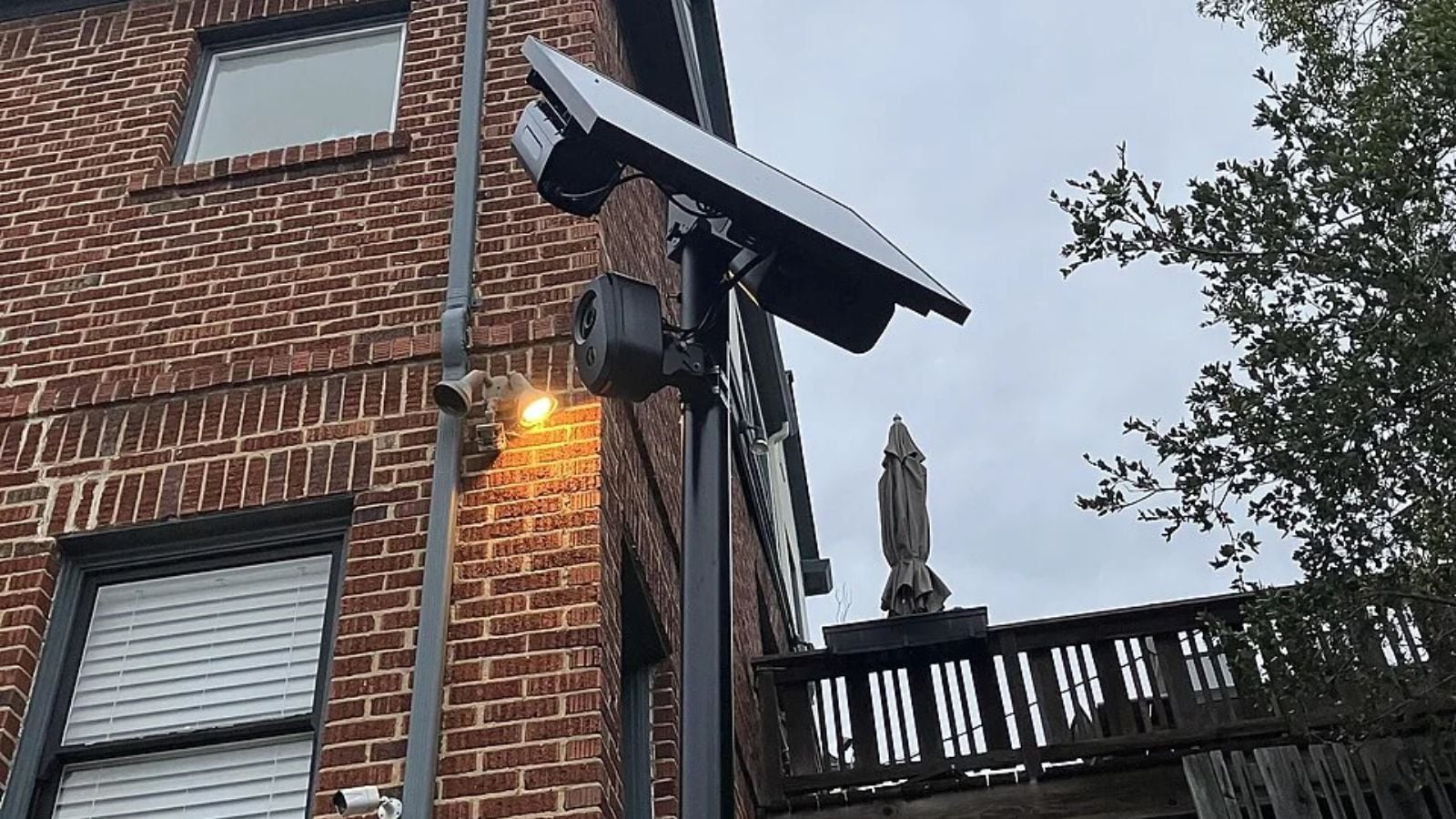
A new free website can tell you whether your license plate appears in certain Flock Safety search records, potentially revealing that someone actively queried your vehicle in the company’s database. The tool is called Have I Been Flocked, and it relies on audit logs obtained through public-record requests and transparency portals.
Using it is simple: enter a plate number, and the site checks its available records for matching searches. A result does not necessarily mean you were under investigation, stopped by police, or accused of doing anything wrong, only that the plate appears in a recorded query.
There is also an important distinction between being searched and being photographed. Have I Been Flocked does not tell you every time your car passed a Flock automatic license plate reader, nor does it cover competing systems operated by companies such as Motorola, Axon, or SkyCop.
The biggest limitation is the database itself. A clean result does not prove nobody searched your plate, because many records have never been released, can arrive months or years late, or may have been heavily redacted before becoming public.
A Hit Means Someone Queried Your Plate
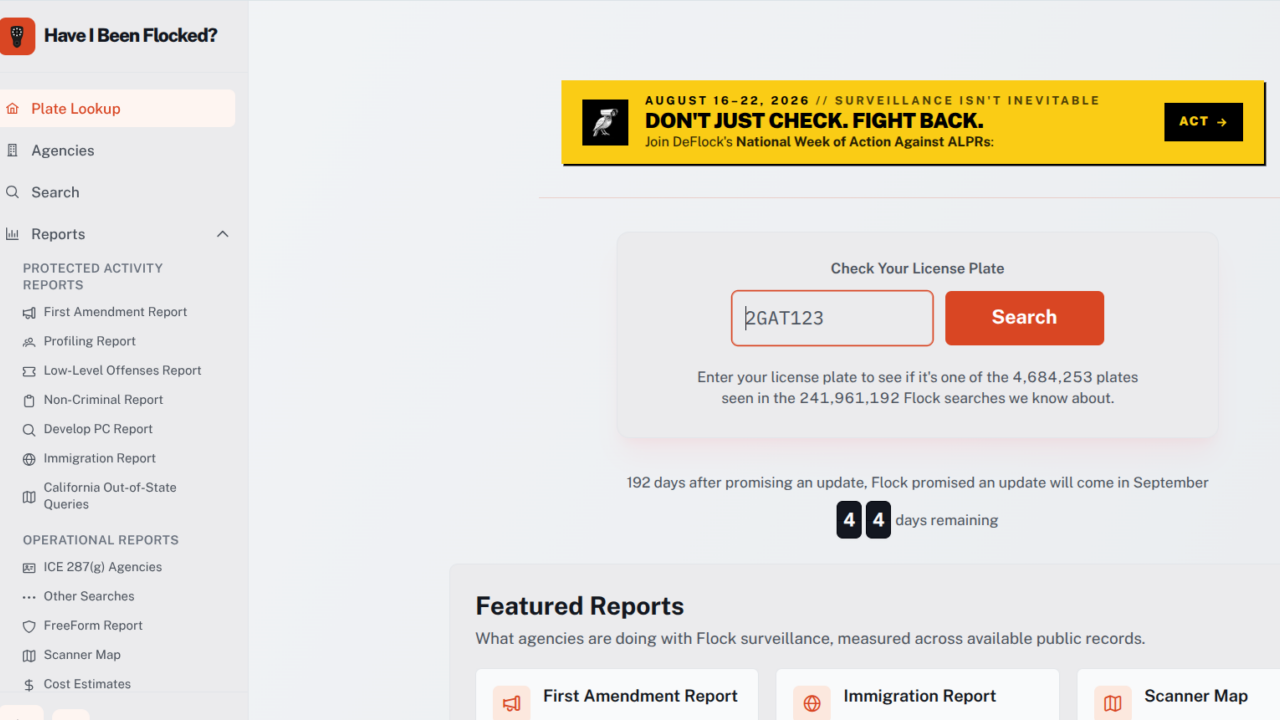
Have I Been Flocked is built around Flock audit records rather than raw camera detections. That means the site is trying to answer a narrower question: whether an operator used Flock’s system to look up a specific license plate.
That operator does not necessarily have to be a sworn police officer. Depending on the agency and its access arrangements, other authorized users may also interact with the system, so a search result should not automatically be interpreted as evidence of a police investigation.
The project also says it does not retain license plates entered by users. That matters for anyone reluctant to submit their own plate number to yet another database while trying to learn how much surveillance information already exists about their vehicle.
No Result Doesn’t Mean You Weren’t Searched
The site’s creators are clear that its records are incomplete. Some agencies do not publish detailed audit logs, while others release information only after lengthy public-records processes or redact so much data that it becomes impossible to connect a search with a particular plate.
That means a negative result should be read as “no matching record was found in the available data,” rather than “your plate has never been searched.” Flock’s network is far larger than the collection of audit logs currently available to the project.
Have I Been Flocked also attempts to associate abbreviated or partial operator names with public employment records. The site warns that those matches are probabilistic and should be independently verified before anyone draws conclusions about who actually performed a search.
Flock Has Reduced What Its Logs Reveal
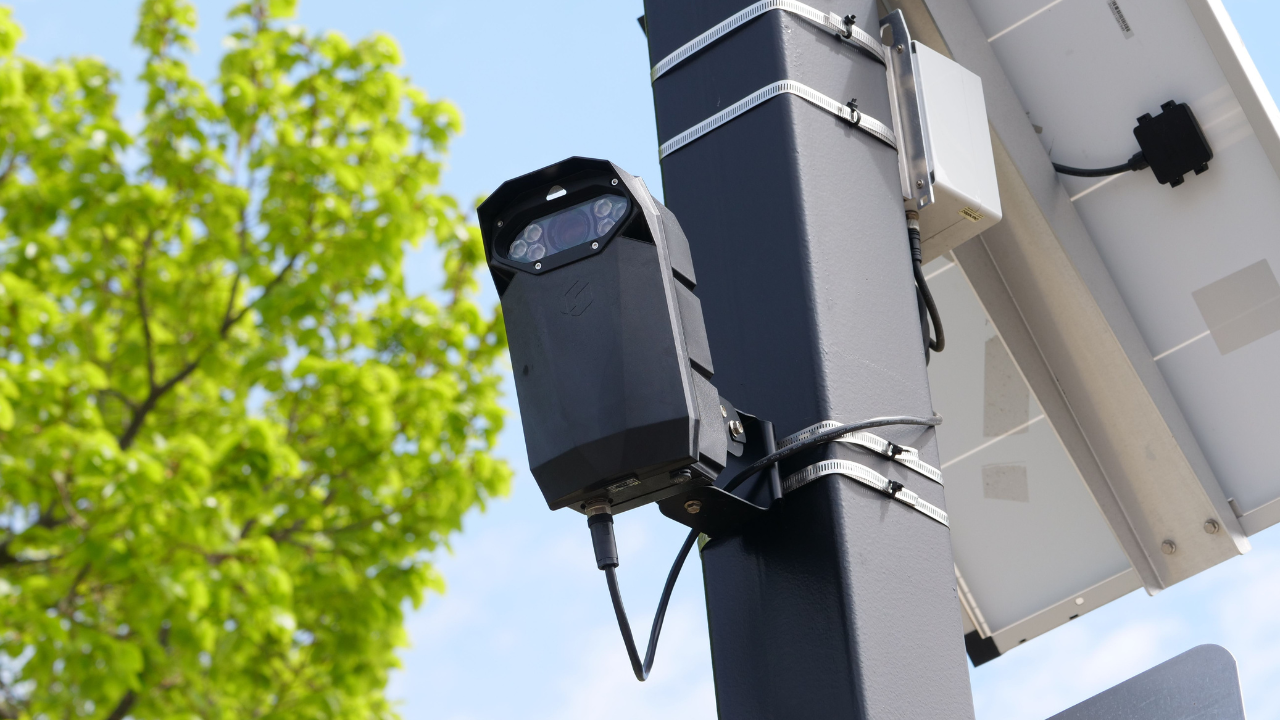
The tool arrives as Flock’s own audit records have reportedly become less informative to the public. Previous network logs could reveal details about outside agencies searching another department’s camera network, sometimes exposing searches that would otherwise have remained difficult to identify.
Flock told InvestigateTV that connected-agency searches no longer display information such as the searching officer’s name, the plate queried, the vehicle fingerprint, or an open-text explanation for the search. The company said those changes were requested by customers concerned about officer safety and active investigations.
Flock has also introduced safeguards, including case-code requirements and automated audit alerts, intended to help agencies identify misuse internally. Those controls may improve oversight inside departments, but they do not give members of the public the same ability to independently inspect who searched what.
It Offers A Small Window Into A Much Bigger System
Flock says its public transparency portals still provide information about agency policies, retention periods, data-sharing partners, and overall search activity. Critics argue that removing the plate number, operator identity, and reason for a search makes those portals substantially less useful for meaningful outside accountability.
Have I Been Flocked cannot restore information that was never released in the first place. What it can do is aggregate the records that are available and make them much easier for ordinary drivers to search without filing their own public-records requests.
That makes the tool useful, but only within clear limits. If your plate appears, you have evidence that it showed up in at least one available Flock search record; if it doesn’t, the absence of a result proves very little.
Would you want to know if a police agency searched your license plate? Do you think ALPR operators should be required to publicly disclose who searched a plate and why?