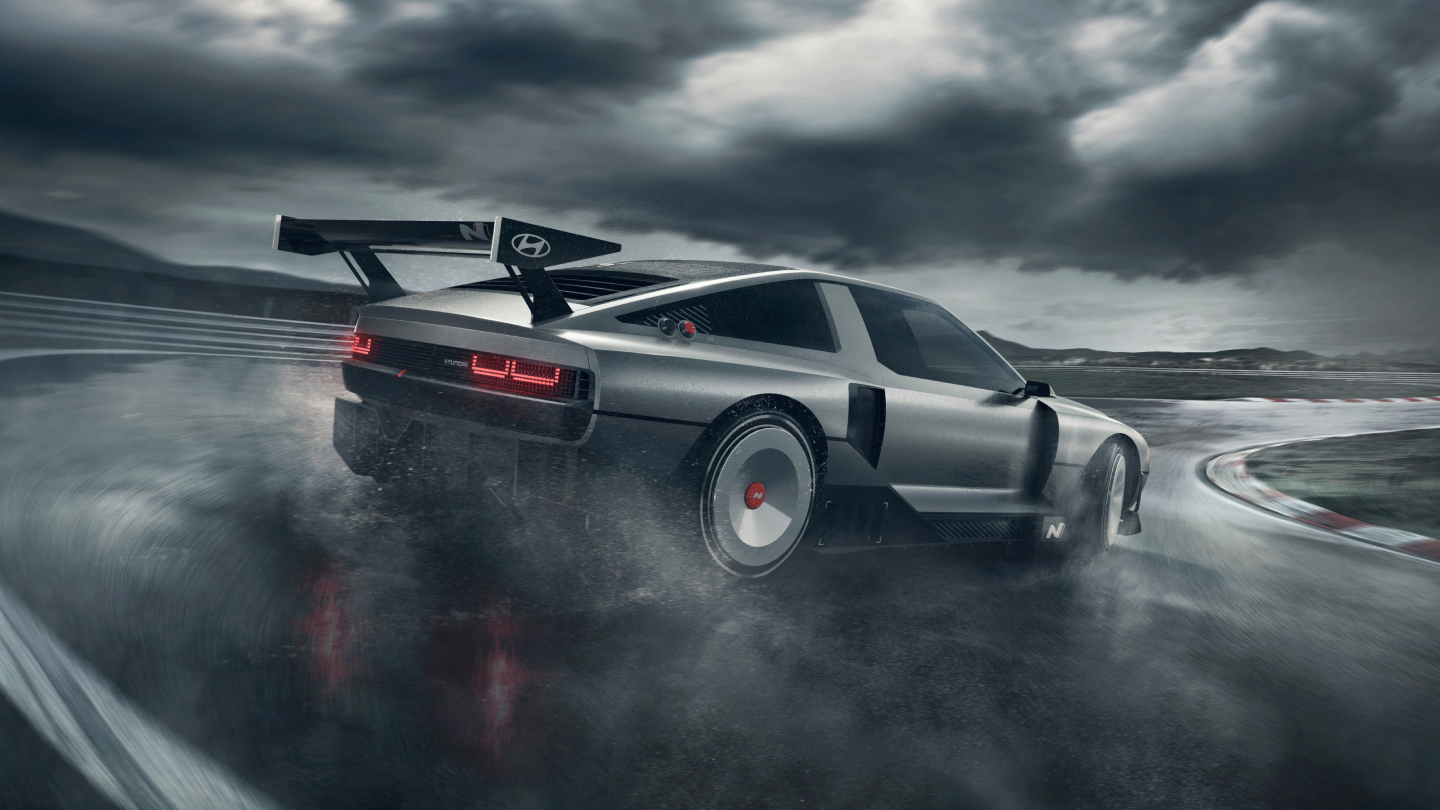
I was just on car TikTok and saw a video by Benedict Townsend that perfectly captures my fascination and frustration with concept cars. It opens: “Hey, we just designed the perfect car ever. It’s literally your dream car. When can you drive it? Oh, uh, never.” Then he adds, “You are never allowed to drive it.” Talk about a depressing video to see while scrolling at midnight. Instead of sleeping, I felt I had to write about this injustice.
Every year, the ritual repeats itself with clockwork precision. Auto shows roll around, and suddenly the internet explodes with breathless coverage of the latest concept car, a vision of automotive perfection that looks like it rolled straight out of a sci-fi movie and onto the showroom floor of our dreams. We ooh and ahh over the gullwing doors, the holographic dashboards, the uniquely aggressive body, the promise of a breakneck top speed. Then, inevitably, comes the crushing reality. There’s no mention of a release date. It’s like they’re just showing off what they could do if they wanted to make cars exciting again. If they weren’t so busy making EV SUVs.
I don’t know if I can stand it anymore.
What Are Concept Cars, Anyway?
Image Credit: Thesupermat, CC BY-SA 4.0 / Wikimedia Commons.Concept cars are essentially automotive fantasies made manifest. These are typically one-off or extremely low-volume vehicles that manufacturers create to showcase new technologies, design directions, or simply to flex their creative muscles. Think of them as the fashion industry’s haute couture, but with horsepower. They’re the BMW Vision Next 100 with its ‘Alive Geometry’ concept—adaptive surfaces and lighting intended to communicate with the driver and other road users, the Mercedes-Benz Vision AVTR, which demonstrated biometric interaction—Mercedes said it could recognize occupants by their heart rate, or the Lamborghini Terzo Millennio that looks like Batman’s weekend ride.
These aren’t just pretty shells, either. Some concept cars are fully functional vehicles, while others are rolling prototypes or design studies built to showcase specific technologies. They feature advanced materials, experimental powertrains, and user interfaces that make your smartphone look positively medieval. In other words, they’re often exactly what we want to be driving — if only the suits in the boardroom would let us.
The Method to the Madness
Image Credit: betto rodrigues / Shutterstock.com.To be fair to the automakers (if I have to be), there are legitimate reasons why concept cars exist in this automotive purgatory. First and foremost, they’re marketing gold. A stunning concept car generates more buzz than a dozen press releases about improved fuel efficiency. They get people talking, create brand excitement, and plant seeds for future sales.
Concept cars also serve as testing grounds for new ideas. They allow engineers to experiment with radical designs and technologies without the pressure of mass production constraints. It’s easier to justify spending millions on a wild experiment when you’re only building one, rather than tooling up a factory to build 100,000 units.
So why not make these concept cars available? They excite us and they inspire the market…. What’s the issue? Well, there’s the practical reality of regulations and safety standards. That gorgeous concept with the glass-heavy or transparent roof structures and suicide doors? It would need to survive a complex gauntlet of crash tests, emissions standards, and pedestrian safety regulations that could turn your dream machine into a regulatory nightmare.
And let’s be real: most of us can’t afford these things because they’re either too expensive or too niche for mass market appeal. Take the BMW Vision M Next, a hybrid supercar that looks like it could outrun any existing supercar. BMW absolutely has the technical capability to build it, but the business case for a limited-production hybrid supercar at the very top of BMW’s pricing hierarchy apparently doesn’t compute in spreadsheet land.
Meanwhile, we’re stuck with the automotive equivalent of vanilla ice cream. Sure, the new Toyota Camry is reliable and efficient, but where’s the passion? The excitement? Where’s the vehicle that makes us feel like we’re living in the future instead of commuting through it?
A Modest Proposal
Image Credit: Porsche.However, at the end of the day, we’re being shown automotive perfection, then told we can’t have it. It’s like being invited to the world’s most exclusive restaurant, shown the most incredible dish, and then being served a gas station sandwich.
The automotive press doesn’t help matters. Every concept car reveal is treated like the second coming of the wheel, complete with breathless speculation about “production possibilities” and “future design language.” We dissect every curve and analyze every detail, building up hope that maybe — just maybe — this time will be different.
But it never is. The concept car makes its rounds at auto shows, gets photographed from every conceivable angle, and then disappears into a corporate museum or private collection, leaving us with nothing but fond memories and a persistent sense of aching for something that will never be.
Here’s a radical idea: What if automakers actually produced some of these concept cars? Not all of them, obviously — some are genuinely too impractical or experimental. But many concepts could be viable as limited-edition models for enthusiasts willing to pay premium prices.
Take a page from the fashion industry’s playbook. High-end fashion houses regularly produce limited quantities of their more adventurous designs. They’re expensive, exclusive, and profitable precisely because they’re not mass market. Ferrari has built an empire on this model, producing beautiful, impractical cars for people who want something special.
The technology exists to make small-batch production economically viable. 3D printing, advanced manufacturing techniques, and direct-to-consumer sales models could make it possible to produce concept cars in limited quantities without the massive infrastructure investments typically required.
Beyond the Showroom
Image Credit:Matti Blume – Own work, CC BY-SA/Wiki Commons.The benefits extend beyond just satisfying our automotive daydreaming. Limited production of concept cars would accelerate the adoption of new technologies. Real-world testing and feedback from actual owners would provide invaluable data for future development. Plus, it would give automakers a new revenue stream from enthusiasts who are currently underserved by the mainstream market.
Imagine if Mercedes had actually produced the Vision AVTR, or if Audi had made the e-tron GT concept available before watering it down for mass production. These cars would become rolling laboratories, advancing automotive technology while giving enthusiasts the futuristic vehicles they crave.
I feel like I’m begging at this point, but it’s time for automakers to stop treating concept cars as elaborate marketing stunts and start seeing them as business opportunities. There’s a market of enthusiasts ready to pay premium prices for something genuinely special — something that makes us feel excited about driving again.
We don’t need every concept car to reach production. But throwing us a bone once in a while would go a long way toward rebuilding the emotional connection between automakers and the people who actually care about cars. Give us the option to put our money where our automotive dreams are.
Until then, we’ll keep showing up to auto shows, getting our hopes up, and inevitably leaving disappointed. We know the cars that will actually make it out of the convention and into the lots will be another beige, soulless box with a massive touchscreen. But we’ll keep dreaming about that impossibly sporty and impressive supercar that we’ll probably never see again.
So whatever, BMW. Go off, give us nothing!