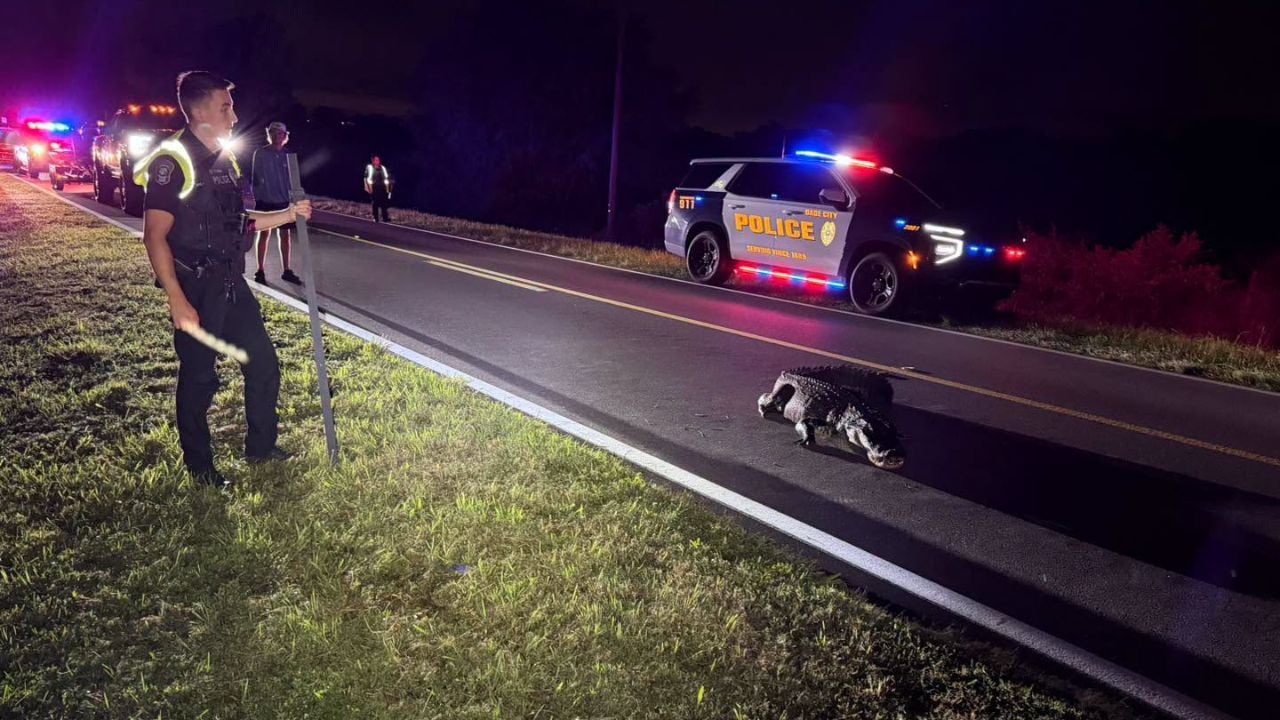
Dade City police said they were called about a pedestrian blocking traffic. To their surprise, when they arrived, they found a four-legged “pedestrian” with lots of teeth.
The police faced an unusual traffic problem Friday night when an alligator wandered into the road and held up drivers.
Police shared the call in a Facebook post the next day. The gator was still in the roadway when officers arrived, but they got it to head back toward the water.
The department did not share which road this happened on or how long traffic was backed up.
Police Called It a Pedestrian Violation
Embedded media follows. Please allow a moment for it to load.
Dade City police labeled the post “Pedestrian Violation” and said that officers had a “brief conversation” with the alligator.
The department joked that the gator was advised to “gator” back to the water and clear the roadway. They wrote in the post, “No citations were issued, but the suspect was warned that future violations could result in a relocation.”
Florida Has About 1.3 Million Alligators
The Florida Fish and Wildlife Conservation Commission estimates about 1.3 million alligators live in Florida, and they are found in all 67 counties.
FWC says they can live anywhere in the state with enough wetland habitat, food and shelter.
Alligators are most active between dusk and dawn, so a nighttime road crossing is not completely out of character. FWC also says serious alligator injuries are rare in Florida.
FWC Usually Does Not Relocate Nuisance Gators
If an alligator is causing problems around people, FWC has a statewide nuisance alligator program.
The agency generally considers a gator a nuisance when it is at least four feet long, and someone believes it poses a threat to people, pets or property. People can report one by calling 866-FWC-GATOR.
FWC says nuisance alligators generally aren’t moved elsewhere because they often try to return to where they were captured. They add that releasing them in another remote area can also create problems with alligators already living there.