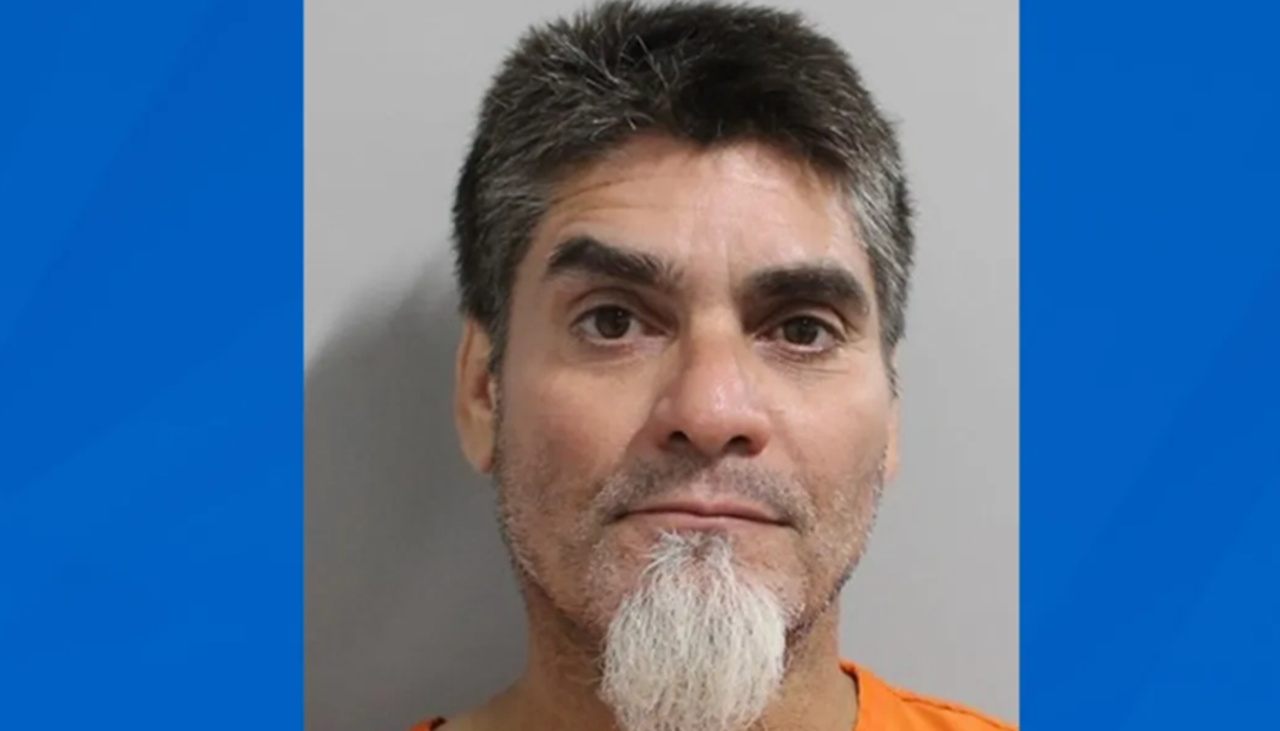
A Polk County driver with a rap sheet that reads more like a traffic court cautionary tale was pulled over on June 11 doing 100 miles per hour on a 60 mph stretch of Highway 27 in Lake Wales. The vehicle was a BMW sedan. The driver had a blood alcohol level he apparently preferred to keep to himself, given his refusal to submit to a breath test. And his license? Revoked since 2022.
Joseph Olivera was taken into custody by the Polk County Sheriff’s Office after a deputy watched him weave aggressively across three lanes of traffic, forcing other drivers to brake hard and swerve out of his path. The traffic stop revealed what can only be described as a comprehensive collection of legal problems: 13 active suspensions covering DUI offenses, breath test refusals, unpaid citations, failure to appear for court summons, and failure to pay child support. At some point this stops being a driving record and starts being a lifestyle.
Open containers of alcohol were found inside the vehicle. Olivera showed visible signs of impairment, declined to blow into the breathalyzer, and was charged with a subsequent DUI offense, driving on a suspended or revoked license, breath test refusal, and dangerous excessive speeding. Sheriff Grady Judd, who rarely minces words, put it plainly: “It’s miraculous he hasn’t killed someone else or himself with his history of DUI charges and illegal driving.” He also made an unusual public request, asking anyone who spots Olivera behind the wheel to call 911 immediately.
The case is newsworthy not because drunk drivers getting arrested is rare, but because what Olivera managed to accumulate while continuing to operate a vehicle on public roads raises serious questions about how much the existing system is actually doing to keep repeat offenders off the pavement. Thirteen suspensions. A revoked license. Multiple DUI charges. And still behind the wheel of a BMW doing a hundred miles an hour. That is not a system working as designed.
What “Habitual Traffic Offender” Actually Means in Florida
Florida Statute 322.264 defines a habitual traffic offender as anyone who racks up three or more serious traffic convictions within a five-year window. That designation carries felony-level consequences, including up to five years in prison and fines reaching $5,000. It also triggers an automatic license revocation. When a person accumulates multiple traffic-related convictions including DUI offenses within a specific period, they may be designated a habitual traffic offender, resulting in a five-year driver’s license revocation.
Olivera’s license had already been revoked since 2022. Being caught driving on a revoked license under habitual offender status is itself a third-degree felony in Florida. Repeated offenses such as driving with a suspended license can escalate charges to third-degree felonies. None of that appears to have functioned as a deterrent here.
The Breath Test Refusal Is Its Own Problem
Olivera’s decision to decline a breathalyzer test is worth noting. In Florida, refusing to submit to a breath sample is treated as a separate offense and is one of the suspensions listed against him. Any person convicted of a third DUI within 10 years of a prior conviction, or a fourth or subsequent DUI, is guilty of committing a third degree felony subject to not more than a $5,000 fine and five years imprisonment.
Repeat refusals compound the legal exposure significantly, and in Olivera’s case, refusal is apparently already baked into his history. He had an open-container situation, signs of impairment, and still declined to cooperate. That calculus presumably made sense to him in the moment.
What Happens to Repeat Offenders Who Keep Driving Anyway
Here is where the frustration behind Sheriff Judd’s comments becomes easy to understand. Florida’s framework for habitual traffic offenders is not toothless on paper. Those caught driving while their license is revoked under the habitual offender law may be charged with a third degree felony, carrying a penalty of up to five years in prison and a $5,000 fine.
Reinstatement after revocation requires petitioning the Department of Highway Safety and Motor Vehicles, completing alcohol treatment, participating in DUI supervision programs, and in many cases installing an ignition interlock device on any vehicle used. These devices require the driver to pass a breathalyzer test before starting the vehicle and are often mandated for repeat offenders as a condition of license reinstatement.
The problem is that none of these requirements mean anything to a driver who simply ignores the revocation and gets back in the car anyway.
A BMW at 100 MPH Is Not a Minor Detail
It is worth spending a moment on the vehicle choice. A BMW sedan capable of 100 mph on a two-lane highway corridor is not a slow car operated at low speed. Highway 27 in Polk County runs through populated areas with intersections, businesses, and cross traffic. Three lanes of cars braking and swerving to avoid a drunk driver doing 100 is not a near miss. It is a catastrophe that did not happen.
Sheriff Judd’s choice of the word “miraculous” was not hyperbole. It was the accurate word for the situation, and the public request to call 911 on sight suggests law enforcement is not particularly optimistic this was the last chapter of the story.