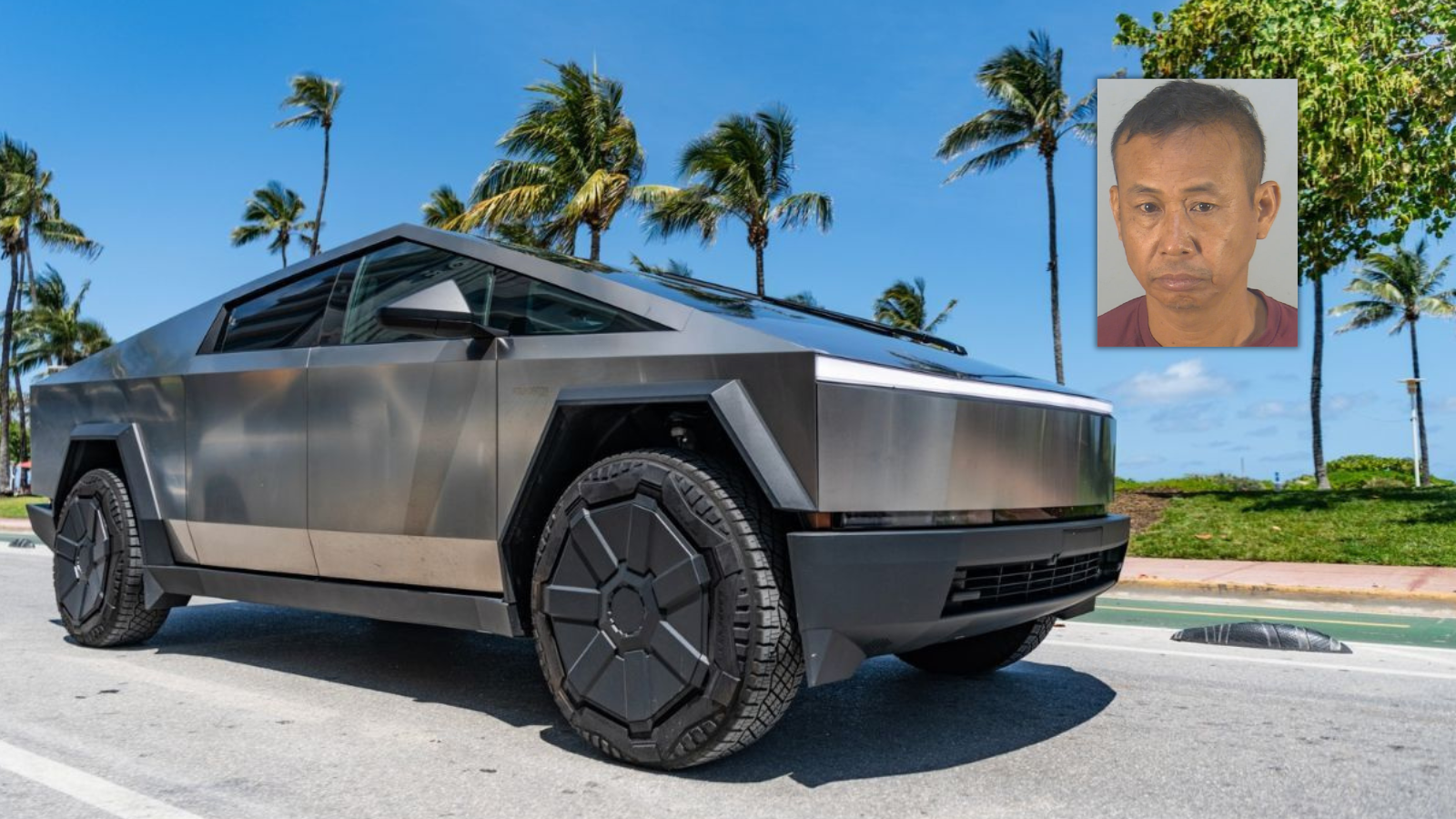
A Florida man accused of driving under the influence insisted he wasn’t driving at all. His Tesla Cybertruck was doing that for him. The explanation came after another motorist reported that the truck had crossed into oncoming traffic, forcing him onto the grass to avoid a collision.
Leesburg police arrested Quyen Thanh Le, 53, on September 15, 2026, after finding him alone in the Cybertruck. Officers reported smelling alcohol and observing slurred speech, while Le acknowledged drinking three small bottles of Corona. He maintained that his vehicle was driving itself, even after an officer explained that Tesla’s technology still required an attentive driver.
Le reportedly responded that police were “overreacting.” He was charged with DUI and refusing to submit to a lawful chemical test, and court records show he pleaded not guilty to both charges.
The arrest raises a question extending well beyond one driver’s explanation. Although the police records do not establish whether Full Self-Driving (Supervised) was engaged, could technology that handles much of the driving task encourage people to get behind the wheel after drinking, even when they remain legally responsible for operating the vehicle?
The Cybertruck Had an Explanation
Police initially responded to a Cybertruck stopped near Newell Hill Road and Shady Trail around 8 p.m. A caller described a man sitting inside the running vehicle who appeared to be slurring his words. Another motorist reported that the northbound Cybertruck had entered his lane, forcing him off the pavement.
Officers subsequently located the truck near U.S. Highway 441 and followed it into a subdivision, where it stopped partially on the grass of a driveway.
Le explained that his phone, sitting in the center console, served as the vehicle’s key. He insisted the Tesla was driving itself and that he was not its driver.
He refused field sobriety exercises, and attempts to obtain a valid breath sample were unsuccessful. Police ultimately recorded the test as a refusal, leaving no measured blood-alcohol concentration in the court records.
The arrest affidavit documents Le’s statements but contains no confirmation that officers examined the vehicle’s automated-driving settings or obtained Tesla telemetry. Whether FSD was operating remains unknown.
A Designated Driver With a Steering Wheel
The idea of allowing Tesla’s technology to handle the trip home after drinking has been circulating for years.
In 2022, InsideEVs examined footage apparently showing a driver asleep while using Autopilot, noting earlier reports of owners treating the system as a designated driver. The footage did not conclusively establish whether the driver was sleeping, but it illustrated how readily assistance technology could be mistaken for autonomous operation.
The conversation became more explicit in September 2025, when Jalopnik covered a podcast discussion involving YouTube personality Landon Bridges and comedian Bert Kreischer.
Bridges described selecting a destination and letting his Tesla handle the journey while he kept looking forward. Jalopnik challenged the suggestion that Autopilot could serve as a designated driver, pointing out that operating a vehicle while intoxicated remained illegal regardless of its driver-assistance capabilities.
The People Already Taking the Chance
In a July 2026 Texas Monthly investigation, Lauren Larson examined whether automated vehicles might change drunk-driving behavior after accepting a ride from a Tesla owner who reassured her that his car could handle the driving following an evening involving alcohol.
Larson interviewed Austin Police Department Lt. William White, who said local DWI specialists had not observed that drivers of partially automated vehicles were more likely to drive impaired. He nevertheless considered it plausible that people would exploit the technology.
Dallas DUI attorney Deandra Grant described a client who, after drinking, insisted he hadn’t driven because FSD had operated his Tesla while leaving a parking lot.
Tesla owners have also discussed changing their transportation habits. In a Reddit conversation titled “Drunk driving predictions” on r/TeslaFSD, one commenter claimed to have previously used Uber after dinners involving wine pairings but now relied on FSD for the journey home. Another described acquaintances using the technology following wine-country outings.
These anonymous accounts cannot establish whether anyone was legally intoxicated, and their accuracy remains unverified. They do, however, suggest that some owners are factoring automated driving into decisions that previously involved finding alternative transportation.
That possibility raises a difficult safety question. FSD might reduce certain errors an impaired driver would make while operating a conventional vehicle, yet its availability might also encourage additional people to drive after drinking. Without reliable comparative evidence, neither the safety benefit nor the potential increase in risk can be quantified.
Watching the Road Isn’t Enough
Tesla’s Cybertruck owner’s manual explains that Full Self-Driving (Supervised) can manage steering, acceleration, braking, lane changes, intersections, and navigation while requiring continuous driver supervision.
An interior camera monitors attentiveness, with escalating warnings when the driver appears distracted. If those warnings go unanswered, the system can disengage and attempt to bring the vehicle to a stop.
Those safeguards address observable inattention, but alcohol impairment presents a more complicated problem. Someone may remain conscious, watch the roadway, and respond to warnings while suffering impaired judgment or diminished reaction time.
Tesla’s published documentation does not establish that its attentiveness monitoring can reliably recognize such impairment. A driver might therefore satisfy the system’s monitoring requirements without being capable of safely intervening when FSD encounters a situation it cannot handle.
The company also cautions that FSD can make unexpected maneuvers requiring immediate human intervention.
Regardless of the technology’s operating mode, Florida law prohibits driving or being in actual physical control of a vehicle while impaired. Supervised automation provides no automatic exemption.
Le’s case cannot establish whether FSD encouraged his decision to drive or contributed to the reported movement into oncoming traffic. It does demonstrate how readily a driver can invoke automated technology when questioned about responsibility behind the wheel.
Someone Called Florida
The possibility of a driver making precisely that argument was anticipated before Le’s arrest.
When Jalopnik published its September 15, 2025, article about Tesla’s technology serving as a supposed designated driver, one reader wondered what would happen if someone tried using it to explain away a DUI.
The following day, September 16, the commenter made a prediction:
I’m sure we will hear about such a case soon…probably from Florida.
On September 15, 2026, one day short of a year later, Leesburg police arrested a Cybertruck driver who repeatedly insisted that his vehicle was driving itself.
The prediction was off by a day.
The state was right.
All parties are presumed innocent unless and until proven guilty in a court of law.