Electric vehicles have completely rewritten the performance rulebook. Thanks to instant torque delivery and sophisticated power management systems, today’s quickest EVs can embarrass supercars that cost twice as much, all while producing zero tailpipe emissions.
Here are the fastest-accelerating electric vehicles you can actually buy.
Note: 0–60 mph times vary by test method (including 1-ft rollout), conditions, tires, battery state, and whether the figure is manufacturer-claimed or independently tested.
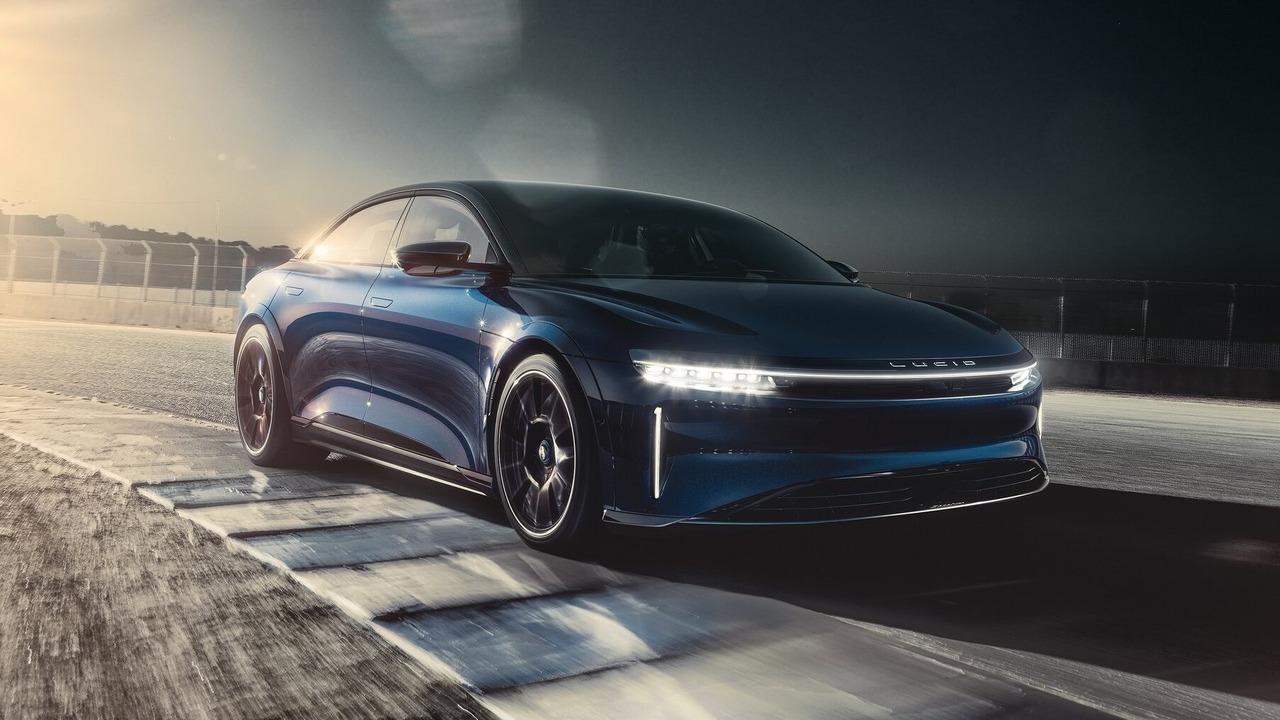
Lucid Air Sapphire: 1.89 seconds

The Lucid Air Sapphire isn’t just fast for an EV; it’s one of the quickest production cars ever made. Period. With three motors producing a combined 1,234 horsepower, this luxury sedan hits 60 mph in a blistering 1.89 seconds.
What makes it even more impressive is that it’s also rated at up to 427 miles (EPA estimated), proving you don’t have to sacrifice range for speed.
Rimac Nevera: 1.85 seconds

The Croatian hypercar delivers nearly 1,900 horsepower through four electric motors, making it one of the fastest-accelerating production EVs on the planet. At $2.4 million, it’s also one of the most exclusive, with only 150 units planned.
The Nevera’s claimed top speed is 412 km/h (about 256 mph), which is almost absurd for an electric vehicle.
Aspark Owl: 1.69 seconds
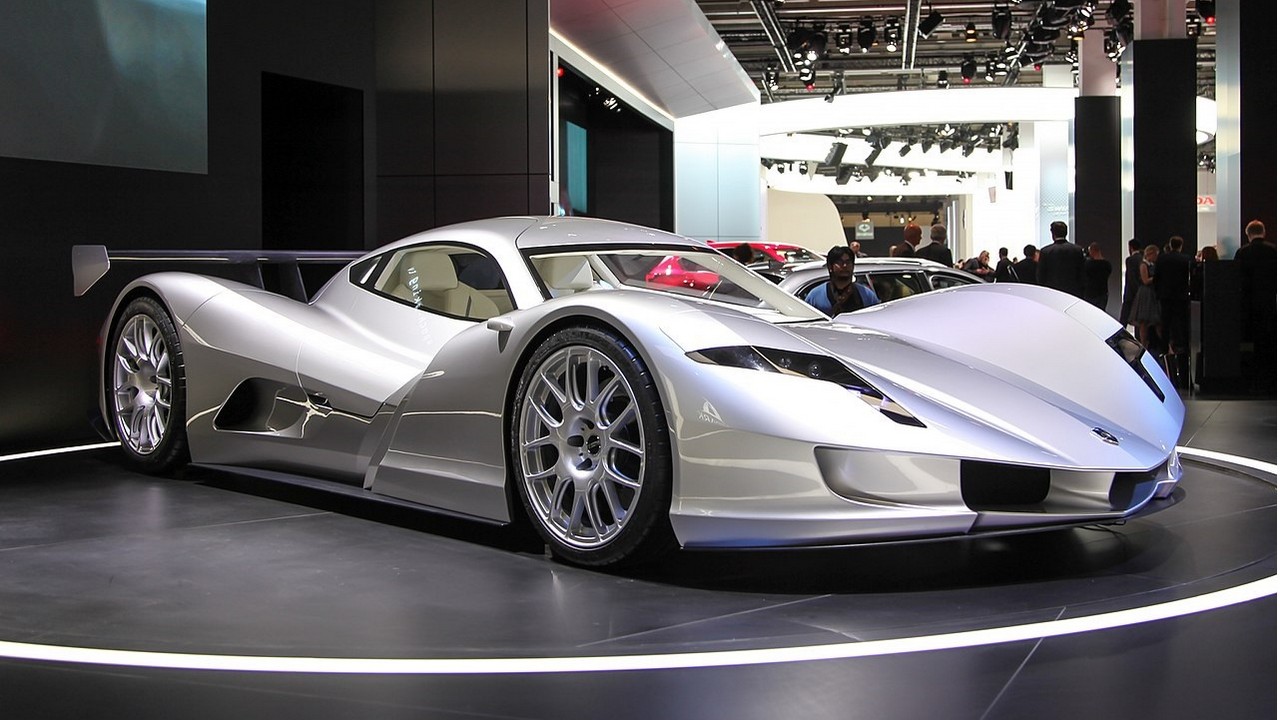
This Japanese hypercar claims a 1.69-second 0–60 mph time, though figures like this can vary by testing method and verification, though its limited production run makes it more of a technological showcase than a real-world option. With 1,985 horsepower and a $3.2 million price tag, it’s designed to push the absolute limits of EV performance.
Only 50 will be built worldwide.
Tesla Model S Plaid: 1.99 seconds
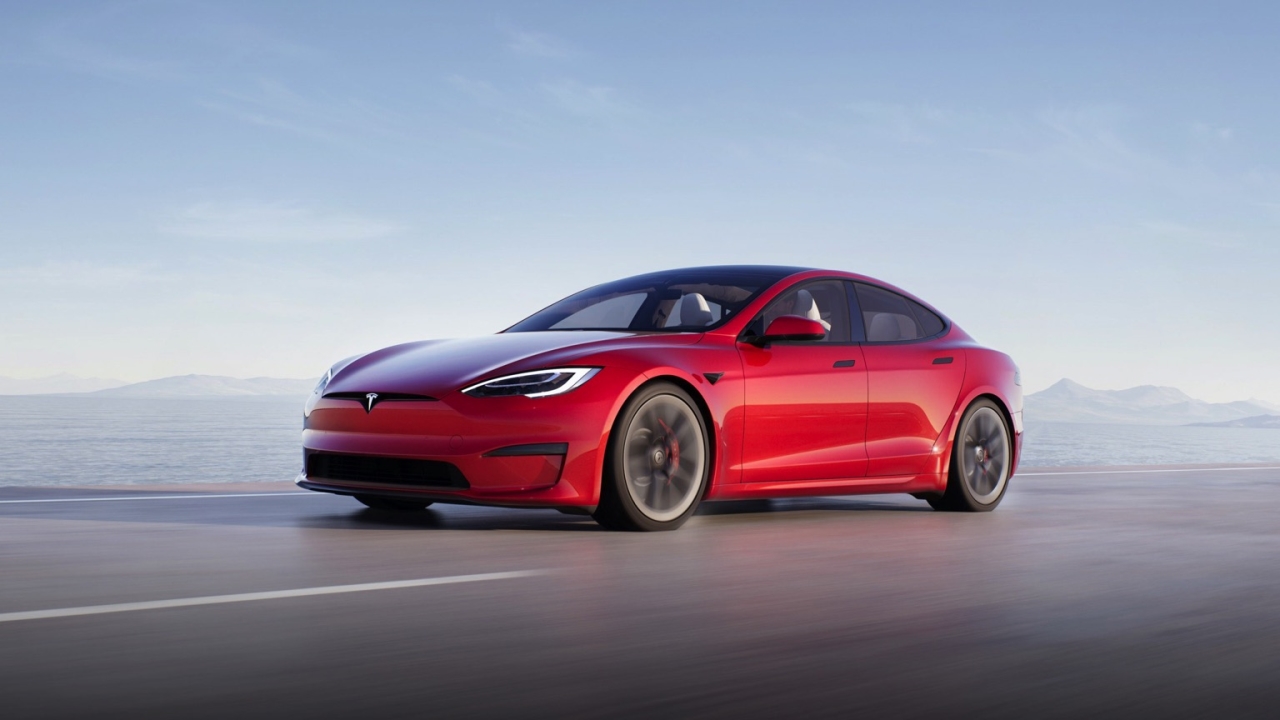
Tesla’s flagship sedan offers supercar performance at a (relatively) accessible price point of around $110,000, depending on configuration. The tri-motor setup produces 1,020 horsepower and includes a legitimate 200-mph top speed, making it one of the fastest sedans ever built.
It’s also genuinely practical as a daily driver, with seating for five and a decent cargo area.
Porsche Taycan Turbo S: 2.6 seconds

Porsche’s approach to electric performance focuses on repeatability and handling rather than just straight-line speed. The Taycan Turbo S can launch over and over without overheating, which is something many EVs struggle with.
It also drives like a proper Porsche, with sharp steering and excellent body control through corners.
BMW iX M60: 3.6 seconds

BMW’s electric SUV proves that high-riding family haulers can still be seriously quick. The iX M60 combines up to 610 horsepower with adaptive air suspension that can lower the vehicle for better aerodynamics at speed.
It’s an interesting example of how EVs are blurring the lines between different vehicle categories.
Mercedes-AMG EQS 53 4MATIC+: 3.4 seconds
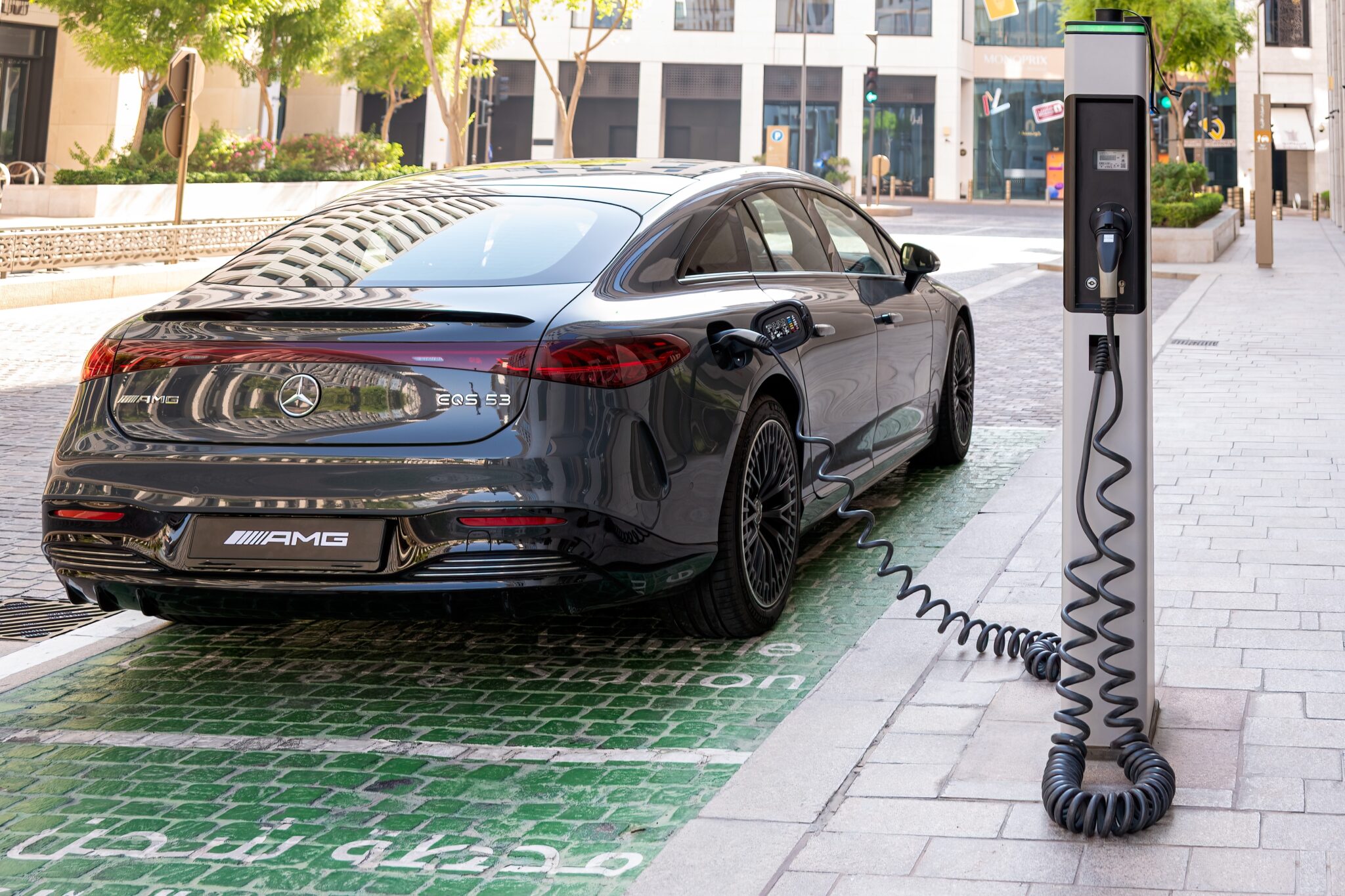
Mercedes brings its AMG performance brand to the electric luxury sedan segment with impressive results. The EQS 53 can boost its output to 751 horsepower temporarily, which is enough to move a roughly 5,800-pound luxury sedan.
The interior is probably the most luxurious on this list, with rear-seat accommodations that rival the S-Class.
Rivian R1T: as quick as 2.5 seconds (Quad-Motor, Launch mode / 22” Super Sport wheels)

The fact that a full-size pickup truck can hit 60 mph in 2.5 is pretty remarkable. Rivian’s quad-motor setup puts a motor at each wheel, enabling precise torque vectoring that helps the roughly 6,500–7,000-pound truck (varies by configuration).
It’s genuinely capable off-road too, which makes it one of the most versatile vehicles here.
Lotus Evija: under 3.0 seconds to 60 mph (claimed)

Lotus is taking a big swing with its first EV, promising about 2,000 horsepower from a four-motor setup. The company claims the Evija will weigh just over 3,700 pounds, which would make it the lightest car on this list by a significant margin.
Production has been limited to 130 examples, and delays have been an issue, but the specs suggest it’ll be worth the wait for its appearance alone.
Audi e-tron GT RS: 2.9 seconds

Built on the same platform as the Porsche Taycan, the Audi offers similar performance with a different flavor. The e-tron GT RS emphasizes grand touring comfort while still delivering up to 637 horsepower with boost/launch control and genuinely engaging driving dynamics.
It’s one of the best-looking EVs on the road, with styling that actually improves on the concept car.
GMC Hummer EV: 3.0 seconds

At over 9,000 pounds, the Hummer EV is by far the heaviest vehicle here, and GMC claims 0–60 mph in ~2.8 seconds for the HUMMER EV Pickup 3X with Watts to Freedom. The “WTF Mode” (Watts To Freedom, officially) is both ridiculous and genuinely impressive from an engineering standpoint. I
It’s proof that American automakers can build compelling EVs, even if the execution is a bit over-the-top.
Hyundai Ioniq 5 N: 3.4 seconds (0–62 mph, claimed)

Hyundai’s performance division brings hot hatch energy to a compact crossover with great results. The Ioniq 5 N includes simulated gear shifts and engine sounds, which might seem silly but actually make the driving experience more engaging.
At around $68,000 expected, it’s one of the most accessible performance EVs that can hit 60 mph in three seconds.
The Electric Performance Revolution

The speed wars in the EV segment are just getting started, with new contenders arriving regularly. What’s particularly interesting is how these performance numbers are trickling down to more affordable models. A few years ago, a three-second 0-60 time was supercar territory, and now you can get it in a family SUV.
As battery technology improves and motors become more efficient, we’ll likely see even more impressive numbers in the coming years.
Note: there are also ultra-low-volume variants and newer trims (e.g., Taycan Turbo GT) that can match or beat some of these times depending on testing.