Across Europe, modernization has reshaped cities and towns at a relentless pace, often erasing the physical traces of earlier centuries. Yet hidden beyond major highways and tourist circuits are villages that seem to have resisted time entirely. In these places, medieval streets remain narrow and uneven, stone houses lean gently with age, and daily life unfolds much as it did hundreds of years ago. The past isn’t reconstructed here, it’s still being lived.
What makes these villages extraordinary isn’t just their architecture, but their rhythm. There are no glass towers interrupting the skyline, no neon signs demanding attention, and no sense of urgency. These villages offer a rare opportunity to experience Europe as it once was, where history feels tangible and present. Here are 12 European villages where time appears to have stopped half a millennium ago.
Albarracín, Spain

Albarracín clings dramatically to a rocky hillside in eastern Spain, wrapped in ancient defensive walls that have barely changed since the Middle Ages. Its narrow streets twist upward between pink-hued stone houses, many still supported by original wooden beams. The town’s layout feels organic, shaped by centuries of foot traffic rather than modern planning. From nearly every angle, Albarracín looks like a medieval painting.
Life here unfolds slowly and deliberately. Locals still gather in small plazas, shops close for midday breaks, and evenings are quiet and communal. Modern intrusions are minimal, allowing the village to retain a deeply authentic atmosphere. Even the silence feels historic.
What makes Albarracín feel frozen in time is its isolation. Development passed it by, leaving traditions intact and architecture untouched. Visiting feels less like tourism and more like stepping into another century. It’s a place where the past remains comfortably alive.
Eguisheim, France

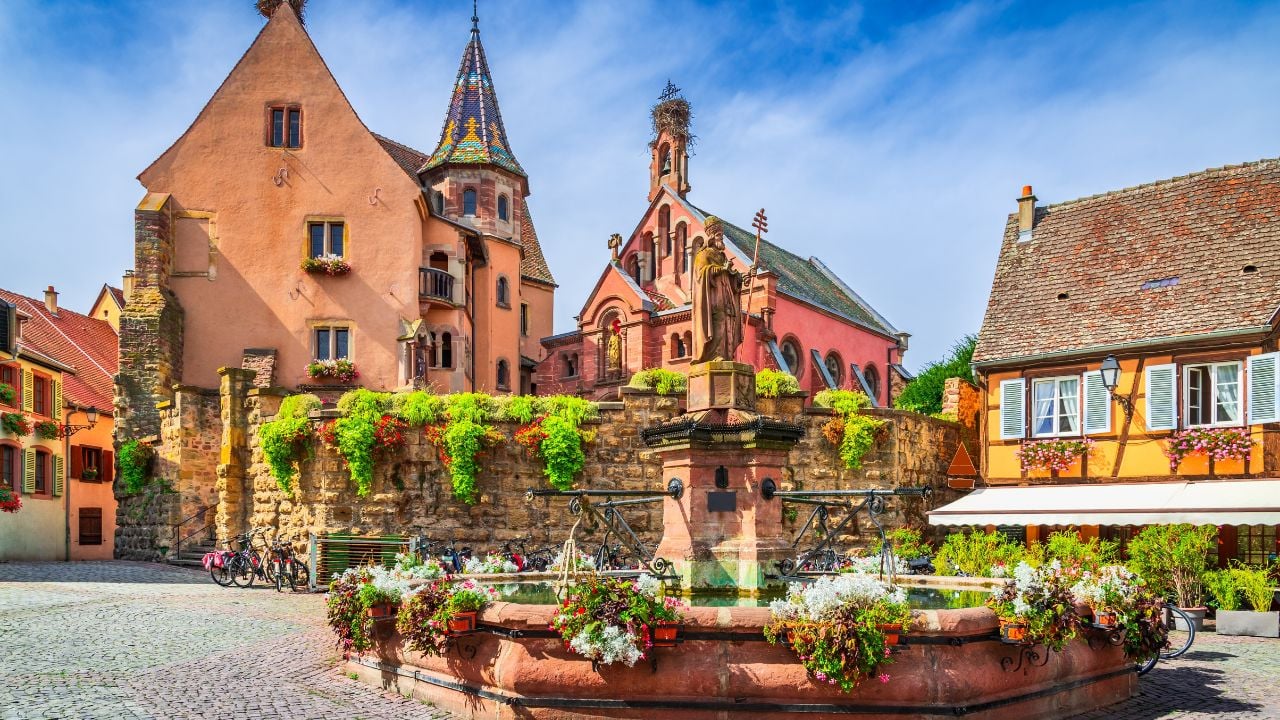
Eguisheim sits quietly in France’s Alsace region, arranged in concentric circles that date back to medieval fortifications. Half-timbered houses painted in soft pastels line cobblestone streets, each adorned with flowers that soften the village’s ancient geometry. The layout hasn’t changed in centuries. Walking through it feels choreographed by history.
Daily life here follows rhythms established long ago. Wine production still shapes the economy, meals remain leisurely, and neighbors greet each other by name. The village feels lived-in rather than curated, despite its beauty. Nothing feels rushed or artificial.
Eguisheim’s power lies in continuity. Families have lived here for generations, maintaining traditions without spectacle. The village hasn’t been preserved, it has simply endured. Time didn’t stop here because it had no reason to move on.
Civita di Bagnoregio, Italy

Civita di Bagnoregio rises from a volcanic plateau, accessible only by a narrow pedestrian bridge. Surrounded by eroding cliffs, the village feels suspended between earth and sky. Stone houses, medieval arches, and a central piazza remain largely unchanged since the Renaissance. The isolation is total and intentional.
With only a handful of permanent residents, life here is quiet and contemplative. Bells mark the passage of time, not clocks or schedules. Daily routines feel deeply connected to place and tradition. Silence is part of the experience.
Civita feels frozen not by design, but by geography. Its fragile setting prevented modernization and protected its character. Walking its streets feels like borrowing time from the past. It’s Europe distilled to its essence.
Hallstatt, Austria

Hallstatt sits between a lake and steep alpine cliffs, its medieval core squeezed gently by geography. Wooden balconies overflow with flowers, and narrow lanes follow paths set centuries ago. The village’s visual harmony feels untouched by modern trends. Every building belongs.
Despite its postcard beauty, daily life here remains grounded. Fishing traditions continue, church bells mark time, and the pace remains slow. Modern conveniences exist quietly in the background. The village refuses to rush.
Hallstatt’s timelessness comes from balance. Nature dictates limits, and residents respect them. The result is a place that feels carefully inherited rather than reinvented. Time lingers here by choice.
Monsanto, Portugal

Monsanto is built directly into massive granite boulders, with houses wedged between stones and roofs shaped by rock formations. The village’s streets wind upward organically, shaped by terrain rather than planning. Many structures date back to the medieval period. The landscape itself feels ancient.
Life in Monsanto feels elemental. Stone dominates everything, walls, paths, and homes. The village’s simplicity reflects centuries-old survival strategies. Modern design never found a foothold here.
Monsanto feels timeless because it never separated from nature. Human life adapted to the land rather than reshaping it. The village stands as proof that endurance can be beautiful. Time didn’t stop here, it settled in.
Rothenburg ob der Tauber, Germany
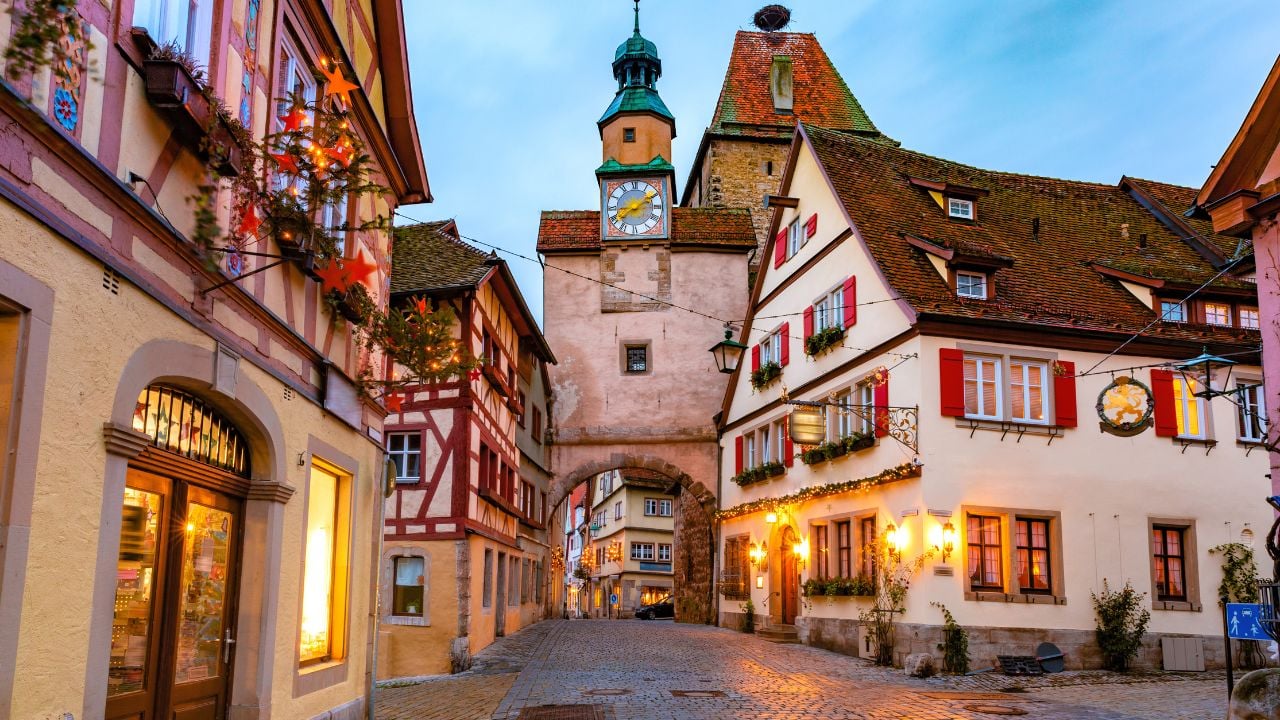
Rothenburg’s medieval walls still encircle the town exactly as they did centuries ago. Timber-framed houses line streets that curve gently with the terrain. Towers, gates, and rooftops create a skyline untouched by modern height or glass. The town feels sealed in time.
Inside the walls, life moves at a human pace. Shops remain small, streets stay walkable, and evenings feel quiet and reflective. Despite visitors, the town retains authenticity. The structure of daily life remains intact.
Rothenburg survived wars and modernization largely unscathed. Preservation here wasn’t an afterthought, it was a priority. The town feels like a living archive. Time lingers with intention.
Pals, Spain

Pals rises from the Catalonian countryside with a stone core that dates back to the 10th century. Its medieval tower, narrow streets, and arched passages remain intact. Stone dominates every surface. The village feels solid and grounded.
Life in Pals remains slow and community-centered. Residents value continuity over novelty. Meals stretch long into evenings, and public spaces remain central to daily life. Modernity feels distant.
Pals feels frozen because it never chased reinvention. The village values preservation through use, not display. It’s history lived daily. Time rests comfortably here.
Bibury, England

Bibury’s stone cottages line the River Coln, forming one of England’s most iconic medieval streets. Built from local limestone, the houses glow softly in changing light. The village’s layout remains unchanged for centuries. Everything feels cohesive.
Life here moves gently. Gardens are tended, walks are leisurely, and conversation feels unhurried. The village resists disruption. Modernity arrives quietly, if at all.
Bibury’s charm comes from restraint. Nothing has been added that doesn’t belong. The past feels present because it was never removed. Time lingers politely.
Riquewihr, France
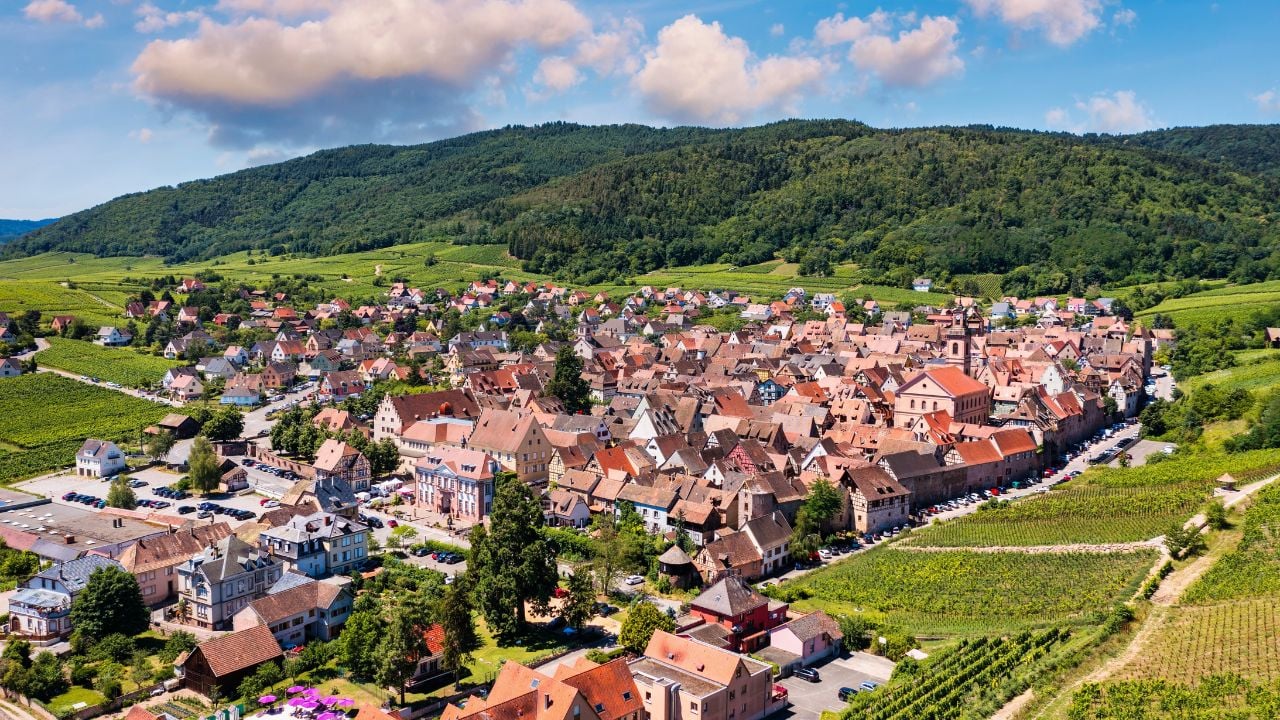
Riquewihr sits along the Alsace wine route, enclosed by medieval walls that still define its boundaries. Half-timbered houses lean slightly with age, painted in traditional colors. The streets follow medieval footprints. Change has been minimal.
Wine production shapes daily life much as it did centuries ago. Cellars remain active, family traditions continue, and seasons dictate rhythm. The village feels purposeful rather than preserved. History breathes here.
Riquewihr’s timelessness comes from continuity. The village evolved slowly, never abruptly. The past remains functional. Time didn’t stop, it matured.
Český Krumlov, Czech Republic

Český Krumlov curves along a river bend beneath a towering castle, its medieval core untouched by modern expansion. Cobblestone streets twist organically, revealing courtyards and hidden corners. Architecture spans centuries without disruption. The town feels enclosed in time.
Life unfolds within historic boundaries. Cafés occupy centuries-old buildings, and daily routines follow inherited patterns. Modern life adapts to old spaces. The town’s soul remains intact.
Český Krumlov avoided industrialization that reshaped other cities. Preservation happened through continuity, not restoration. The result is immersive. Time remains layered, not erased.
Oia (old quarter), Greece

Oia’s oldest quarter predates tourism, carved into volcanic cliffs above the Aegean. Cave houses, narrow paths, and whitewashed walls follow ancient logic. The village’s structure remains fundamentally unchanged. Light and stone define everything.
Daily life in the old quarter feels quiet and insular. Movement follows narrow paths, and spaces remain intimate. The scale is human, not commercial. Time feels suspended.
Oia’s timelessness survives despite attention. Its form resisted expansion. The past persists in shape and rhythm. Time stays because it fits.
Sighișoara, Romania

Sighișoara’s medieval citadel rises intact above the surrounding countryside. Colorful houses, watchtowers, and fortified walls remain functional and authentic. Streets follow original layouts. The village feels self-contained.
Life inside the citadel remains calm and structured. Traditions are respected, and modern intrusions are minimal. The town feels protected by its history. Daily life aligns with old rhythms.
Sighișoara’s power lies in preservation through use. The village wasn’t rebuilt, it was maintained. Time didn’t stop here accidentally. It was invited to stay.