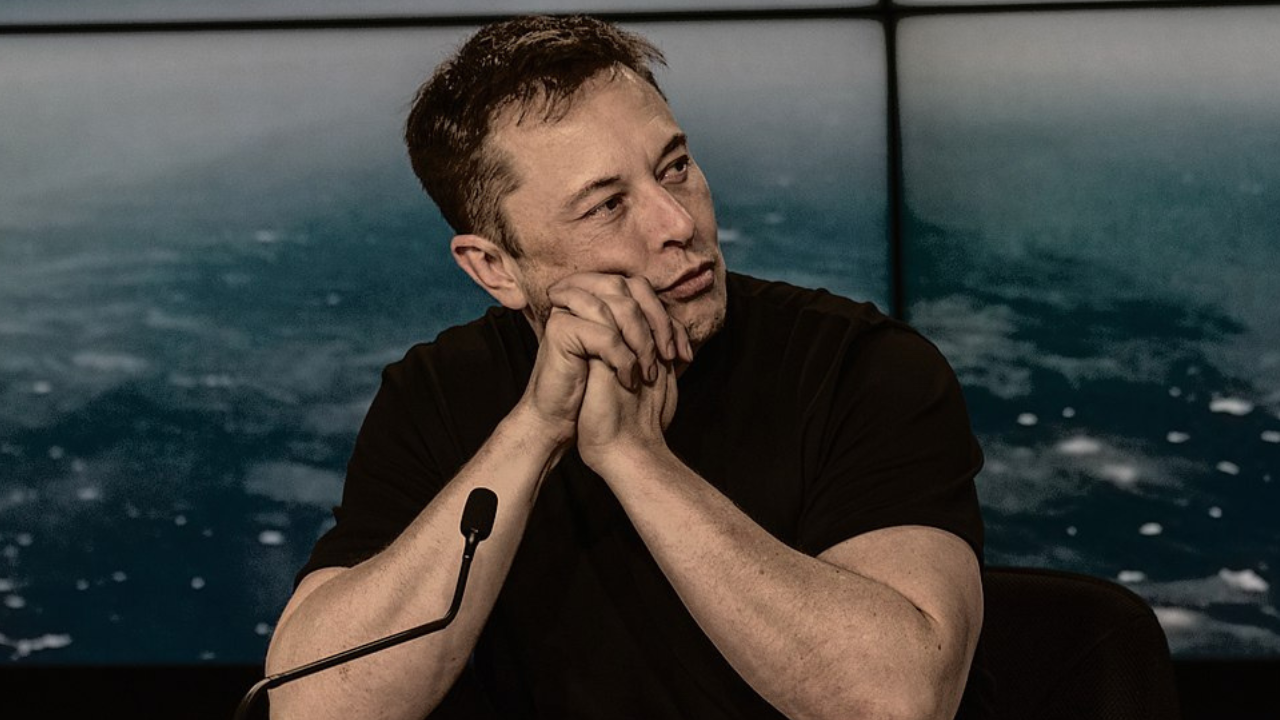

At the center of this story is a surprisingly public disagreement between Elon Musk, CEO of Tesla, and Andrej Karpathy, who until recently led Tesla’s AI and Autopilot efforts. According to The Times of India, Karpathy, now independent of the company, was asked in a social‑media‑amplified exchange about how Tesla’s Full Self‑Driving (FSD) compares to Waymo, Alphabet’s autonomous driving arm.
Karpathy praised both systems and suggested that at their current stage, they both feel like “perfect drives,” even likening Tesla’s FSD experience to riding on a magnetic levitation train — smooth, confident, and impressive.
Crucially, Karpathy did not declare Tesla definitively ahead of Waymo. He framed the differences as subtle and emergent at scale, a nuanced answer that stopped short of picking a clear winner and acknowledged the strengths of both approaches.

Musk, for his part, was publicly “unhappy” with this characterization. He responded directly on X (formerly Twitter), calling Karpathy’s understanding “dated” and asserting that Tesla’s AI software has advanced far beyond what it was when Karpathy left.
Musk even claimed that the “intelligence density per GB” of Tesla’s AI was significantly superior to competitors’, including Waymo, a bold and quantifiable‑sounding boast that lacks independent verification.
The Tech Battle
At its core, this spat reveals deeper strategic and philosophical divides.
Tesla’s FSD system emphasizes an end‑to‑end neural network trained on billions of real‑world miles, relying primarily on cameras and AI to interpret and act on raw visual data. This is rooted in Karpathy’s “Software 2.0” philosophy, treating learned model weights as the core “code” rather than handcrafted logic for every situation.
Waymo, by contrast, uses a modular system combining HD mapping, LiDAR, multiple sensors, remote supervision, and layered software. This set‑up tends to be robust in highly mapped and structured environments but can default to safety modes if one component falters, as seen during a San Francisco outage that froze Waymo vehicles while Tesla cars continued running.
Karpathy’s comments demonstrates a pragmatic respect for real‑world performance by both systems rather than uncritical boosterism.
The Onus of Musk’s Reaction
Musk’s strong rebuttal serves several functions beyond controlled narratives. Tesla’s brand and stock price are tightly linked to its technological leadership claims. A senior former employee seeming to hedge on their superiority can undercut that narrative.
By framing Karpathy’s views as outdated, Musk emphasizes that Tesla’s FSD tech has rapidly evolved, especially since Karpathy left, and implicitly urges investors and the public to look forward, not back.
Musk has publicly portrayed Waymo as a rival that “never really had a chance” against Tesla in the long run, despite Waymo completing millions of paid robotaxi rides and having an operational driverless network.
This tension may not be personal, but it certainly touches on a broader industry Inflection Point where claims about autonomous driving go beyond PR and edge into strategic positioning in AI, robotics, and future mobility markets.
Tesla and Waymo represent two very different visions of autonomy.
Waymo has deployed its service at scale in controlled urban zones and has faced regulatory scrutiny, including investigations over traffic behavior. Tesla continues to push FSD updates via over‑the‑air software and aims toward a future fleet of robotaxis that generate revenue without human drivers — the so‑called “Nvidia moment” instigated by unsupervised self‑driving success.
Concisely, Musk would not accept Karpathy’s balanced perspective that dominance is not yet decided between Tesla’s FSD and Waymo, although both systems have trade‑offs in safety, scalability, cost, and regulatory acceptance.
Beyond Ego: A Maturing Debate
Musk’s displeasure isn’t the most notable takeaway from this moment. It’s that a former insider with deep technical credibility is offering a tempered view of competition, rather than a tribe‑aligned proclamation of supremacy. That’s clearly rare in a field where hype and hyperbole often blur substantive progress.
Musk, on the other hand, probably do not deserve blame for his tellingly public and pointed response. It reflects how much is at stake: perception shapes investment, policy, and the future deployment of autonomous vehicles. Whether Musk’s claim of superior Tesla AI holds up in the long run will depend on real world safety, regulatory approvals, and the ability to demonstrate driverless performance at scale — not just social media sound bites.