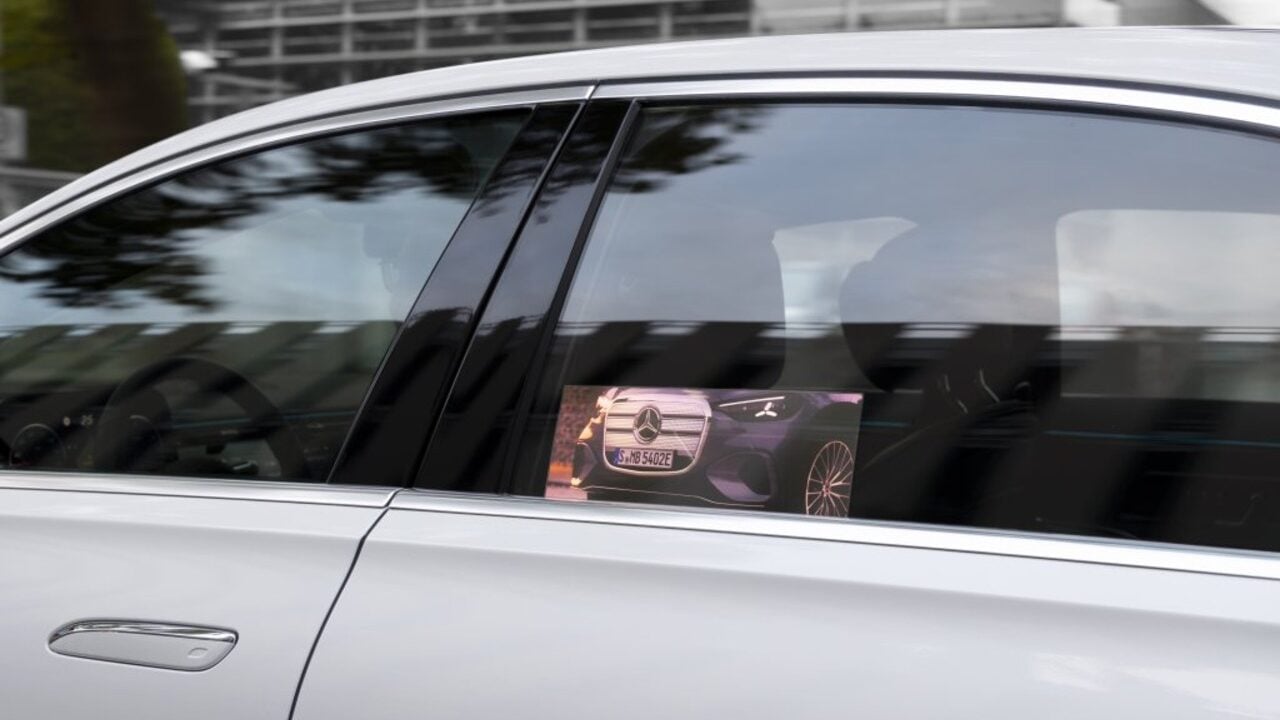
If you think modern Mercedes-Benz interiors already have enough screens, the German automaker has some news for you. Apparently, the dashboard, center console, and passenger display aren’t quite enough, because it’s now experimenting with turning the windows into screens, too. Yup, that’s right, the windows!
Mercedes recently unveiled several technologies that are under development, including two display systems that could change how drivers and passengers interact with their cars. One puts LED messages directly into the glass, while the other transforms sections of the windshield into something resembling a giant head-up display.
According to Mercedes-Benz, the idea isn’t simply to squeeze another screen into every available space. The company believes its new technology could improve safety, provide useful information, and make vehicle displays less intrusive when they’re not needed.
That sounds promising, although there’s a fair question worth asking. Do we really need cars communicating through their windows when drivers already have plenty competing for their attention?
Your Rear Window Could Talk to Other Drivers
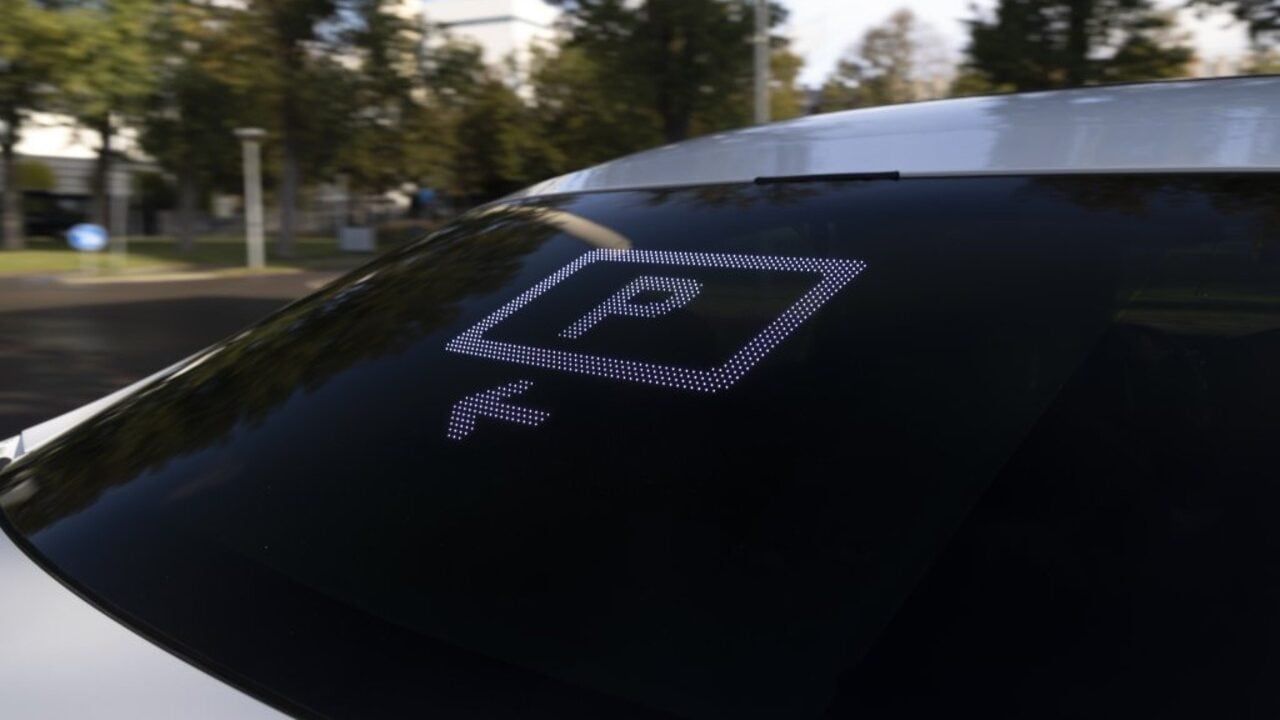
Mercedes calls its first concept Intelligent Display in Glass. It uses LED elements laminated directly into vehicle windows to display warning symbols, brake signals, and traffic-related information.
Mini LEDs could cover larger areas, particularly the rear window, while higher-resolution Micro LEDs would handle smaller displays and animations. When switched off, Mercedes says the technology becomes almost invisible.
Imagine the car behind you seeing a pedestrian warning or accident symbol rather than simply your brake lights. It’s an interesting safety idea, although messages telling tailgaters to keep their distance might produce mixed reactions.
The Windshield Becomes Another Display
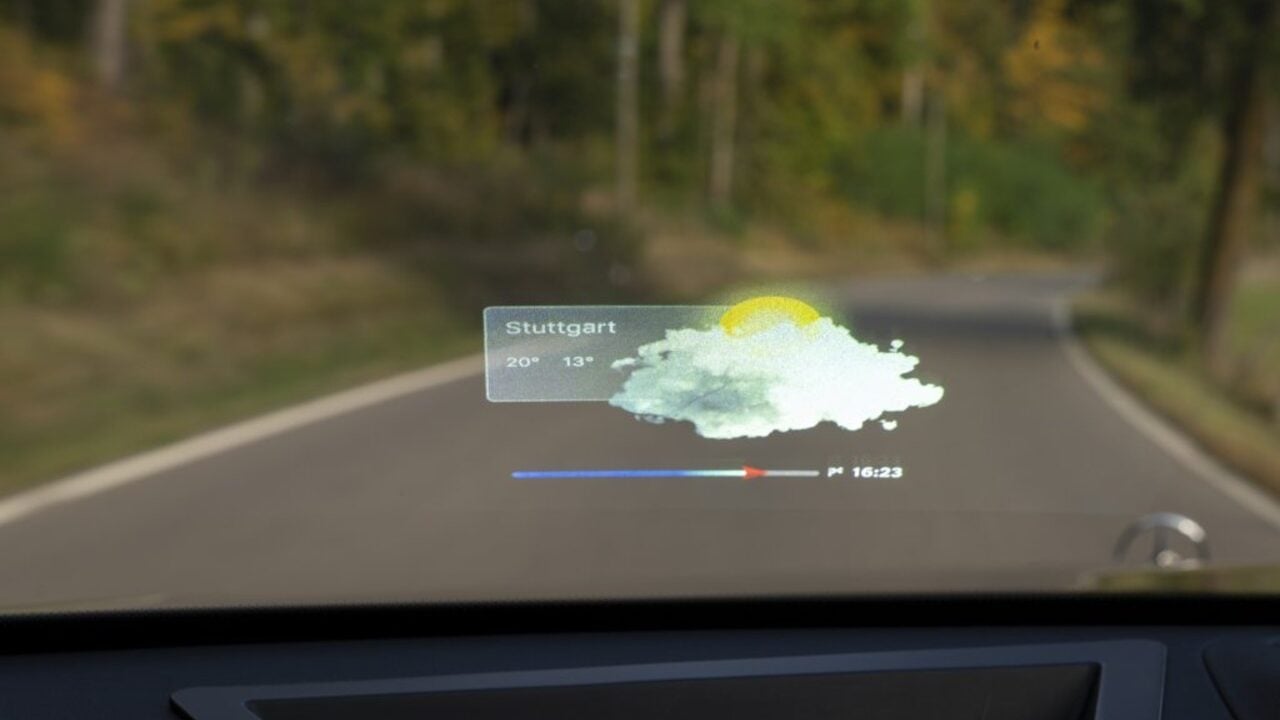
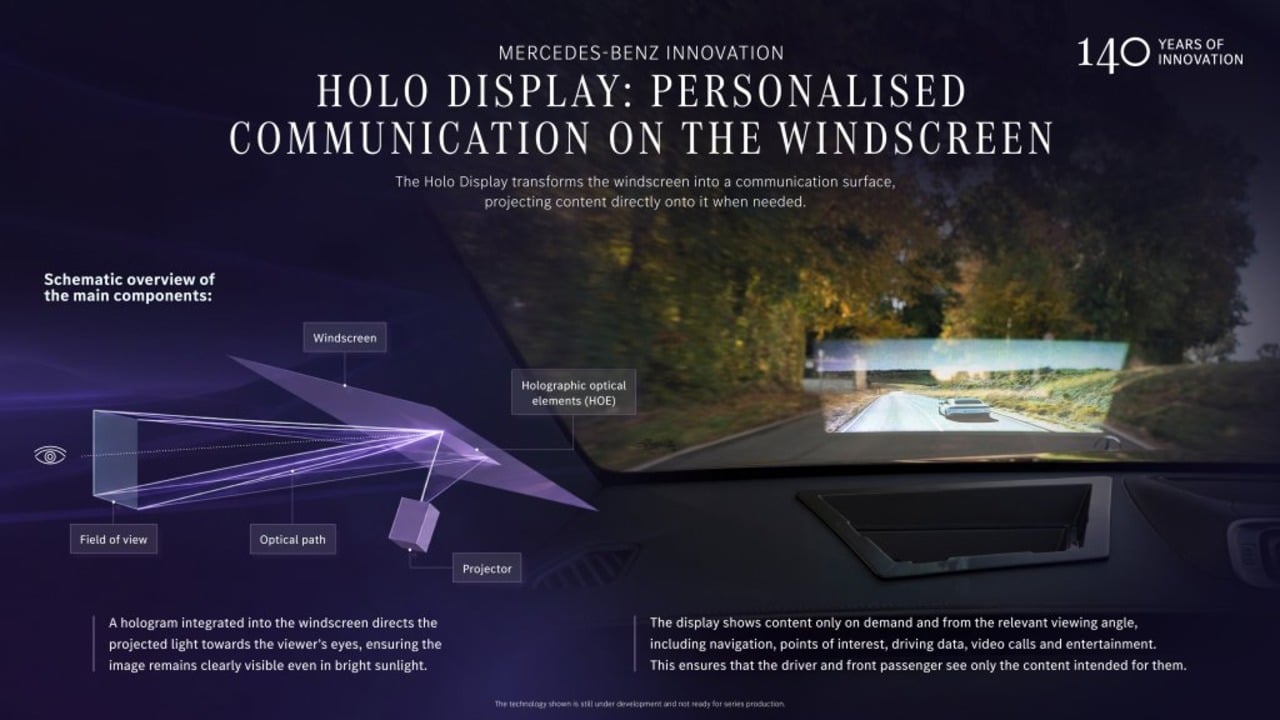
The second concept, Holographic Display, takes a different approach. A dashboard-mounted projector sends images onto a special transparent film embedded in the windshield, creating displays visible even in sunlight.
The clever part is that the images are visible only from specific angles. Passengers could watch a film or make video calls while the driver sees navigation instructions without being distracted by their content.
Mercedes also envisions displaying information about nearby points of interest. Unlike a permanently installed screen, the projected content disappears when it’s no longer needed.
Clever Technology, or Another Distraction?
There’s genuine engineering behind these concepts, particularly the ability to hide displays within ordinary-looking glass. The potential safety benefits of communicating hazards to following drivers are worth exploring.
Still, adding information to windows raises concerns about visibility, distraction, and whether other motorists will understand the messages. A warning is only useful if the person receiving it can recognize it immediately.
Don’t Expect It at Dealerships Yet
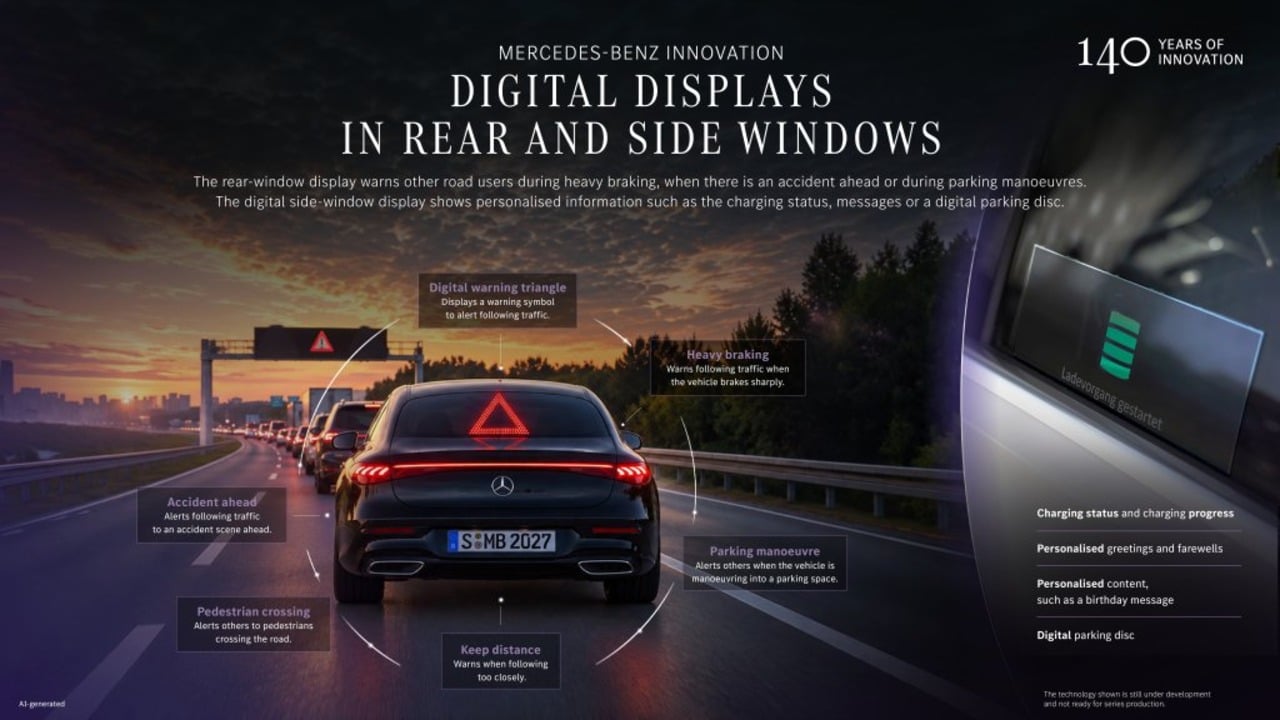
Mercedes stresses that both display systems remain research projects, with no confirmed production applications. The company is also developing new high-voltage power electronics, although that’s a separate effort.
The windows in your Mercedes will continue doing what windows have always done, but perhaps at some point in the future, we’ll find out whether turning them into screens makes driving safer or simply adds another layer of digital clutter and tech that might break.