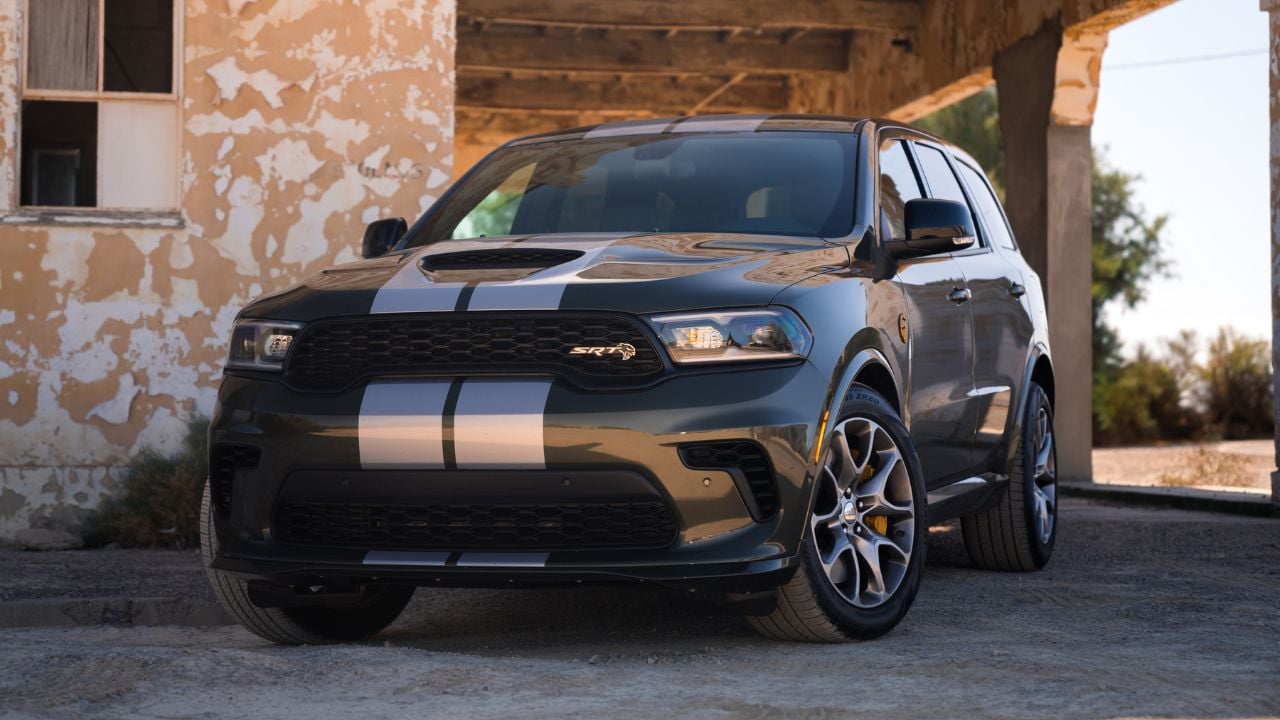
For decades, American drivers knew exactly what to look for in their rearview mirrors. Whether it was a Ford Crown Victoria or a Dodge Charger, the familiar silhouette of a police sedan was enough to make drivers instinctively check their speedometers.
That changed when Dodge ended production of its previous-generation Charger in 2023. The traditional American police sedan disappeared from production, leaving law enforcement agencies increasingly reliant on SUVs and pickup trucks.
Now, Dodge wants to bring it back. The automaker previewed a new Charger Police Pursuit Vehicle (PPV) at the Police Fleet Expo in Daytona Beach, Florida, in August 2026, although its latest cruiser won’t have the HEMI V8 that helped make its predecessor so recognizable.
The prototype drew renewed attention after a November 26 video from automotive YouTube channel Auto Crate, which attracted about 5,300 views in two days. Meanwhile, preliminary results from the Michigan State Police’s 2027 model-year vehicle evaluation reveal just how much the police vehicle market has changed in the Charger’s absence.
A Different Beast
Embedded media follows; please allow a moment to load.
Instead of bringing back the familiar HEMI, Dodge’s prototype is based on the gasoline-powered Charger Sixpack, equipped with a 3.0-liter twin-turbocharged Hurricane inline-six engine.
In its standard-output civilian configuration, the engine produces 420 horsepower and 468 pound-feet of torque. That’s 50 more horsepower than the previous HEMI-powered Charger Pursuit, although Dodge has yet to announce final performance specifications for the police version.
All-wheel drive is also expected, addressing a limitation of the previous-generation cruiser. Departments previously had to choose between the more powerful rear-wheel-drive HEMI and an all-wheel-drive V6.
For officers working through Michigan winters or responding to emergencies in heavy rain, combining power with all-wheel drive could be a more attractive proposition than horsepower alone.
Ford Sets the Pace
The preliminary 2027 Police Vehicle Evaluation results from the Michigan State Police illustrate the competition awaiting Dodge’s new Charger.
Ford’s 3.0-liter EcoBoost Police Interceptor Utility recorded the highest top speed of every vehicle evaluated, reaching 148 mph. The all-wheel-drive SUV accelerated from zero to 60 mph in 6.26 seconds and reached 100 mph in 14.57 seconds.
Dodge wasn’t far behind in terms of top speed. Its 5.7-liter HEMI-powered Durango Pursuit reached 143 mph, making it the second-fastest vehicle by top speed in the preliminary results. However, it needed 7.56 seconds to reach 60 mph and 19.50 seconds to reach 100 mph.
Chevrolet’s rear-wheel-drive Tahoe PPV topped out at 130 mph, while its four-wheel-drive counterpart reached 124 mph.
For Dodge, the challenge isn’t simply building a faster police vehicle. Ford has demonstrated that an SUV can deliver impressive straight-line performance while offering the practicality departments have come to expect.
An Electric Surprise
Some of the most interesting results came from vehicles with no gasoline engines at all.
Ford’s Mustang Mach-E GT accelerated from zero to 60 mph in 4.01 seconds, making it the quickest four-wheeled vehicle off the line. Chevrolet’s Blazer EV PPV followed at 4.99 seconds.
Both electric vehicles comfortably outperformed their gasoline-powered SUV counterparts in acceleration, although neither matched the top speed of Ford’s EcoBoost Police Interceptor Utility or Dodge’s HEMI-powered Durango.
Perhaps the most revealing detail, however, was what the evaluation didn’t include. Among the 13 SUV, crossover, and pickup configurations tested, there wasn’t a single police sedan.
That’s a gap Dodge could fill without persuading every police department to give up its SUVs.
Still to Prove
The new Charger also attempts to address some of the practical reasons police departments favor larger vehicles. Its liftback design provides a wide rear cargo opening, while the prototype incorporates dedicated equipment storage, a passenger partition, and space for police communications equipment.
Nevertheless, fleet managers will need to consider maintenance costs, reliability, equipment compatibility, and long-term durability alongside acceleration and top speed.
The Charger PPV was not included in the preliminary 2027 Michigan State Police evaluation, meaning there are no comparable performance figures to establish how it stacks up against Ford’s Interceptor.
According to Auto Crate, Dodge is targeting summer 2027 for opening orders. Final police-specific engine output, pricing, and pursuit performance remain unannounced.