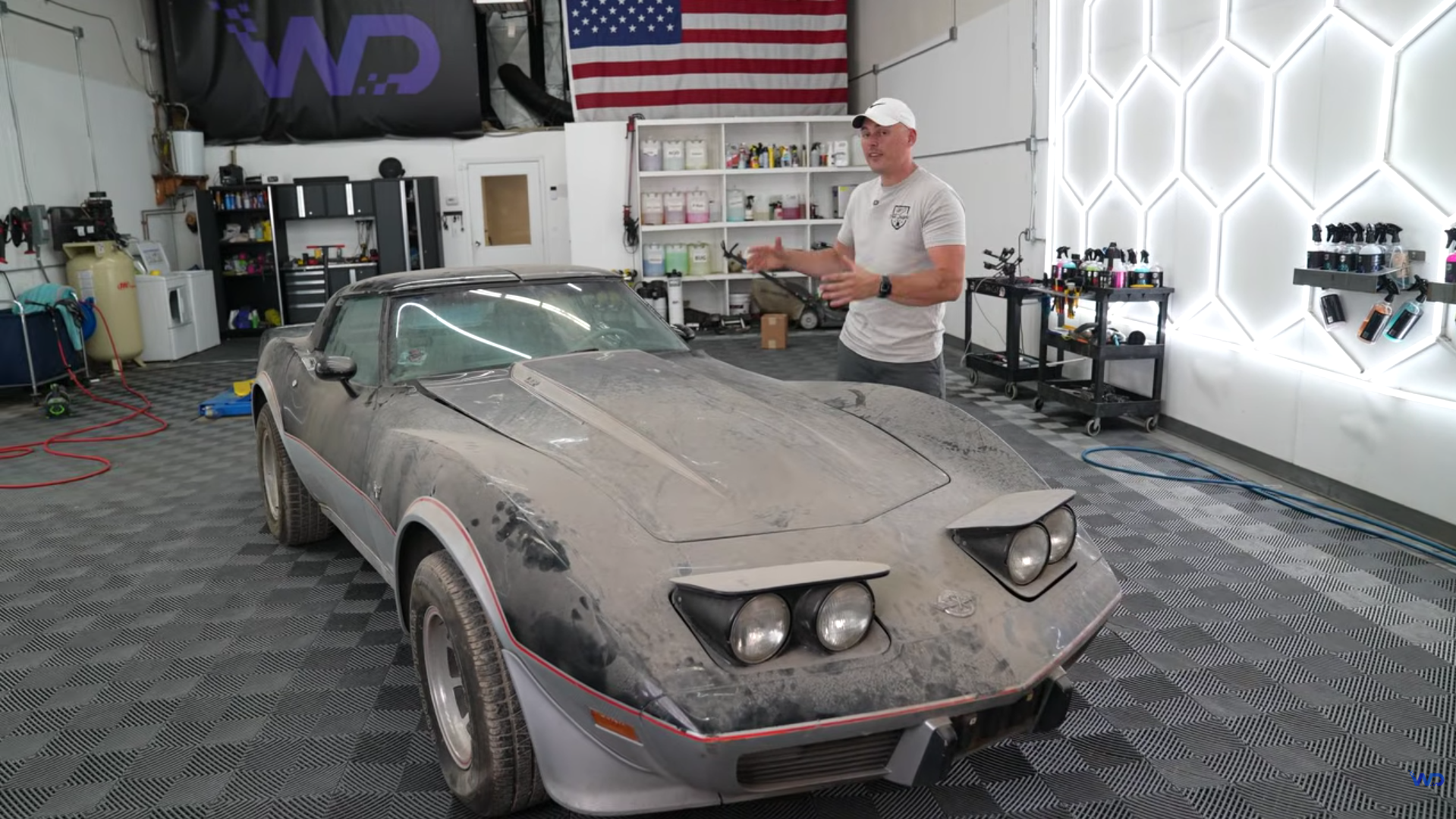
Bringing a long-abandoned classic back to life is stressful enough without accidentally breaking one of its rarest parts before the real work even begins. That is exactly what happened to the team at WD Detailing while restoring a 1978 Chevrolet Corvette Pace Car that had spent more than 20 years sitting in storage.
The C3 belonged to a family that had been dealing with years of personal hardship, including cancer diagnoses and the loss of a loved one. Its owner had intended to restore the Corvette, but the project was pushed aside as more important family matters took priority.
WD Detailing stepped in with the goal of making the car look good enough to motivate the family to finish the mechanical work and return it to the road. The plan involved a complete exterior wash, paint correction, wheel restoration, engine-bay cleaning, and a deep interior detail.
Before much of that could happen, however, the team discovered that one of the Corvette’s removable T-top panels had cracked during transport. Finding an exact replacement turned out to be considerably more painful than expected.
The Broken T-Top Cost $2,000 To Replace
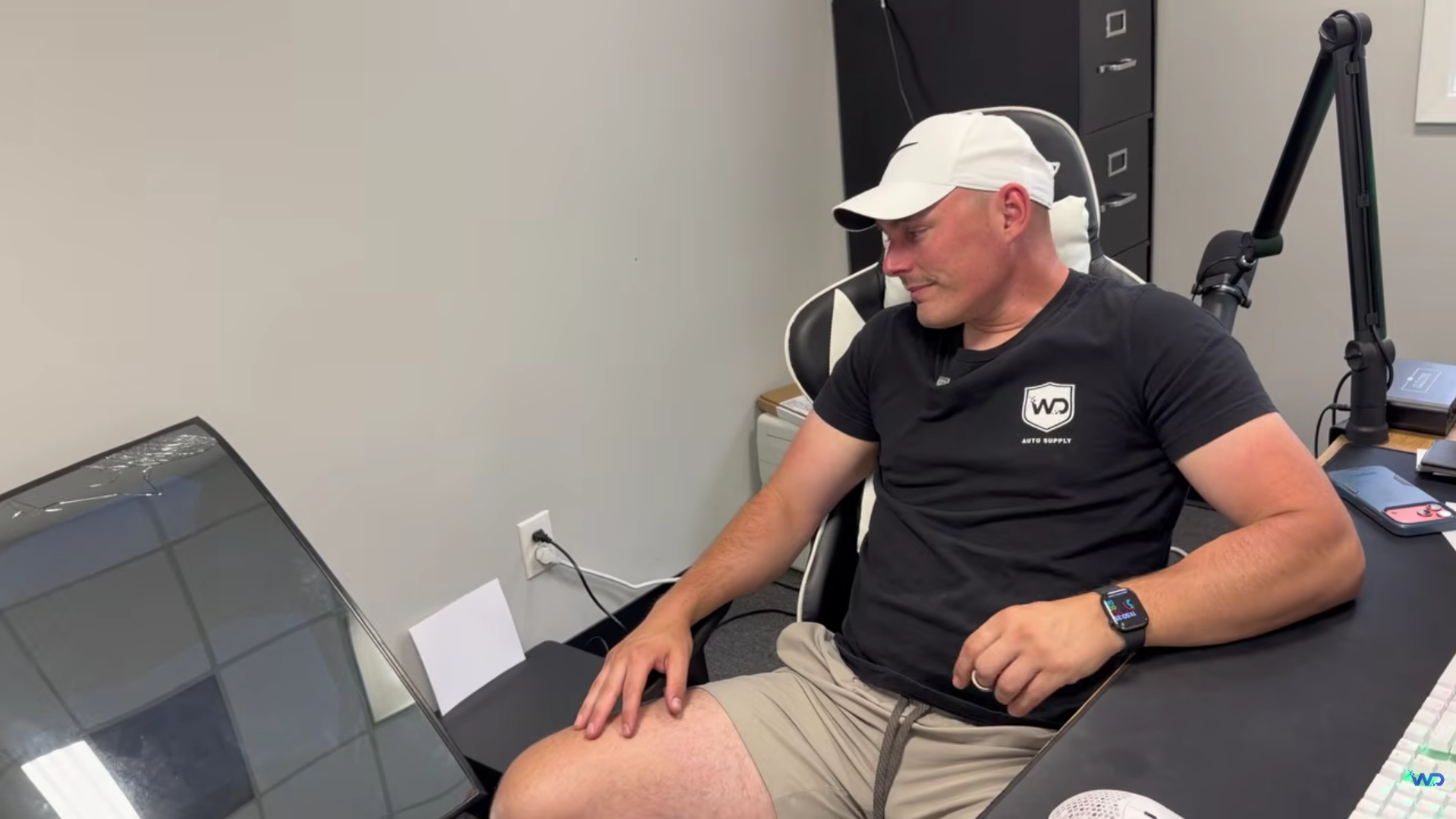
The Corvette’s glass roof panels were not all created equal. According to WD Detailing, the car had the rare blue laminated version, rather than the more common smoked or bronze glass.
After searching for a replacement driver’s-side panel, the team said it found only one available in the United States. The part was new old stock and carried a price of $2,000, turning an apparently simple transport mistake into one of the most expensive accidents the shop says it has made.
Rather than attempt to hide the damage or substitute a different part, WD Detailing ordered the replacement and planned to explain what had happened when returning the car. The broken frame was also retained because even that was said to have substantial value.
The Corvette Had Been Sitting For Decades
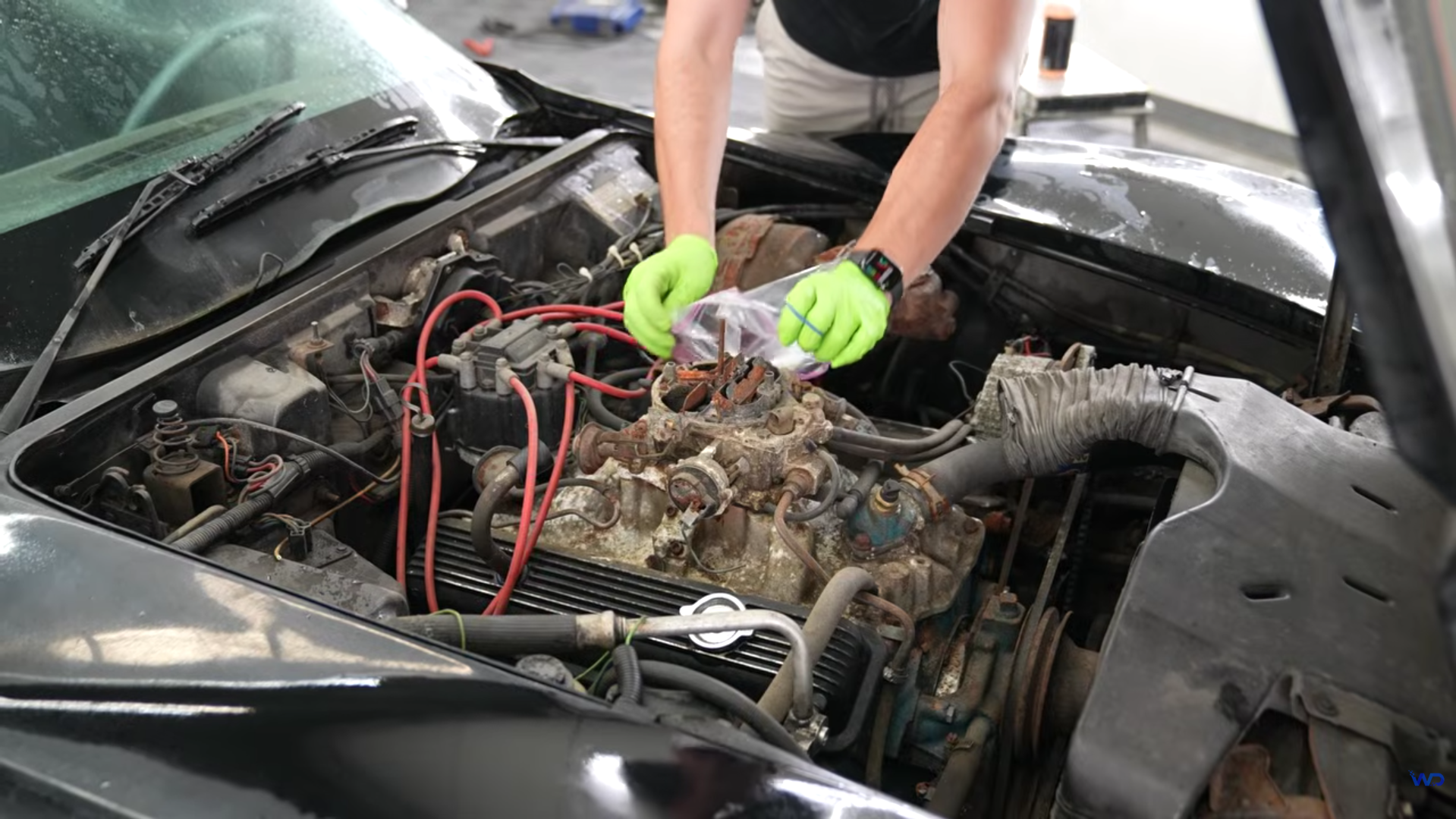
Once the replacement was on its way, attention returned to the car itself. Years of grime covered the body, wheels, and engine bay, while the interior contained mildew, mold, rust staining, and accumulated debris.
The paint created another complication because the detailers determined that the black finish was single-stage. Without a separate clear coat protecting the color layer, aggressive chemicals and excessive pressure could cause permanent damage.
That meant the team avoided its usual pre-wash treatment and carefully pressure-washed the car with water instead. Some already-failing paint still came loose from the bumper, highlighting just how fragile parts of the finish had become.
The Original Paint Needed Serious Correction
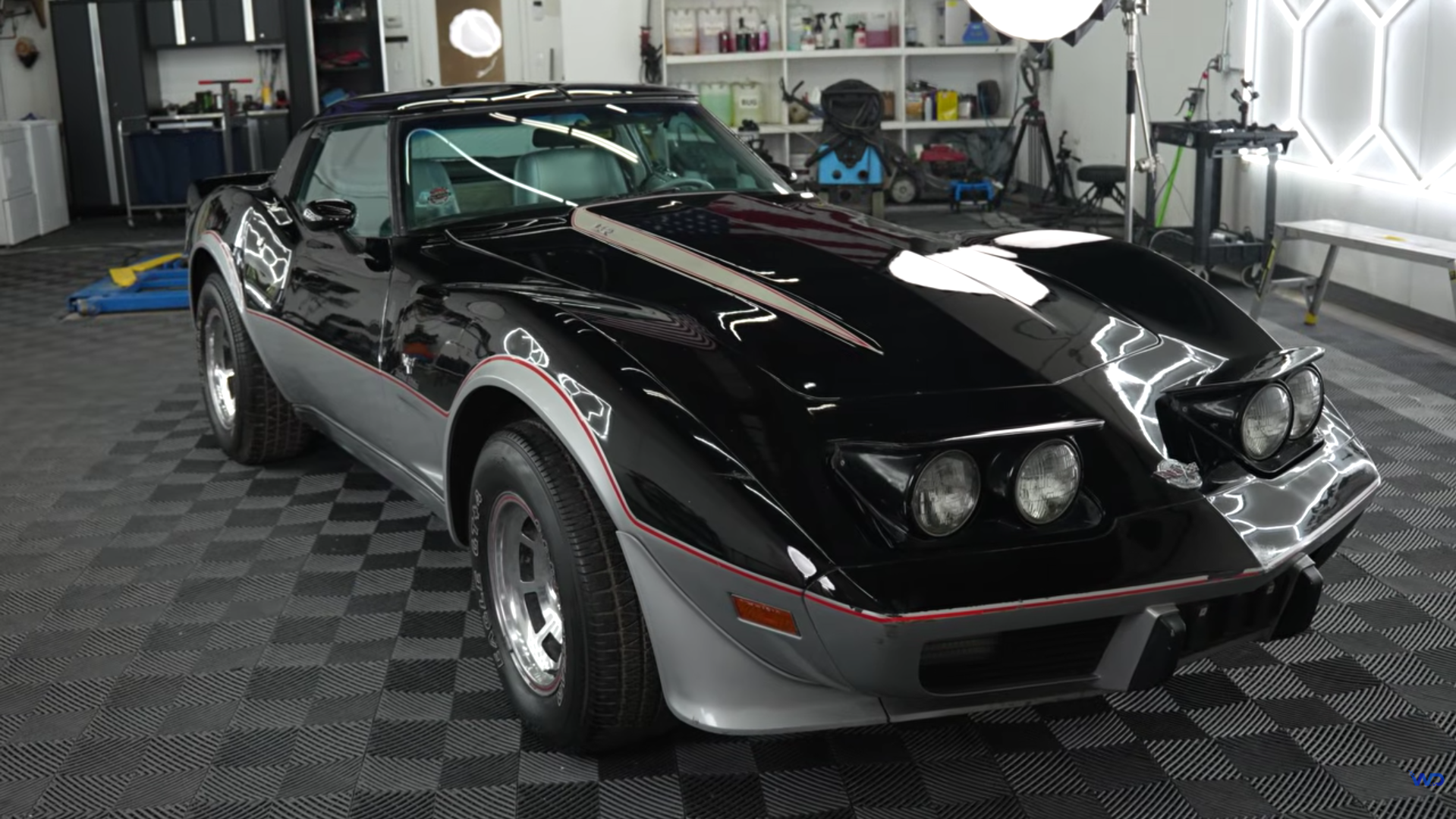
Cleaning the Corvette revealed extensive scratching and contamination beneath the dirt. The detailers used clay and iron remover to decontaminate the surface before moving on to machine polishing.
Paint correction on an older single-stage finish can be risky because there is less margin for error, particularly around sharp body lines and edges. WD Detailing used a rotary polisher with heavy-cut compound before refining the surface with a dual-action machine and foam pad.
The result did not make the Corvette factory-new, but it dramatically improved the gloss and depth of the black paint. Its distinctive late-1970s C3 bodywork, pop-up headlights, and silver lower accents were suddenly much easier to appreciate once decades of neglect were removed.
The Interior Was Just As Much Work
Inside, the seats were removed to access the carpets, which were treated for odors, rust stains, and embedded dirt. Mold and mildew on the door panels, dashboard, and center console were tackled with brushes, cleaners, steam, and extraction.
Despite the car’s condition, a surprising amount of the original cabin was salvageable. Cleaning the interior instead of immediately replacing everything helped preserve the period character of the Corvette Pace Car.
The aluminum wheels also received extra attention, including removal from the car and machine polishing. Combined with fresh tire dressing and cleaned glass, those smaller details helped make the finished Corvette look substantially closer to a car worth saving.
The Family Took The Mistake Surprisingly Well
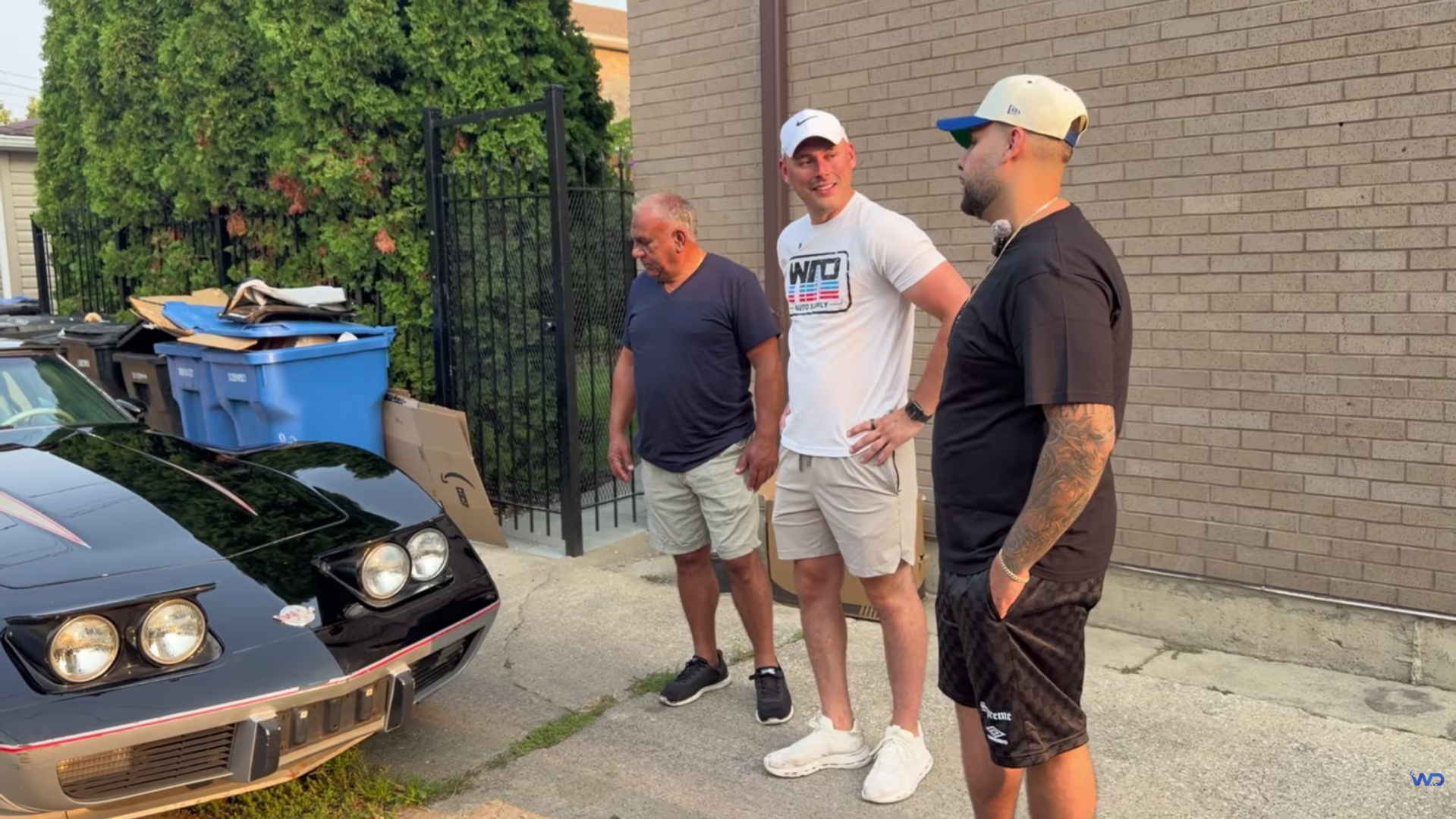
Before unveiling the completed detail, WD Detailing told the owners about the damaged T-top and showed them the replacement. The family appeared understanding, particularly after learning that the shop had sourced an exact new-old-stock blue panel and absorbed the $2,000 cost.
After seeing the transformed Corvette, the owners confirmed that they intended to continue working on the car, get it running, and eventually take it to shows.
The Corvette still needs mechanical attention before it can return to regular driving, but the detailing work gave the neglected Pace Car a major visual reset. Breaking a rare T-top may have made the project considerably more expensive, yet replacing it properly meant the family’s unusual 1978 Corvette came home looking better rather than leaving them with another problem to solve.