
Modern cars are packing more technology than ever before, and nowhere is this more apparent than in the growing list of specialized driving modes. We’re not just talking about your standard Sport and Eco settings anymore.
Today’s vehicles come with modes that promise everything from teaching you to drift like a pro to turning your luxury SUV into a genuine rock crawler. Some of these features are genuinely impressive pieces of engineering that unlock new capabilities. Others feel more like marketing gimmicks that sound cooler than they actually are.
Let’s explore some of the most interesting, unusual, and downright strange driving modes available in modern cars, celebrating the innovations while keeping it real about what actually works.
Tesla’s “Mad Max” Mode – The Controversial One

Tesla recently brought back its provocatively named “Mad Max” mode in October 2025, and it immediately caught federal attention. Part of the Full Self-Driving system’s five-tier personality settings, Mad Max promises more aggressive driving with higher speeds and more frequent lane changes than the “Hurry” mode. The National Highway Traffic Safety Administration opened an inquiry within days of its launch after reports surfaced of Tesla vehicles driving more than 15 mph over speed limits and rolling through stop signs.
Named after the dystopian film series famous for chaotic highway battles, the mode adjusts throttle, transmission shift points, and traction control for what Tesla describes as peak performance. While Tesla owners have posted videos showing the system weaving through traffic with impressive smoothness, the timing seems questionable given the company faces multiple investigations into its driver-assist systems, including 58 reports of traffic violations and 14 crashes.
It’s a feature that perfectly captures the tension between technological capability and responsible implementation — and reminds us that just because you can program a car to drive aggressively doesn’t necessarily mean you should.
Porsche Sport Response Button – The 20-Second Rush

Hidden in the center of Porsche’s Sport Chrono dial sits one of the most theatrical buttons in modern performance cars. Press the Sport Response button, and you get 20 seconds of maximum engine and transmission performance — basically a “push to pass” feature borrowed straight from motorsports.
On turbocharged models, it engages overboost for temporary power increases, while the PDK transmission drops to the optimal gear for acceleration. Think of it as automotive nitrous without the bottle. The beauty is in its practicality — you don’t need to fumble with mode switches when that highway on-ramp appears or you need to safely overtake slower traffic. On electric Porsches like the Taycan, it unlocks an additional 94 to 188 horsepower depending on the trim level. A countdown timer appears in your instrument cluster, adding to the drama.
While some purists argue it’s a bit gimmicky (especially on naturally aspirated models where the benefit is less pronounced), there’s something undeniably satisfying about having a physical button that says “give me everything you’ve got, right now.” It’s drama with a purpose, and it works.
Jeep Rubicon Rock Mode – Crawling at 0.5 MPH

When Jeep engineers designed the Wrangler Rubicon’s Rock mode, they created something that turns the laws of physics into your off-road advantage. Paired with the Rock-Trac 4×4 system featuring a 4:1 low-range transfer case, manual transmission Rubicons can achieve a mind-bending 100:1 crawl ratio with the optional 4.88:1 axle ratio.
What does that mean in practical terms? You can climb nearly vertical rock faces at half a mile per hour while maintaining precise control. Rock mode optimizes throttle response, transmission shift points, and traction control specifically for low-speed technical terrain. The electronic locking differentials ensure power goes to wheels with traction, while the disconnectable front sway bar allows massive suspension articulation over obstacles.
Even the Rubicon 392 with its 470-horsepower V8 includes Sand and Rock modes that adjust everything from throttle mapping to how the transmission behaves under load. Unlike some modes that feel like software tweaks, Rock mode fundamentally changes how the vehicle behaves when you need every ounce of traction and control.
This is engineering serving a clear purpose: making the impossible terrain merely difficult.
Land Rover Terrain Response 2 Auto – The Mind Reader

Land Rover essentially created a system that does the thinking for you, and it’s genuinely impressive. Terrain Response 2 Auto uses vehicle sensors to detect wheel slip, gradient, and surface conditions, then automatically selects from modes like General, Grass/Gravel/Snow, Mud & Ruts, Sand, and Rock Crawl.
It monitors over 100 vehicle parameters and adjusts throttle response, brake pressure, center differential bias, and transmission shift patterns on the fly. The genius is in how seamlessly it works — transition from pavement to snow to mud, and the system adapts within seconds without driver input. You can still manually override if you want a specific mode, but the Auto setting means you never have to guess which mode is appropriate. It even provides helpful suggestions, like when to engage low range or adjust ride height.
Tested in 20 countries across temperature extremes from minus 40 to 125 degrees Fahrenheit, the system represents decades of Land Rover’s off-road expertise distilled into software. While some enthusiasts prefer the engagement of manual mode selection, there’s something liberating about trusting the vehicle’s brain to optimize for conditions you might not even recognize.
It’s technology serving confidence.
Ford Mustang Electronic Drift Brake – Sideways Made Simple

Ford brought back drift culture to the 2024 Mustang with a feature that would make professional drifters smile. The Electronic Drift Brake functions as a competition-style hydraulic handbrake, applying more than three times the force of a conventional mechanical parking brake.
Developed with help from pro drifter Vaughn Gittin Jr. and his RTR Vehicles company, it only activates in Track mode and works with both the four-cylinder EcoBoost and V8 engines, plus either transmission option. Unlike traditional handbrakes that stay engaged, this one bounces back instantly when released — just like the hydraulic systems in purpose-built drift cars. The system can be adjusted for different skill levels, from novice learning the basics to experienced drivers ready for competition settings.
Outside Track mode, it cleverly becomes a one-push parking brake activator. Ford even added “Mustang” to the bolts on the handle as an Easter egg detail. While drift functionality on a street car might seem questionable, Ford makes clear this is track-only equipment.
It’s an honest acknowledgment that people buy Mustangs to have fun, and Ford is willing to provide the tools — as long as you use them responsibly in appropriate venues.
BMW M Track Mode – When the Infotainment Goes Dark

BMW’s approach to Track mode on M cars shows they understand what matters when you’re pushing hard on circuit. Beyond the expected suspension stiffening and throttle sharpening, Track mode does something unusual — it completely shuts off the central information display and entertainment system.
The idea is simple: eliminate distractions and force complete concentration on driving. The only information displayed relates directly to vehicle dynamics and performance. Driver assistance systems and their steering wheel controls also deactivate, preventing accidental interventions mid-corner. Combined with M Drive Professional’s customizable M1 and M2 buttons, you can create incredibly specific setups for different tracks or driving styles. You can adjust engine response across Efficient, Sport, and Sport Plus settings, suspension through Comfort, Sport, and Sport Plus damper modes, and even dial in 10 levels of traction control intervention.
The M Setup menu lets you fine-tune everything from brake pedal feel to how aggressively the all-wheel-drive system behaves. It’s a level of granular control that might seem overwhelming at first, but it means you can tailor a car perfectly to your preferences and skill level.
Track mode isn’t just about going faster — it’s about creating the optimal environment for serious driving.
Ford Focus RS Drift Mode – The All-Wheel-Drive Slideshow
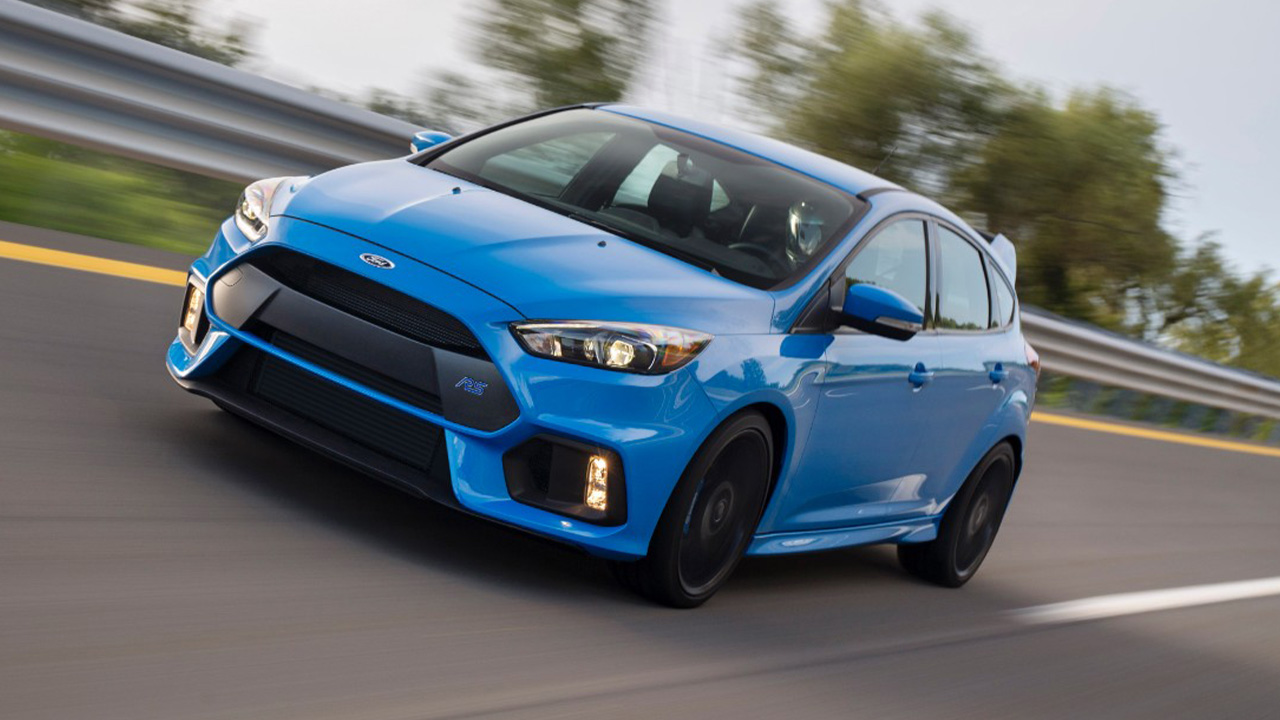
Ford’s now-discontinued Focus RS featured one of the most talked-about modes ever fitted to a hot hatch. Drift mode used the car’s sophisticated torque-vectoring rear differential to send not just more power to the rear wheels, but specifically to the outside rear wheel during cornering.
Combined with softer dampers and more relaxed steering to make slides easier to catch, it could make an all-wheel-drive car behave like a proper drift machine. The clever part was how the system maintained the drift — by keeping that outside rear wheel spinning faster while the inside rear helped maintain forward momentum. Press a button and suddenly your practical hatchback could lay down impressive smoky slides.
Critics worried it would lead to inexperienced drivers getting in over their heads, and they weren’t entirely wrong. But for enthusiasts with access to appropriate venues, it provided a surprisingly effective introduction to car control at the limit. The system worked well enough that professional rally drivers found it genuinely useful on loose surfaces where controlled slides are actually faster.
It proved that with smart engineering, you could give people access to techniques that once required years of practice — though wisdom and appropriate venues still remained the driver’s responsibility.
Mercedes-AMG Race Start – Launch Control with Conditions

Mercedes-AMG vehicles feature a launch control system that’s remarkably effective but comes with more prerequisites than a security clearance. Race Start requires Sport+, Sport Plus, or Race mode, manual transmission setting, ESP in Sport Handling mode, optimal fluid temperatures, perfectly straight steering wheel, fastened seatbelt, closed doors, and outside temperatures above 40 degrees Fahrenheit.
Miss any condition and the system simply refuses to engage. The process itself is theatrical — hold both paddle shifters to activate, confirm with the right paddle, floor the accelerator while keeping the brake pressed, then release the brake for maximum acceleration. The AMG holds revs at around 3,000-4,000 RPM depending on the model, then delivers brutal, wheel-controlled launches. Models like the GT63 S can hit 60 mph in under 3.2 seconds using the system. Mercedes engineered these conditions deliberately — cold fluids will damage components, and wrong modes prevent proper power delivery.
While some find the requirements excessive, they prevent both mechanical damage and driver error. It’s Mercedes saying “we’ll give you the violence, but you need to do the prep work.” Unlike some systems that feel like afterthoughts, Race Start shows the precision that comes from German engineering — complicated, effective, and uncompromising.
BMW My Modes – Ambience Over Performance

Not every driving mode needs to be about speed or capability. BMW’s My Modes available in vehicles like the 7 Series take a completely different approach by focusing on the entire sensory experience. Digital Art Mode transforms the cabin into a moving art gallery, featuring work from artist Cao Fei with coordinated displays, mood lighting, sound design, and graphics across the curved display.
Theatre Mode, available with the rear-seat entertainment system, deploys window shades, dims ambient lighting, and creates an authentic cinema atmosphere for passengers. Relax Mode goes the opposite direction with calming imagery, peaceful sounds, darkened displays, and activating massage functions for both driver and passengers. Expressive Mode adds dynamic artwork and provocative lighting effects to energize the journey. These aren’t about lap times or rock crawling — they’re about recognizing that the driving experience encompasses more than just vehicle dynamics.
Some enthusiasts roll their eyes at modes that don’t involve performance, but there’s something refreshing about automakers acknowledging that sometimes you want your car to be a sanctuary, entertainment venue, or mobile art installation. It expands what a “driving mode” can mean beyond the traditional performance parameters. Not every journey requires Sport Plus.
Nissan GT-R R-Mode – The Controversial Launch

The Nissan GT-R’s Launch Control became infamous not for its capability, but for the controversy surrounding its use. The system could achieve 0-60 mph times under 3 seconds by precisely managing clutch engagement, engine torque, and all-wheel-drive power distribution.
However, early GT-R owners discovered that using the feature — advertised by Nissan as a key selling point — could result in transmission damage. Worse, some dealers denied warranty claims if telemetry data showed Launch Control use. The situation sparked outrage in the enthusiast community and legal challenges. Nissan eventually extended warranties and modified software to reduce wear, but the damage to trust was done. The GT-R saga became a cautionary tale about the tension between marketing performance features and the mechanical realities of repeated high-stress launches.
It raised legitimate questions about automaker responsibility—if you prominently advertise a feature, shouldn’t the vehicle be engineered to withstand its regular use? The technical capability was never in doubt; the GT-R’s launches were genuinely spectacular. But the whole situation highlighted how advanced performance modes need to be backed by components built to handle them, and manufacturers need to be upfront about limitations rather than burying them in fine print after problems emerge.
Don’t need the GT-R’s fancy Launch Control mode? There are some cars that bring the same experience as the GT-R but with a smaller price tag.
Toyota Gazoo Racing Modes – Track Tech for Street Cars

Toyota’s Gazoo Racing division brought genuine motorsports technology to their performance models with increasingly sophisticated mode selections. The GR Corolla and GR Yaris feature customizable drive modes that adjust power distribution, stability control intervention, and throttle response for different conditions. What makes them special is the focus on driver engagement rather than pure automation. The GR Yaris offers five drive modes including Track mode with adjustable torque split settings, letting drivers choose how much power goes to the front versus rear wheels.
You can set up front-biased for slippery conditions, balanced for mixed surfaces, or rear-biased for more playful handling. The system learns your preferences and adapts behavior accordingly. Circuit mode goes further by recording lap times, G-forces, and power/torque curves to help drivers analyze their performance. These aren’t gimmicks — they’re tools derived from Toyota’s rally racing program, where adjustable power delivery makes the difference between winning and losing. The genius is making sophisticated technology accessible without dumbing it down.
You need to understand what you’re adjusting and why, which creates genuine learning opportunities. It’s the opposite of Tesla’s controversial Mad Max approach: Toyota gives you the control but expects you to develop the skill to use it properly.
Lamborghini Strada/Sport/Corsa – Italian Drama with Purpose

Lamborghini’s three-mode system in models like the Huracán and Aventador proves that sometimes straightforward can be spectacular. Strada (street) provides comfortable daily driving with softer suspension, gentle throttle response, and civilized exhaust note. Sport tightens everything up for spirited driving while maintaining livability. Corsa (race) unleashes the full Italian fury with aggressive transmission shifts, stiffest suspension settings, maximum throttle response, and exhaust valves wide open.
What makes Lamborghini’s approach work is the dramatic difference between modes—this isn’t subtle adjustment, it’s transformation. Corsa mode makes the car feel genuinely different, almost angry. The ANIMA selector (Adaptive Network Intelligent Management) coordinates engine mapping, transmission behavior, electronic differential, electronic stability control, and all-wheel-drive torque distribution. In Corsa, shift speeds drop from 50 milliseconds to 30, and the active aerodynamics deploy for maximum downforce.
The Italian approach is more theatrical than German precision but no less effective. Some find it overwrought, but that misses the point — Lamborghini isn’t apologizing for drama. These modes match the brand’s personality while delivering measurable performance differences. When you select Corsa mode, you want to feel the change, hear it through the exhaust, and see it in the instrument cluster.
Subtlety was never part of the plan, and that’s exactly right.
Conclusion

The explosion of specialized driving modes in modern cars tells us something important about where the automotive industry is headed. These features represent genuine innovation — from Land Rover’s terrain-reading intelligence to Porsche’s perfectly timed power bursts to Jeep’s rock-crawling wizardry. They unlock capabilities that would have seemed impossible just years ago. But the controversy around features like Tesla’s Mad Max mode reminds us that engineering capability must be balanced with responsibility and common sense.
The best driving modes enhance what a car can do while respecting the limits of both machine and driver. They provide tools for specific situations, whether that’s navigating a desert, attacking a track, or simply making your commute more pleasant. As vehicles become more sophisticated, we’ll undoubtedly see even more creative modes — some brilliant, some questionable, all interesting. The key is distinguishing between features that genuinely improve the driving experience and those that prioritize marketing over substance.
When done right, these modes represent automotive engineering at its finest: technology serving the pure joy of driving.