
There are cars built for cruising, cars built for hauling, and cars that just seem to be magnetically attracted to flashing blue and red lights. It’s like they come with an invisible “pull me over” sign. They’re taunting the cops on the side of the highway with aggressive styling, eye-catching colors, loud exhausts, or excessive horsepower. Pick your poison.
Whatever the reason, certain cars attract more speeding tickets than others, and not always for the reasons you might expect. This collection of rulebreakers includes familiar names and a few quiet surprises that might make you side-eye that mild-mannered hatchback in the next lane. These aren’t always fire-breathing sports cars; sometimes, the subtle ones lead you down the path to a court date. One thing’s for certain: these cars know how to get noticed, even when they’re just trying to keep up with traffic… or so their owners claim.
When the Right Car Meets the Wrong Speed Limit

This isn’t about which cars look the most obnoxious or which meets are the most toxic. It’s based on publicly reported analyses of speeding citations and insurance-quote violation data. Different studies use different methods (and driver demographics and miles driven matter), so exact rankings can vary—but certain models show up repeatedly.
If your car made the list, it might be time to check that speedometer a little more often. Because a smooth ride feels infinitely better without the distinctive siren song of Johnny Law catching up from behind.
Subaru WRX
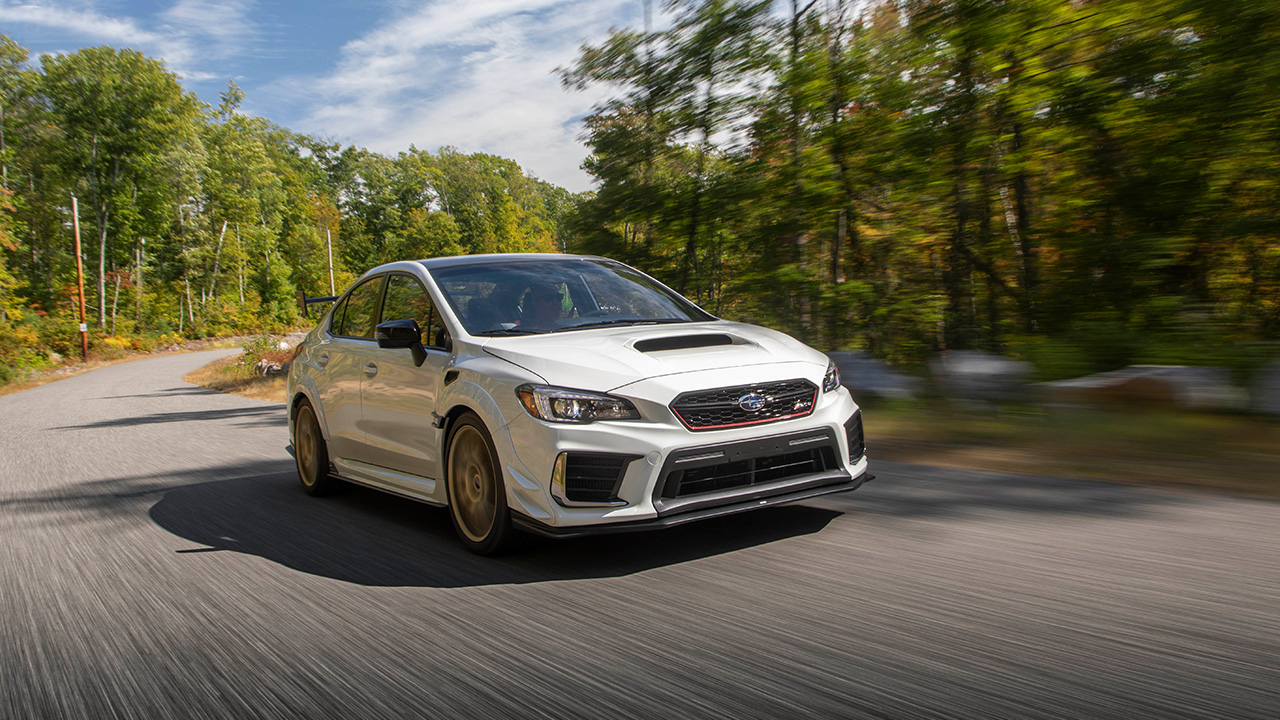
In several published analyses of speeding citations and insurance-quote violation rates, the Subaru WRX frequently ranks near the top, and the reason is as easy to understand as a Subaru owner’s love for mud flaps. With sharp reflexes, symmetrical all-wheel drive, and road feedback tuned for engagement, it delivers a sense of control that encourages spirited driving, often right into a radar trap. The design screams performance from every angle, looking like it’s fresh off a rally stage even when parked outside a Starbucks. Drivers, perhaps feeling like Colin McRae, Petter Solberg, or Travis Pastrana, often respond accordingly.
While many owners appreciate its balance of practicality and agility, the temptation to push limits frequently shows up in traffic stops. Law enforcement may recognize the profile, and the tell-tale turbo whoosh (often made louder by common aftermarket mods), and tickets can follow even brief moments of overconfidence. The WRX rewards skilled driving, but that same capability can invite unnecessary risks.
It regularly shows up in “most-ticketed” lists in the U.S., for a reason that often has less to do with intent and more to do with opportunity… and perhaps a slightly heavy right foot.
Scion FR-S

Light, responsive, and designed to feel utterly connected to the pavement, the Scion FR-S (and its close twins, the Subaru BRZ and the Toyota 86/GR 86, depending on year and market) creates an experience that thrives on motion. Drivers often find themselves exploring its limits on everyday roads, which, ironically, can lead to more attention from law enforcement than expected. You see, while it only packs about 200 horsepower from its naturally aspirated flat-four, it corners like it’s on rails. This encourages drivers to carry ridiculous amounts of speed through turns, feeling like a race car driver, only to find themselves way over the limit on the straightaways.
The compact frame and confident handling provide feedback that encourages movement, even when conditions suggest caution. From off-ramps to quiet stretches of highway, the FR-S can blur the line between casual and quick without much effort. Its drivers rarely seek confrontation, yet the car’s behavior often creates one. For those who own one, discipline matters as much as control, especially since its exhaust note can sound like you’re going twice as fast as you actually are.
With so many citations associated with the model in some studies, it stands as a clear example of how precision and a fun chassis can quietly edge into penalty territory.
Volkswagen GTI
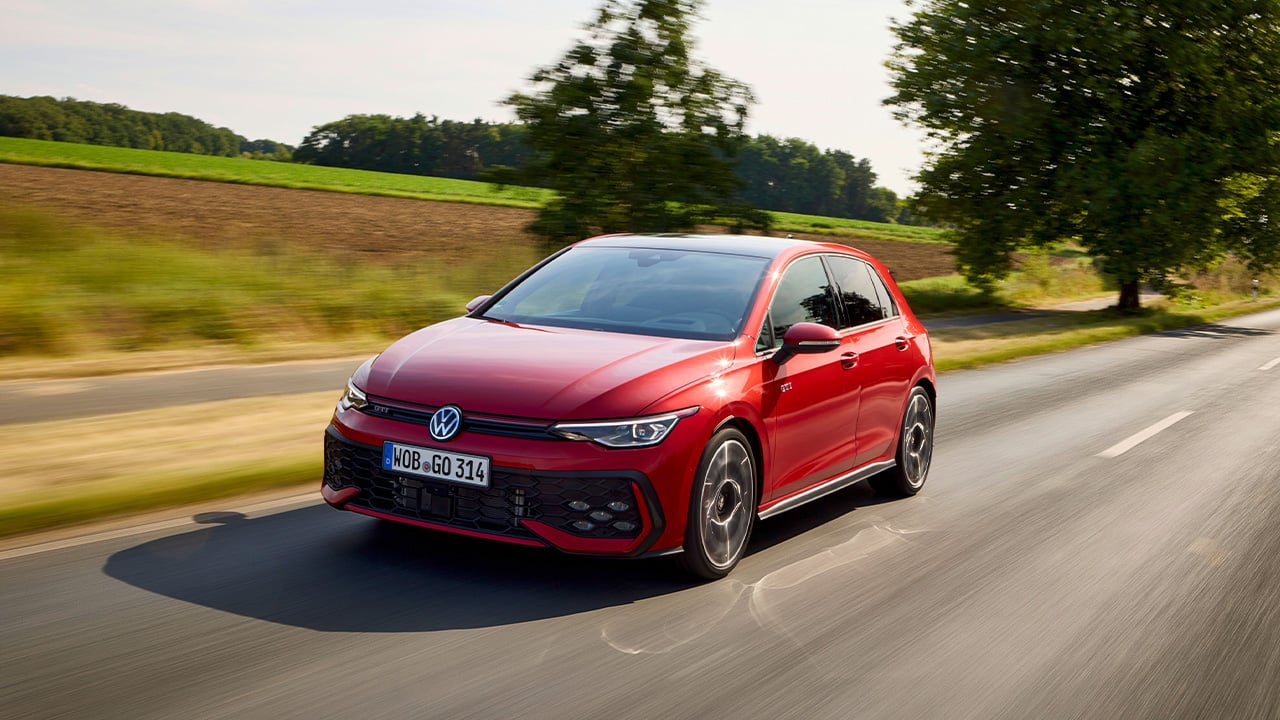
The Volkswagen GTI blends power and practicality in a way that makes it incredibly easy to underestimate. At first glance, it feels like a compact hatch built for flexibility and grocery runs, but once behind the wheel, its turbocharged potential becomes clear. Depending on generation and market, the GTI has used a variety of four-cylinder engines (including today’s 2.0-liter turbo), with output ranging from roughly 100-plus horsepower in early models to about 241 horsepower in the latest versions. Drivers often enjoy how quickly it responds to input and how comfortably it handles highway speeds, often without feeling like they’re breaking a sweat. That confidence can lead to lapses in judgment or small surges that catch the attention of nearby patrols, who might just see a “regular” car going entirely too fast.
With turbocharged energy and a well-weighted feel, it performs best when used responsibly, but the ticket data says otherwise. This is a car that rewards control yet frequently tempts drivers into moments that cost more than just time (and certainly more than that oil change). The GTI offers versatility and excitement, but speeding fines remain an unfortunate part of its reputation.
Dodge Charger

Few cars carry the kind of road presence the Dodge Charger offers. With bold, aggressive styling that makes it look like it just flexed, and a performance-focused stance, it practically demands attention with a glare. That impression often transfers to the driver, who may feel the road invites more than just casual movement. The Charger has been repeatedly flagged in insurance data for high rates of speeding tickets, especially among younger owners who are still trying to figure out what to do with a near-two-ton sedan that starts around the high-200s/low-300s in V6 form and climbs much higher in V8 trims.
Its blend of comfort and capability makes it easy to travel faster than intended, especially on long stretches of highway where the rumble of its HEMI V8 (or even the Pentastar V6) makes triple digits feel like a leisurely cruise. While it carries legacy and visual impact, the practical costs often show up in courtrooms and renewal statements. This model continues to connect speed and identity in ways that keep it on lists like this one.
If you own a Charger, you’re not just buying a car; you’re buying a target for radar guns. Stop trying to race Mustangs on the highway.
Nissan 350Z

The Nissan 350Z, unveiled in 2002 and sold as a 2003-model-year car in many markets, was built with precision in mind, and that engineering continues to affect the way its drivers treat open roads. The low profile, focused setup, and the responsive VQ35DE V6 engine (around 287 hp in early six-speed versions, depending on year/market) encourage sharper inputs and more aggressive driving, and that usually translates into increased pace. Many drivers feel a sense of control that blurs the risk, even in heavy traffic or low-speed zones.
Ticket records reflect that behavior, with the 350Z showing up consistently among vehicles tied to excessive speed. Its aggressive look adds to the effect, signaling motion even at a standstill, it’s practically begging to be pulled over. Law enforcement recognizes the silhouette quickly, often before the needle moves that far. The experience behind the wheel is real, but so are the penalties for thinking you’re on a Need for Speed circuit.
The 350Z remains a car known for excitement and, unfortunately, consequences.
Chevrolet Camaro

The Chevrolet Camaro carries a long-standing identity rooted in muscle and motion. Its aggressive shape, the throaty sound of its V6 or V8 engine, and its planted stance all contribute to a feeling of potential that encourages acceleration even in mild conditions. The engine may remain quiet at lower speeds, but drivers often explore its depth in open stretches, feeling like they’re channeling Steve McQueen. The result frequently ends with flashing lights in the rearview mirror, as that distinctive rumble is hard to miss.
Data shows Camaro drivers receive a high number of citations compared to average vehicle owners. This happens across age groups and regions, pointing to something deeper than coincidence, perhaps a symbiotic relationship between a powerful car and an enthusiastic right foot. The Camaro makes a powerful impression, and that impression sometimes includes a stop at the shoulder. Even with comfort and refinement in newer models, the name still carries an expectation that drivers tend to fulfill, often to their financial detriment.
Hyundai Genesis Coupe

When Hyundai unveiled the Genesis Coupe in 2008, it came with a clear message: it was ready to play with serious contenders, shedding Hyundai’s previous reputation for bland economy cars. Drivers responded by treating it like a proper sports car, often leaning into acceleration and tight handling in areas better suited for calm travel. Its consistent presence on speeding citation reports reflects that pattern. The design implies agility, and many owners take full advantage of its capabilities, often forgetting they’re not on a closed track.
While the Genesis Coupe offers comfort and a strong feature set for the money, the ticket data shows a consistent issue with restraint. Those who enjoy the drive often end up facing costs beyond maintenance, like a surprise “fun tax.” This model highlights how performance, even from an unexpected brand, can invite attention, even when the intention is simply to enjoy the ride.
It’s the car that quietly outperforms your expectations, and then loudly announces your traffic violation.
Toyota Supra (Mk4 and Mk5)

The Toyota Supra name carries expectations, especially with the legendary MK4 (A80) and its more recent MK5 (A90) revival. From the first push of the start button, these cars offer sharp responses and effortless pace. That confidence, combined with the smooth power delivery of the 2JZ-GTE (MK4) or BMW B58 (MK5) engines, becomes a significant factor in how drivers behave on everyday roads. When a car makes 300-plus horsepower feel effortless in stock form (and can be modified to far more), it’s hard to resist.
The Supra appears often in speeding reports, not because it asks for trouble, but because it makes trouble feel distant and insignificant. Its handling and response remove the usual cues that tell a driver to slow down; it’s so composed at high speeds that you simply don’t feel like you’re going that fast. The result is often a ticket, sometimes a suspension, and almost always a lesson about not believing your own hype. This isn’t Tokyo Drift, alright?
Performance is part of its identity, and for many, that becomes a challenge rather than a guideline.
Audi S4

Understated and elegant, the Audi S4 does not announce itself loudly like some of its American counterparts, but its capability makes itself known quickly, usually with a subtle flash of taillights as it vanishes over the horizon. The combination of precise handling (thanks to quattro all-wheel drive) and strong acceleration (from engines that vary by generation, twin-turbo V6, 4.2-liter V8, and later supercharged or turbocharged V6s, spanning roughly the mid-200s to the mid-300s horsepower in stock form) creates a car that feels ready for every challenge. That quiet competence often leads to more confident driving, which shows up clearly in insurance reports and traffic citation statistics.
S4 drivers tend to enjoy the experience fully, even when the conditions suggest otherwise. Its comfort and balance make speed feel casual, and that illusion leads to increased risk. Law enforcement knows the pattern; they’re looking for that subtle gleam of chrome and those four rings disappearing into the distance.
This is a car that deserves respect not just for what it can do, but for how easily it convinces drivers to push past limits while looking utterly dignified.
Infiniti G37

The Infiniti G37 (closely related to, and largely replacing, the earlier G35 in many markets) carries the kind of refinement that makes it easy to forget how quickly it moves. The steering is responsive, the body stays composed even through corners, and the power delivery from its 3.7-liter VQ37VHR V6 engine (rated around 328–330 hp depending on year and body style) feels smooth, almost deceptive, even when speeds climb. That balance can cause problems, as many drivers find themselves far past the legal limit without realizing just how fast they’re going. Ticket reports consistently show this model among the most cited for speed-related offenses.
The design speaks to confidence, and the ride delivers comfort, but the connection between driver and risk is where the story takes a turn. In the wrong setting, those qualities invite penalties. The G37 offers a polished ride with spirited performance, though many learn the hard way how closely those elements can mix, often at the expense of their license and their insurance premiums.
It’s the sophisticated cousin of the 350Z, but apparently, its bad habits carried over.
Fast Moves Fade-Smart Choices Last

A fast car in the right hands can be a thrill, a symphony of engineering and adrenaline. However, i the wrong moment, or with the wrong foot, it becomes a lesson written in flashing lights and rising insurance premiums. Every vehicle on this list offers excitement, but the real challenge begins when excitement meets responsibility, or a very stern-looking officer who hates joy.
The road rewards skill, but it also demands awareness. For younger drivers, especially, knowing when to hold back is just as important as knowing how to take a corner at the limit (on a track, of course, we’re not hooligans). Speed may impress for a second, but control and a clean driving record earn respect for a lifetime. So, the next time you feel that urge to floor it, remember this list. Your wallet, and your future self, will thank you.