Remember when heated seats were science fiction and Bluetooth was something your dentist worried about? The 2000s were a magical time when cars came standard with absolutely nothing standard, and we were grateful for it. These were the glory days of manual everything: windows that gave you biceps, mirrors you adjusted by hand (and prayer), and air conditioning that was basically a suggestion.
Of course, some 2000s cars were more basic than others. We’re going to focus on the cars that were not the most exciting, but they got you to work just fine every day, hit 300K without needing maintenance, and helped you out during that rough move you had back in 2002 — all while having no extra features or unique styling. In fact, I started cracking up while writing this article because if you look fast enough, all of these cars look practically the same.
How We Put This List Together
We scoured the automotive landscape of the 2000s for cars that made no apologies for being basic. These are the vehicles that appeared in newspaper ads with giant “$99 DOWN!” headlines and monthly payments that wouldn’t break a college budget. Each car earned its spot by offering the absolute essentials: four wheels, an engine that started most of the time, and enough sheet metal to keep the weather out.
We focused on base trims: the ones where power windows were considered a luxury upgrade and carpeted floor mats were a dealer-installed option. These cars came with hubcaps that fell off if you looked at them wrong, interiors made entirely of materials that could survive a nuclear blast (and probably will), and engines designed by engineers who clearly believed more horsepower just meant more problems.
PS: You’re not going crazy. You’re not seeing double. All of these cars are different, we promise you.
Ford Focus

The Focus was Ford’s attempt to prove Americans could handle a European driving experience, which apparently meant “small, efficient, and pleasantly confused about what it wanted to be when it grew up.” Available as a sedan, wagon, or hatchback, the Focus was like that friend who’s decent at everything but never quite excels at anything specific.
Base models came with a 2.0-liter four-cylinder making 110 horsepower — enough power to merge onto highways with the confidence of someone ordering at a restaurant they’ve never been to before. The manual transmission was actually pretty decent, which was good because the automatic had all the urgency of a government office on Friday afternoon.
Inside, you got cloth seats that wore like iron and plastic trim that looked like it belonged in a kindergarten classroom. But here’s the thing: it worked. The Focus was reliable, surprisingly spacious, and got around 28/36 mpg when gas prices made you question your life choices. Plus, it was one of the few cheap cars that didn’t feel like it was actively trying to kill you in corners.
Chevrolet Cavalier

Ah, the Cavalier: GM’s answer to the question “What if we made a car, but like, really halfheartedly?” This was the car your neighbor bought because it was $500 less than everything else on the lot, and honestly, that was reason enough. The Cavalier didn’t pretend to be anything it wasn’t, which was refreshing in an era of marketing departments going absolutely bonkers with “sport” and “luxury” badges.
The base engine was a 2.2-liter four-cylinder producing 140 hp, which sounds adequate until you realize it had to haul around 2,900 pounds of America’s finest rental car plastic. The automatic transmission shifted with all the precision of a coin flip, but it kept shifting for 200,000 miles, so who’s laughing now?
Cavaliers came in colors ranging from “beige” to “slightly different beige,” with interiors that featured enough hard plastic to stock a Tupperware convention. The best part? Everything was exactly where you expected it to be, because GM had been making the same basic car since the Carter administration and saw no reason to get creative now.
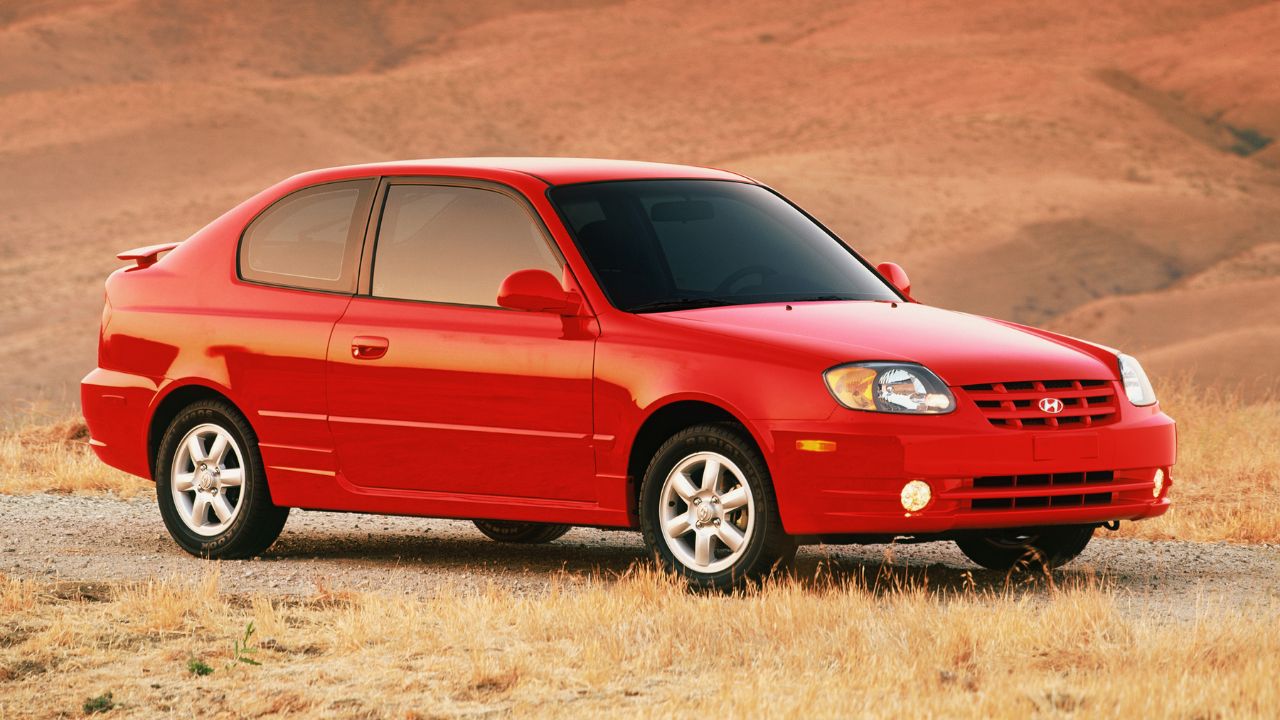
Hyundai Accent

The Accent was Hyundai’s proof that yes, you absolutely could build a brand new car for less than a used Honda Civic, and no, you probably didn’t want to think too hard about how they did it. But here’s the plot twist: it was actually pretty decent.
With 110 hp from a 1.6-liter engine, the Accent had enough power to keep up with traffic and enough fuel economy (32/37 mpg) to make you feel smug at the gas station. The interior looked like it was designed by someone who had heard cars described secondhand but had never actually seen one, yet somehow everything worked and kept working long after more expensive cars had given up.
The real genius of the Accent was its 10-year, 100,000-mile warranty; Hyundai’s way of saying, “Look, we know you’re skeptical, but we’ll put our money where our mouth is.” It was like buying insurance that came with a free car attached. Smart buyers recognized that sometimes the best luxury is knowing you won’t be walking to work.
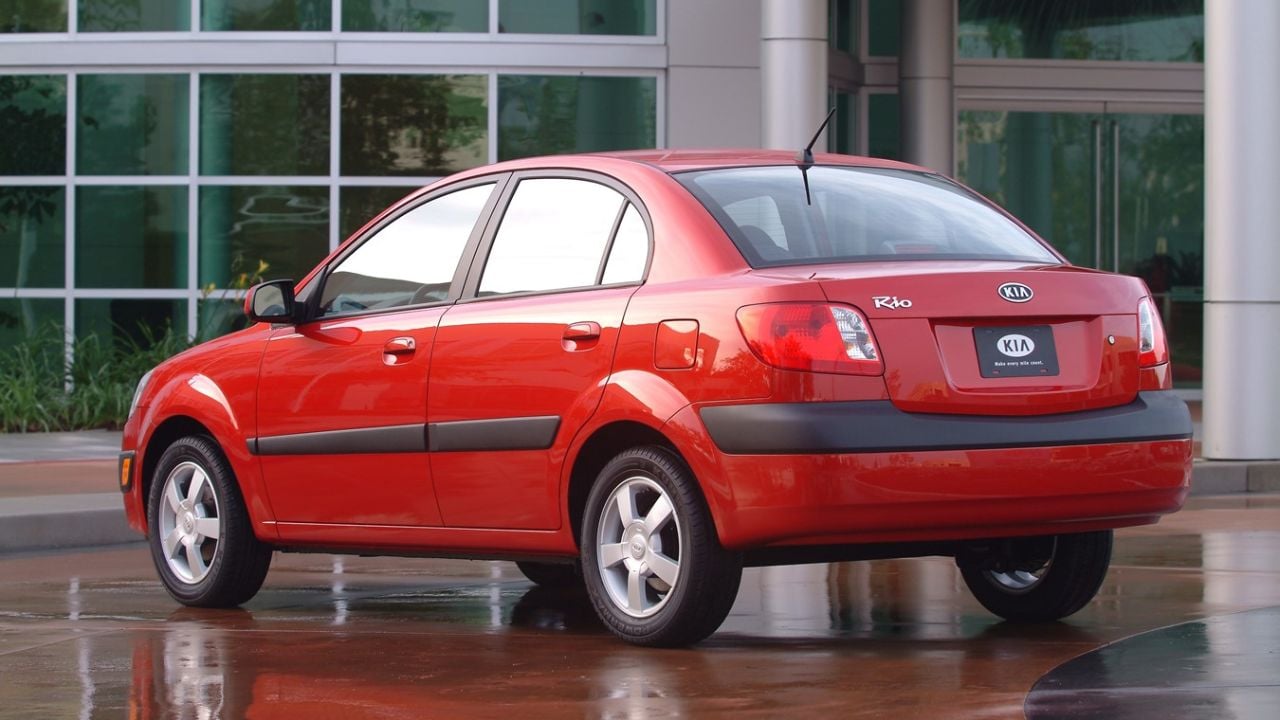
Kia Rio

The Rio was living proof that Kia’s “The Power to Surprise” slogan was accurate: it was genuinely surprising that these cars held together as well as they did. At prices that made shopping carts look expensive, the Rio offered transportation in its most distilled form.
The 1.6-liter engine produced 104 hp, which sounds pathetic until you remember this thing weighed about as much as a riding lawn mower. It got an honest 32/37 mpg, had enough interior space for four actual humans, and came with that same reassuring 10-year warranty that made penny-pinching feel responsible rather than cheap.
Early Rios had the build quality of a sociology major’s IKEA furniture, but they improved rapidly. By the mid-2000s, you were getting a car that would start every morning, get you where you needed to go, and ask for nothing more than occasional oil changes and the kind of maintenance schedule that busy people could actually follow.
Dodge Neon

The Neon was Chrysler’s attempt to inject some personality into the econobox segment, and by personality, we mean “round headlights and the structural rigidity of a wet paper bag.” But you know what? It worked. The Neon had character, even if that character was “fun friend who makes questionable decisions.”
Under the hood, a 2.0-liter four-cylinder produced 132 hp, making it one of the more spirited entries on this list. The manual transmission was surprisingly engaging, and the car actually handled decently, which was more than you could say for most of its competitors. It was like someone had taken a real sports car and photocopied it until only the fun parts remained.
The interior featured more plastic than a shelf in Walmart and a build quality that suggested the factory workers were paid by the hour, not by results. But Neons developed a cult following because they were cheap, peppy, and had enough personality to make their owners feel like they were driving something slightly less generic than spreadsheet software.
Toyota Echo

The Echo was Toyota’s bold experiment in making a car that looked like it was designed by someone who had only heard cars described over a bad phone connection. With proportions that defied conventional automotive wisdom and a dashboard that belonged in a spaceship (specifically, one from a 1970s sci-fi movie), the Echo was weird in the best possible way.
The 1.5-liter engine made 108 hp, which doesn’t sound like much until you remember this thing weighed about as much as a golf cart filled with aluminum cans. It achieved an EPA-estimated 35/43 mpg, making it a fuel-sipping champion that could go approximately forever on a single tank.
The interior was spacious in ways that seemed to violate the laws of physics, with a center-mounted instrument cluster that took some getting used to but actually made sense once you stopped fighting it. Echo buyers were either very practical or very brave, and sometimes it was hard to tell which was which.
Saturn Ion

The Ion was Saturn’s follow-up to the beloved S-Series, which was like asking someone to remake The Godfather but with half the budget and none of the original cast. It wasn’t Saturn’s finest moment, but it had its charms if you squinted and tilted your head just right.
The base engine was a 2.2-liter four-cylinder producing 140 hp, paired with either a manual transmission that was decent or an automatic that shifted like it was thinking really hard about each decision. The Ion’s party trick was its dent-resistant polymer body panels, which was great news for parking lots but made the car sound like a Tupperware container when you closed the doors.
Inside, the Ion featured Saturn’s commitment to being different for the sake of being different, with controls and layouts that made sense only to the engineers who designed them. But it was reliable, practical, and came with Saturn’s no-haggle pricing, which meant you could buy one without feeling like you needed a law degree.
Chevrolet Aveo

GM apparently wanted to figure out how cheap they could make a new car and still consider it a car. They came up with the Aveo as the answer.
With 103 hp from a 1.6-liter engine, the Aveo had roughly the same power-to-weight ratio as a determined hamster. But it was reliable, got decent gas mileage (27/35 mpg), and could be purchased for less money than many people spend on vacation. The automatic transmission was about as responsive as customer service at a cable company, but it kept working long after you’d forgotten what smooth shifting felt like.
The interior featured enough hard plastic to supply a small nation with cafeteria trays, but everything was logically laid out and surprisingly durable. College students loved them because they were cheap to buy, cheap to run, and cheap to fix — the holy trinity of student transportation.
Pontiac Sunfire

The Sunfire was Pontiac’s attempt to add some “excitement” to GM’s J-body platform, which was like trying to make oatmeal exciting by serving it in a fancier bowl. It worked, sort of, thanks to Pontiac’s knack for making even the most mundane cars look like they had at least thought about going fast.
The base 2.2-liter engine produced 115 hp, which was adequate for most situations that didn’t involve hills, headwinds, or unreasonable expectations. The five-speed manual was actually pretty good, while the automatic shifted with all the enthusiasm of someone working a double shift on Christmas Eve.
Sunfires came with Pontiac’s signature ribbed cladding and twin-nostril grilles, which made them look sportier than their Cavalier siblings even though they were basically the same car underneath. It was automotive marketing at its finest: selling the sizzle when there wasn’t much steak to work with.
Nissan Sentra Base

The B15-generation Sentra was Nissan’s entry into the “competent but forgettable” segment, and it succeeded wildly at being both. With clean, inoffensive styling and the kind of reliability that Japanese manufacturers were famous for, the Sentra was the automotive version of a good pair of khakis — not exciting, but appropriate for almost every situation.
The base 1.8-liter engine produced 126 hp, making it one of the more powerful cars on this list. Paired with Nissan’s smooth four-speed automatic or a five-speed manual, the Sentra offered a refined driving experience that put most of its competitors to shame.
The interior was a masterclass in basic done right: everything was where it should be, materials were decent for the price point, and the controls actually made intuitive sense. It wasn’t flashy, but it was the kind of car you could live with for years without developing any particular grudges against it.
When Basic Was Enough

Looking back at these cars now, it’s easy to dismiss them as forgettable transportation appliances. But that misses the point entirely. These vehicles served as faithful companions during some of the most important years of their owners’ lives — college, first jobs, starting families, building careers.
They were honest cars in an era before automotive marketing departments convinced everyone they needed heated steering wheels and ambient lighting to get to the grocery store. They started when you turned the key, got you where you needed to go, and asked for nothing more than basic maintenance and the occasional tank of gas.
Sure, they weren’t fast or luxurious or particularly stylish. In fact, they all look the same at a quick glance! However, they were reliable, affordable, and surprisingly durable. In an age of 84-month financing and $50,000 pickup trucks, there’s something almost quaint about cars that cost less than a nice vacation and lasted longer than most marriages.
These cars provided freedom to an entire generation of drivers who couldn’t afford anything fancier but refused to let that stop them from going places. And honestly? That’s not basic at all. That’s pretty remarkable.