The automotive rumor mill is churning again, with Japanese magazine Best Car reporting that Toyota and Mazda might be teaming up to create a new sports car. If true, it would be another chapter in the long history of carmakers joining forces to create something special. When automakers pool their resources, share technology, and combine their expertise, the results can be pretty remarkable.
Sometimes these partnerships produce vehicles that neither company could have built alone, blending the best characteristics of both brands into something that enthusiasts remember for decades.
Toyota GR86/Subaru BRZ (2012-Present)

Toyota and Subaru created one of the most driver-focused, affordable sports cars on the market with this collaboration. Subaru provided its flat-four boxer engine, while Toyota handled much of the design and development, resulting in a lightweight rear-wheel-drive coupe that starts around $31,200 (U.S., before destination).
The partnership gave both brands a halo sports car without the massive investment required to develop one independently.
BMW Z4/Toyota GR Supra (2019-Present)

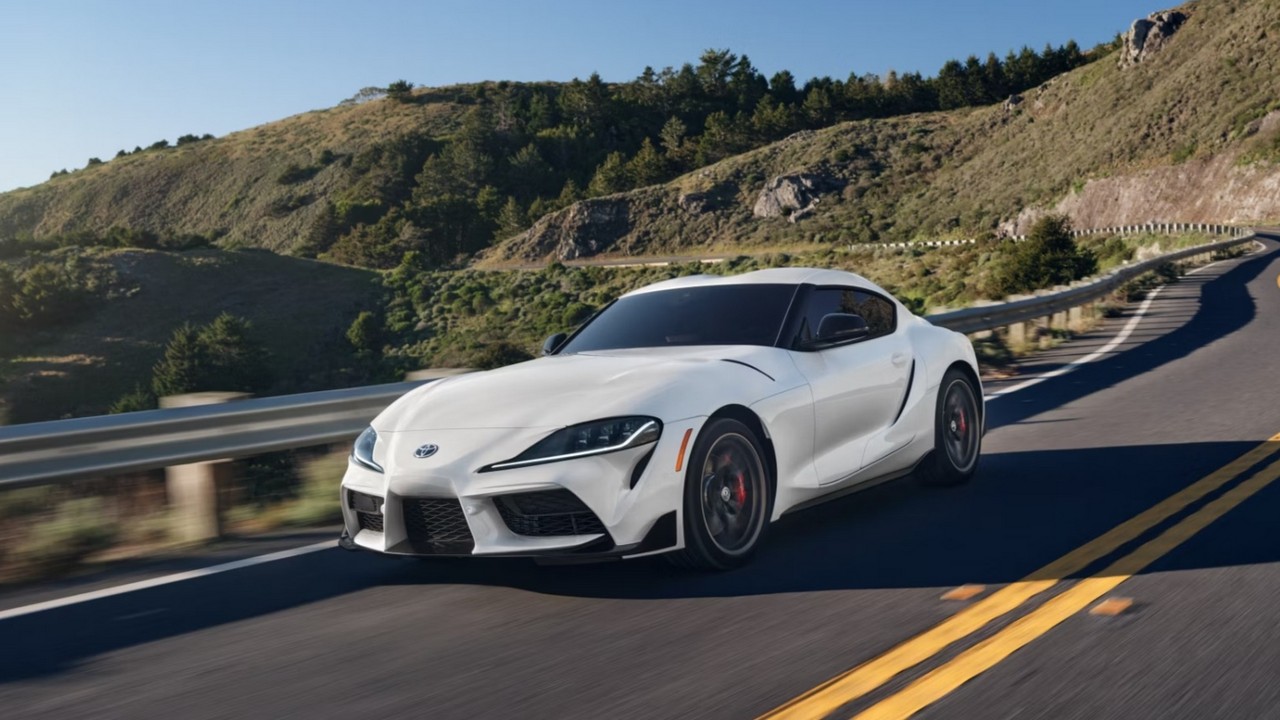
BMW and Toyota seemed like unlikely partners, but their collaboration produced two distinct sports cars from the same platform. The Z4 is a traditional roadster, while the Supra is a fixed-roof coupe with Toyota’s own tuning philosophy, offering 382 horsepower in top spec.
Both companies got world-class sports cars while sharing development costs for the chassis and BMW’s turbocharged inline-six engine.
Aston Martin Cygnet (2011-2013)

This collaboration was born out of necessity when Aston Martin needed to lower its fleet emissions to meet European regulations. They took Toyota’s tiny iQ city car and gave it a full Aston Martin interior treatment with hand-stitched leather and luxury amenities, selling it for around $45,000.
While commercially unsuccessful, it remains one of the strangest and most interesting badge-engineering exercises in automotive history. It’s a rare city car that hasn’t been forgotten.
Mazda MX-5 Miata/Fiat 124 Spider (2016–2019 production; 2017–2020 model years depending on market)

Mazda’s fourth-generation Miata platform became the foundation for Fiat’s revival of the 124 Spider nameplate. Fiat contributed its turbocharged 1.4-liter engine, while Mazda provided the chassis, suspension, and most mechanical components, giving the 124 a different character with more low-end torque.
The partnership allowed Fiat to reenter the roadster market without developing an entirely new platform.
Ford GT40 (1960s)

Ford’s legendary Le Mans winner actually began as a collaboration with Lola Cars, with Ford acquiring the Lola GT prototype as the foundation for its racing program. Lola’s Eric Broadley was brought on as a consultant to help develop what became the GT40, contributing crucial engineering expertise.
The result was a car that won Le Mans four consecutive times from 1966 to 1969, cementing its place in racing history.
Alfa Romeo 8C/Maserati GranTurismo (2007-2011)

These Italian beauties shared the Ferrari/Maserati F136 V8 family: the 8C used a 4.7L, while the GranTurismo launched with a 4.2L and later gained a 4.7L in the GranTurismo S and similar platform components, though they expressed very different personalities. The limited-production Alfa Romeo 8C was a carbon-fiber exotic with only 500 coupes made, while the Maserati GranTurismo was positioned as a more accessible grand tourer.
Both offered stunning Italian styling: the GranTurismo was designed by Pininfarina, while the 8C was designed by Alfa Romeo’s Centro Stile.
Mercedes-Benz SLR McLaren (2003-2010)

Mercedes-Benz and McLaren combined forces to create a supercar that blended German luxury with British racing expertise. The 617-horsepower supercharged V8 could push the SLR to 207 mph, while the interior featured Mercedes’ signature luxury appointments.
McLaren’s Formula 1 experience influenced the car’s aerodynamics and carbon fiber construction, creating a unique grand touring supercar. Speaking of, McLaren returned to Mercedes power in Formula 1 starting in 2021.
Volkswagen Touareg/Porsche Cayenne/Audi Q7 (2002-Present)

This three-way collaboration across the Volkswagen Group created a shared platform for luxury SUVs that became a major bestseller and profit driver for Porsche while giving all three brands competitive entries in the growing SUV market. Each vehicle was engineered to reflect its brand’s character, from the Touareg’s practicality to the Cayenne’s sports car handling.
The platform-sharing strategy proved so successful that it’s now in its third generation and has expanded to include the Bentley Bentayga and Lamborghini Urus.
Dodge Stealth (1991–1996) / Mitsubishi 3000GT (1990–2000)

Chrysler’s partnership with Mitsubishi in the 1990s produced this technologically advanced sports car that was sold under both brands. The top-spec Mitsubishi 3000GT VR-4 (and Dodge Stealth R/T Turbo) featured all-wheel drive, four-wheel steering, twin turbos, and active aerodynamics, pushing 320 horsepower.
While the Dodge Stealth was more subdued in styling, both versions showcased Japanese engineering with American marketing. And both are 1990s cars that we still dream about.
Pagani Huayra (2011–2018 for the original Huayra; later variants continued)

Road-going Huayra models use a Mercedes-AMG twin-turbo V12 (M158), but the track-only Huayra R uses a bespoke naturally aspirated V12 built by HWA. This partnership gives the small Italian hypercar manufacturer access to a world-class powertrain producing 850 horsepower in the Huayra R, something that would be impossible for Pagani to develop independently.
The AMG engine’s reliability and performance have been crucial to Pagani’s success as a manufacturer.
Saab 9-2X (2005-2006)

Nicknamed the “Saabaru,” this collaboration brought together Saab’s Scandinavian design sensibility with Subaru’s all-wheel-drive expertise. Based heavily on the Subaru Impreza wagon, the 9-2X Aero featured a turbocharged 2.5-liter boxer engine making about 230 horsepower (Aero) and Saab’s distinctive interior touches.
Though short-lived, it remains a quirky collector’s item that blended Swedish and Japanese engineering.
McLaren F1 (1992-1998)

Gordon Murray’s legendary supercar was built by McLaren but relied on BMW to create its naturally aspirated 6.1-liter V12 engine, which produced 627 horsepower. BMW M Division developed the engine specifically for the F1, and it helped the car achieve its record-breaking 240 mph top speed that stood as the production car record for over a decade.
This collaboration between a racing constructor and a premium engine manufacturer created what many consider the greatest supercar ever built.
Conclusion

These collaborations prove that when automakers check their egos at the door and combine their strengths, everybody wins. Whether it’s sharing development costs, accessing specialized technology, or blending different engineering philosophies, partnerships have given us some of the most interesting and capable vehicles on the road. If Toyota and Mazda do team up for a new sports car, they’ll be joining a tradition that’s produced everything from affordable driver’s cars to record-breaking supercars.
The best collaborations don’t just split costs; they create something neither company could have achieved alone.