The 1990s were a golden era for performance cars. Automakers were pushing boundaries with new technologies, and turbochargers were becoming mainstream. The balance between raw power and everyday drivability hit a sweet spot that enthusiasts still discuss today.
These fresh and dope rides didn’t just look good on paper: they delivered experiences that stuck with drivers long after the keys were handed back.
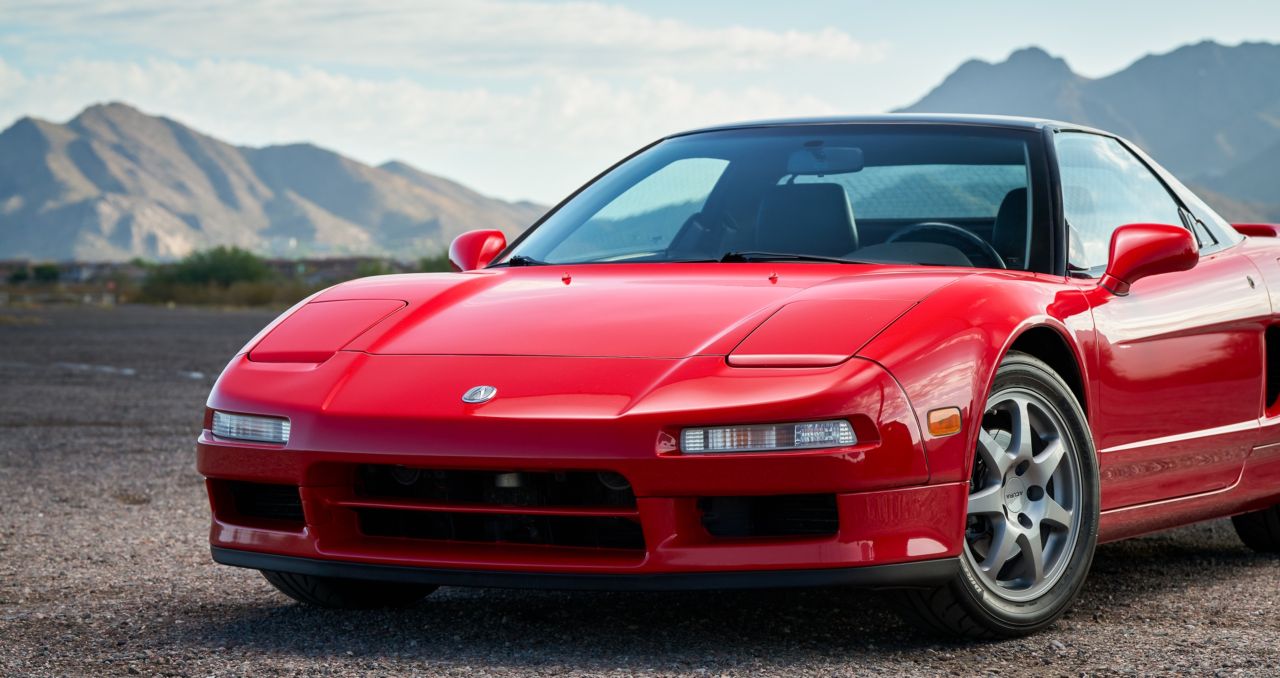
Acura NSX

Honda’s supercar proved you didn’t need to sacrifice reliability for exotic performance. The all-aluminum body and mid-mounted V6 delivered 270 horsepower while maintaining the build quality of an Accord, and Ayrton Senna himself helped fine-tune the handling.
It rewrote the rulebook for what a supercar could be, forcing Ferrari and Porsche to reconsider their approach to everyday usability seriously.
Mazda RX-7

The third-generation Mazda RX-7 reached its peak with rotary power, featuring Mazda’s own twin-turbocharged 1.3-liter 13B-REW engine rated at around 255 horsepower, depending on the market. The compact rotary design allowed engineers to achieve near 50/50 weight balance, one of the key reasons the FD RX-7 remains among the best-handling sports cars of the 1990s.
Its sequential twin-turbo setup helped smooth out turbo lag, while the pop-up headlights and flowing bodywork gave it an unmistakable silhouette that still turns heads today.
Fun fact: Mazda officially listed the 13B-REW as a 1.3-liter engine; however, because of the rotary’s unique design, its total swept volume doesn’t directly compare to a piston engine. In performance terms, it behaves more like a 2.6-liter.
Toyota Supra Turbo

The fourth-gen Supra’s 2JZ-GTE inline-six became legendary in tuning circles for its ability to handle massive power increases with minimal modifications. From the factory, its 320 horsepower was impressive enough, but the over-engineered drivetrain could support significantly higher power levels with the right upgrades.
Today, clean examples command prices that would have seemed impossible just a decade ago.
Dodge Viper RT/10

Chrysler’s answer to the Corvette was essentially a barely tamed race car with a license plate. The 8.0-liter V10 engine produced 400 horsepower, with no traction control and early models lacking anti-lock brakes, and no apologies for being difficult to drive.
It was raw, intimidating, and precisely what American performance enthusiasts wanted: proof that domestic automakers could build something truly outrageous. It remains one of the rawest and most extreme cars Dodge has ever made.
BMW M3

The E36 M3 introduced a more refined approach to performance than its predecessor, featuring a silky 240-horsepower inline-six engine that loved to rev.
While European models got 286 horsepower, even the US-spec version delivered an engaging driving experience that balanced daily usability with track capability. Its relatively subdued styling meant it flew under the radar while embarrassing flashier sports cars on backroads.
Nissan 300ZX Twin Turbo

Nissan’s technological showcase packed twin turbos, four-wheel steering, and adjustable suspension into a sleek grand tourer body. The often underrated VG30DETT V6 produced up to 300 horsepower, depending on market and transmission, making it one of the quickest Japanese cars available in America during the early 1990s.
The complex engine bay became infamous among mechanics, but owners accepted the maintenance headaches for that combination of power and refinement.
Porsche 911 Turbo

The last air-cooled 911 Turbo delivered 408 horsepower through an all-wheel-drive system, making it remarkably capable in any weather. Its twin-turbocharged flat-six could launch the car to 60 mph in around 4 seconds, supercar territory for the era.
Collectors now consider it the sweet spot between classic Porsche character and modern performance.
Chevrolet Corvette C5

The C5 represented a complete redesign that finally gave the Corvette the world-class chassis it deserved. The LS1 V8’s 345 horsepower was just the beginning—the new platform’s rigidity and near-perfect weight distribution transformed it into a legitimate sports car that could hold its own against European exotics.
Better yet, it maintained the Corvette’s reputation for being a performance bargain with maintenance costs that wouldn’t bankrupt you.
Mitsubishi 3000GT VR-4

This technical tour de force featured all-wheel drive, all-wheel steering, twin turbos, and active aerodynamics, all of which were offered by most competitors at the time. With up to 320 horsepower, depending on the year and market, the twin-turbo V6 had serious punch, though the car’s 3,800-pound curb weight meant it felt more like a capable grand tourer than a lightweight sports car.
The complexity that made it impressive also made it a maintenance challenge that scared away many potential buyers.
Ford Mustang SVT Cobra

Ford’s answer to the Camaro Z28 packed 240 horsepower from a specially tuned 5.0-liter V8, later replaced by a 4.6-liter engine producing 305 horsepower. Developed by Ford’s Special Vehicle Team (SVT), the Cobra stood as the pinnacle of Mustang performance in its day. Engineers focused on balance and precision, making it as capable in the corners as it was in a straight line.
The SVT Cobra featured upgraded suspension, larger brakes, and subtle aerodynamic refinements, along with unique badging and interior touches that distinguished it from the standard GT.
These Cobras proved that American muscle could deliver real handling prowess when given proper attention to chassis dynamics—paving the way for the high-performance Mustangs that followed.
Ferrari F355

The F355’s naturally aspirated 3.5-liter V8 revved past 8,000 rpm, producing 375 horsepower and delivering the quintessential Ferrari experience. Its gated manual transmission became iconic, offering a tactile connection between driver and machine that modern automated gearboxes can’t replicate.
Yes, maintenance was expensive, but hearing that Formula 1-derived flat-plane crank engine at full song made every penny worthwhile.
Honda Prelude Type SH (1997-2001)

While it wasn’t the most powerful car on this list, with only 195 horsepower, the Prelude Type SH’s Active Torque Transfer System provided front-wheel-drive handling that bordered on magic. The system could shuffle power between the front wheels during cornering, essentially eliminating understeer and making it feel like a much more expensive sports car.
It proved that clever engineering could sometimes matter more than raw horsepower numbers.
Conclusion

These 12 cars represent a unique moment in automotive history when manufacturers were experimenting boldly, and drivers could still find analog thrills without electronic nannies softening every input. Whether it was Japanese precision, American muscle, or European refinement, the ’90s delivered performance cars with distinct personalities that matched their capabilities.
Today’s cars might be faster and more capable. Still, there’s a reason we keep looking back at these machines with such fondness; they offered involvement and character that’s increasingly rare in our modern, ultra-competent automotive landscape.