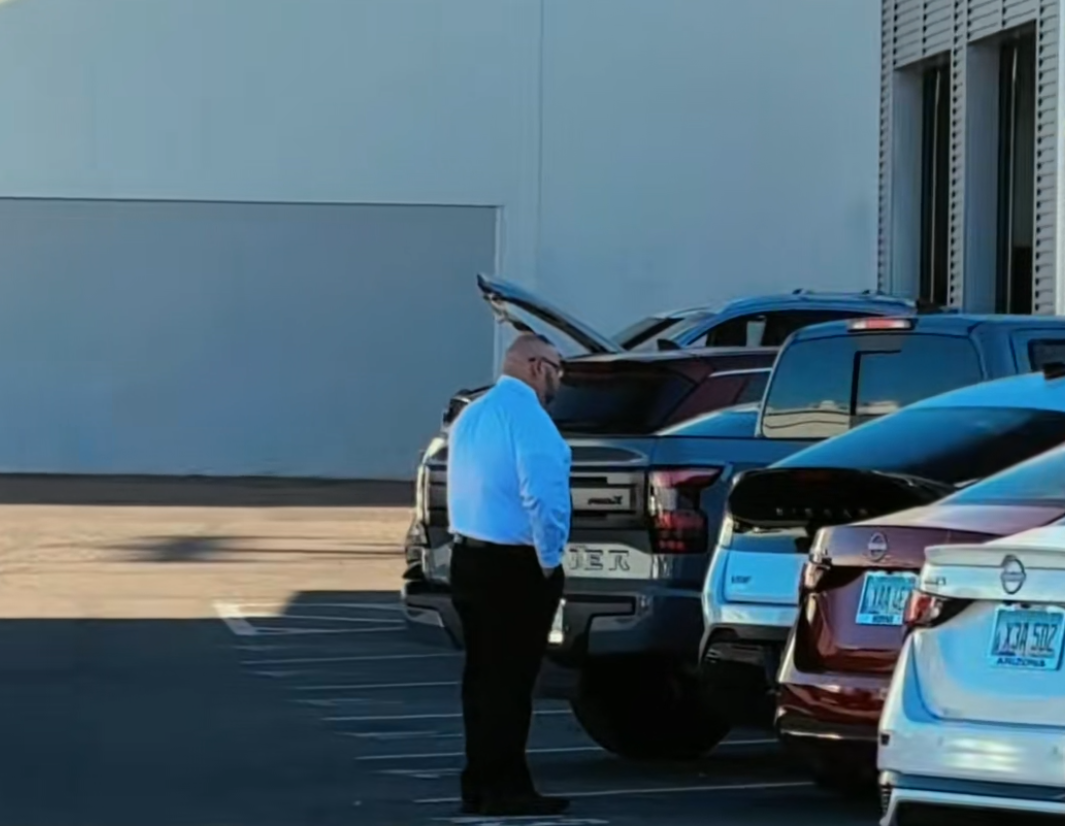
When a TikTok clip of a car dealership manager staring in disbelief at a trade-in gone wrong started making the rounds online, most people figured the comments section would fill up with sympathy. It did not. Instead, it became a confessional booth for drivers everywhere who have pulled the exact same move.
The video, posted by TikTok user Mike (@keyswithmike), shows a group of dealership employees standing outside on the lot, eyes locked on a vehicle that clearly was not what it appeared to be at the time of the deal. The caption summed it up simply: the manager was not happy about the trade-in one of his employees had accepted. The details of what, exactly, was wrong with the car were not spelled out, but the collective body language of the staff said plenty.
What followed in the comments was part comedy, part cautionary tale, and part group therapy session for anyone who has ever quietly driven a car with a check engine light straight to the dealership and hoped nobody noticed. As it turns out, that is a lot of people.
Car dealerships have long had a reputation for getting the upper hand in negotiations, upselling warranties, and squeezing trade-in values down to the bare minimum. So when the tables turn, even slightly, the internet tends to cheer. This particular video gave people the chance to share their own stories, and share they did.
The Comment Section Was Full of Confessions
@keyswithmikeyuma We try our best lol #yumaaz #yumalicious #nissan #tiktok #fyp ♬ original sound – warnerbrosanz
The responses to the video read less like sympathy for the dealership and more like a highlight reel of creative trade-in tactics. One commenter recalled finishing all of the paperwork on a trade-in before the salesperson asked about a check engine light. The driver’s response? “You didn’t ask.”
Another person shared how they timed their visit perfectly, knowing their car’s transmission would overheat and stall if driven after warming up. The solution was to head to the dealership first thing in the morning before the engine had a chance to cause problems. It worked.
A third commenter got lucky in an unexpected way. A bump in the road on the way to trade in their Dodge with a failing transmission somehow knocked the check engine light off entirely. They walked away with full trade-in value.
These stories might sound like scheming, but many commenters saw it as leveling the playing field. Several pointed out that dealerships rarely, if ever, volunteer information about the downsides of a vehicle they are trying to sell. If anything, they noted, the industry has spent decades perfecting the art of not disclosing more than legally necessary.
What the Law Actually Says About Trade-In Disclosures
This is where things get interesting. According to legal resources cited in discussions about trade-in ethics, buyers are generally required to disclose very little when trading in a vehicle. That said, there are some areas where honesty is not just expected but legally required.
Odometer readings are among the most serious. Misrepresenting mileage can expose a seller to civil liability. Beyond that, disclosing salvage titles, flood damage, or major structural damage is typically required. Trying to conceal that kind of history crosses from savvy negotiating into fraud territory.
A check engine light or a transmission that shudders at highway speeds? That is much murkier. If a dealership completes an official appraisal, accepts the vehicle, and signs off on a bill of sale without catching a problem, the burden of proving when that damage occurred falls on the dealer. It does not automatically mean the previous owner is off the hook, but it does mean the situation is complicated.
The bottom line: reading any trade-in agreement carefully before signing is essential. Some dealerships include clauses that address undisclosed defects, and others do not.
Dealership Workers Weighed In Too
Perhaps the most surprising voices in this conversation were people who claimed to work at dealerships themselves. One person said they regularly take trade-ins and actively advised against volunteering information about a vehicle’s problems. Their reasoning was simple: it does not change the outcome for the seller, and it opens the door to complications in the deal.
Another commenter said a friend who worked at a dealership gave them the same advice when their car started having engine trouble. The recommendation was to clear any stored error codes and immediately take the car in for a trade before anything got worse. That kind of insider tip, whether it is ethical or not, travels fast.
People on automotive forums have debated this exact issue for years. A recurring argument is that dealerships build enough margin between the wholesale trade-in price and the eventual retail sale price to cover repairs and still turn a profit. If a car is traded in for $4,000 and resold two weeks later for $18,000, some would argue the dealership has little room to complain about a transmission issue they missed in the inspection.
What We Can Learn From All of This
This viral moment is really about something bigger than one bad trade-in. It is about trust, or the lack of it, between car buyers and dealers. The fact that so many people enthusiastically admitted to hiding vehicle problems says a lot about how that relationship has historically felt to consumers. When people do not believe the other party is being straight with them, they stop feeling obligated to be straight in return.
For buyers, the lesson is to do your homework. A pre-purchase inspection from an independent mechanic is always worth the cost. For sellers trading in a vehicle, knowing what you are legally required to disclose versus what you are strategically choosing not to mention is a meaningful distinction worth understanding before you sign anything.
And for dealerships? The comment section on that TikTok video may be the most honest market research they have seen in years.