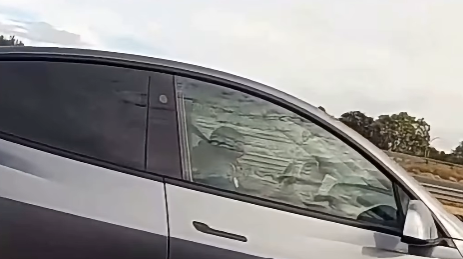
A Tesla driver cruising along a California freeway at 60 mph appeared to have found an unconventional use for Full Self-Driving: catching up on sleep.
A California Highway Patrol motor officer spotted the driver slumped behind the wheel with dark sunglasses on as the Tesla traveled along Interstate 80 in Solano County.
The encounter happened Sept. 2, according to Bay City News. CHP later shared video of the stop and said the driver had been heading home from work.
The car kept moving. The nap did not.
Caught Napping
Embedded media follows; please allow a moment to load.
CHP’s Solano-area office said its motor officer noticed the driver slumped over while the Tesla traveled at about 60 mph.
The officer stopped the vehicle and issued the driver a citation for unsafe speed.
CHP later joked that FSD stood for “Full Self-Driving,” not “Full Snooze Drive,” while warning drivers that assistance technology does not eliminate their responsibility behind the wheel.
Scott Heitman, an officer with CHP Solano, told Bay City News that California does not have a specific penalty aimed at drivers who fall asleep while a vehicle is operating in a self-driving mode. Existing traffic laws can still apply.
“What’s the safe speed for being asleep? Zero miles per hour,” Heitman said.
Still The Driver
Tesla’s own instructions leave little room for a sleeping interpretation of the system.
Tesla describes FSD (Supervised) as an advanced driver-assistance system that requires active driver supervision. The company says it does not make a Tesla autonomous and that the person behind the wheel remains responsible for the vehicle’s speed and control.
That distinction also matches the federal description of Level 2 driving assistance. The National Highway Traffic Safety Administration says Level 2 systems can continuously assist with steering and acceleration or braking, but the human driver remains responsible for driving and must stay fully engaged and attentive.
California regulators have also scrutinized how Tesla describes the technology. In February, the California Department of Motor Vehicles said Tesla had modified its use of the “Full Self-Driving” name to specify that driver supervision is required.
CHP’s takeaway from the Solano County stop was considerably shorter: power naps belong in a parking spot, not behind the wheel.