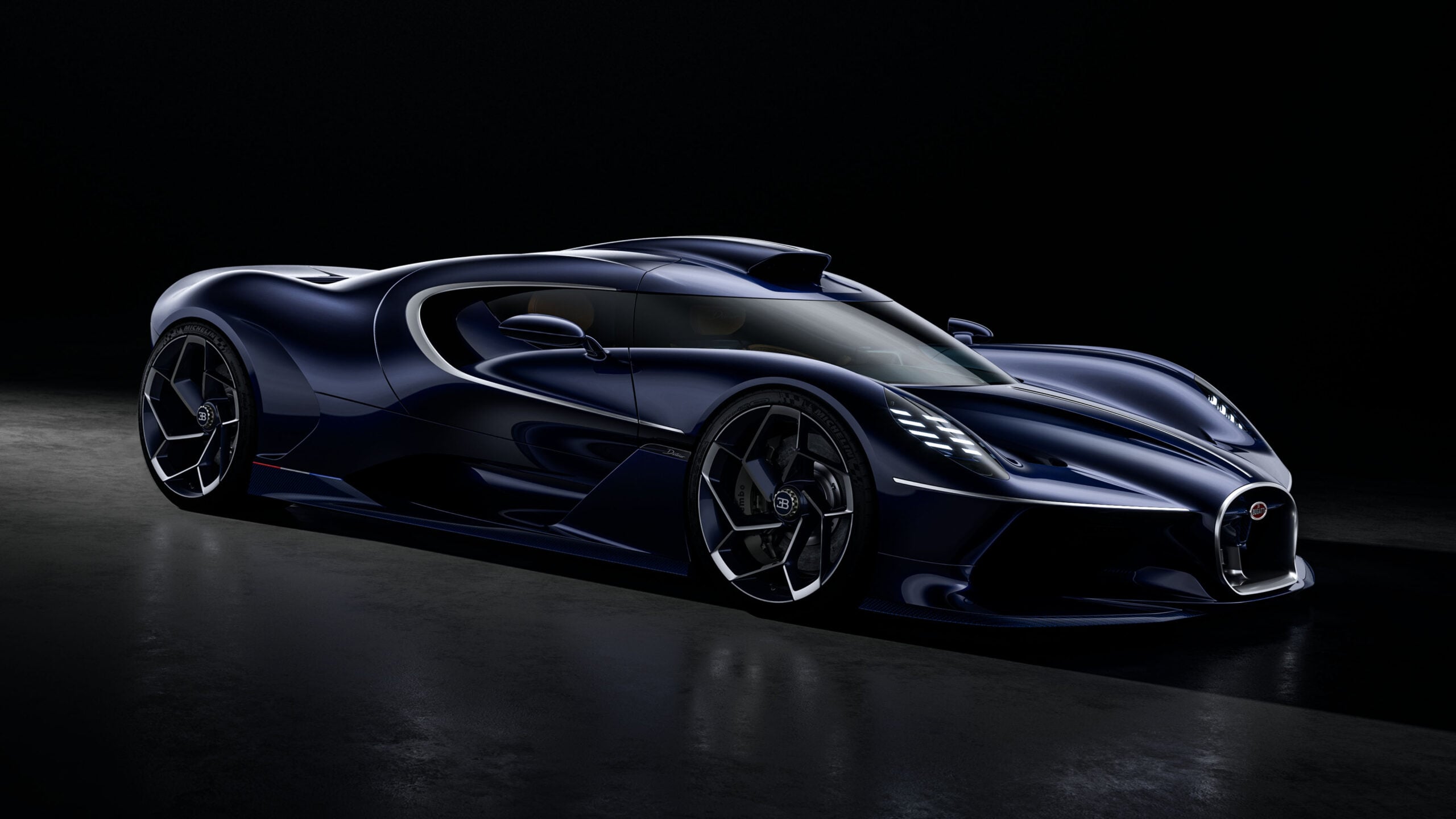
Bugatti has taken one of its most extreme track cars and reimagined it as something far more elegant. Its new Destrier uses the Bolide as its foundation but trades much of that car’s aggressive aero for bespoke bodywork, luxury materials, and a far more sculptural appearance.
The Destrier is the third one-off model created through Programme Solitaire, following the Brouillard and F.K.P. Hommage. Its name comes from the powerful horses ridden by medieval knights, an appropriate reference for a machine carrying nearly 1,600 horsepower.
Underneath the new skin is the same carbon-fiber monocoque used by the Bolide, along with Bugatti’s quad-turbocharged 8.0-liter W16. Output remains an extraordinary 1,578 horsepower, sent to all four wheels through a seven-speed dual-clutch transmission.
Only one Destrier will be built, and Bugatti has not disclosed its price or owner. The finished car is scheduled to appear during Monterey Car Week before being shown at the Pebble Beach Concours d’Elegance on August 16.
The Bolide’s Shape Without The Giant Aero
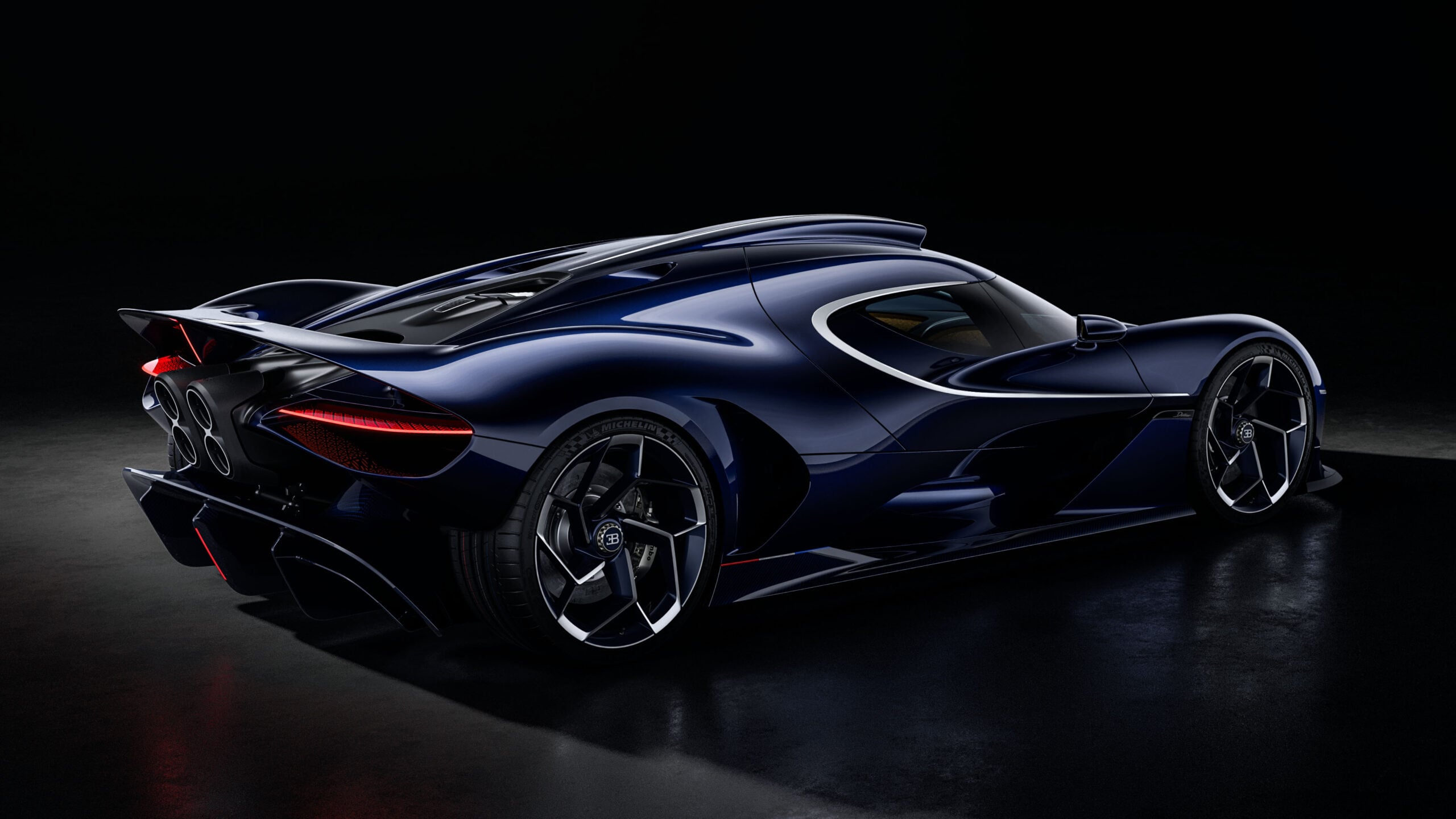
The Bolide was designed around downforce and track performance, resulting in huge intakes, an enormous rear wing, and bodywork shaped almost entirely by aerodynamic demands. The Destrier deliberately moves in the opposite direction.
Bugatti removed much of that visual complexity and allowed the Bolide’s underlying proportions to become the focus. The body sits extremely low, with the cabin tucked between swollen wheel arches and a dramatic waistline that narrows sharply before expanding over the rear wheels.
Bugatti’s familiar C-shaped design element is more prominent here and receives polished trim. A wider horseshoe grille, revised lighting, and a polished center spine running across the hood and roof give the car a more formal appearance.
The rear wing is much smaller and more integrated than the Bolide’s towering track-focused setup. Thin taillights and cleaner bodywork further distance the Destrier from its racing sibling while retaining the same underlying stance.
The W16 Still Makes 1,578 Horsepower
The styling may have been softened, but the mechanical specification certainly has not. Behind the cabin sits Bugatti’s quad-turbocharged 8.0-liter W16 producing 1,578 horsepower.
That engine is paired with a seven-speed dual-clutch transmission and all-wheel drive. Bugatti has not released dedicated performance figures for the Destrier, so there is no confirmation that it matches the Bolide’s acceleration or top-speed capability.
The decision to retain the W16 also makes the car particularly significant as Bugatti moves into a new era of electrified V16 powertrains. Destrier effectively gives the outgoing architecture another highly exclusive chapter.
Its wheels are larger than the Bolide’s track-focused 18-inch setup, measuring 20 inches at the front and 21 inches at the rear. The change gives the car a more road-oriented visual stance while filling out its dramatic arches.
Sapphire Celeste Gives It A Completely Different Personality
The one-off exterior color is called Sapphire Celeste, a deep blue-purple shade incorporating a sparkling effect. Bugatti pairs it with polished aluminum and color-matched exposed carbon fiber.
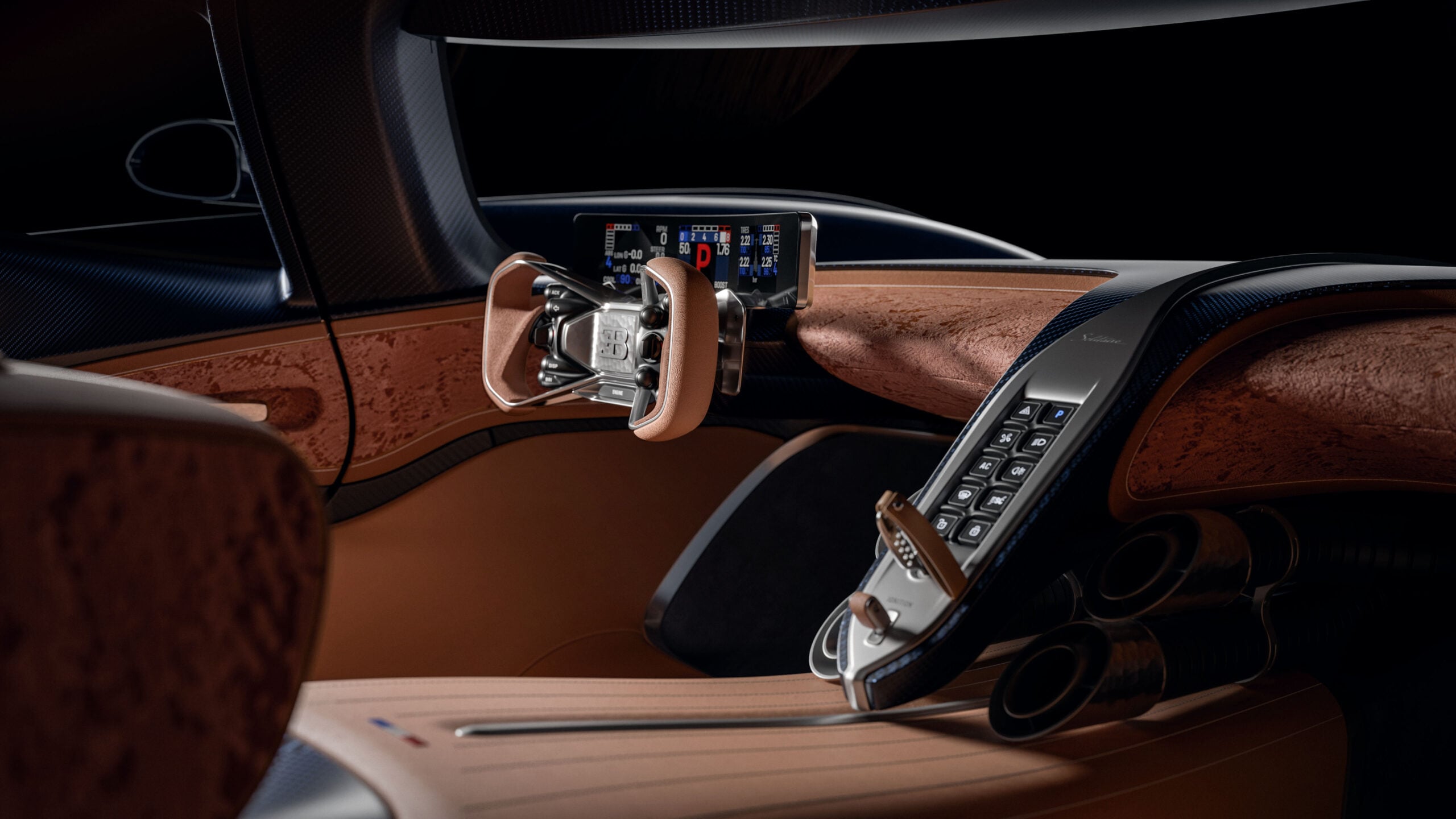
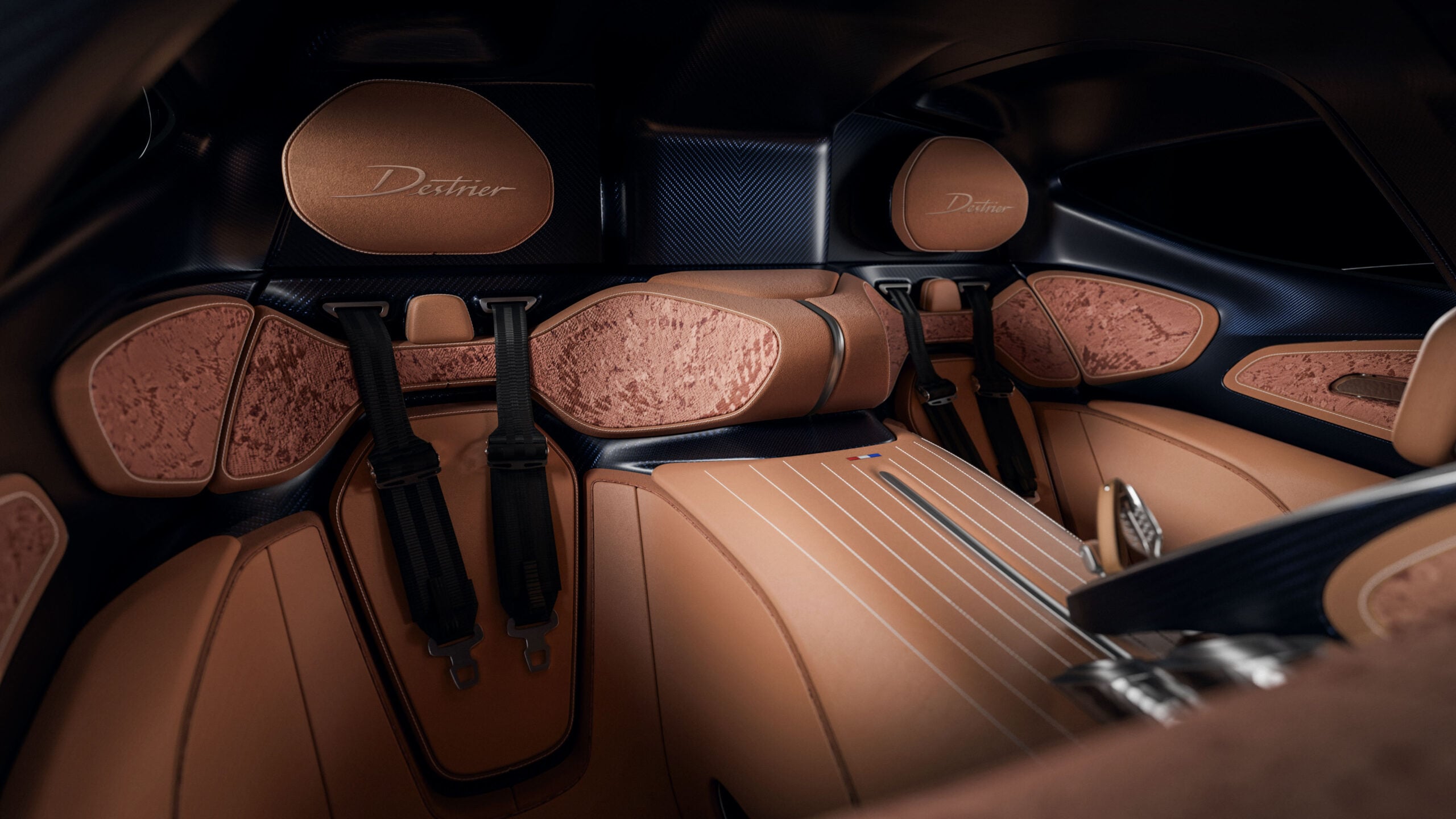
The cabin follows the same philosophy of transforming a competition-focused environment into something far more luxurious. Brown leather and nubuck are combined with a three-dimensional knitted textile woven with copper-colored yarn.
Hammered metal details appear throughout the interior and engine bay as a reference to medieval armor. The treatment can be found on components including the vents, steering-wheel hub, door openers, and sill plates.
A small French flag and extensive bespoke stitching provide additional finishing touches. Even the oil-filler cap carries a “1/1” marking, making the Destrier’s one-off status impossible to miss.
Bugatti Looked Back To The Type 57
Bugatti says the concept behind the Destrier has historical precedent within the company. The Type 57 platform once supported both competition-focused machines and dramatically different road cars, including the Type 57G Tank and the Type 57SC Atlantic.
That same idea underpins the relationship between the Bolide and Destrier. One is designed around lap times and aerodynamic performance, while the other uses similar mechanical ingredients to pursue design and craftsmanship.
A special engraved panel above the windshield depicts the historic Type 57G and Type 57SC, making the connection explicit. Bugatti design director Frank Heyl has even suggested the Destrier could still be appearing on concours lawns decades from now.
Would you prefer the Destrier’s cleaner styling or the wild aero of the original Bolide? Which Bugatti W16 model do you think will be remembered most fondly in 50 years? Let us know in the comments.