

Against a backdrop of new vehicle unveilings and high‑octane racing announcements at this year’s Detroit Auto Show, Bill Ford delivered a message that resonated long beyond the shiny aluminum and chrome on display.
For Ford Motor Company’s executive chairman, preserving the company’s roots as a family business is inseparable from a commitment to strong domestic manufacturing and a resilient industrial base.
Ford, the great‑grandson of founder Henry Ford, has spent nearly four decades in leadership roles at the company his ancestor launched in 1903. At an event marking the season launch for Ford’s racing efforts and product portfolio, he paused for a family portrait with three of his four children.
That image — a multigenerational lineup positioned in front of the company’s latest offerings — captured the blend of legacy and contemporary vision he champions.
Family is Everything
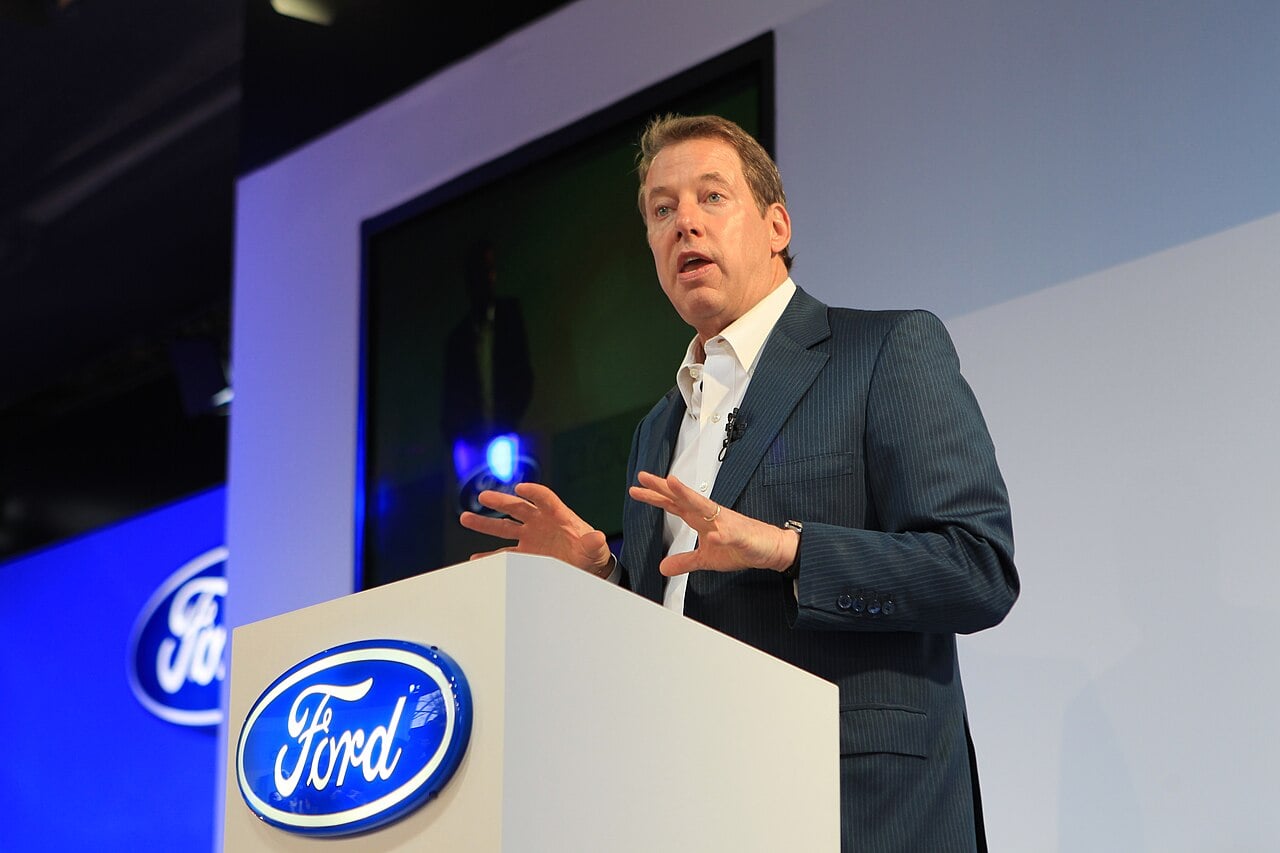
“One hundred and twenty‑three years, and we’re still a family business,” Ford told Yahoo Finance in a wide‑ranging interview. “I’m only the fourth family member to be at the top of the company. I’ve had every title: I’ve been president, I’ve been CEO, I’ve been chairman, I’ve been COO.”
That sense of stewardship is not symbolic. It reflects Ford’s determination that the company remain distinct among the legacy American automakers. Unlike its Big Three peers, Ford boasts active involvement from multiple family members.
Will Ford serves as general manager of Ford Racing, younger son Nick Ford contributes to corporate strategy, and daughter Alexandra Ford English occupies a seat on the board of directors, having become the first woman in the family to do so.
Family control of a major global automaker in 2026 is rare. It gives Bill Ford a platform to articulate long‑term strategies that might conflict with short‑term market pressures. One of his most fervent convictions is that Ford must retain a substantial U.S. manufacturing footprint even when overseas production might appear cheaper.
Proudly American, No Matter What

“Before anybody heard of tariffs, our competitors were moving their production elsewhere,” Ford said. “But to me it was important that we remain centered here in America. We paid a penalty for that; it costs us more, but in the end, it was the right thing to do.”
That decision holds up on several fronts. Ford currently assembles around 80 percent of the vehicles it sells in the United States on U.S. soil, a higher ratio than its American rivals. The company also employs the largest number of United Auto Workers personnel among the domestic automakers.
That culminated in a hard‑fought labor agreement at the end of 2024 that increased labor costs but secured stability across assembly lines and worker relations.
Ford’s focus on domestic production comes at a moment when political leaders in Washington underscore the importance of revitalizing the country’s manufacturing base. President Donald Trump has made reshoring and trade protection a central plank of his economic agenda.
Tariffs on imported parts and vehicles may increase costs for companies like Ford, particularly on vehicles or components produced abroad, such as the Mexico‑built entry‑level Maverick. Yet Bill Ford views these short‑term tradeoffs as necessary if they strengthen long‑term industrial capacity in the United States.
Fighting for Survival… and Legacy

“We were really in danger of losing our industrial base,” Ford said. “Fortunately, over the last few years, both Republicans and Democrats have realized, ‘Wait, it is important.’”
Industry observers note that this focus aligns Ford with broader economic and geopolitical shifts. Other executives have pointed to rising concerns about global competition, especially from China’s expanding automotive sector.
While Ford’s chief executive has called for more robust policy actions to counter those pressures, Bill Ford’s emphasis remains rooted in a more foundational belief: that the company’s identity, and by extension its competitive edge, is bound up in strong U.S. production and family leadership.
As the auto world accelerates toward electrification, autonomous technology, and new mobility concepts, Bill Ford insists that Ford Motor Company’s heritage is not a relic. It is a principle that continues to shape how the automaker builds cars, treats workers, and positions itself for the long haul.