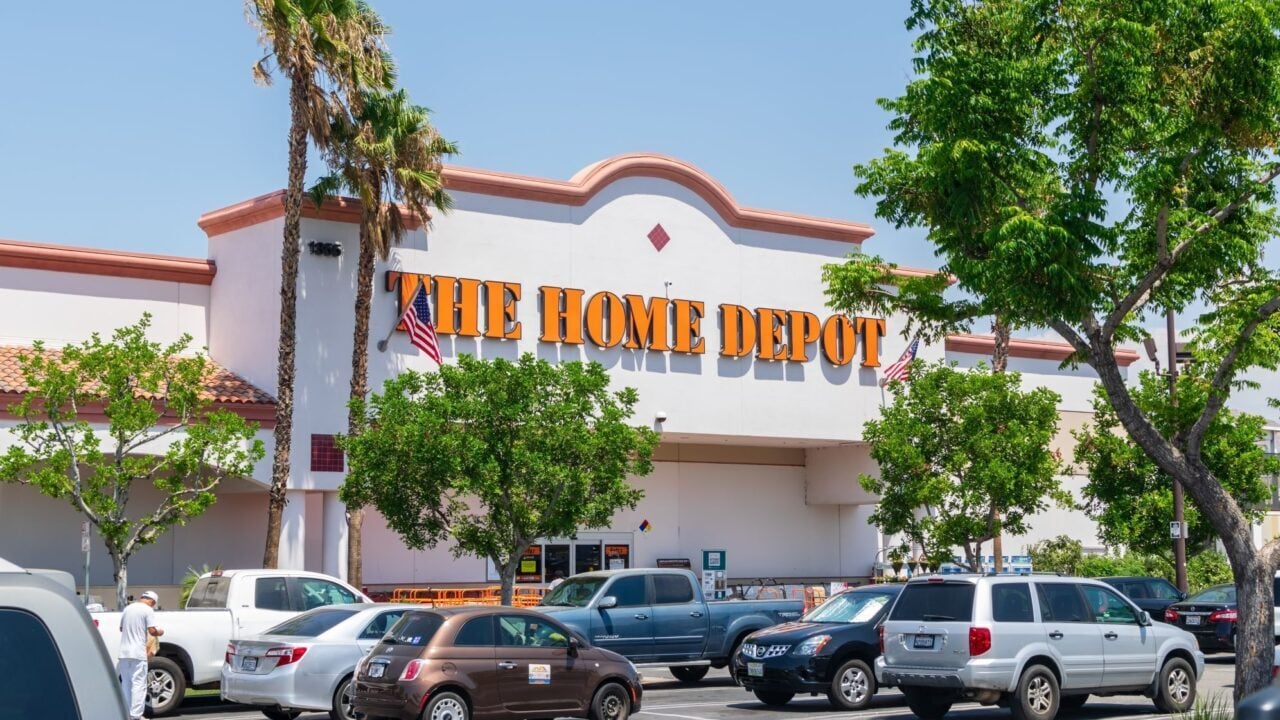
Big box stores are increasingly turning to license plate reader technology to fight organized retail theft, and for car enthusiasts and privacy advocates alike, the debate feels a lot bigger than Home Depot parking lots.
A recent report from WHAS11 highlighted how retailers, including Home Depot and Lowe’s, are using automated plate-reader cameras in parking lots following a rise in large-scale theft operations targeting stores across the country. The concern is not hypothetical either.
According to WSB-TV, investigators linked one theft ring to more than $10 million in stolen merchandise in what authorities described as the largest organized retail theft operation targeting Home Depot in company history.
License plate readers no longer exist only on police cruisers or highway toll systems.
Today, they can be found in shopping centers, apartment complexes, neighborhoods, parking lots, and outside private businesses, creating a sprawling web of interconnected cameras quietly recording vehicle movement across everyday life.
Modern Retail Theft Crews Operate Like Professional Teams
Another major theft case involved a New York-based crew accused of targeting Home Depot stores across nine states from Maryland to Massachusetts. Authorities allege the group stole more than $2 million worth of merchandise from 128 stores, including power tools, air conditioners, and household goods.
Investigators said surveillance footage showed the crew allegedly dumping merchandise into garbage bins before wheeling the stolen products out of stores. In some cases, officials say one member of the crew allegedly distracted employees while others slipped out with merchandise. According to investigators, many of the stolen items were later allegedly sold through storefronts and online marketplaces, including Facebook Marketplace.
Officials also said the recovered merchandise represented only about 1% of the total amount allegedly stolen, which gives some idea of how massive these operations can become before authorities finally shut them down.
License Plate Readers Are Quietly Becoming Part of Everyday Driving
For many people, the phrase “license plate reader” still sounds like something associated mainly with toll roads or police cruisers. In reality, systems like Flock cameras have quietly spread into neighborhoods, shopping centers, parking lots, apartment complexes, and intersections across the country.
The technology itself is not automatically sinister. In many situations, these systems genuinely help recover stolen vehicles, locate suspects, and investigate crimes. But the concerns surrounding them are real as well. We have seen cases where drivers were reportedly stopped because a vehicle was incorrectly flagged in a database.
Critics have also raised concerns about how quickly AI-assisted surveillance tools are being deployed before the technology, accuracy standards, and regulatory frameworks are fully settled.
Modern plate-reader systems do far more than simply photograph a license plate. Many can allegedly log locations, timestamps, travel patterns, and vehicle details across wider camera networks. For some drivers, the concern is not one camera outside Home Depot. It is the growing reality that cameras outside stores, Ring doorbells on homes, dashcams recording traffic nonstop, Tesla Sentry Mode capturing activity around parked vehicles, and traffic cameras at intersections are all starting to feel interconnected.
Unlike the old “Big Brother is watching” fears people once associated mainly with governments, the modern version feels much stranger because so much of the surveillance infrastructure is now owned by private businesses and ordinary homeowners, all connected through cloud-based systems feeding enormous amounts of data into AI-driven networks.
At some point, it stops feeling Orwellian and becomes full-blown sci-fi.
Not Everyone Thinks the Tradeoff Is Worth It
The WHAS11 report said retailers are deploying automated license plate readers in parking lots to help identify repeat offenders, organized theft crews, and suspicious vehicles connected to retail crimes. Home Depot reportedly stated that it does not provide federal law enforcement with direct access to its plate-reader systems, while Lowe’s said that customer information is disclosed only when required by law or legal process.
Civil liberties advocates interviewed in the segment warned that large-scale plate-reader systems can effectively create searchable travel histories for ordinary people who are not suspected of crimes. Unsurprisingly, the reaction online quickly split into multiple camps.
Some commenters argued that organized retail theft has become so common that stores are left looking for any tool possible to slow it down. Others argued Americans surrendered most of their privacy years ago through smartphones, GPS systems, connected vehicles, apps, and social media.
Another group pushed back hard, warning that interconnected surveillance systems are becoming normalized so quickly that society barely has time to debate where the limits should actually be. Some also questioned how effective these systems truly are against professional theft crews, noting that organized criminals allegedly use stolen vehicles, fake temporary tags, swapped plates, or vehicles with missing plates.
The conversation quickly turned into something much larger than shoplifting at Home Depot. People are realizing modern surveillance no longer comes only from government cameras or police cruisers. It now comes from businesses, homes, parked cars, doorbells, parking lots, and connected devices quietly recording massive parts of everyday life.