British automotive engineering has given us some of the most celebrated machines in motoring history, from elegant grand tourers to track-focused screamers that redefined what’s possible on four wheels. The UK’s car industry has always punched above its weight, blending craftsmanship with innovation in ways that make enthusiasts weak at the knees.
These aren’t just cars that happened to be built in Britain — they’re vehicles that could only have come from a country obsessed with getting the driving experience exactly right. Whether it’s thundering down a country lane or conquering a race circuit, British cars have earned their legendary status through a combination of engineering brilliance and sheer character.
Here are twelve machines that represent the very best of what the UK has contributed to automotive culture.
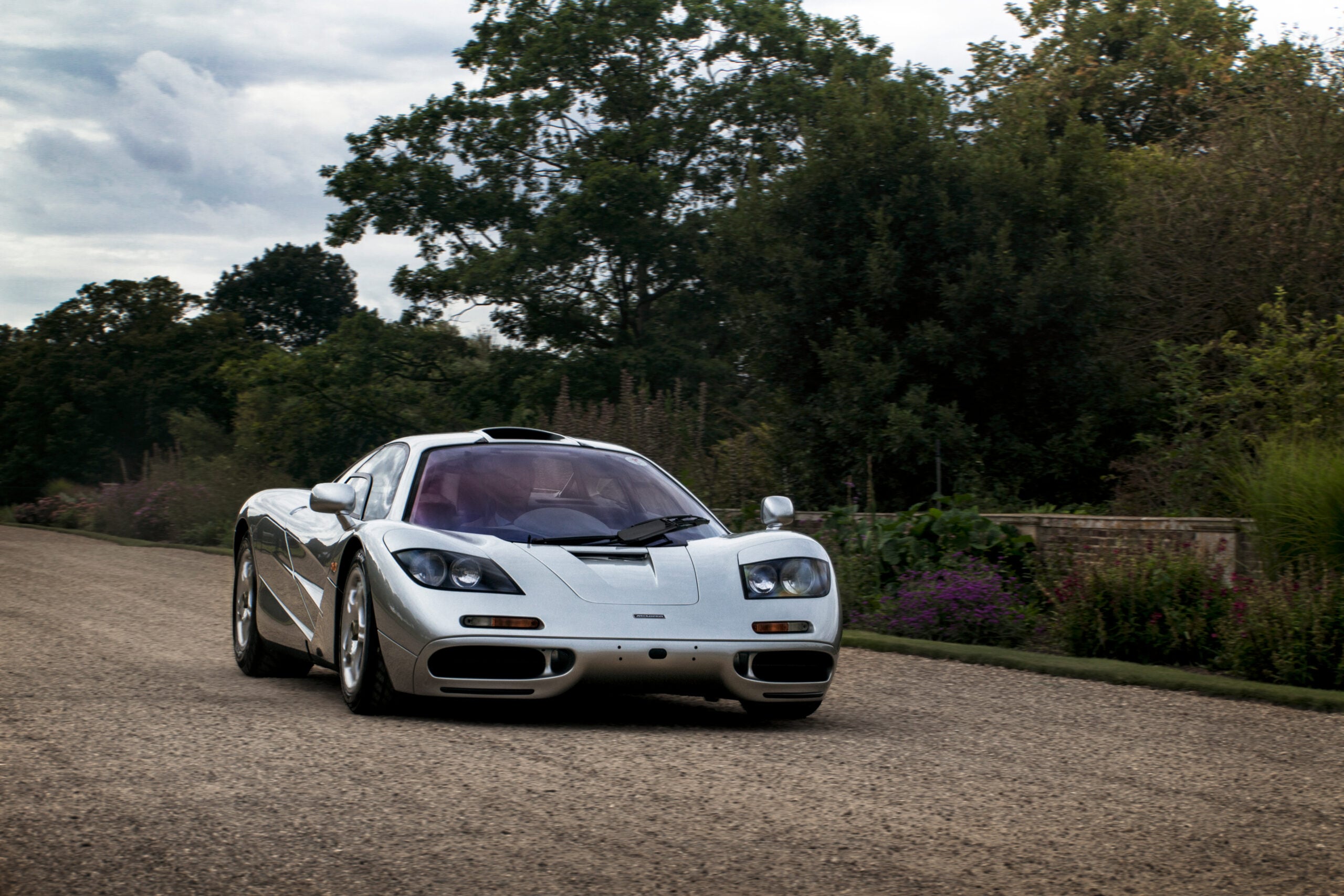
McLaren F1

The McLaren F1 was more than the fastest car of its era — it was a complete reimagining of what a road car could be when every decision prioritized the driving experience.
Gordon Murray’s masterpiece featured a central driving position flanked by two passenger seats, creating a cockpit layout that’s never been replicated in a production supercar. With a naturally aspirated BMW V12 producing 627 horsepower and a curb weight of just 2,509 pounds thanks to extensive carbon fiber construction, it hit 240.1 mph in 1998 and held the production car speed record for over a decade. The F1’s analog purity — no power steering, no ABS, no traction contro l —makes it the ultimate expression of a driver’s car philosophy.
Only 106 examples were built between 1992 and 1998, and they’ve become some of the most valuable cars ever made, with pristine examples selling for over $20 million at auction.
Jaguar E-Type

When Enzo Ferrari calls your car “the most beautiful car ever made,” you know you’ve created something special.
The E-Type burst onto the scene in 1961 with styling that looked like it was doing 150 mph while standing still, combining aerodynamic efficiency with pure sensual appeal. Underneath that gorgeous body sat a 3.8-liter inline-six producing 265 horsepower, propelling the roadster to 150 mph—a staggering figure for a car that cost a fraction of contemporary Ferraris and Aston Martins. The combination of independent rear suspension, disc brakes on all four corners, and a monocoque chassis made it as capable as it was beautiful.
Over its 14-year production run, Jaguar built more than 70,000 E-Types, making this exotic British sports car surprisingly accessible compared to its Italian rivals.
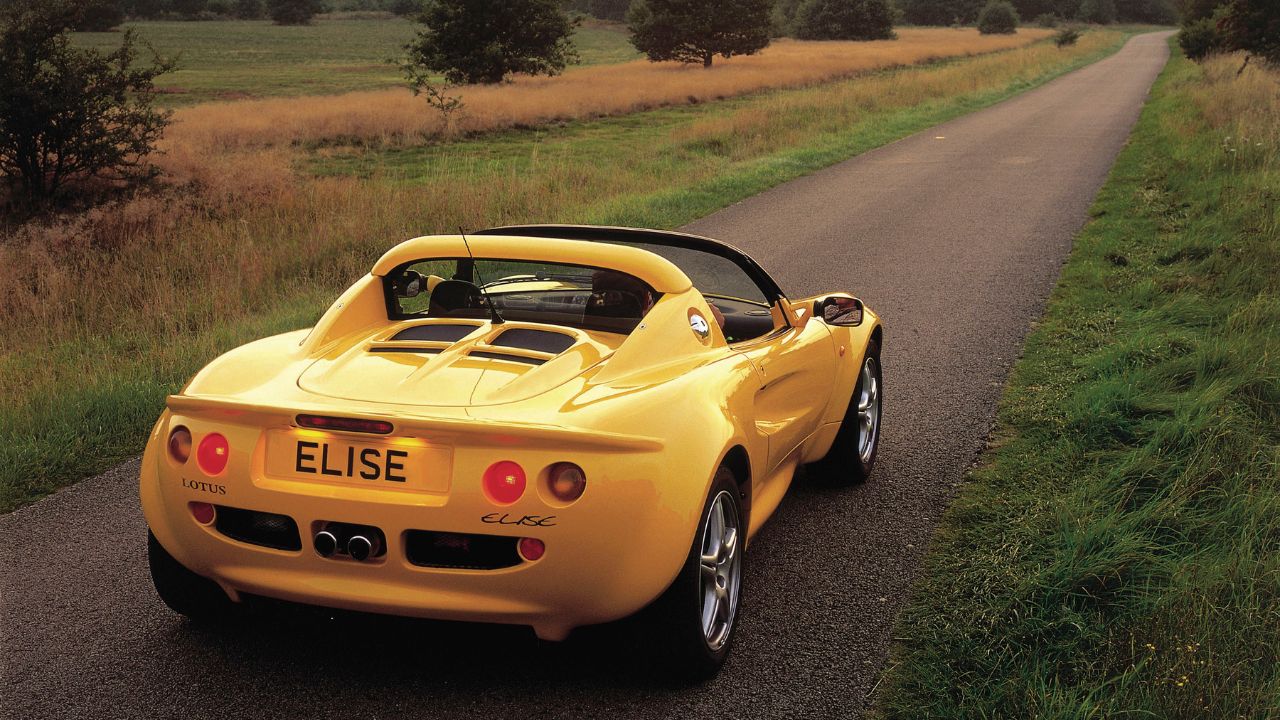
Lotus Elise
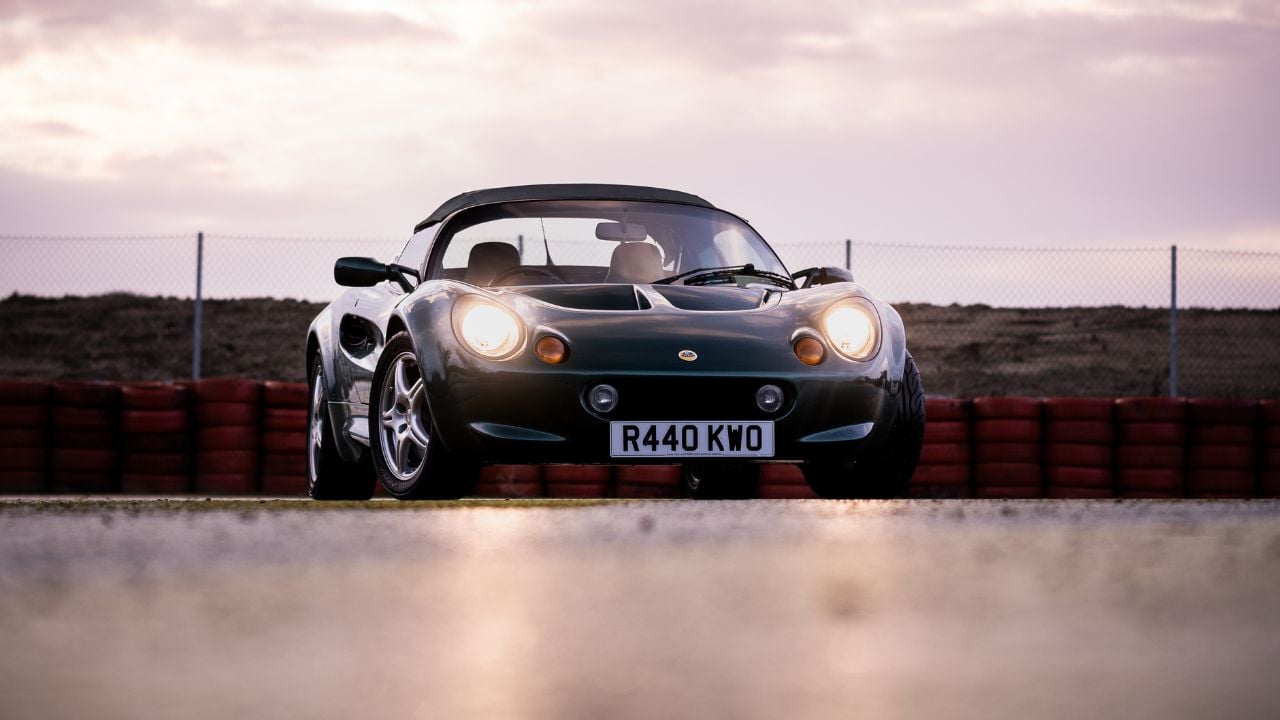
Colin Chapman’s “simplify, then add lightness” philosophy reached its apex with the Elise, a car that proves you don’t need massive horsepower when you’ve mastered the art of weight reduction.
Tipping the scales at just 1,598 pounds in its original Series 1 form, the Elise could embarrass much more powerful cars through corners thanks to its bonded aluminum chassis and perfectly tuned suspension geometry. Even with a modest 118 horsepower from its Rover-sourced 1.8-liter four-cylinder, the Elise could sprint to 60 mph in 5.8 seconds and delivered a driving experience that made every journey feel like a track day. The hydraulic steering remains some of the most communicative ever fitted to a production car, letting you place the Elise with millimeter precision.
Since its 1996 debut, it’s inspired countless automotive journalists to write purple prose about what driving should feel like, and I’m one of them! I never have a bad thing to say about this car.
Aston Martin DB5

James Bond made the DB5 famous, but this Aston Martin earned its place in automotive history through elegant design and genuine grand touring capability long before it sprouted machine guns and an ejector seat.
Powered by a 4.0-liter inline-six producing 282 horsepower, the DB5 could reach 145 mph while cosetting its occupants in leather and walnut luxury that epitomized British craftsmanship. The fastback roofline and subtle curves created a silhouette that’s aged better than virtually any car from the 1960s, looking just as purposeful today as it did when production began in 1963. Aston Martin built only 1,021 DB5s over two years, making it one of the rarer classic cars from the golden age of British motoring.
Its combination of performance, luxury, and timeless styling set the template for every Aston Martin that followed.
Mini Cooper

Alec Issigonis created the Mini to solve Britain’s fuel crisis, but he accidentally invented one of the most entertaining cars ever built in the process.
By mounting the engine transversely and putting the gearbox in the sump, Issigonis created 80% interior space in a car measuring just 120 inches long — a packaging efficiency that seems almost impossible even by today’s standards. The original Mini Cooper, tuned by racing legend John Cooper, transformed this economy car into a giant-killer that won the Monte Carlo Rally three times and embarrassed much larger, more powerful cars on racetracks around the world. With its go-kart handling, cheeky personality, and classless appeal that attracted everyone from celebrities to students, the Mini became a cultural icon that transcended its automotive roots.
Over 5.3 million were built between 1959 and 2000, making it one of the best-selling British cars of all time.
Lotus 49

Jim Clark and Graham Hill drove the Lotus 49 to victory in Formula 1, but this car’s influence extends far beyond its race wins thanks to one revolutionary engineering decision.
Colin Chapman made the engine a stressed member of the chassis, bolting the rear suspension directly to the Cosworth DFV V8 and eliminating the need for a rear subframe — a weight-saving innovation that’s now standard practice in motorsport. The wedge-shaped body wrapped in Gold Leaf Team Lotus livery became one of the most recognizable race cars of the late 1960s, winning 12 Grands Prix between 1967 and 1970. With 408 horsepower in a car weighing just 1,145 pounds, the 49 could accelerate to 60 mph in 2.8 seconds and hit 180 mph on the straights.
This was British engineering at its most innovative, proving that thinking differently about fundamental design could lead to performance advantages that changed the sport forever.
Range Rover (First Generation)

Land Rover took their rugged off-road mechanical components and wrapped them in Spen King’s elegant styling to create the luxury SUV category decades before anyone else realized it was possible.
The original Range Rover combined genuine go-anywhere capability with leather seats, plush carpeting, and refinement that made it equally at home dropping kids at school or crossing the Sahara Desert. Its aluminum V8 produced 135 horsepower initially (later increased to 180), but the real magic was in the permanent four-wheel-drive system and coil-spring suspension that delivered surprising on-road comfort. The design was so right that production continued essentially unchanged from 1970 to 1996, with the boxy styling aging into classic status rather than obsolescence.
New York’s Museum of Modern Art recognized its design excellence by making it part of their permanent collection — the first vehicle to receive such an honor.
Jaguar XJ220

Jaguar’s supercar ambitions resulted in a machine that held the production car speed record at 212.3 mph and showcased British engineering’s ability to compete with the Italian exotics.
What started as a V12-powered concept evolved into a twin-turbocharged V6 reality producing 542 horsepower, with the engine derived from Jaguar’s racing program rather than their road cars. The aluminum honeycomb chassis and carbon fiber body panels kept weight down to 3,241 pounds, while the scissor doors and ground-hugging stance gave it proper supercar presence. Though only 275 were built between 1992 and 1994, the XJ220 proved British manufacturers could build world-class supercars that competed directly with Ferrari and Lamborghini.
At $650,000 in 1992 dollars, it was eye-wateringly expensive, but it delivered performance that justified the price tag.
Bentley Continental GT (2003)

The Continental GT revived Bentley as a serious luxury performance brand after decades of sharing platforms with Rolls-Royce, proving that British craftsmanship could combine with modern engineering to create something genuinely special.
Its 6.0-liter twin-turbocharged W12 engine produced 552 horsepower, launching this 5,200-pound luxury coupe to 60 mph in 4.7 seconds — performance that shocked people expecting Bentley to build stately cruisers rather than genuine sports cars. The interior featured hand-stitched leather, wood veneers from sustainably managed forests, and organ-stop vent controls that recalled Bentley’s pre-war glory days while incorporating modern convenience. Volkswagen Group ownership provided the engineering resources and platform-sharing with Audi, but Bentley’s design team in Crewe created something that felt distinctly British rather than German.
The Continental GT became Bentley’s best-selling model and introduced a new generation to the appeal of British luxury.
Caterham Seven

The Seven keeps Colin Chapman’s original 1957 Lotus design alive through Caterham’s dedicated production, offering driving purity that modern cars simply can’t match despite all their technological advantages.
There’s no ABS, no traction control, no power steering: just you, a lightweight chassis, and whatever engine you’ve chosen to bolt in the front. The range spans from 80-horsepower base models to the 620R with 310 horsepower and a power-to-weight ratio that embarrasses supercars costing ten times as much. With a curb weight as low as 1,190 pounds in its lightest form, the Seven delivers acceleration and handling that feels almost violent in its directness.
Building one yourself through Caterham’s kit program means you can legally claim to have built your own car, adding another layer of appeal for enthusiasts who want the deepest possible connection with their machine.
McLaren P1

McLaren’s hybrid hypercar demonstrated that electrification could enhance driving pleasure rather than diminish it, with the electric motor’s instant torque perfectly complementing the twin-turbo V8’s power delivery.
The combined output of 903 horsepower and 664 lb-ft of torque launched the P1 to 60 mph in 2.8 seconds and onward to a limited top speed of 217 mph. Active aerodynamics adjusted the rear wing through five different positions, while the hydraulically adjustable suspension could lower the car by two inches for maximum downforce in Race mode. The carbon fiber monocoque chassis demonstrated Formula 1 technology applied to road cars, with exceptional rigidity that made the P1’s handling surgically precise.
Limited to just 375 examples at $1.15 million each, the P1 proved that British engineering could still compete at the absolute pinnacle of automotive performance.
TVR Sagaris
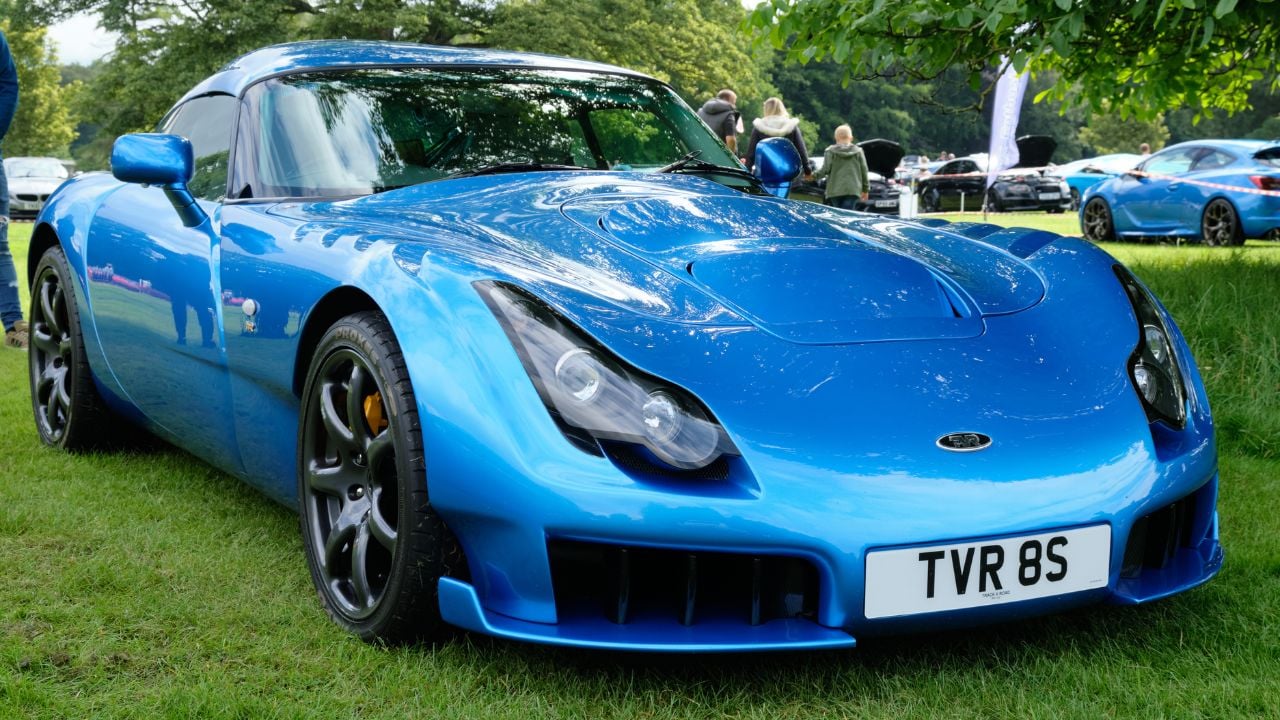
The Sagaris represented TVR’s design philosophy taken to its logical extreme — no computer aids, massive naturally aspirated power, and styling that looked like it was drawn by a committee of hyperactive eight-year-olds with a ruler fetish.
Its 4.0-liter inline-six produced 406 horsepower in a car weighing just 2,315 pounds, creating a power-to-weight ratio that demanded respect and quick reflexes from its driver. The angular bodywork featured functional vents and scoops everywhere, with the interior stripped down to essentials in the pursuit of weight savings and driving focus. Without ABS, traction control, or airbags, the Sagaris offered an experience that would be impossible to sell today, making it a fascinating time capsule of pre-electronic nanny era performance cars.
Only 211 were built between 2005 and 2006 before TVR’s financial troubles ended production, creating instant collectibility for one of Britain’s wildest sports cars.
Conclusion
The vehicles that have emerged from Britain’s workshops and factories prove that great cars come from more than just engineering specifications and performance figures.
These twelve machines represent different philosophies and eras, but they share a common thread of uncompromising vision and attention to the driving experience that separates merely good cars from legends. From Lotus’s obsession with weight reduction to Jaguar’s blend of beauty and performance to McLaren’s cutting-edge technology, British automotive culture has consistently pushed boundaries while maintaining distinct character. The best British cars don’t just transport you — they create an emotional connection that makes every journey memorable, whether you’re chasing apexes on a track or simply enjoying a Sunday morning drive.
That’s the real legacy of British automotive excellence, and it’s why these cars continue to inspire enthusiasts around the world.