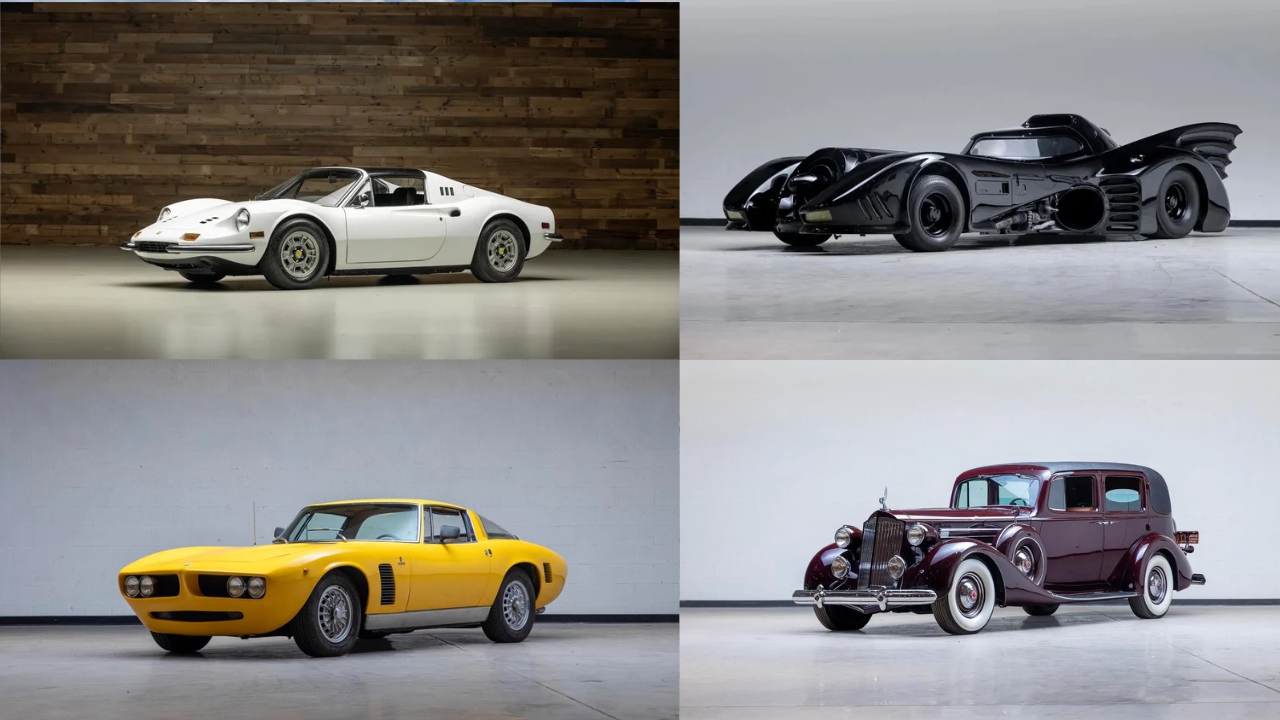
After 15 years of showing visitors everything from tiny European microcars to enormous American luxury vehicles, an Arizona car museum is preparing to close. Its collection includes two Batmobiles, rare Italian sports cars, and vehicles so obscure that even dedicated enthusiasts might struggle to identify them.
The Tucson Auto Museum has announced that it will close permanently on January 1, 2027. Rather than move the collection to another location, the museum is selling its automobiles and memorabilia at an auction scheduled for January 28.
There is an interesting opportunity for collectors. Kruse Auctions is advertising 80 vehicles, all offered without reserve. That means there is no minimum price set by the seller, so each car will go to the highest bidder regardless of how much the bidding reaches.
For Tucson residents, however, the sale marks the end of something that took years to assemble. Museum director Otton Suarez told local television station KGUN9 that the museum attracted visitors from around the world, many of whom brought their own memories and knowledge of the vehicles on display.
Two Very Different Batmobiles
Embedded media follows; please allow a moment to load.
Among the most recognizable vehicles in the official auction inventory are replicas of the Batmobiles associated with the 1966 television series and the 1992 film Batman Returns. They represent two completely different interpretations of Batman’s famous ride.
The 1966 replica was built by Fiberglass Freaks, an officially licensed manufacturer, and features a modern General Motors V8 engine, power steering, and power brakes. The auction listing identifies it as the 15th of 32 examples produced.
The Batman Returns car has a different history. Built by Carl Casper’s Hollywood Productions, it was one of a limited number of officially licensed vehicles made for promotional appearances, commercials, and automotive exhibitions associated with the film.
Other recognizable entries include a 1981 DeLorean DMC-12, a 1969 Jaguar E-Type coupe, and a 1973 Ford Mustang Mach 1. But some of the museum’s most entertaining vehicles are considerably smaller.
Small Cars, Big Personalities
The museum has assembled an interesting selection of microcars, including a 1957 Zündapp Janus 250, a 1961 Messerschmitt KR200, and a 1957 BMW Isetta 300. These vehicles emerged during an era when manufacturers were experimenting with inexpensive, compact transportation.
The Janus is particularly memorable because of its unusual seating arrangement. Its passengers sit facing opposite directions, with doors at both ends of the car. The Messerschmitt takes a different approach, using a narrow cockpit and aircraft-inspired styling.
American ingenuity is represented by a 1951 Crosley Super Sport Roadster, while the collection also includes a Subaru 360 and a miniature Daihatsu Hijet fire truck.
Their appeal has little to do with horsepower or luxury. They illustrate just how many different solutions automakers have tried while attempting to make personal transportation affordable, practical, or simply fun.
Italian Style, American Muscle
Another part of the collection explores an interesting chapter of automotive history, when small manufacturers combined European coachwork with powerful American engines.
The auction includes a 1967 Iso Grifo Series I, a 1957 Dual-Ghia convertible, and a 1973 DeTomaso Pantera L. Each represents a different approach to delivering exotic styling without relying exclusively on European mechanical components.
The Dual-Ghia is particularly scarce. According to Kruse, the example being sold was among the first 30 of approximately 100 originally built. Its Italian bodywork and American V8 gave it an unusual combination of sophistication and familiar mechanical power.
Collectors looking for more established classics will also find a 1929 Duesenberg Model J Arlington Sedan, a Ferrari Dino 246 GTS, and a 1937 Packard Twelve Formal Sedan.
The Duesenberg has documented ownership history dating back to its original sale in Paris. Kruse describes it as retaining its original chassis, engine, firewall, and body, an important consideration for collectors interested in historically significant automobiles.
More Than Cars
According to the museum’s official website, the nonprofit was established to preserve and display unusual vehicles while giving visitors opportunities to learn about automotive history. It describes itself as a living museum, with roadworthy vehicles that have been taken to shows.
That hands-on character appears to have been important to Suarez. In an October interview with KGUN9, he described watching families share stories about cars their parents or grandparents remembered from decades earlier.
He also explained that visitors regularly taught museum staff things about the collection. The exchange of personal experiences was as much a part of the attraction as the vehicles themselves.
The museum has not publicly established a reason for its closure in the official announcements reviewed. Suarez acknowledged that seeing the cars leave was bittersweet, while expressing hope that some would remain in Tucson.
One Last Look
The Kruse Auctions sale will take place at the museum on January 28, 2027, with in-person and online bidding available. The event is scheduled during Arizona Car Week, when collectors from around the country will already be visiting the state.
Prospective buyers can inspect the vehicles during preview sessions from January 23 through January 27, between 10 a.m. and 4 p.m. The auction begins at 10 a.m. on January 28, with doors opening an hour earlier.
Beyond the automobiles, the sale includes vintage advertising signs, gas pumps, and other automotive memorabilia. With every lot offered without reserve, collectors will determine where the individual pieces of the Tucson Auto Museum’s collection go next.