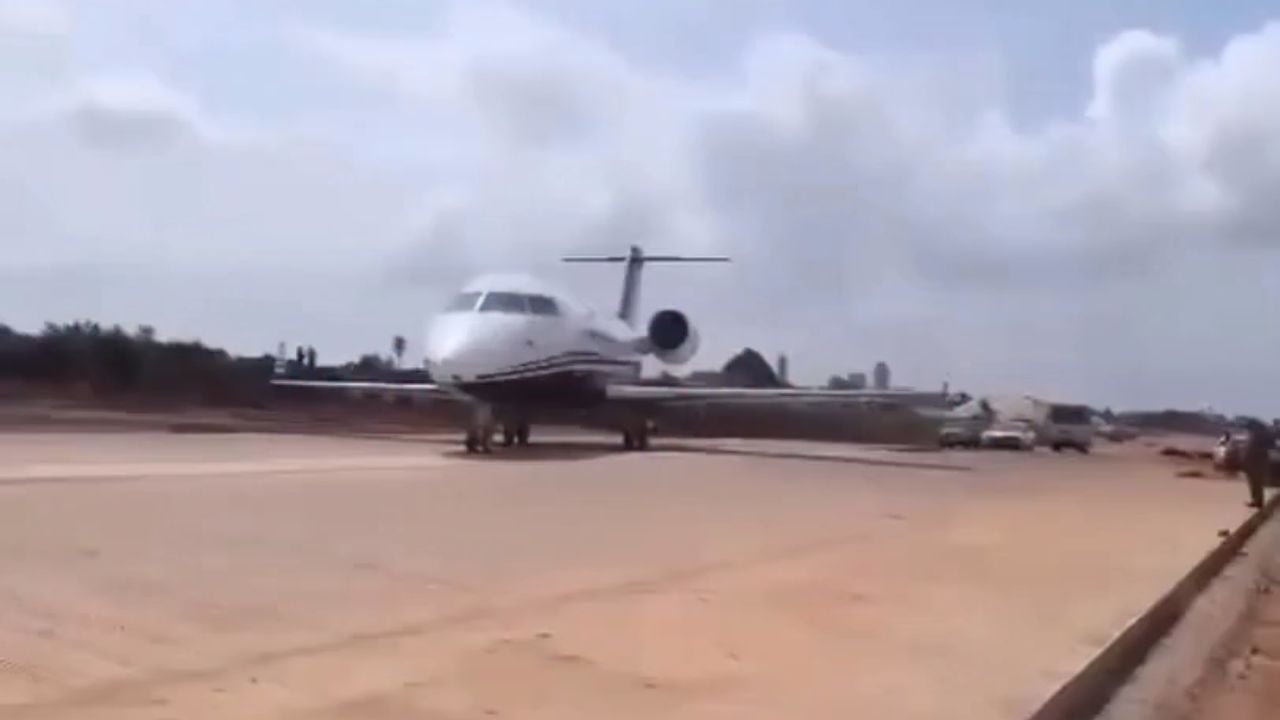

A US-registered business jet that was supposed to land at Asaba International Airport has become the focus of an investigation after touching down on a highway under construction in Delta State. The plane later departed the scene without approval from aviation authorities.
Videos of the aircraft parked on a stretch of concrete road near Ogwashi-Uku spread across social media on June 10. The incident prompted questions from Nigerians who struggled to accept the explanation that the jet had simply missed its approach to the airport.
The aircraft involved was identified as a 1988 Bombardier Challenger 601, registration N989BC, a US-registered business jet operated by Nigerian firm VMO Aero Limited. The aircraft was reportedly flying from Lagos to Asaba with four crew members on board and no passengers.
While no injuries were reported, the incident has drawn the attention of regulators, investigators, aviation professionals, and members of the public. The focus is no longer only on why the aircraft landed on a highway, but also on how it managed to depart the site and return to Lagos without obtaining clearance from the authorities.
The Missed Approach That Led to a Highway Landing
According to preliminary information released by the Nigeria Civil Aviation Authority (NCAA), the aircraft conducted a missed approach at approximately 7:43 a.m. while attempting to land at Asaba International Airport. Moments later, the Challenger 601 landed on a roadway in the Ogwashi-Uku area near Asaba.
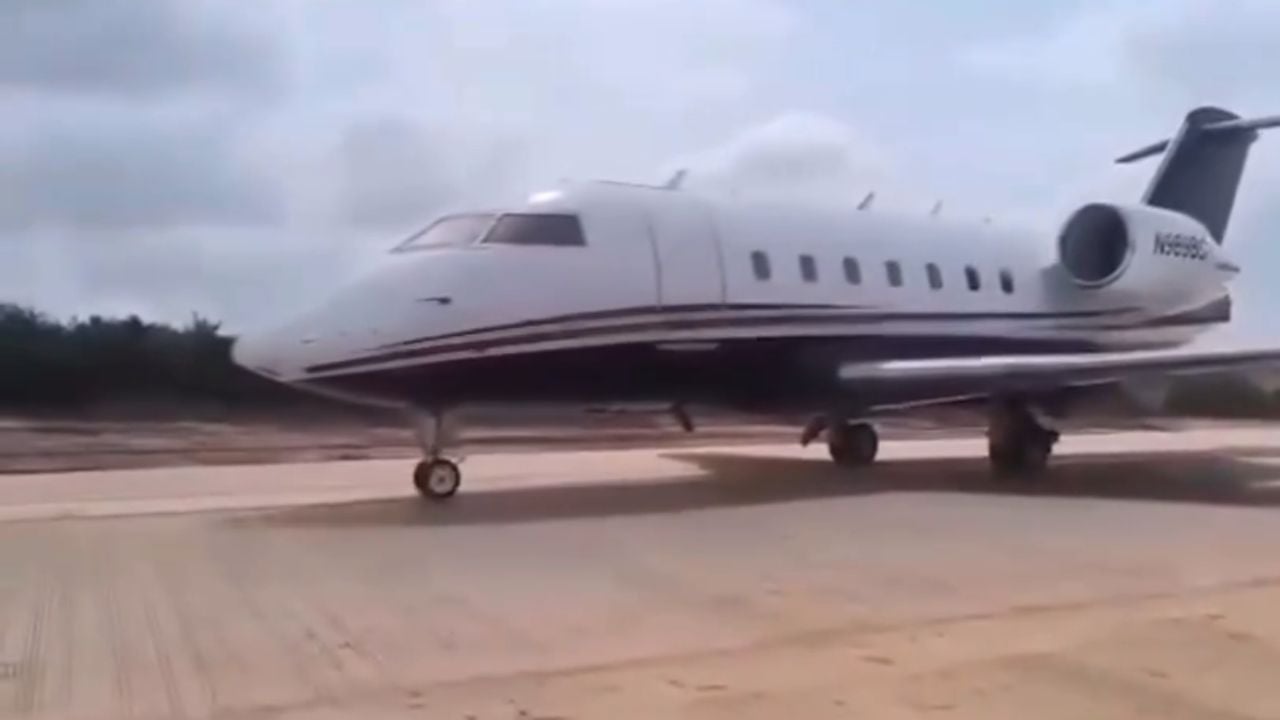
The stretch of road, part of an expressway project, offered a long concrete surface that appeared capable of accommodating the aircraft. Footage from the scene showed the jet parked on the roadway as residents gathered around it.
Authorities said all four crew members exited safely. No fatalities, injuries, or damage to vehicles on the road were reported. The occupants were subsequently transported by road to Asaba.
What remains unclear is why the crew chose the roadway instead of diverting to another airport, entering a holding pattern, or attempting another approach. Investigators are now examining flight records, air traffic communications, maintenance documentation, and operational records to determine exactly what happened in the cockpit during those critical minutes.
The Departure That Escalated the Incident
The controversy deepened hours later. According to the NCAA, the aircraft departed the roadway at approximately 11:02 GMT and returned to Lagos without obtaining the required regulatory approval.
Air traffic authorities were reportedly informed only after the aircraft had already taken off. That decision triggered immediate action from regulators.
Upon arrival in Lagos, the aircraft was grounded. The NCAA suspended VMO Aero Limited’s Permit for Non-Commercial Flights and placed the flight crew under regulatory review pending the outcome of investigations. The regulator described the departure as a potential breach of aviation regulations and initiated enforcement proceedings.
The incident also prompted intervention from the Ministry of Aviation and Aerospace Development. The nations aviation minister, Festus Keyamo, reportedly directed relevant agencies to investigate the circumstances surrounding both the landing and the departure.
VMO Aero and the Questions Surrounding the Flight
The aircraft is operated by VMO Aero Limited, a Nigerian aviation company that provides private aviation services. Investigators from the Nigerian Safety Investigation Bureau (NSIB) have since recovered the aircraft’s Cockpit Voice Recorder and Flight Data Recorder, often referred to as the black boxes, for analysis.
Those recordings may provide answers to questions that have fueled speculation online. Across social media, many Nigerians have questioned whether a missed approach alone can explain an off-airport landing followed by an unauthorized departure.
View this post on Instagram
Others have speculated about possible cargo transfers, contraband activity, or other motives. To date, however, no evidence has emerged publicly to support claims of criminal activity. Aviation authorities have not announced any findings suggesting illicit conduct.
For now, investigators are focused on evidence rather than speculation. Analysis of cockpit recordings, flight data, air traffic control communications, and maintenance records is expected to determine whether the crew’s decisions were driven by operational factors, human factors, technical issues, or violations of established procedures.
Investigation Continues
The NSIB, NCAA, and the Nigerian Airspace Management Agency are now working to establish a complete timeline of events surrounding one of the most unusual aviation incidents seen in Nigeria in recent years.
Until investigators release their findings, the image of a US-registered Challenger 601 parked on a Delta State highway will continue to generate debate. The landing itself drew attention, but it was the decision to take off again without authorization that transformed an aviation incident into a national story.