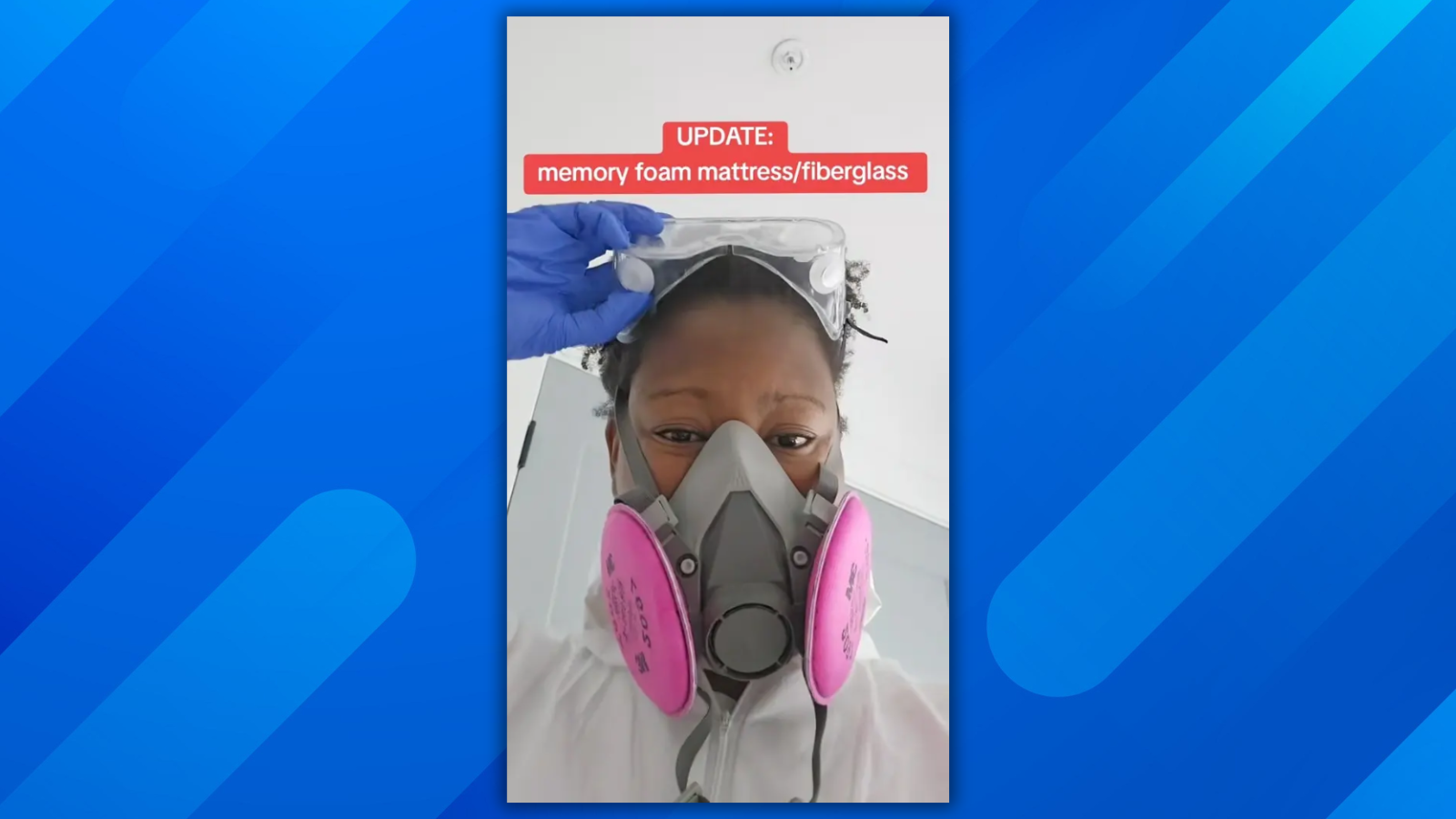
Have you ever encountered a mattress that could potentially harm you? This unlucky woman did. TikTok creator @fortheloveofkez, real name Kezi, appeared in full personal protective equipment in a viral video. She explained that the hazmat outfit was for fiberglass from her mattress, as reported by The New York Post. Expressing her frustration with the situation, she lamented the material’s continued use despite the amount of litigation against it.
Fiberglass is common in mattresses. It’s often used as an inexpensive barrier against fire, layered inside the mattress beneath the outer cover to help bedding meet the legal flammability standards. As long as it stays contained inside the mattress, experts say people are relatively safe from harm the fiberglass can cause. There are only problems when the fiberglass somehow escapes the confines of the mattress.
That’s what happened in Kezi’s case. In the comments, she called the plexiglass-like assault on her home a “nightmare” and the substance “toxic.” She spent some time documenting the cleanup across follow-up videos. She started in an N95 mask and body covering before upgrading to a respiratory mask, sealed off the unaffected parts of her home with tarp, bought a HEPA vacuum, and repeatedly wiped her walls and floors with water and vinegar.
That still wasn’t enough to ensure she wasn’t breathing in the fibers.
Her belongings took the brunt of it. Kezi said many items in her bedroom, including clothing, had to be thrown out. Though she found this “disheartening,” she added that some clothes were salvageable. Acting on suggestions from viewers, she used a pet lint roller and her phone’s flashlight to spot the shards, then washed the clothing on a cold setting with vinegar added and dried it. The experience is similar to what several mattress owners have reported after removing the outer cover of a bed built with a fiberglass barrier.
How Fiberglass Gets Out of a Mattress
The most common way fiberglass escapes is when someone removes a mattress cover. Plenty of mattresses, particularly memory foam models, have a zippered outer cover that sits directly over the fiberglass layer. When the cover comes off, usually because an owner wants to wash it, the fiberglass is exposed. Then, its fine fibers can spread through the air and settle across a room, embedding in clothing, bedding, carpet, and furniture.
It’s hard to clean up fiberglass because each fiber is tiny, sharp, and hard to see. If you breathe it in or get it on your body, it can irritate your skin, eyes, and airways. That can subsequently cause rashes, itching, and breathing problems. To avoid getting it in your home, you should never unzip or remove a mattress cover if the tag says there’s fiberglass inside. Also, use a separate mattress protector for cleaning and sanitation.
How to Avoid a Fiberglass Mattress Altogether
You don’t have to buy a mattress with fiberglass. The key is knowing what to look for. The tag stitched to a mattress lists its materials, and terms like fiberglass or glass fiber are something to watch out for. Latex and certified organic mattresses aren’t usually made with fiberglass, since they rely on different flame-barrier approaches. Those are a good option if you’re worried about accidentally purchasing a mattress with fiberglass.
An organic mattress is usually worth paying more for because it reduces exposure to potentially toxic substances. Certifications such as the Global Organic Textile Standard can help you find mattresses made without those materials. For most people, the simplest protection against fiberglass is still the cheapest. Just leave the cover on, and check the tag before you buy.
That’s the best way to avoid a situation like this TikToker’s.