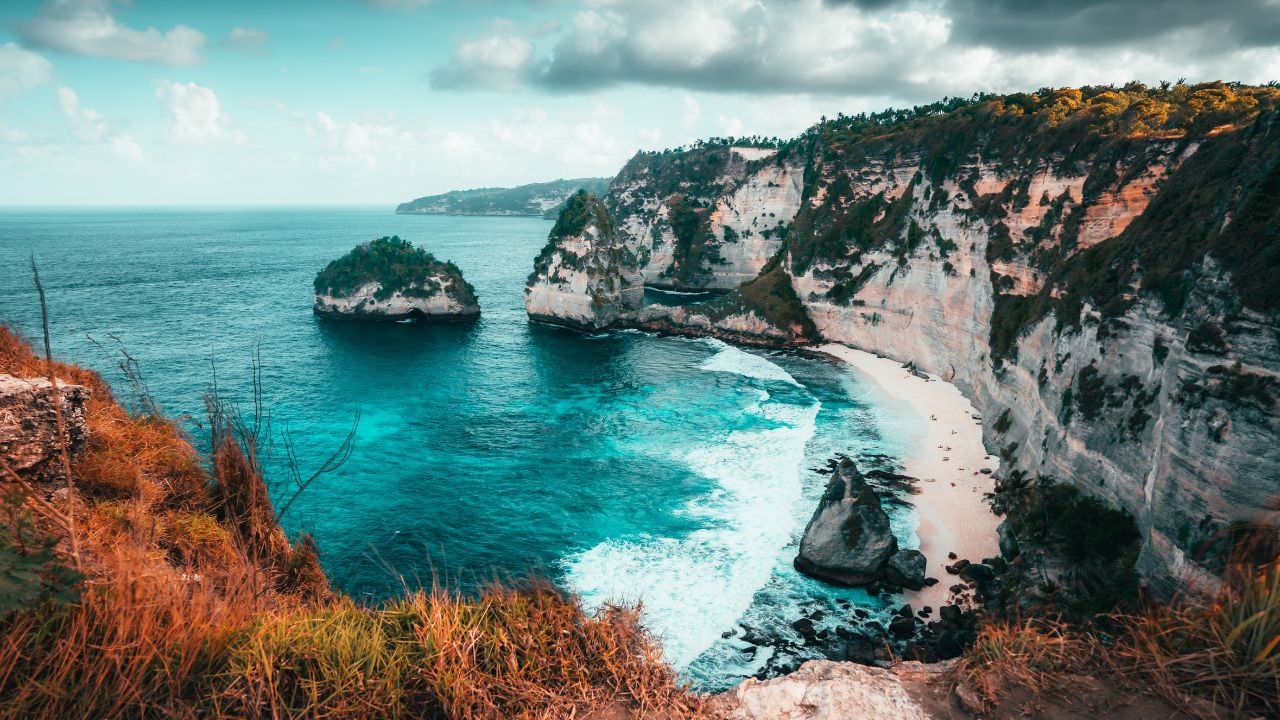
A first trip to Bali can turn into a race across beaches, temples, waterfalls, cafés, rice terraces, and sunset spots. That version looks good on a map and usually feels worse on the ground, especially once traffic, heat, and packed viewpoints start eating into the day.
A better first route gives the island room to breathe. Start with an easy coastal landing in Sanur, move inland for Ubud’s rice terraces and food, add a quieter village or a wider terrace landscape, then finish on the east coast where black sand, fishing boats, and Mount Agung change the mood completely.
Seven to ten days is enough for this version. With seven days, choose either Sidemen or Jatiluwih instead of trying to force both. With nine or ten days, Sidemen can become an overnight pause, while Jatiluwih fits as a slower rice-terrace day between bigger moves.
A private driver is usually the easiest choice for longer transfers, since Bali distances often feel shorter on a map than they do on the road. The point is not to avoid every famous place. It is to see the Bali first-timers came for without spending the whole trip in crowds, traffic, and rushed photo stops.
1. Start in Sanur, Where the First Morning Is Easy
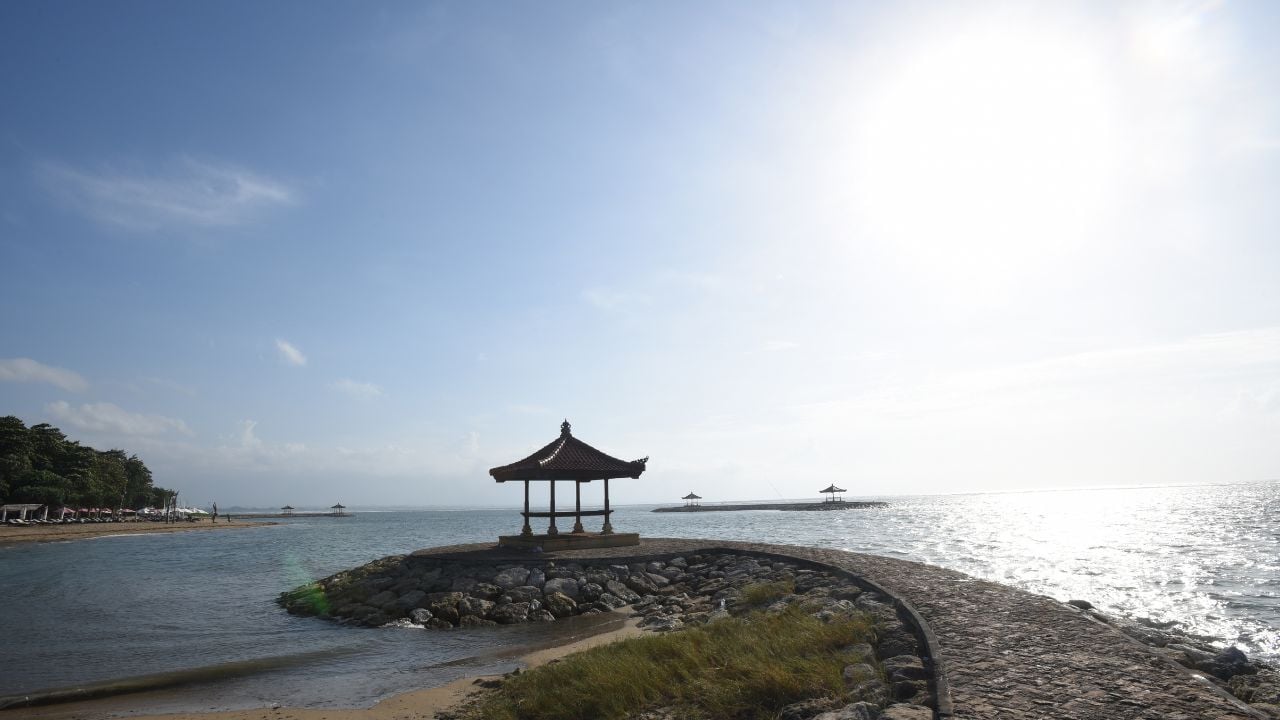
Sanur gives a first Bali day a softer landing. The beach sits east of Denpasar, away from the louder southern nightlife zones, and the morning light arrives over calm water instead of traffic-clogged streets. After a long flight, that matters more than squeezing in one more temple before dinner.
Indonesia Travel describes Sanur as one of Bali’s early tourism areas, with historic hotels, restaurants and cafés along the coast, and a paved beachfront cycle path stretching about five kilometers. Start there before the day gets hot. Walk the path, watch boats move across the water, and let the first morning stay simple.
Sanur also gives the route an easy food stop before the trip turns inland. The same official tourism page points visitors toward the Pasar Malam night market near Jalan Danau Tamblingan and Jalan Pungutan, which is useful for a casual first dinner without turning the evening into a big production. Stay one or two nights, depending on arrival time, then leave for Ubud after sunrise and breakfast.
2. Give Ubud Three Nights and Choose Carefully
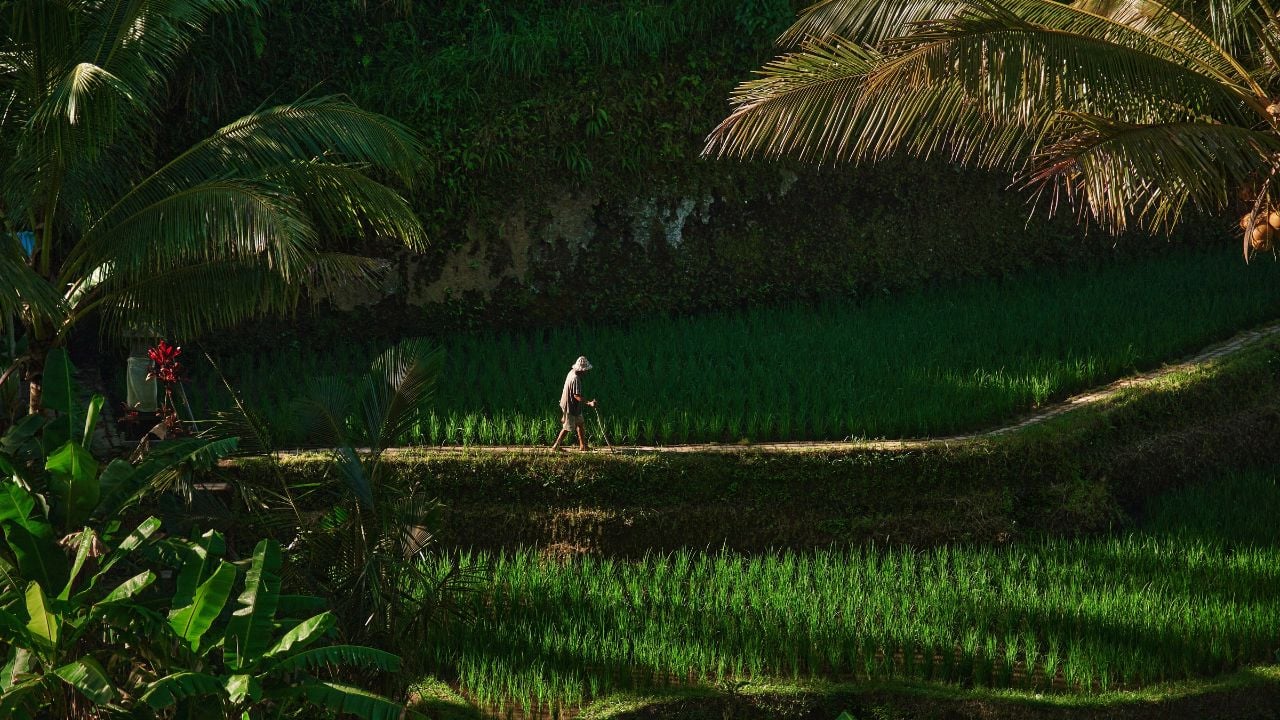
Ubud belongs on a first Bali route, but the town punishes anyone who treats it like a one-day checklist. The center can be busy, scooters fill the main roads, and the most famous stops draw tour groups. The better Ubud days start early, leave space between outings, and avoid stacking five attractions into one afternoon.
Use Ubud as an inland base for three nights if the schedule allows. One day can go north toward Tegallalang, where layered rice terraces sit close enough to town for a morning visit. Go early, then leave before the heat and crowds flatten the experience.
Keep another day closer to town. Wander around the market area, stop for a warung lunch, visit one cultural site properly, and leave time for a café or hotel break before dinner. Ubud feels less frantic when the day has one main outing instead of a list of places that only get twenty minutes each.
The inland roads north and east of town are where the route starts to feel less like standard first-time Bali. Rice fields appear between homes and small shops, temple gates sit beside everyday traffic, and a short drive can move from a crowded street to a quieter lane in minutes. That contrast is the reason Ubud still earns its place, even with the crowds.
3. Add Sidemen for Rice Fields, Weaving, and Village Roads
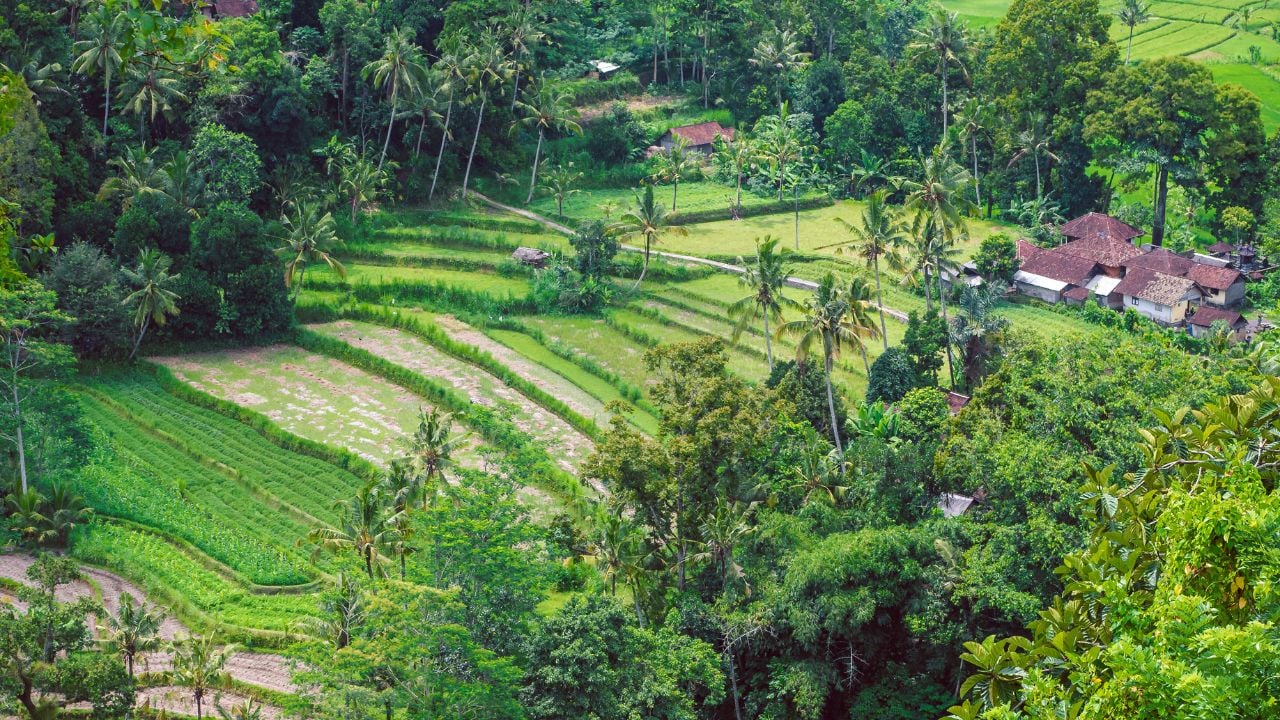
Sidemen changes the trip by pulling it away from Bali’s busier first-timer circuit. The village sits in Karangasem, east of Ubud, where guesthouses look over rice fields, narrow roads cut through small settlements, and Mount Agung often hangs in the background when the sky is clear.
Indonesia Travel describes Sidemen Village as a peaceful area known for wide rice fields and traditional weaving. That craft detail matters. Sidemen should not be treated only as a scenic rice-field stop, because the weaving gives the visit a more local angle than another quick viewpoint.
Stay one or two nights if the route has enough time. Walk in the morning when the fields are cooler, listen for motorbikes and roosters along the smaller roads, and eat close to where you are staying instead of turning every meal into another transfer. The best part of Sidemen is the lack of pressure to keep moving.
For a seven-day trip, Sidemen can replace Jatiluwih as the quieter rice-field pause. For a longer trip, it becomes the overnight reset between Ubud and the east coast. Either version gives the route a village stop before the final stretch to the sea.
4. Spend a Slower Day in Jatiluwih’s Wide Terraces

Jatiluwih gives the route a broader rice-terrace landscape than the tighter, busier scenes many visitors see near Ubud. The fields stretch across the highlands of Tabanan Regency, with walking paths, water channels, and cafés overlooking the terraces. It deserves more than a quick roadside photo.
UNESCO says Bali’s cultural landscape includes five rice terraces and their water temples, covering 19,500 hectares, with the cooperative subak water-management system dating back to the 9th century. Jatiluwih is part of that larger cultural landscape, so the view is not just scenery. The fields are tied to irrigation, temple life, farming, and village cooperation.
Indonesia Travel places Jatiluwih about 40 kilometers from Denpasar and notes that cafés along the drive overlook the terraces. Build in enough time to walk through the fields instead of treating the stop as a detour. The terraces feel different when the water channels, steps, and working plots are visible up close.
Jatiluwih can fit between Ubud and Sidemen, as a central-highland day, or as the rice-field choice for travelers skipping Sidemen. It is especially useful for readers who want Bali’s agricultural landscape without spending the whole day around the island’s most photographed Ubud-area terraces.
5. Finish in Amed With Black Sand, Snorkeling, and Mount Agung

Amed is the right final stop for travelers who want the coast without ending the trip in a party zone. The east-coast setting looks and feels different from the beach areas many first-timers know first: darker sand, fishing boats pulled near shore, quieter lanes, and Mount Agung rising behind the coast when the weather cooperates.
Indonesia Travel describes Amed Beach as quieter than Bali’s southern coastline, with calm waters, traditional fishing villages, and views of Mount Agung. Spend two nights here if snorkeling, diving, and slow mornings matter more than nightlife. The best mornings start early, when the sea is calmer and the beach is still half-asleep.
For underwater time, Indonesia Travel lists Amed snorkeling spots including Bunutan Point, Amed Wall, and the Japanese Shipwreck, a World War II relic offshore that has become an artificial reef. A morning in the water pairs naturally with a long lunch at a simple seaside warung, wet hair drying in the sun, and snorkel gear left beside the table.
Ending in Amed gives the route a cleaner final memory than a crowded beach club or another traffic-heavy transfer. Wake up by the water, watch jukung boats move along the coast, eat grilled fish or a simple Balinese meal, and let the last evening stay close to the sea. For a first Bali trip, that quiet finish can be the part that stays with the traveler longest.