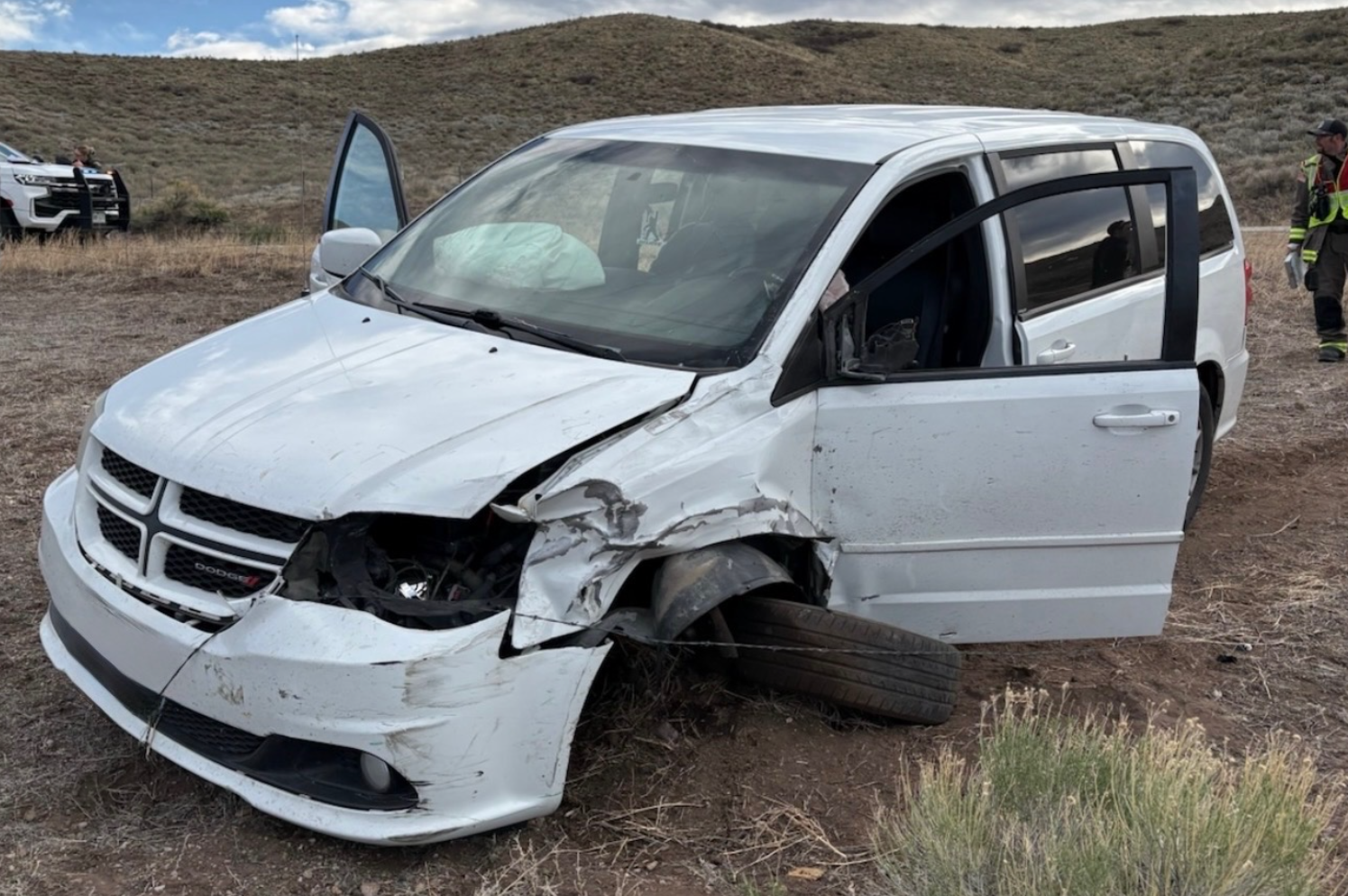
It was not even 7 a.m. when emergency crews got the call. A serious crash had just unfolded on South Highway 69 in Custer County, Colorado, and by the look of it, things could have gone very, very wrong. One vehicle had rolled over. First responders braced for the worst. What they found instead was nothing short of remarkable: everyone walked away without a scratch.
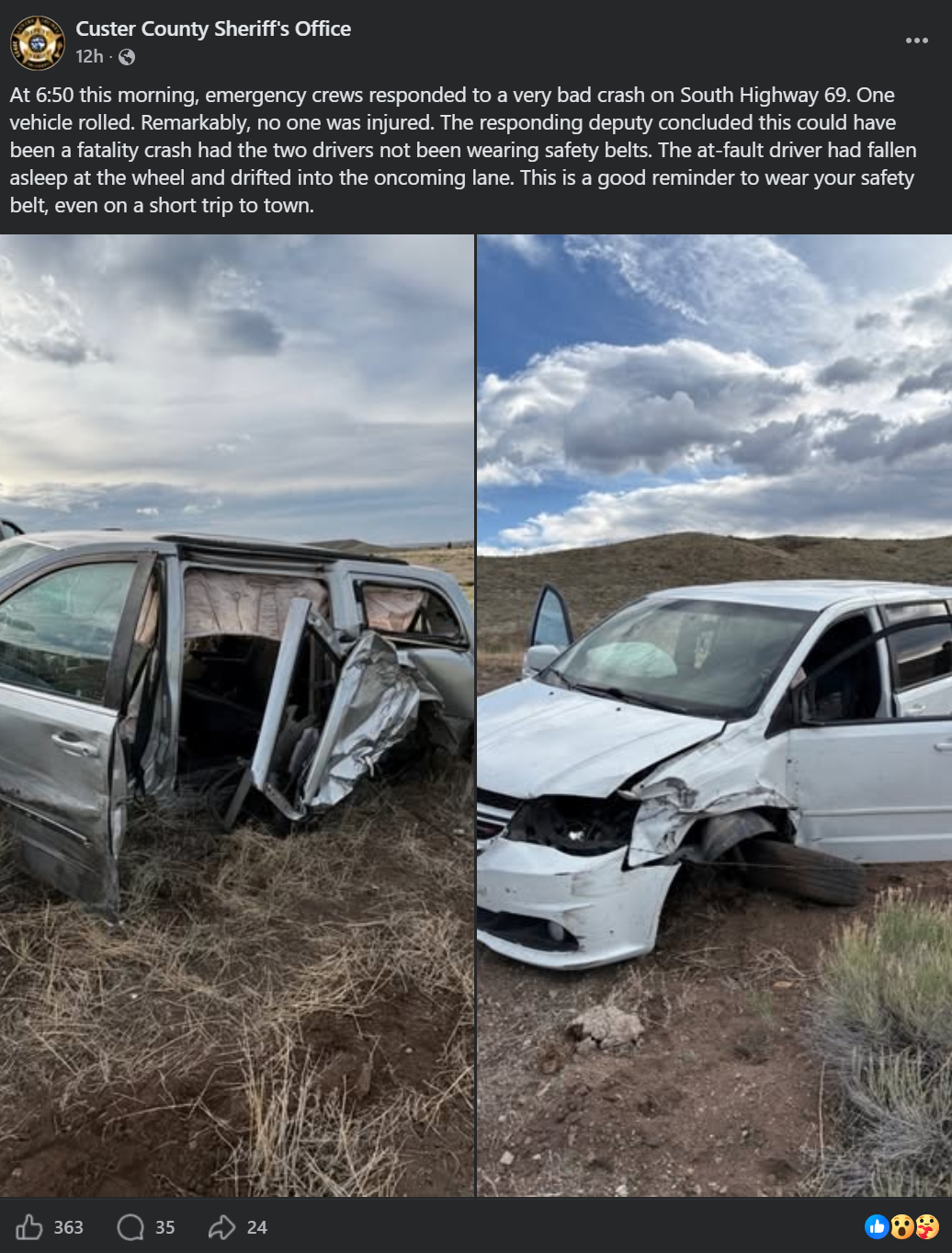
The Custer County Sheriff’s Office shared the details of the incident on social media Thursday morning, noting that crews responded at 6:50 a.m. to what they described as a “very bad crash.” A vehicle had rolled, which in most circumstances is the kind of accident that generates a very different kind of news story. But not this time.
According to the responding deputy, the crash had all the makings of a fatality. The at-fault driver had fallen asleep behind the wheel, drifted across the centerline, and collided with an oncoming vehicle. That is the kind of scenario that keeps traffic safety advocates up at night and that has ended far too many lives on rural two-lane roads across the country. Yet somehow, both drivers were okay.
The reason? Seatbelts. The deputy on scene stated plainly that this could have been a fatal crash if both drivers had not been buckled in. It is a reminder that feels almost too simple, and yet here we are, still needing to say it out loud.
What Actually Happened on South Highway 69
The crash took place in the early morning hours when traffic on rural Colorado roads is light but driver alertness tends to be at its lowest. Drowsy driving is a well-documented hazard, particularly in the hours just before and after sunrise. The at-fault driver lost consciousness at the wheel, drifted into the oncoming lane, and struck another vehicle with enough force to cause a rollover.
Rollovers are among the most dangerous types of crashes on American roads. According to the National Highway Traffic Safety Administration, rollovers account for a disproportionately high share of vehicle fatalities relative to how often they occur. The fact that both occupants survived this one is genuinely unusual and credit goes directly to the fact that they were restrained.
Drowsy Driving Is More Dangerous Than Most People Realize
Most drivers know not to get behind the wheel drunk. Far fewer treat drowsy driving with the same level of seriousness, even though research consistently shows that going without sleep for 20 hours or more impairs driving ability in ways comparable to a blood alcohol level of 0.08, the legal limit in all 50 states.
Rural highways are particularly unforgiving in these situations. There are no traffic lights, no pedestrian crossings, no natural reasons to slow down or snap back to attention. A driver who nods off for even a few seconds at highway speeds can travel the length of a football field before anyone realizes something has gone wrong. On a two-lane road with oncoming traffic, that margin for error essentially does not exist.
What This Crash Can Teach the Rest of Us
The Custer County Sheriff’s Office ended their post with a gentle but pointed reminder: wear your seatbelt, even on a short trip to town. It sounds obvious. It sounds like something you learned in driver’s ed and have heard approximately one thousand times since. And yet seatbelt usage rates in the United States, while improved over the decades, still fall short of where they need to be, particularly in rural areas.
There are a few takeaways from this incident that go beyond the standard “buckle up” message. First, crashes do not announce themselves. The at-fault driver in this case presumably did not set out to fall asleep on the highway. Nobody does. Fatigue sneaks up gradually, and by the time it is a problem, it is often too late to do much about it. If you are yawning, struggling to keep your eyes open, or cannot remember the last few miles of road, that is not a reason to push through. That is a reason to pull over.
Second, seatbelts work even in the most violent types of crashes. A vehicle rollover is not a fender bender. The forces involved are severe. And yet the restraint system in a modern vehicle, when actually used, is designed specifically for these scenarios.
Third, the short-trip excuse holds no water. The sheriff’s office pointed this out directly, and it is worth sitting with. A significant portion of serious crashes happen close to home, on familiar roads, during routine trips. Complacency is its own kind of risk.
A Good Outcome With a Serious Message
It would be easy to read this story and move on with a sense of relief. Everyone is okay, after all. But the deputy at the scene saw something the rest of us did not: what this crash would have looked like with one different variable. No seatbelts, and this is a completely different story with a completely different ending.
Custer County is a rural, sparsely populated area in south-central Colorado. Emergency response times in communities like this are longer than in urban areas, which makes the seconds immediately following a crash even more critical. The protective effect of a seatbelt does not wait for paramedics. It kicks in the moment of impact, and it is the single most effective thing a driver or passenger can do to survive a serious crash.
So the next time the drive feels too short to bother, or too familiar to worry about: buckle up anyway. This story had a good ending. Not all of them do.