European car manufacturers have nailed the design aspect. Their cars are sleek, curvy, and elegant, and that’s precisely why they adorn teenage boys’ rooms in poster form.
American V8 engines are simple and somewhat agricultural, but within that simplicity lies their brilliance. These brawny powerplants are all about showing muscle, and it’s almost too easy to tease out even more power from them.
This combination of beauty and raw power makes foreign cars with American power perfect. Let’s check out 23 foreign cars that pack American V8 engines.
Why We Picked These Cars

This list focuses on production and limited-run foreign-market vehicles (non-U.S.-designed) that used American-made V8 engines, particularly from Ford, GM, or Chrysler. Entries span from postwar oddities to modern hypercars, emphasizing design, engineering partnerships, and cultural impact.
Kit cars, restomods, and tuner builds were excluded unless offered in turn-key form from a manufacturer. Each entry offers a brief overview of the car’s origin, engine specs, and what made the combination unique or significant.
Sunbeam Tiger
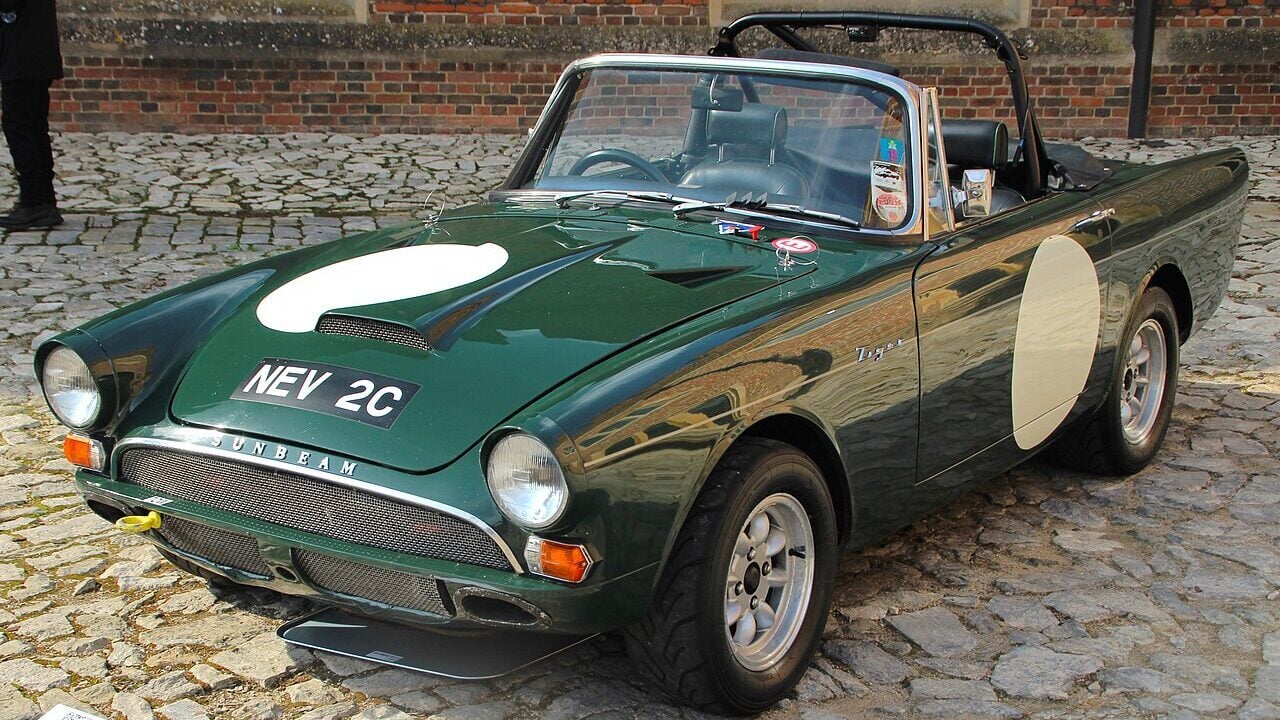
The Sunbeam Tiger was the hairy-chested version of the Sunbeam Alpine. The Rootes Group, the company behind the Sunbeam, initially tried to convince Ferrari to help develop the Alpine’s four-cylinder engine.
When that didn’t work out, they decided to go with a Ford V8 instead, and who better to ask than Carroll Shelby?! According to Hagerty, Shelby did his part, but Rootes Group decided to have British carmaker Jensen do the assembly work and pay Shelby royalties for every car they built. The first Sunbeam Tigers had a 4.3-liter 260 Ford V8, and later variants used the 4.9-liter 289 unit.
De Tomaso Longchamp

The De Tomaso Longchamp was a stunningly beautiful Italian sports car, and like all De Tomasos, it was powered by a Ford V8. In this case, a 5.8-liter engine was found under the sleek European’s hood, according to AutoEvolution.
The Longchamp was one of only two front-engine production De Tomasos, alongside the Deauville sedan.
AC 428 Frua

The AC 428 was a British fastback coupe or convertible, and Hagerty reports that this GT car was packing some serious American muscle under its hood. It was based on an extended AC Cobra chassis, and we all know how awesome those are.
The AC 428 Frua was powered by Ford’s 428 cubic inch (7.0-liter) FE V8, with output varying by tune and transmission.
Bizzarrini 5300 GT
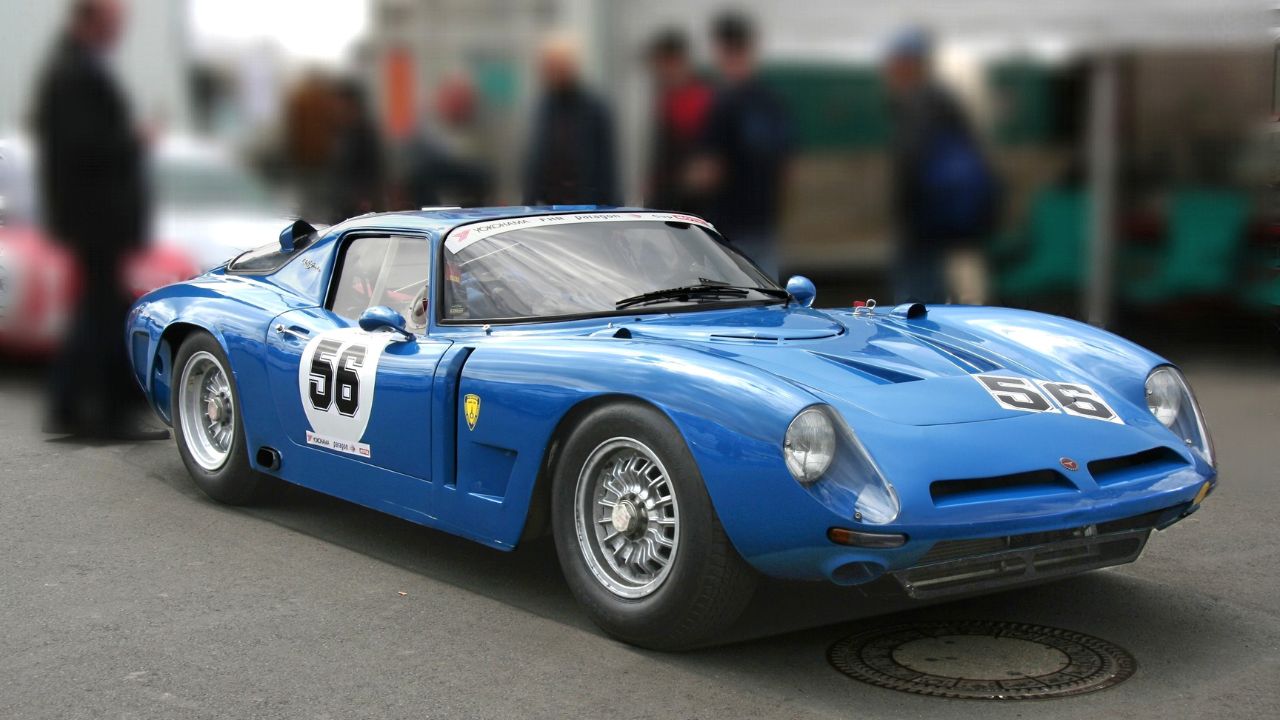
Giotto Bizzarrini was an ex-Ferrari engineer, and seeing as he was the man responsible for the legendary Ferrari 250 GTO, he was more than capable of creating his own car.
After leaving Ferrari, Bizzarrini created the 5300 GT, one of the most beautiful cars ever made. It’s hard to think of a more quintessential Italian design from the 1960s, but the monster under the hood was no Italian. The engine was a Chevrolet 327 cu in (5.4-liter) small block V8 straight from Detroit.
Iso Rivolta

Bizzarini was also involved with another Italian brand. As per Hagerty, Iso Autoveicoli was owned by car enthusiast Renzo Rivolta. Giorgetto Giugiaro at Bertone was the genius behind the Iso Rivolta’s styling, and Bizzarini engineered the chassis.
Again, they chose an American engine to power this beast. The Chevrolet 327 cu in (5.4-liter) V8 did the trick, and period figures commonly put 0 to 60 mph in the roughly 7-second range depending on tune and transmission.
Iso Grifo

The Iso Grifo was also engineered by Bizzarrini and designed by Giorgetto Giugiaro. As you’d expect, the bodywork is stunning and beautifully sculpted. Under its long, curved hood, there lived a Chevrolet V8 engine.
As reported by My Car Quest, early models were fitted with a 5.4-liter Chevrolet 327 small block. Later models were called Iso Grifo 7 Litri because the engine was now a 7.0-liter 427 L71 V8 big block Corvette engine that produced 435 horsepower. In the Series II era, Iso also offered the IR-9 Can Am with a Chevrolet 454 (7.4-liter) V8, and later built the IR-8 with a Ford Boss 351 V8.
Ghia 450 SS

The Ghia 450 SS only exists because Hollywood producer and former race car driver Burt Sugarman convinced Carrozzeria Ghia to build a car with a Detroit V8 for wealthy Americans.
The Ghia 450 SS looked unmistakably like an Italian car of its era, but it had the V8 rumble of an American car. The engine came from the Plymouth Barracuda and produced around 240 horsepower. Unfortunately, the vehicle cost roughly the same as a Ferrari – you could buy two Corvettes for that amount – and they only sold 57 cars.
Monteverdi Hai 450 SS

By the time Peter Monteverdi was 21, he had somehow become the first Swiss Ferrari owner and concessionaire. He proceeded to hold that position for 12 years. By then, he’d had enough of Enzo’s rules, so he started his own car company.
The plans for the Alpine A110’s successor heavily inspired the Hai’s design. Monteverdi wanted to build a car that challenged Ferrari, but the best engine he could get his hands on was a 7.0-liter Chrysler Hemi V8. Unfortunately, it didn’t matter that it produced over 450 horsepower, as the rich and famous weren’t willing to spend Italian exotica money on a Detroit engine. According to Below the Radar, Monteverdi only built three cars.
Ultima Evo GTR

The Ultima Evo GTR has a rather ridiculous top speed of 240 mph, and the craziest part is that buyers can build it in their garage as a workaround of US import rules. Those who don’t feel confident enough to bolt together a supercar themselves can opt for the turnkey version.
As for the engine, Ultima offered GM LS-based Chevrolet V8s in multiple states of tune. Depending on specification, outputs ranged from about 350 horsepower to as much as 1,020 horsepower.
Facel Vega HK500

Facel Vega arrived on the French automaker scene in 1954, specializing in high-end luxury cars. According to Below the Radar, they didn’t last long, but they built some beauties while they were in business. One of Facel Vega’s gems was the HK500.
The HK500 was a combination of French luxury and American muscle. It had a Chrysler 383 V8 under the hood. This unit served in multiple Mopar performance cars and produced a very respectable 330 horsepower.
Rover P5B
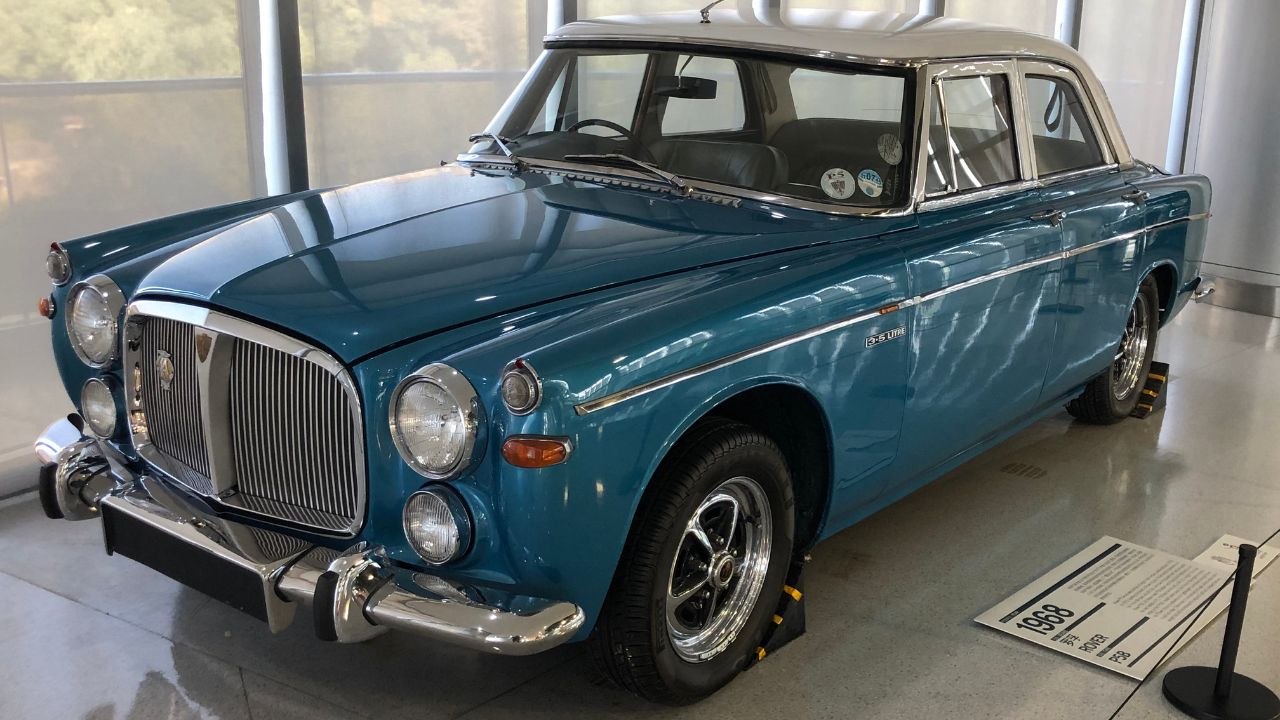
The Rover P5B was one of those rare cars that found love among all walks of life, from blue-collar workers to celebrities, business people, and politicians.
In the mid 1960s Rover acquired the rights to Buick’s 215 cu in V8 design, and the Rover version first appeared in the Rover P5B in 1967. Rover continued to develop the engine, and by the time they were done, it had become one of the best and most legendary engines ever. It remained in production until 2004.
Facel-Vega Facel II

The Facel Vega Facel II is one of the most beautiful cars ever made, and you’d never guess the company was struggling financially by looking at it. Classic Mobilia reports that Facel-Vega pulled out all the stops when they made this car, hoping it would save them from bankruptcy.
That didn’t work, but not because it wasn’t an incredible machine. Thanks to a huge, Chrysler-sourced 400-horsepower 6.7-liter V8, the Facel II punched just as hard as the best European sports cars of that era.
Bristol Type 603

Classic & Sports Car reports that the Bristol Type 603 followed Bristol Cars’ tradition of using Chrysler V8s under the hood. High-performance versions used a 5.9-liter engine and went from 0 to 60 mph in 7.6 seconds. Bristol also made an “economy” version with a 5.2-liter.
The Type 603 was produced from 1976 to 2011, which is impressive in itself. It received some updates during that time, but the main formula remained the same.
Jensen Interceptor

Hagerty says the Jensen Interceptor was the brainchild of brothers Alan and Richard Jensen. The British grand tourer was designed by the Italians at Carrozzeria Touring and powered by an American V8 from Chrysler V8. It was indeed an international car.
The Jensen Interceptor started out with the 383 Chrysler V8, but when the oil crisis hit in the early 1970s, Chrysler detuned the 383, and its power dropped drastically. Jensen then decided to go with the much bigger 7.2-liter 440 V8 to ensure the performance lived up to expectations.
De Tomaso Mangusta
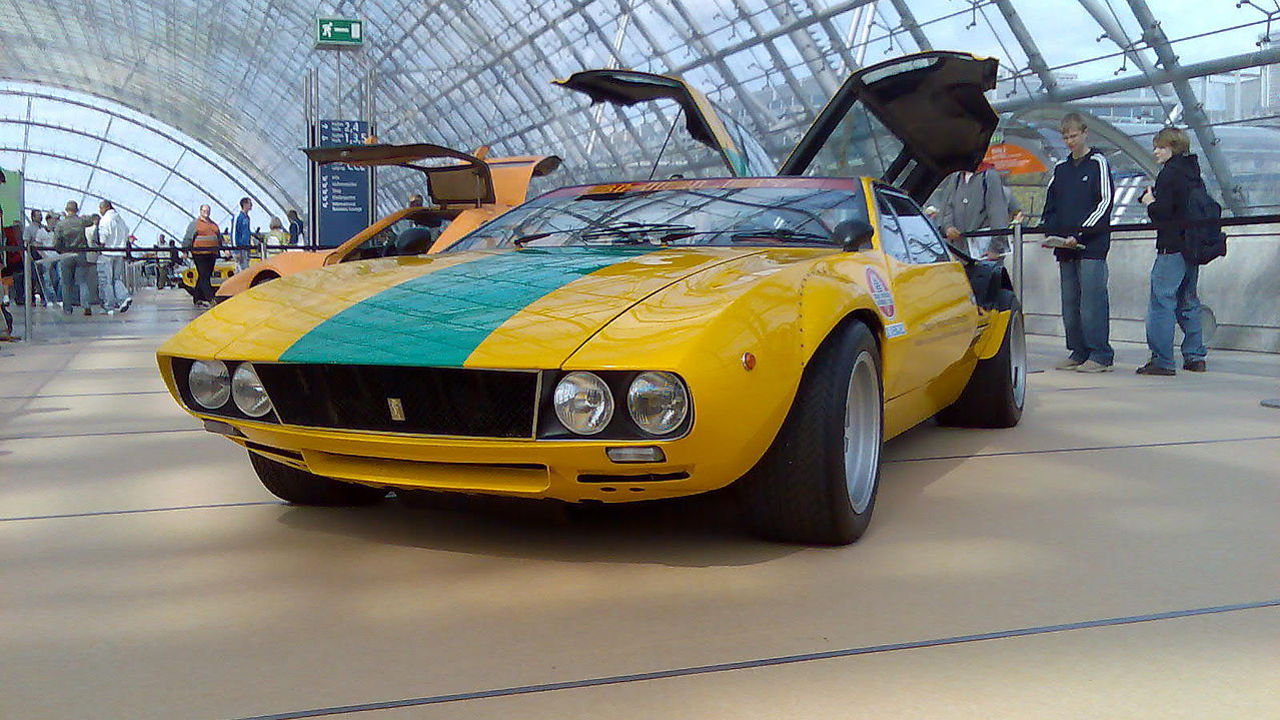
Undoubtedly, the Mangusta is among the best-looking De Tomaso models, and that really says a lot. According to Silodrome, this mid-engined supercar appeared on the market only one year after the Lamborghini Miura turned the sports car world on its head.
Early cars intended for the European market came with a 306-horsepower Ford 289 V8 engine. However, most of the Mangustas had a 230 horsepower Ford 302 V8. It’s rumored that the Mangusta got its name after a business deal between De Tomaso and Carroll Shelby turned sour. Mangusta is Italian for mongoose, an animal that kills cobras.
De Tomaso Pantera
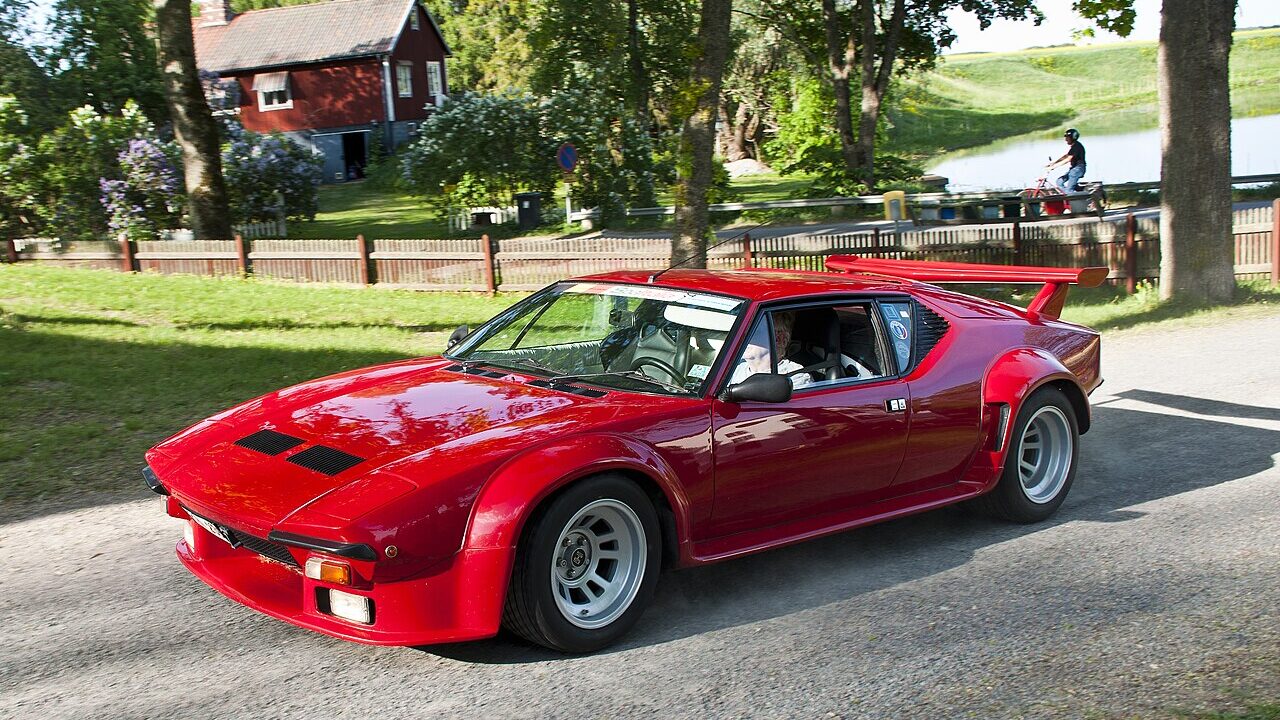
Another beauty from De Tomaso, the Pantera, is most likely the most successful Italian car powered by an American V8. De Tomaso designed the Pantera as a supercar that regular people could buy.
The Pantera first arrived with a Ford 351 Cleveland V8 fitted behind the driver. This engine was later replaced with the 351 Windsor V8 before the fuel-injected 4.9-liter Ford 302 V8 was used in the last Pantera Si version.
Monteverdi High Speed

Swiss sports carmaker Monteverdi returns for another entry on this list, this time with the aptly named High Speed. As Below the Radar reports, it was produced from 1967 to 1976, and the lineup included different coupe models, a convertible, and a sedan.
Fitted with the 7.2-liter Chrysler 440 Magnum V8, the High Speed was a beautiful powerhouse, capable of duking it out with the established Italian brands. Unfortunately, the 1971 oil crisis spelled the end of this legendary Swiss performance car.
Koenigsegg CC8S

These days, Swedish hypercar manufacturer Koenigsegg builds its engines in-house. However, for its first production car, the CC8S, Koenigsegg used a Ford-based 4.7-liter V8.
Koenigsegg didn’t leave it stock, though. The Swedes fitted a supercharger, and the engine revved to a 7,250 RPM redline, producing 655 horsepower and about 553 lb-ft of torque (750 Nm).
De Tomaso P72

The De Tomaso P72 features an exterior design heavily based on LeMans race cars of the 1970s but with a modern twist. While it may be a modern-day De Tomaso, some things never change.
The engine is mounted in the middle, as it should be on a De Tomaso, and it is, of course, a Ford unit. De Tomaso’s P72 uses a 700-horsepower supercharged Ford Coyote V8.
Mazzanti Evantra

The Mazzanti Evantra is a limited-production sports car built on commission, with a maximum of five vehicles manufactured annually. This Italian masterpiece has a massively powerful American engine, enabling it to keep up with its more famous Italian cousins.
Depending on the spec, the Evantra is delivered with a naturally aspirated Chevy 7.0-liter LS7, a twin-turbo 7.2-liter LS7-based V8, a 7.4-liter LS7-based twin-turbo V8, or a supercharged 6.2-liter LT2. According to Uncrate, power ranges from 691 horsepower to 1,106, depending on how deep the buyer’s pockets are.
Opel Diplomat V8 Coupe

From 1929 to 2017, Opel was one of the biggest companies under the GM umbrella based outside the States. The German carmaker built its Diplomat V8 Coupe luxury model between 1965 and 1967, and Chevrolet’s models of that era clearly inspired its design.
Under the hood, the top-spec Opel Diplomat Coupe packed a Chevy 327 V8 engine paired with a Powerglide automatic transmission. Opel was never really considered a luxury car manufacturer, so they only built 347 units, and AutoEvolution calls it one of the rarest and most sought-after European classics.
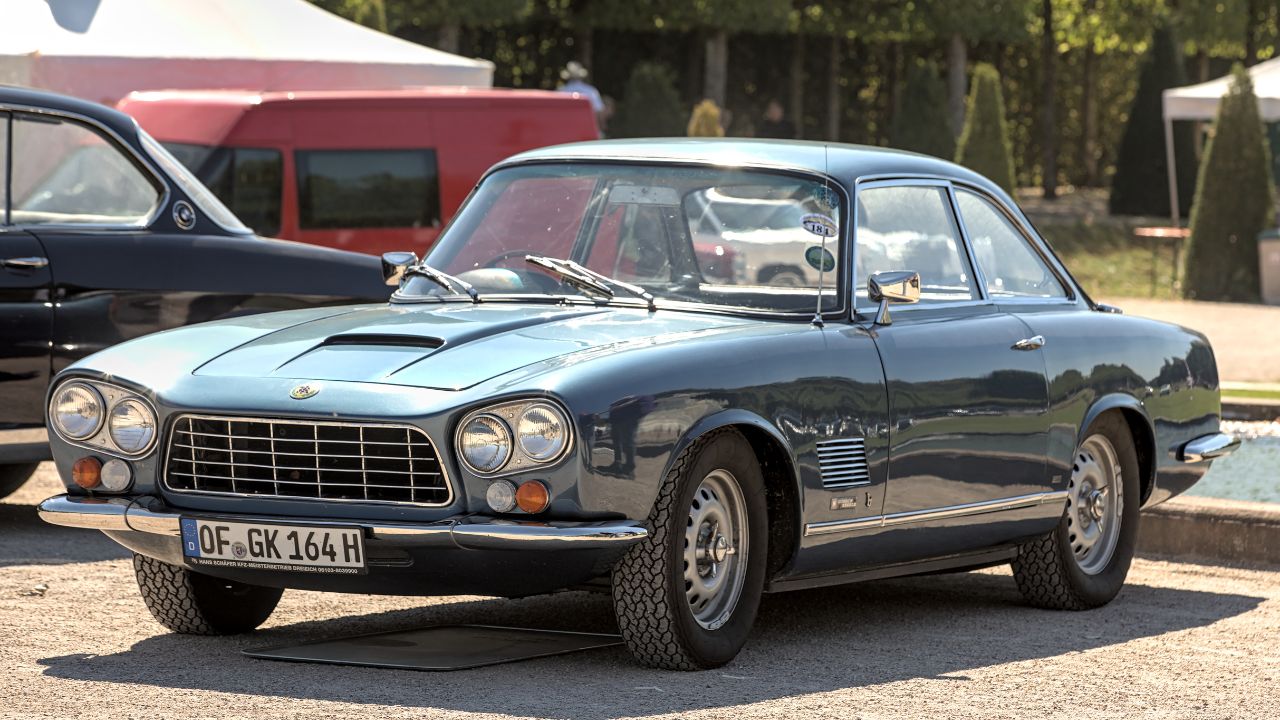
Gordon-Keeble GK1
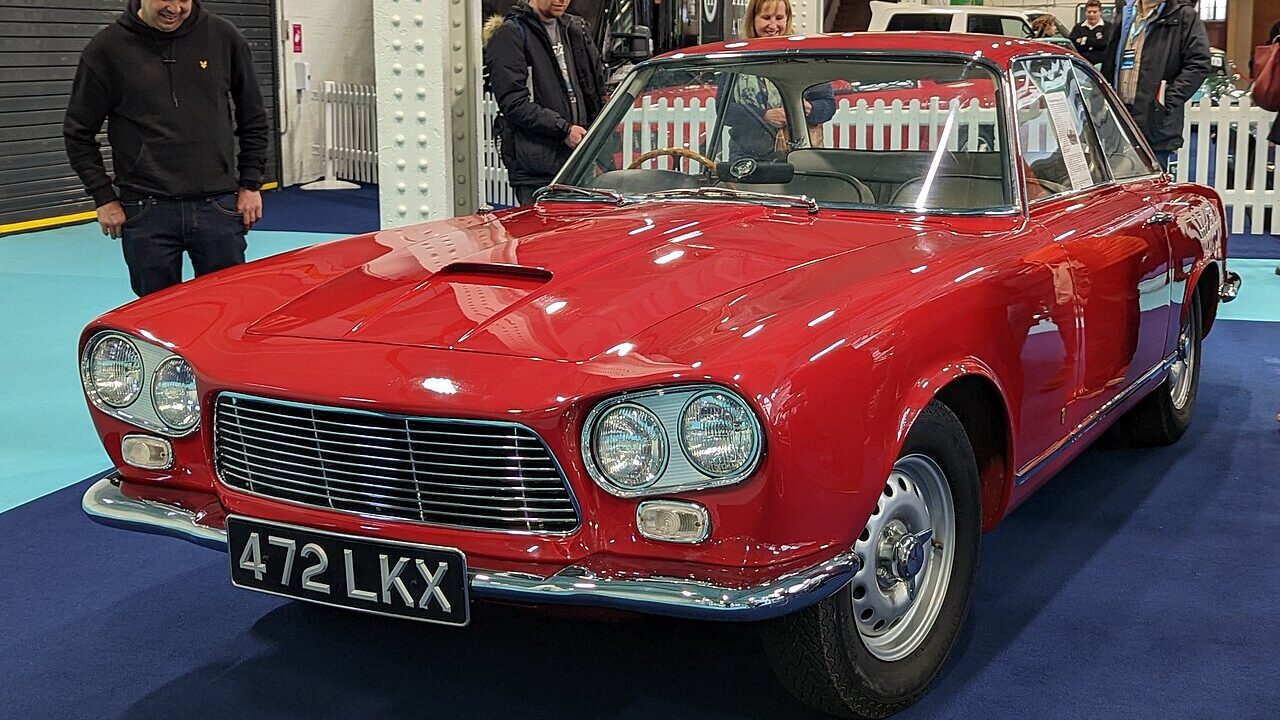
Produced between 1964 and 1967, the Gordon-Keeble GK1 was a British grand tourer with a distinctly American heart: a Chevrolet Corvette-sourced 5.4-liter V8. As reported by Classic Motor Hub, it was designed by Bertone’s Giugiaro and built with a fiberglass body. The GK1 was both fast and stylish, capable of 0–60 mph in under six seconds, which was impressive for its era.
Only 100 cars were ever built, and each one combined Italian design, American horsepower, and British engineering in a surprisingly refined package. Today, it’s one of the rarest and most charming examples of this transatlantic marriage of speed and style.
Iso Lele
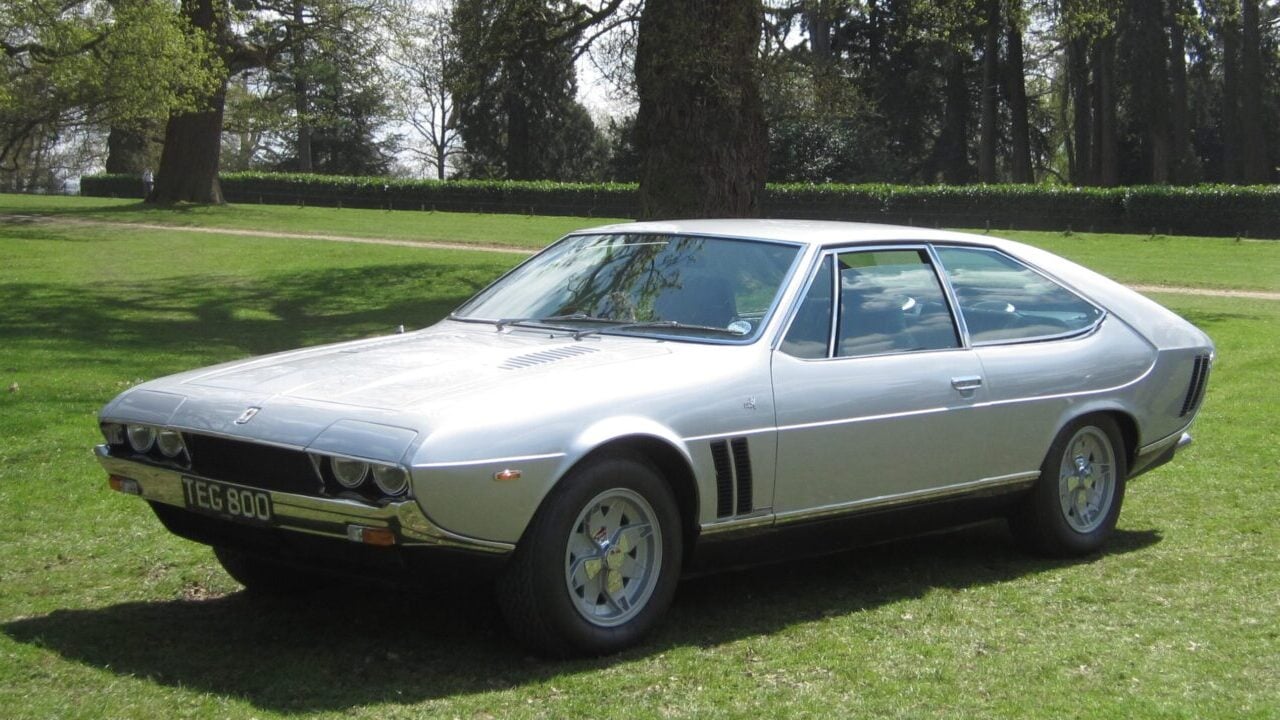
Below the Radar says the Iso Lele was a luxurious GT car introduced in 1969 as a more practical alternative to the Iso Grifo. Designed by Gandini and powered initially by a 5.4-liter Chevrolet V8, later models switched to Ford’s 351 Cleveland V8 due to GM supply issues.
The Lele featured a 2+2 layout, plush interiors, and a top speed of around 140 mph. It was comfortable, stylish, and surprisingly quick. Only around 285 were produced, making it a rare but fascinating chapter in Iso’s short-lived history of wrapping American muscle in Italian metal.
European Style, American Power

These cars prove that you can have your cake and eat it, too. By pairing refined European design with the raw, torquey power of American V8s, these machines offered the best of both worlds.
Some were built to dominate racetracks, others to cruise the Riviera or highways in opulent comfort. Many faded into obscurity, but all of them deserve recognition as icons of cross-cultural engineering.