
Since 1903, Ford Motor Company has been America’s most lovably dysfunctional automotive family. Founded by Henry Ford, a man who revolutionized manufacturing and apparently had strong opinions about dancing and vegetarianism, the Blue Oval has given us some of the most iconic cars in history. And some of the most questionable electrical systems known to mankind.
Over the decades, Ford Motors has built a solid following of car enthusiasts and staunch clientele. The automaker didn’t just stumble on its following. It’s built a reputation in the auto industry for developing some of the boldest, most versatile automobiles on the planet, from the Ford F-150 truck to the ferocious Mustang.
But hey, that’s what makes them endearing, right? Like that friend who’s always breaking down on road trips but tells the best stories at the bar afterward.
Ford Model T

Let’s start where it all began — the Model T, affectionately known as the “Tin Lizzie.” Released in 1908, this revolutionary bucket of bolts sold over 15 million units and basically invented the concept of “affordable transportation for the masses.”
Henry Ford famously said customers could have it in “any color they wanted, as long as it was black.” This wasn’t Ford being a control freak, it was because the black paint dried faster than other colors, speeding up production. Classic Ford: practical to a fault, even when it seems arbitrary.
The Model T was so brilliantly simple that farmers could fix it with baling wire, determination, and expletives we’re not allowed to repeat here. The entire car had just four forward gears (controlled by foot pedals that confused everyone), a top speed of 45 mph downhill with a tailwind, and the structural integrity of a well-built shed. Yet it worked. Boy, did it work.
Here’s the kicker: the Model T essentially created the American middle class. At $825 in 1908, it was expensive, but by 1925, Ford had driven the price down to $290, through assembly line efficiency. Suddenly, every American could afford a car, which meant they could live farther from work, which led to suburbs, which led to shopping malls, which led to… well, here we are.
The Model T had a 2.9-liter four-cylinder engine producing a whopping 20 horsepower. For perspective, your lawnmower probably makes more power. But it was reliable as sunrise and about as complicated as a can opener. Ford built over 15 million of these things, and some are still running today — unlike most 2000s Ford Focus transmissions.
1955 Ford Thunderbird

When Chevy dropped the Corvette in 1953 and started flexing on Ford with their fiberglass sports car, the Blue Oval said “Hold my beer and watch this,” and created the Thunderbird. Designed by Lewis Crusoe and Frank Hershey — two men who clearly understood that if you’re going to copy someone, you might as well do it with style — this two-seater was Ford’s answer to the question nobody asked: “What if we made a Corvette, but with more luxury and less plastic?”
The T-Bird borrowed styling cues from the Jaguar XK120, because apparently even in the ’50s, Ford knew the secret to looking good was copying the Europeans and then making it work reliably. Unlike the early Corvettes with their anemic Blue Flame inline-six, the Thunderbird came standard with a 292-cubic-inch Y-block V8 producing 193 horsepower. Ford was basically rubbing Chevy’s nose in the fact that it had a real engine.
The removable fiberglass hardtop was a masterpiece of engineering that weighed approximately 847 pounds and required three strong men, a chiropractor, and a weekend to remove. When you finally got it off, you had one of the most gorgeous convertibles ever built. The optional soft top was powered and could be raised or lowered with the push of a button, which was space-age technology in 1955.
Ford received 3,500 orders in the first ten days after the T-Bird’s debut at the Detroit Auto Show, proving that Americans had been waiting for a sports car that didn’t require an engineering degree to keep running. The early Thunderbirds outsold Corvettes by huge margins, mainly because they were actually available for purchase and didn’t catch fire in showrooms.
The ’55-’56 Thunderbirds are still drop-dead gorgeous today, unlike their bloated four-door descendants that looked like they ate too many cheeseburgers at the company picnic and decided to give up on life entirely.
1959 Ford Country Squire
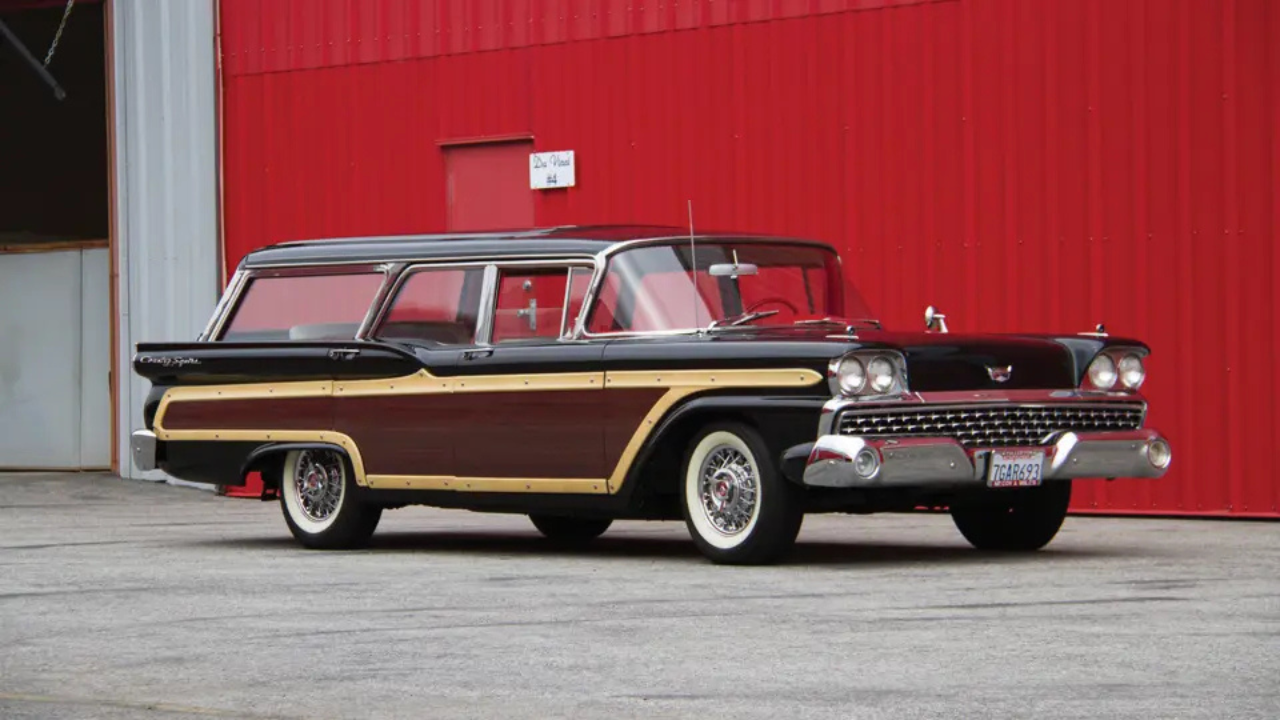
Before Instagram influencers started “van life” and started to pretend they invented camping, Ford was building the Country Squire — a station wagon so ahead of its time it included a kitchen sink. Literally. Because nothing says “rugged outdoor adventure” like wood-grain vinyl siding and the ability to wash dishes at a campsite while your neighbors are still figuring out how to light their Coleman lantern.
The Country Squire had been Ford’s luxury wagon since 1950, but the ’59 concept model was something special. It was Ford’s way of saying, “What if we took a regular wagon and made it so over-the-top that even Texas would blush?” This rolling palace featured not just a sink, but a refrigerator, a stove, fold-out beds, and probably a small nuclear reactor to power it all.
The standard Country Squire was no slouch either. Built on the full-size Ford platform, it could seat nine passengers in comfort, haul a boat, and still have room for enough groceries to feed a small army. The “wood” paneling was actually vinyl designed to look like wood, because even in 1959, Ford understood that actual wood on cars was a maintenance nightmare waiting to happen.
Under the hood, you could get everything from a modest 223-cubic-inch inline-six to a tire-shredding 390-cubic-inch FE V8. The big-block versions could tow pretty much anything you could hitch to them, making the Country Squire the original SUV before anyone knew what an SUV was.
These wagons were the backbone of American family road trips for decades. They hauled millions of families to national parks, beaches, and that one vacation where dad insisted he knew a shortcut through three states and nobody had cell phones yet. The Country Squire proved that you could have luxury, utility, and style all in one package — a lesson Ford seems to have forgotten and rediscovered several times since.
1961 Lincoln Continental

The ’61 Continental is famous for two things: having the coolest doors in automotive history, and being JFK’s ride in Dallas. We prefer to focus on the doors — those rear-hinged “suicide doors” that opened backward and made every exit look like a movie star moment, even if you were just getting out at a 7-Eleven.
Designed by Elwood Engel, the Continental was a masterclass in understated elegance. While Cadillac was busy adding more chrome than a 1950s diner, Lincoln went the opposite direction with clean, uncluttered lines that looked like they were penned by someone who actually understood proportions. The Continental was 19 feet long but somehow managed to look elegant rather than bloated: a trick modern Lincoln designers are still trying to figure out.
Under the hood lurked a 7.0-liter (430-cubic-inch) V8 producing 325 horsepower, which was later replaced by a 7.5-liter (460-cubic-inch) monster because apparently Ford’s philosophy was “if it ain’t broke, make it bigger and add more displacement.” The big Lincoln V8s were torque monsters that could accelerate the massive Continental with surprising authority, though fuel economy was measured in gallons per mile rather than miles per gallon.
The Continental also came with America’s first two-year, 24,000-mile warranty, proving that even back then, Ford knew their reputation needed some insurance. This was revolutionary stuff — most cars came with 90-day warranties that basically said “good luck, sucker” once you drove off the lot.
The suicide doors were flashy but made getting in and out of the rear seats much easier, especially when wearing the formal attire that Continental owners tended to favor. The doors also created a pillarless opening that was absolutely massive, making the Continental feel more like a living room on wheels than a traditional car.
These Continentals were the choice of presidents, movie stars, and anyone else who wanted to make a statement without being flashy about it. They represented American luxury at its finest: understated, powerful, and built like bank vaults.
1966 Shelby Mustang GT-350H
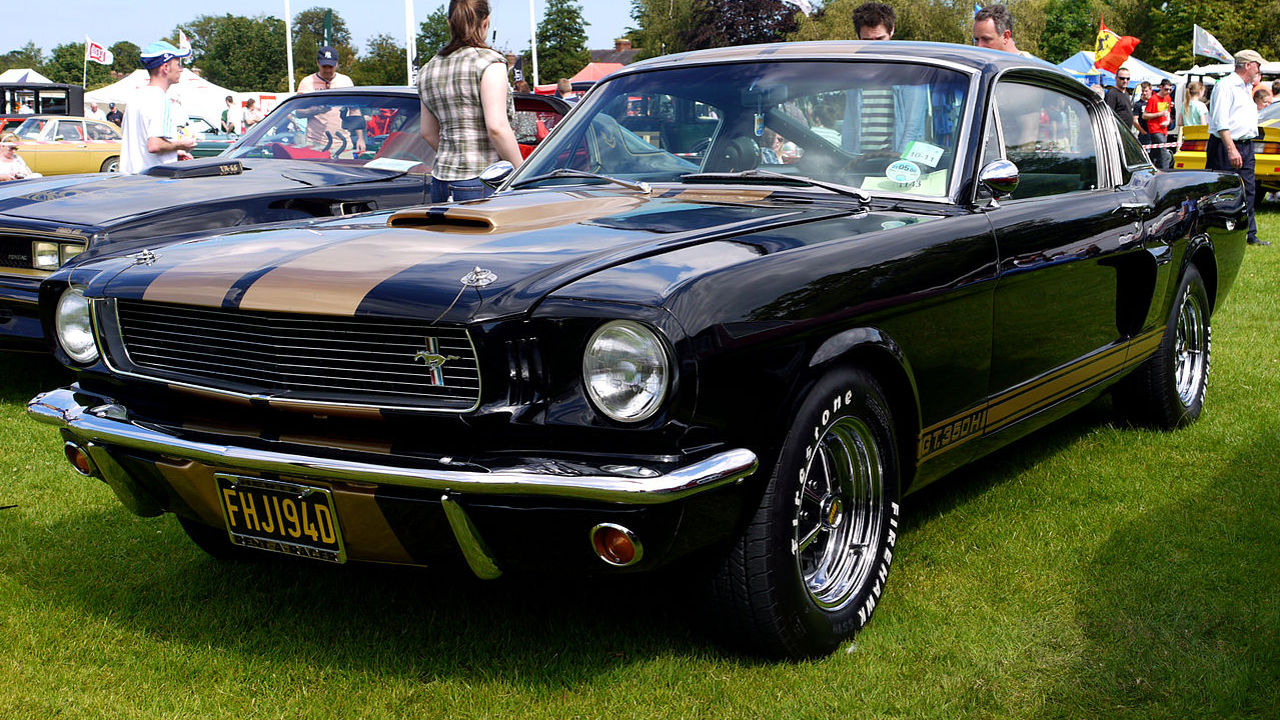
Only in America could you walk into a Hertz counter with a driver’s license and a credit card and rent a legitimate race car for $17 a day. The GT-350H was Carroll Shelby’s masterpiece — a Mustang so angry it made normal Mustangs look like Priuses driven by Sunday school teachers.
The “H” stood for Hertz, and this partnership was pure genius marketing madness. Hertz wanted something exciting to attract customers, and Shelby needed volume sales to make his operation profitable. The result was 1,000 of the wildest rental cars ever built, most painted in Hertz’s signature black with gold stripes.
These things came with a K-code 289 HiPo (High Performance) V8, making 306 hp, which doesn’t sound like much today, but remember, this was when cars had the aerodynamics of a refrigerator and the safety features of a medieval catapult. The engine featured solid lifters, a wild cam, and headers that sounded like controlled explosions. It was loud, aggressive, and absolutely intoxicating.
The suspension was completely reworked with stiffer springs, heavy-duty shocks, and a Monte Carlo bar to improve handling. The interior was stripped down and functional, with a wood-rimmed steering wheel and full instrumentation. These weren’t luxury cars: they were purpose-built speed machines that happened to be street legal.
Legend has it that some customers would rent these for weekend SCCA races, remove the Hertz stickers, run the entire weekend, then return them Monday morning with racing numbers still taped to the doors and tire compound rubber cooked into the fender wells. Hertz eventually caught on when they started getting cars back with roll cages and racing fuel still in the tank, but not before creating the most legendary rental car program in history.
When the program ended, many of the Hertz cars were sold to the public, where they became some of the most desirable Shelbys ever built. Today, a genuine GT-350H is worth more than most people’s houses, proving that sometimes the best investment strategy is renting race cars and forgetting to return them.
1984 Ford Bronco
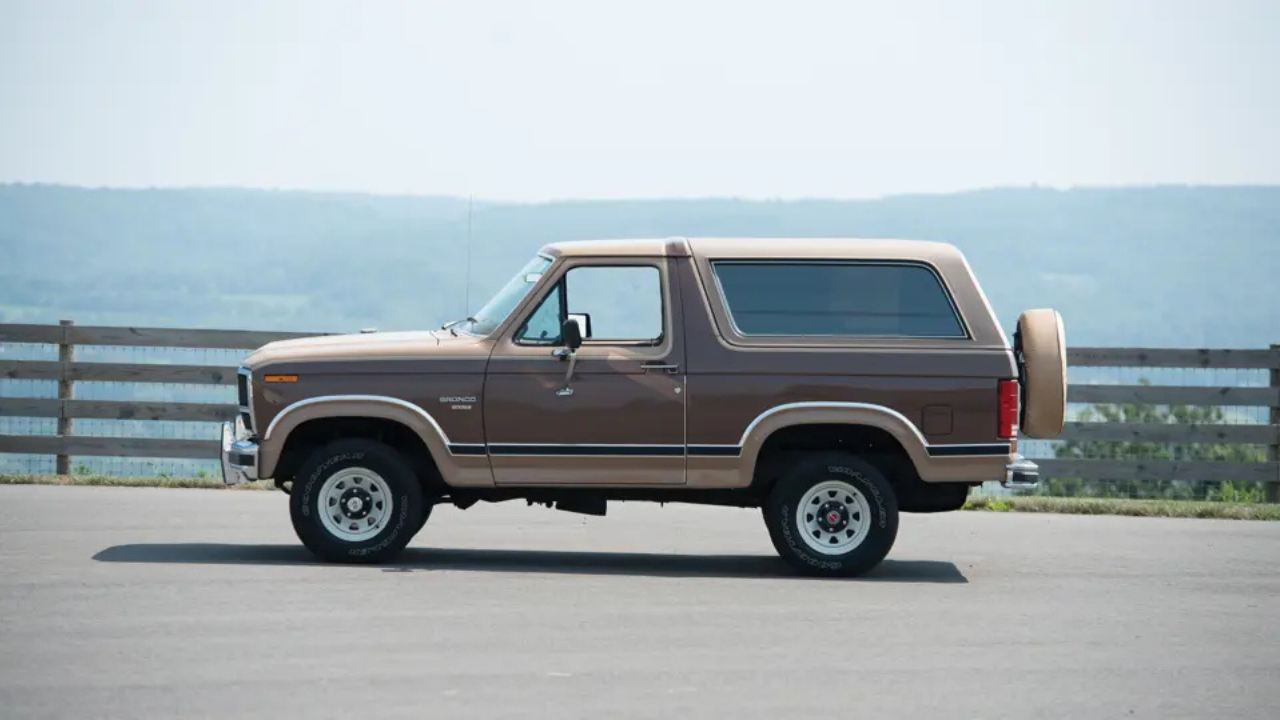
Here’s a fun piece of trivia to impress your friends at Cars and Coffee: the 1984 Bronco was the first vehicle to feature a cup holder. That’s right, before Ford figured out how to keep your Big Gulp secure during off-road adventures, we were all just holding our drinks like savages while bouncing through the wilderness. How did we even live?
The ’84 Bronco came during Ford’s “malaise era,” when everything was being downsized faster than a tech company during a recession. The first-generation Bronco (1966-1977) was a rugged, simple beast that could climb mountains and ford rivers. The second-generation Bronco (1978-1979) was… well, let’s just say it existed. But the third-generation Bronco that debuted in 1980 was Ford’s attempt to build a civilized SUV that could still get dirty when needed.
Compared to the original Bronco’s agricultural brutality, the ’84 was more like a suburban soccer mom who occasionally went camping and owned a really good tent. It was built on the F-150 platform, which meant it had the bones to be tough, but it was packaged in a more user-friendly wrapper with improved aerodynamics and better fuel economy.
The ’84 featured independent front suspension with coil springs instead of the solid axle and leaf springs of its predecessors. This made it ride better on pavement but reduced its rock-crawling credibility. Ford was clearly targeting buyers who wanted the image of off-road capability without necessarily needing to use it — a market segment they basically invented.
Under the hood, you could get anything from a fuel-sipping 4.9-liter inline-six to a thirsty 5.8-liter V8. The big V8 versions were genuinely quick for their time and could tow substantial loads, making them popular with boat owners and anyone who needed to haul toys to the lake.
The cup holder innovation might seem trivial now, but it was actually revolutionary. (Just ask any SUV owner.) Before 1984, drinking while driving meant either holding your beverage or precariously balancing it somewhere, hoping it wouldn’t spill on the first bump. Ford’s cup holder was simple — just a molded depression in the dashboard — but it changed everything. Today’s vehicles have enough cup holders to caffeinate a small army, and it all started with the ’84 Bronco.
1978 Ford Mustang II King Cobra

The Mustang II King Cobra was Ford’s answer to the Pontiac Firebird Trans Am, which is like bringing a knife to a gunfight, except the knife has racing stripes, an attitude problem, and a really aggressive hood snake decal. After years of selling Mustangs powered by what can generously be called “lawn mower engines” during the dark days of the emissions crisis, Ford finally stuffed a V8 back under the hood.
The King Cobra was the top dog in the Mustang II lineup, which admittedly wasn’t saying much. The base Mustang II came with a 140-cubic-inch four-cylinder that produced about as much power as a really enthusiastic hamster. The King Cobra, on the other hand, packed a 4.9-liter (302-cubic-inch) V8, marketed as a 5.0 because Ford’s math has always been creative and marketing departments have never let facts get in the way of a good story.
The King Cobra featured aggressive body graphics, and the centerpiece was a massive cobra snake decal that covered most of the hood, flanked by racing stripes and enough “COBRA” badges to stock a small reptile house. It was the automotive equivalent of a 1970s rock album cover — completely over the top and absolutely perfect for its era.
Despite the visual drama, the King Cobra only produced about 139 hp, which was barely enough to get out of its own way, let alone intimidate Trans Ams. But context matters: this was 1978, when emissions regulations had turned most muscle cars into rolling paperweights. The King Cobra was at least trying to be fast, even if it wasn’t quite succeeding. Still… Sorta lame.
The handling was surprisingly decent, thanks to the Mustang II’s rack-and-pinion steering and independent front suspension borrowed from the Pinto. Yes, the Pinto that’s famous for turning into a Roman candle in rear-end collisions. But the chassis was actually quite good, which is why it later became the foundation for countless hot rods and kit cars.
Only 4,313 King Cobras were built in 1978, making them relatively rare today. They represent a specific moment in automotive history when manufacturers were desperately trying to recapture the muscle car magic while dealing with regulations that made it nearly impossible. The King Cobra proved that sometimes, trying really hard is almost as good as actually being good. Maybe.
Ford Capri RS2600
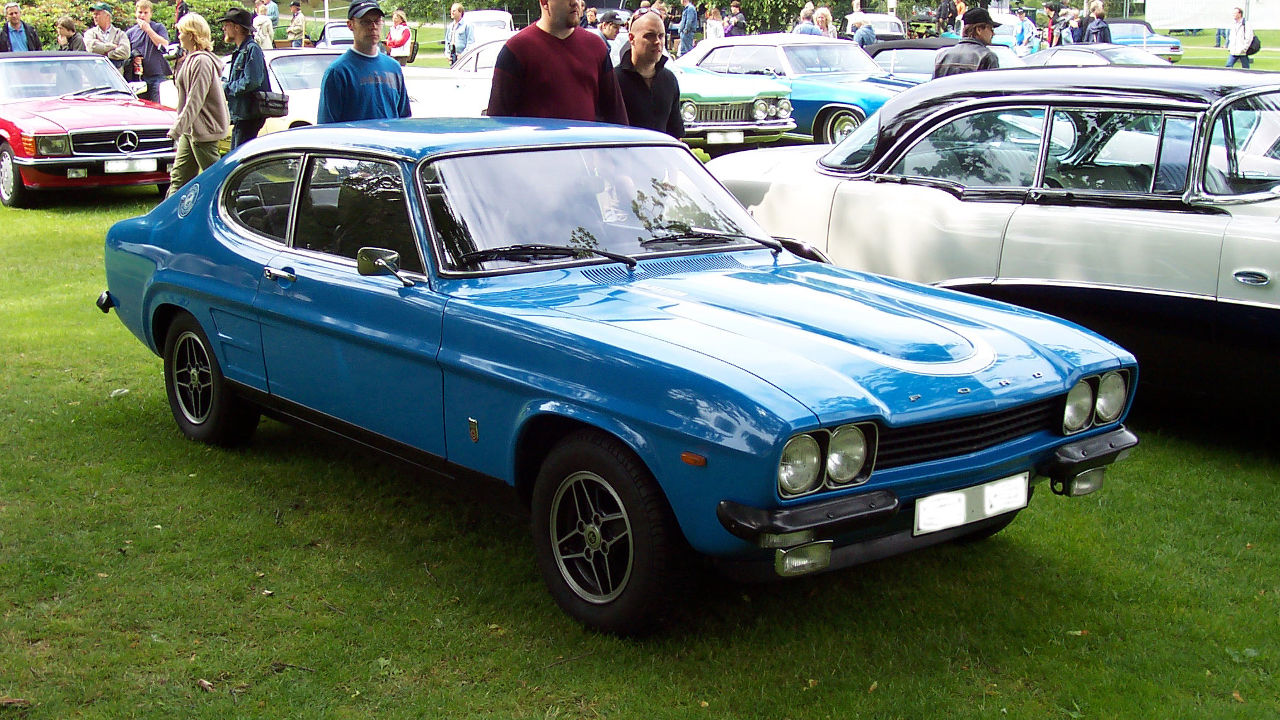
The Capri RS2600 was what happened when Ford let their European division actually design something cool without Detroit sticking its fingers in the pie. Built in Germany and designed by Philip T. Clark, this thing was basically a European Mustang that didn’t have to deal with U.S. emissions regulations, American safety standards, or the general heaviness of American life.
The RS2600 was the hot rod version of Ford’s “European Mustang,” the regular Capri. While the standard Capri was a pleasant enough sporty coupe, the RS2600 was a legitimate performance machine built for racing homologation. Only 2,636 examples were built, all in left-hand drive, making them rare even when new.
Under the hood sat a 2.6-liter Cologne V6 producing 150 bhp, which was genuinely impressive for a European engine in the early 1970s. This wasn’t some agricultural American V8: it was a sophisticated, high-revving engine that loved to be wound up. The V6 could propel the lightweight Capri to 124 mph and deliver 0-62 mph times of 8.6 seconds, which was genuinely quick for the era and still faster than many modern economy cars driven by people who think the left lane is for cruising.
The RS2600 featured a distinctive long hood and short deck proportions that made it look fast standing still. The front end was dominated by a deep air dam with integrated fog lights, while the rear spoiler was subtle but effective. The whole package had a purposeful, race-bred appearance that the regular Capri could only dream of achieving.
Inside, the RS2600 was all business. Recaro seats, a wood-rimmed steering wheel, and full instrumentation made it clear this wasn’t a secretary’s car. The driving position was perfect, the controls were precise, and everything felt like it was built for serious driving rather than just looking pretty in mall parking lots.
The RS2600 proved that when Ford wasn’t overthinking things or trying to meet seventeen different regulatory requirements, they could build something truly special. Unfortunately, they didn’t sell it in America because we apparently didn’t deserve nice things, and our safety regulations would have probably required them to add 500 pounds of crash structure and turn it into just another heavy, slow car.
Today, surviving RS2600s are among the most sought-after Fords ever built, commanding prices that would make early buyers’ heads spin. They represent what Ford could accomplish when they focused on building great cars instead of just meeting market research requirements.
Ford F-150
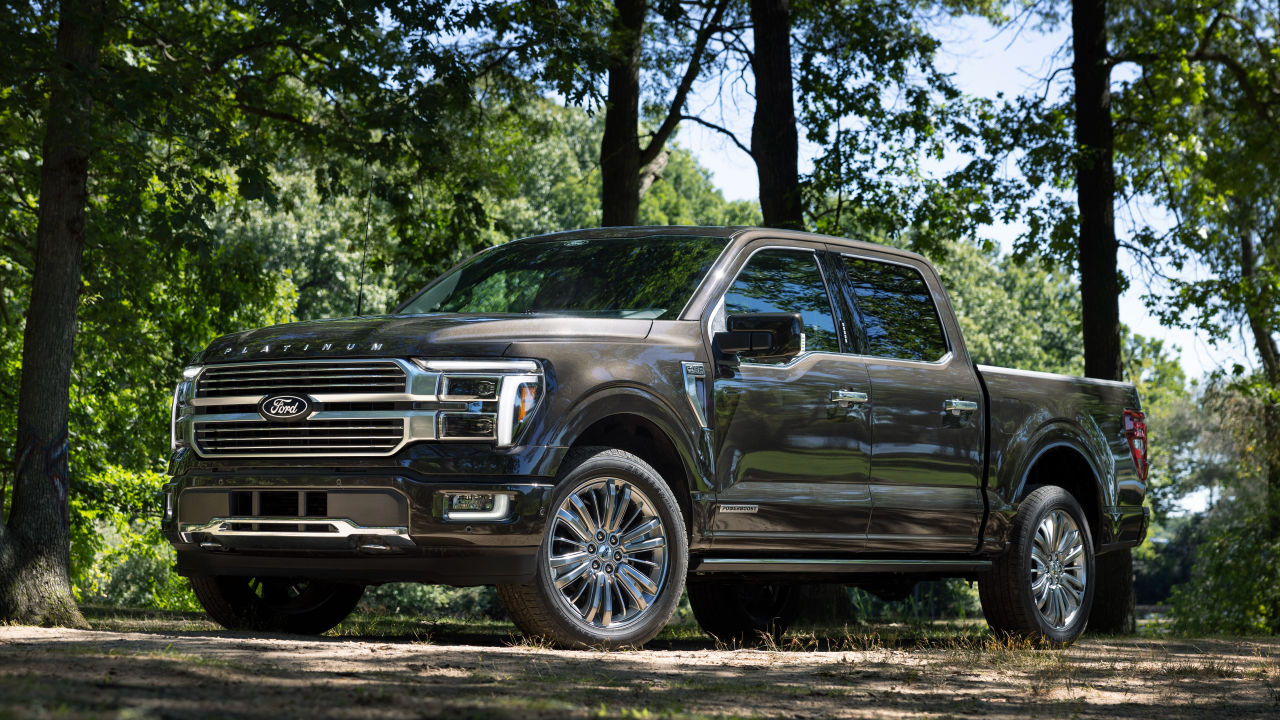
You can’t talk about Ford without genuflecting before the F-150 altar. Even non-truck people know of its epicness. Probably because this truck has been America’s best-selling vehicle for longer than some countries have existed. And for good reason: it’s the Swiss Army knife of the automotive world, the duct tape of transportation, and the closest thing America has to a national religion.
The F-150 started life in 1975 as the lighter-duty version of Ford’s F-Series trucks, slotting between the F-100 and F-250. Ford’s thinking was simple: build a truck that could work hard during the week and clean up nice for church on Sunday. What they created was a vehicle so fundamentally American that it should probably be featured on currency.
Over the decades, the F-150 has evolved from a basic work truck into a luxury land yacht that can tow a house, seat eight people in comfort rivaling a premium sedan, and still somehow get reasonable fuel economy. Modern F-150s have more computing power than the Space Shuttle, more features than a Swiss Army knife factory explosion, and interiors nicer than most people’s actual homes.
The current generation offers everything from a basic work truck to the $80,000 Limited that features massage seats, panoramic sunroofs, and probably a built-in espresso machine. You can get a hybrid that returns 25 mpg, an all-electric version that can power your house during blackouts, or a Raptor that can jump sand dunes at 100 mph while playing your Spotify playlist through a premium sound system.
The F-150’s success isn’t just about capability — it’s about identity. In America, your truck says something about who you are, what you do, and how seriously you take yourself. The F-150 manages to be simultaneously practical and aspirational, which is a neat trick that Ford has somehow pulled off for nearly fifty years.
Whether you’re hauling hay, taking the kids to soccer practice, or trying to prove your masculinity at Home Depot by buying lumber you’ll never actually use, the F-150 has you covered. Sorta like duct tape. It fixes everything, makes you look handy in the process, and somehow becomes indispensable once you start using it.
The F-150 has survived fuel crises, emissions regulations, safety requirements, and countless attempts by competitors to dethrone it. Through it all, it’s remained fundamentally true to its mission: be the truck that Americans didn’t know they needed until they had one.
Ford Explorer

The Explorer exists because the Bronco II was about as successful as your high school dating life, and it was getting owned by the competition. So Ford’s engineers did what engineers do best: they looked at what they already had and figured out how to make it work better.
What they had was the Ranger pickup, a solid, reliable truck that was selling well but limited by its two-door, open-bed configuration. What they needed was a family-friendly SUV that could compete with the Cherokee’s practicality and the Bronco’s off-road image. So they took the Ranger, gave it four doors, a roof, and some marketing spin, and called it the Explorer.
Genius? Absolutely. Original? Not even a little bit. But it worked better than anyone expected.
The Explorer debuted in 1990 and immediately became the definitive family SUV. It offered genuine off-road capability thanks to its truck-based construction and available four-wheel drive, but it was civilized enough for daily driving and soccer practice duty. The interior was more car-like than truck-like, with actual comfort and convenience features instead of just “function over form” agricultural basics.
Under the hood, the Explorer offered a choice of engines ranging from a fuel-efficient 4.0-liter V6 to a powerful 5.0-liter V8. The V6 was adequate for most duties and returned decent fuel economy, while the V8 turned the Explorer into a genuinely quick family hauler that could also tow a boat.
The Explorer’s timing was perfect. American families were abandoning station wagons in favor of SUVs, and the Explorer offered all the advantages of truck-based construction — durability, capability, and commanding driving position — without the compromises of actual trucks. It was tall enough to see over traffic, tough enough to handle dirt roads, and comfortable enough for long family trips.
Of course, the Explorer also became famous for less positive reasons, including rollover issues and the Firestone tire controversy of the early 2000s. But even these problems couldn’t kill America’s love affair with the Explorer concept. Ford sold millions of them, and they became the template for family SUVs that continues today.
Over the years, the Explorer has morphed from a truck-based SUV to a unibody crossover, proving that even Ford couldn’t resist the SUV-ification of America. Modern Explorers are faster, more comfortable, and more capable than ever; they just inherit Ford’s proud tradition of mysterious electrical gremlins and the occasional inexplicable rattle that only appears when you’re trying to demonstrate it to the service advisor.
2016 Ford GT No. 68
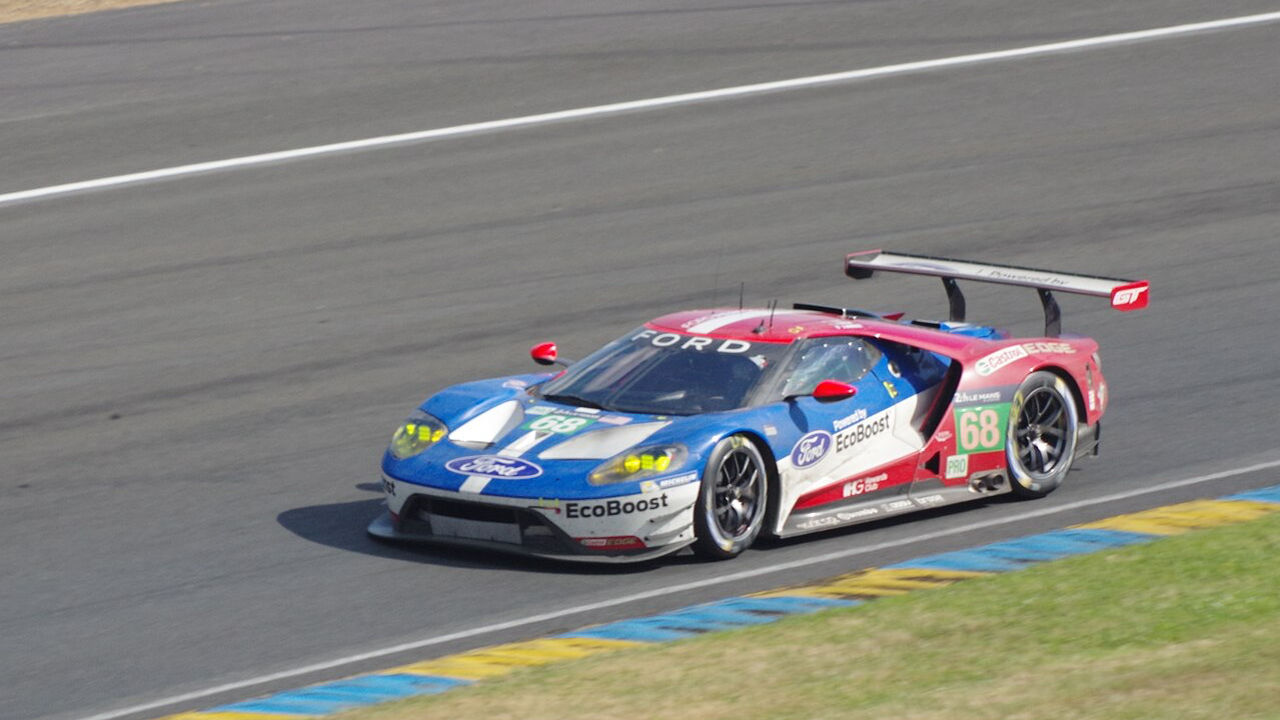
In 1966, Ford went to Le Mans with a simple mission: embarrass Ferrari so thoroughly that Enzo would cry into his pasta. They succeeded spectacularly, finishing 1-2-3 and basically inventing the concept of “American automotive superiority complex.” Fifty years later, they decided to do it again, just to make sure the Europeans didn’t forget who owned them (hint: America).
The 2016 Ford GT was a carbon fiber one-fingered salute to anyone who thought American cars couldn’t handle corners, couldn’t be sophisticated, or couldn’t compete with the best Europe had to offer. This wasn’t some barely-modified street car pretending to be a race car — this was a purpose-built racing machine that happened to have a street-legal version for people with more money than sense.
The GT program was classic Ford: ambitious, slightly crazy, and executed with the kind of single-minded determination that makes other manufacturers nervous. They assembled a dream team of engineers, gave them essentially unlimited resources, and told them to build something that would make Ferrari owners question their life choices.
GT No. 68 was one of four race-prepared cars that Ford entered in the 2016 Le Mans 24 Hours, and it delivered in spectacular fashion. Not only did it win its class, but it did so on the 50th anniversary of Ford’s original Le Mans domination, creating one of those perfect sports car moments that gives you chills just thinking about it.
The race-spec GT featured a twin-turbo 3.5-liter EcoBoost V6 producing around 600 horsepower, advanced aerodynamics that could literally hold the car to the ceiling at speed, and a carbon fiber chassis so sophisticated it made Formula 1 teams jealous. The whole package was designed using cutting-edge computer modeling and wind tunnel testing, proving that modern American engineering could match or exceed anything coming out of Europe.
The victory was especially sweet because it came against factory teams from Ferrari, Porsche, and other European manufacturers who had decades more experience in prototype racing. Ford showed up, learned the rules, and then proceeded to rewrite them in their favor.
The street version of the GT was equally impressive, featuring the same basic architecture as the race car but with enough luxury and comfort features to make it actually drivable on public roads. Only 4,038 examples were built over four years, making it a rare and desirable supercar.
The 2016 GT program proved that when Ford decides to get serious about performance, they can compete with anyone in the world. It also proved that sometimes the best revenge is served fifty years later, at 200 mph, in front of thousands of European racing fans who thought American cars were just good for straight lines.
2017 Ford Focus RS
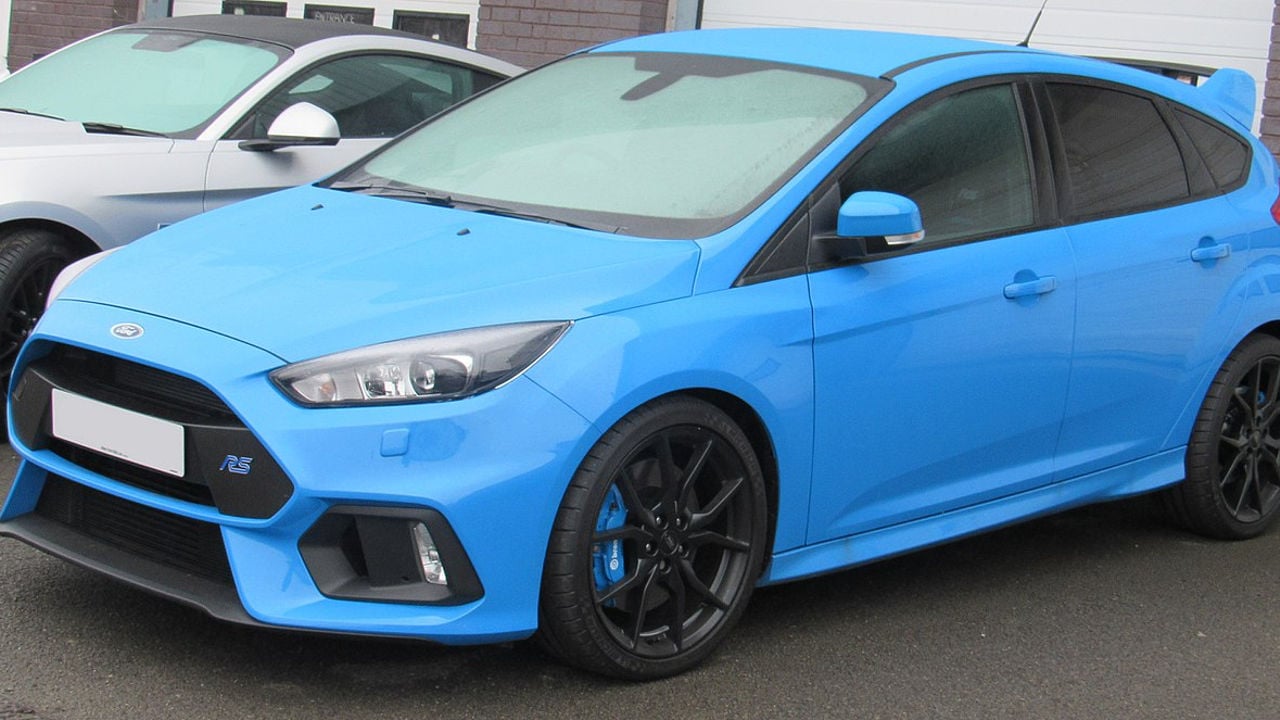
While everyone was obsessing over Subaru WRXs, Mitsubishi Evos, and the general superiority of Japanese all-wheel-drive systems, Ford quietly built one of the most deranged hot hatches ever to roll off a production line: the Focus RS. With 350 hp from a 2.3-liter EcoBoost engine and an all-wheel-drive system that could drift on command, this thing was like a rally car that got lost on its way to the forest and decided to terrorize suburban neighborhoods instead.
The RS wasn’t just another hot hatch — it was the culmination of decades of Ford performance engineering, European rally experience, and American “more is better” philosophy. The previous Focus RS models (sold only in Europe because America apparently didn’t deserve nice things) had been front-wheel-drive tire-shredding monsters. But the 2017 version got all-wheel drive and became something truly special.
The heart of the beast was Ford’s 2.3-liter EcoBoost four-cylinder, the same basic engine used in the Mustang but tuned to an even higher state of aggression. With a massive turbocharger, direct injection, and enough boost pressure to make your ears pop, it produced 350 horsepower and 350 lb-ft of torque. More importantly, it delivered power in a completely linear, predictable way that made the car incredibly easy to drive fast.
The real magic was in the all-wheel-drive system. Ford’s engineers created something called “drift mode,” which was exactly what it sounds like—a setting that would intentionally send power to the rear wheels to make the car slide sideways at will. This wasn’t some marketing gimmick; it was a legitimate performance tool that made the RS incredibly fun and engaging to drive.
The RS came in “Nitrous Blue” (because calling it “blue” wasn’t extreme enough for Ford’s marketing department) and featured aggressive bodywork that looked like it was designed in a wind tunnel by people who took aerodynamics very seriously. The huge rear spoiler, front splitter, and side skirts weren’t just for show — they actually worked to keep the car planted at high speeds.
Inside, the RS was all business. Recaro seats that held you in place during serious cornering, a flat-bottom steering wheel, and instrumentation that included everything you needed to monitor the car’s vital signs during spirited driving. The interior struck the perfect balance between performance focus and daily usability.
The Focus RS dominated every comparison test it entered, embarrassing cars costing twice as much and making established performance car manufacturers wonder what they were doing wrong. It could accelerate to 60 mph in 4.7 seconds, hit a top speed of 165 mph, and lap racetracks faster than cars with much more power.
Unfortunately, Ford discontinued the RS after just three years because apparently we can’t have nice things, and now they’re worth more than some houses. The RS represented everything great about modern performance cars: sophisticated technology, massive capability, and everyday usability all wrapped up in a package that could fit in a compact parking space.
2023 Ford GT MK IV
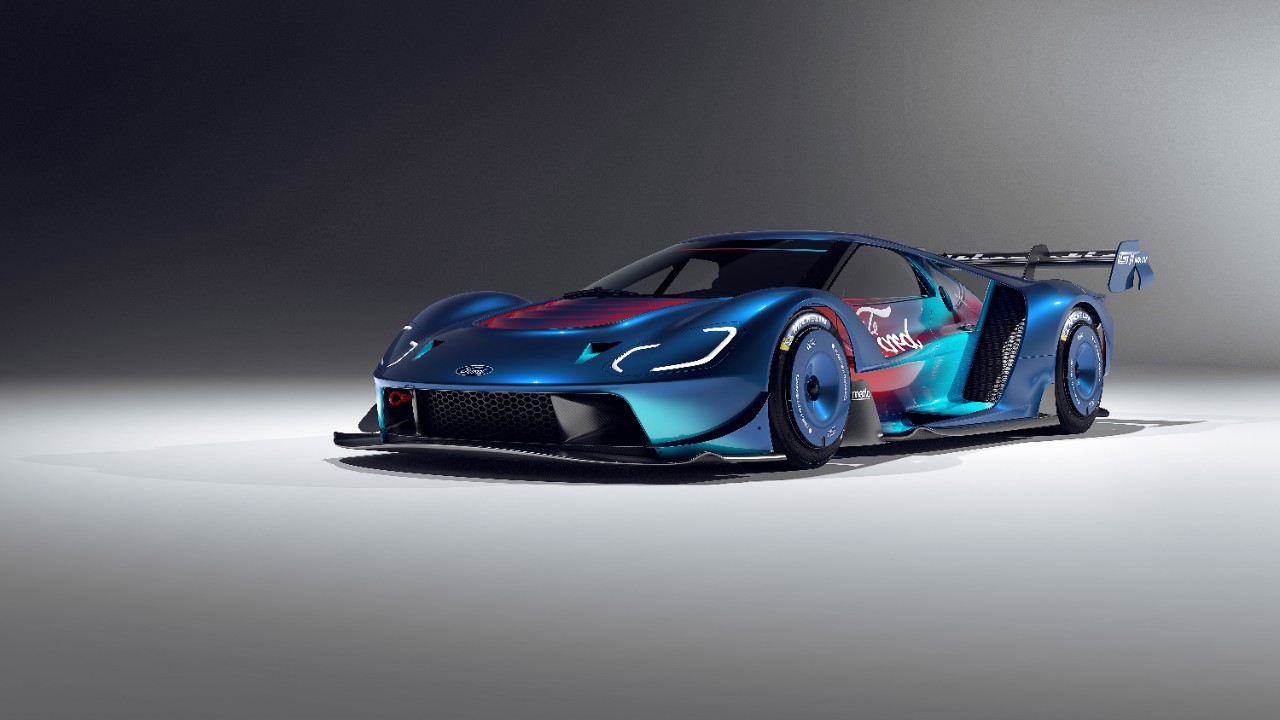
Ford’s final farewell to the GT lineage cost $1.7 million, produced over 800 hp, and was limited to just 67 examples worldwide. In other words, it was exactly the kind of excessive, unnecessary, and absolutely magnificent machine that only Ford would build as a goodbye gift to themselves.
The MK IV was track-only, which means it’s the automotive equivalent of a thoroughbred racehorse: bred for absolute performance but not allowed to go outside without supervision. It represented everything Ford had learned from decades of racing, combined with modern technology that would have been science fiction when the original GT40 was built.
The powertrain was based on the same twin-turbo 3.5-liter EcoBoost V6 used in the road-going GT, but tuned to produce over 800 hp. This wasn’t just a matter of turning up the boost; Ford’s engineers completely reworked the engine with stronger internals, more aggressive camshafts, and cooling systems designed to handle track duty without breaking a sweat.
The aerodynamics were next-level insane. The MK IV featured active aerodynamic elements that could adjust in real-time to optimize downforce or reduce drag depending on track conditions. The car could literally generate enough downforce to drive upside down at speed, though Ford’s lawyers probably wouldn’t recommend trying it.
The chassis was a masterpiece of carbon fiber construction, designed using the same advanced modeling techniques that Formula 1 teams use. Every component was optimized for minimum weight and maximum rigidity, resulting in a car that weighed less than a Honda Civic but was stiffer than most buildings.
Inside, the MK IV was stripped to essentials. A racing seat, safety equipment, and just enough instrumentation to keep the driver informed about what the car was doing at any given moment. There was no air conditioning, no radio, and no cup holders (the thing Ford itself invented!) — because when you’re paying $1.7 million for a track toy, creature comforts are apparently optional.
Only 67 examples were built, ensuring that approximately 66 more people than you or I will ever own one. The number 67 was chosen to commemorate Ford’s victory at Le Mans in 1967, because Ford has never been subtle about their achievements and sees no reason to start now.
The MK IV represented the absolute pinnacle of Ford’s performance engineering capabilities. It was everything the company had learned about building fast cars, distilled into the most extreme package they could imagine. It was excessive, impractical, and completely unnecessary, which made it absolutely perfect as a final statement.
Ford: The American Dream
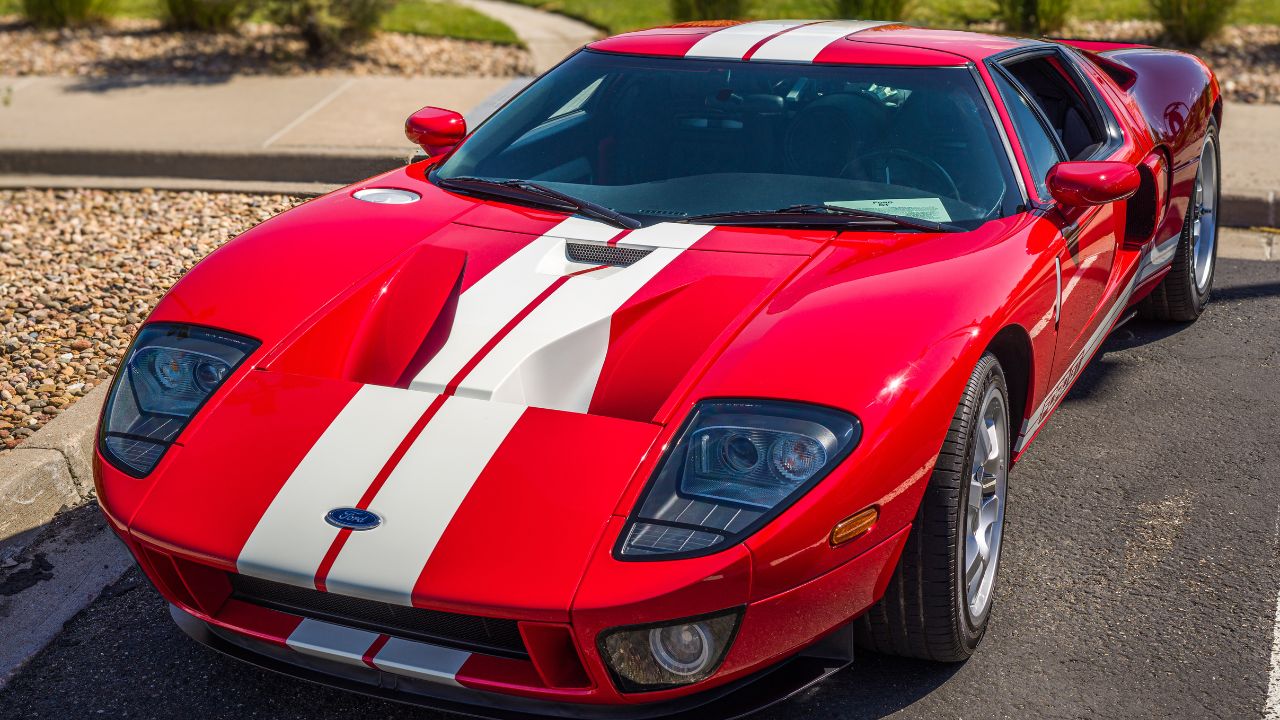
Ford has given us some of the most iconic vehicles in automotive history, along with some electrical systems that seem to have been designed by caffeinated squirrels working the night shift. They’ve revolutionized manufacturing, won Le Mans multiple times, invented the assembly line, created the modern pickup truck market, and somehow convinced millions of Americans that paying $80,000 for a pickup truck is not only reasonable but actually a smart financial decision.
Whether you love them for their innovations, tolerate them for their quirks, worship at the altar of the F-150, or just appreciate their commitment to building cars that make interesting noises, one thing is certain: Ford isn’t going anywhere. They’ll keep building trucks that can tow mountains, Mustangs that sound like freedom being born, sports cars that embarrass Europeans, and electrical systems that keep auto electricians employed and confused.
Ford represents everything great and terrible about American automotive culture. They’re bold when they should be cautious, conservative when they should take risks, and somehow always manage to build exactly the right car at exactly the wrong time—or vice versa. They’ve survived the Great Depression, two world wars, multiple fuel crises, the rise of Japanese competition, and the general decline of American manufacturing, all while maintaining their essential Ford-ness.
And honestly? That’s exactly why we love them. Ford: Built Ford Tough, and just tough enough to keep us coming back for more, wondering what they’ll think of next, and hoping our warranties are still valid.