
Toyota believes internal-combustion engines still have a future in Europe, even as the continent moves toward stricter emissions regulations. The Japanese automaker is now urging European lawmakers to recognize certain combustion-powered vehicles as zero-emission cars.
However, Toyota isn’t suggesting that ordinary gasoline vehicles should receive the same classification as electric cars. Instead, it wants vehicles designed to run exclusively on qualifying renewable fuels to be treated as zero-emission.
The proposal forms part of Toyota’s latest recommendations for Europe’s automotive regulations, announced on October 16. The company argues that policymakers should adopt a more flexible approach to reducing emissions while protecting the region’s automotive industry.
Toyota’s position comes as European regulators reconsider the rules governing new vehicles from 2035 onward. The automaker believes renewable fuels could help preserve internal-combustion technology while supporting Europe’s climate ambitions.
Toyota Wants Renewable-Fuel Cars Recognized As Zero-Emission
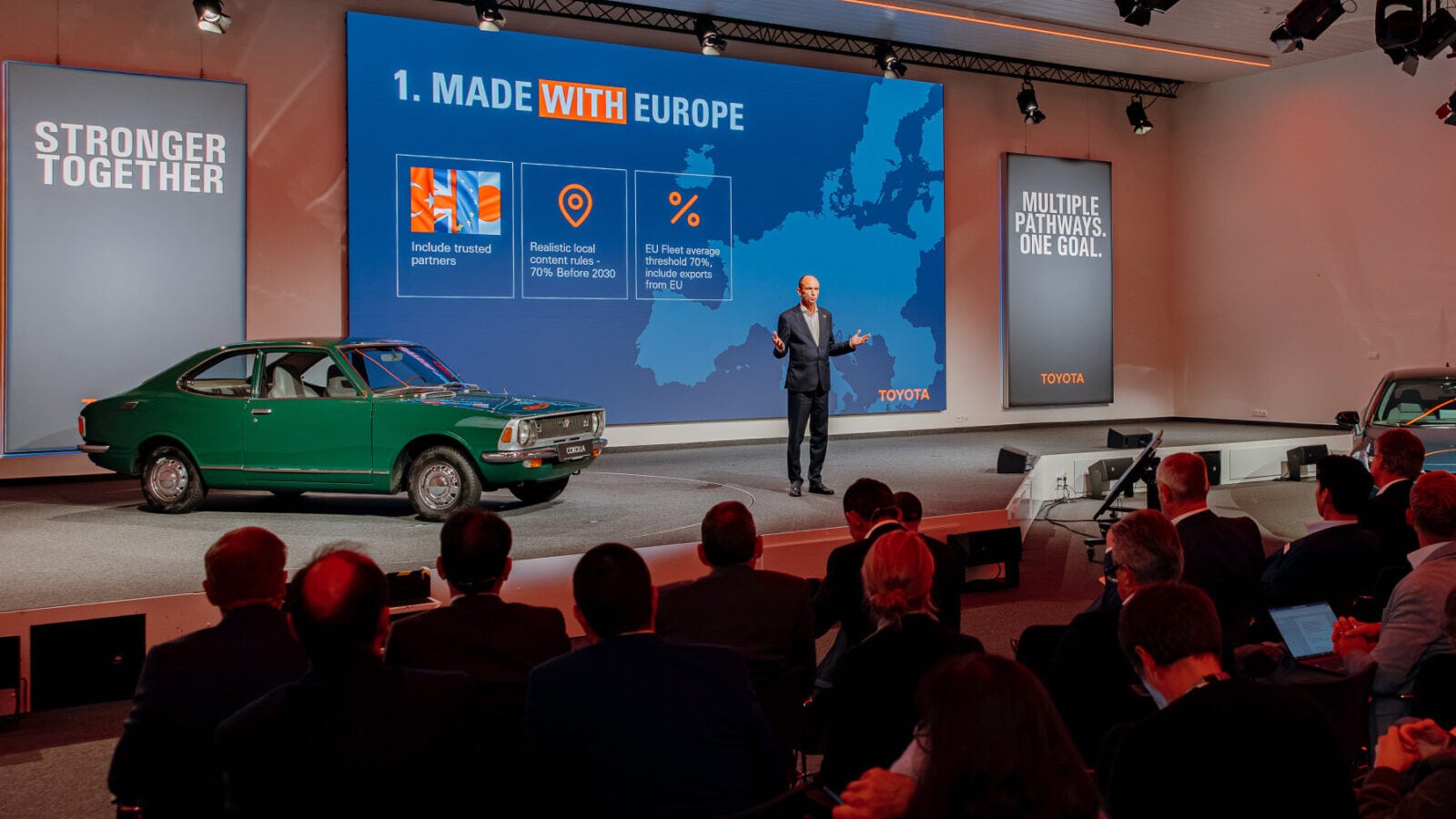
Toyota is asking the European Union to create a common definition for vehicles exclusively running on eligible renewable fuels, known as VEEF. Under its proposal, these vehicles would receive zero-emission status despite retaining internal-combustion engines.
The company wants the classification aligned with the EU’s Renewable Energy Directive, establishing consistent standards for qualifying fuels. Crucially, the proposal wouldn’t automatically cover conventional gasoline cars that occasionally use renewable fuel.
However, burning renewable fuels still produces tailpipe CO2, meaning the proposed classification would reflect their potential lifecycle emissions benefits rather than an absence of exhaust emissions.
Europe Could Give Combustion Engines More Breathing Room
Toyota is also pushing for a 90% reduction in fleet-average CO2 emissions for new vehicles by 2035, instead of the 100% reduction required under the EU’s existing rules. It believes renewable fuels and measures such as low-carbon steel could help address the remaining emissions.
The automaker is requesting additional flexibility around the 2030 targets, including a five-year compliance window running from 2028 through 2032. Toyota argues that regulations must better reflect actual electric vehicle demand and infrastructure development.
There’s Still A Major Problem To Solve

One obvious challenge is ensuring that vehicles classified as renewable-fuel-only actually use qualifying fuels throughout their lives. Without reliable verification, drivers could potentially fill their tanks with conventional gasoline.
Toyota has already been exploring a possible solution through a Spanish pilot program launched with BMW, Bosch, and Repsol. The trial uses digital tracking technology to verify renewable-fuel use across approximately 20 vehicles.
Toyota’s proposal could give combustion engines a longer future in Europe, although regulators would need to establish strict rules governing which fuels qualify. The debate also raises questions about whether Europe’s emissions regulations should focus solely on vehicle exhaust or take into account the environmental impact of the fuels they use.