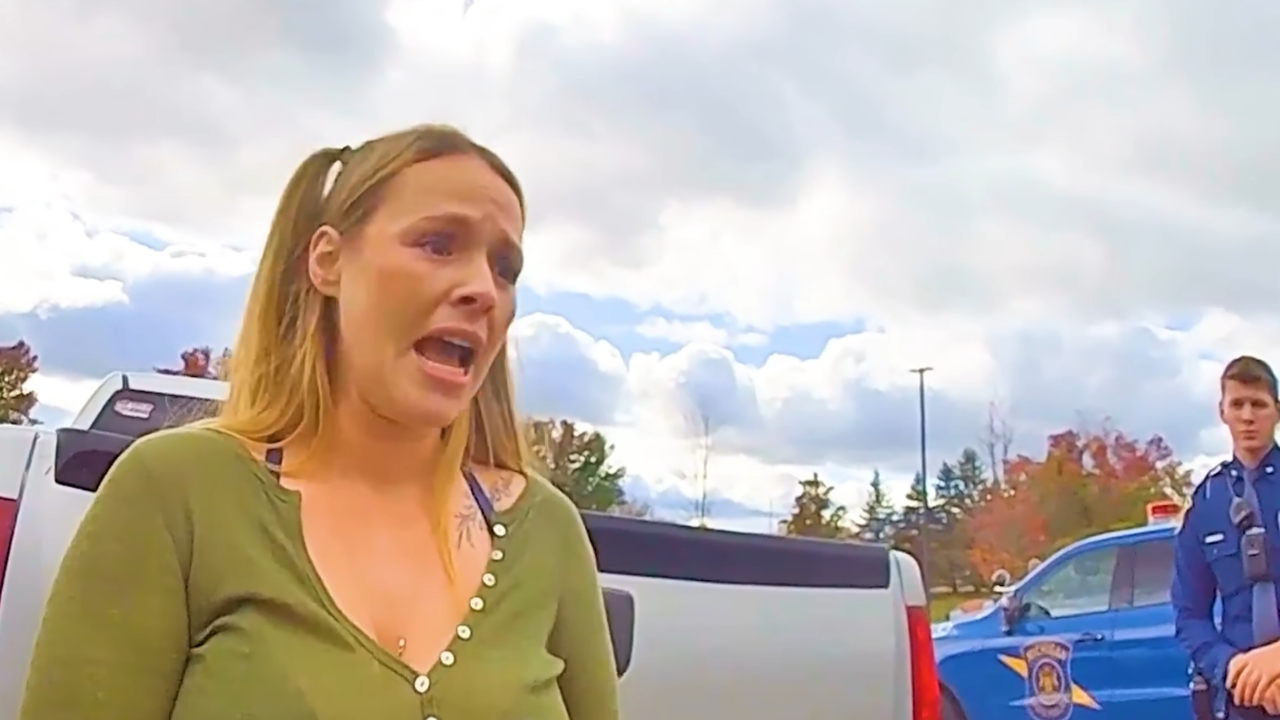
A newly shared body-camera video of an earlier domestic-violence arrest is drawing attention to a dispute outside a pediatrician’s office. Officers were trying to establish whether a mother had struck her partner with a purse while their baby was with them.
The recording, published by Midwest Safety and Sergeant Curtis, follows the questioning and the difficult effort to get her into a police car. The original incident date and location have not been verified, so the new upload should not be mistaken for a new arrest.
The mother denied deliberately hurting her partner, while a witness described an intentional strike. He acknowledged contact with the purse but questioned whether she had meant to hit him, leaving officers to compare accounts that differed on a central point.
The couple also had a baby to care for. As officers separated the adults, questions about who would take the child home became part of an encounter that had started with a doctor’s visit.
Outside the Office
Embedded media follows; please allow a moment to load.
During the questioning, the mother explained that they had disagreed inside the office and stepped outside because she did not want to discuss it there. She described taking off her purse and handing it to him.
“I did not hit him with the purse,” she insisted.
Her partner gave a different account: she had followed him outside with the baby, turned quickly and struck the side of his face. He initially described the contact as unintentional. When an officer returned to the question, he acknowledged that the purse had made contact but expressed uncertainty about her intent.
A witness was more definite. “It was definitely intentional,” she said, describing the bag raised in the air and the mother following him after the contact.
The mother later allowed that the purse might have brushed his hip while she was trying to give it to him. She maintained that she had not intended to hurt him and described the couple hugging and kissing afterward before returning inside for the baby’s bottle.
An officer announced that she was under arrest for domestic violence. She protested and tried to speak to her partner as officers directed them to remain apart.
At the Car
The encounter did not end with that announcement. Officers repeatedly instructed her to get into the car, keep her feet inside, and leave her handcuffs behind her back.
An officer warned that moving the cuffs to the front again would bring another charge. Later, officers discussed that she had moved them forward again and was banging on the windows. During the struggle to seat her, they also ordered her to stop kicking and spitting.
When she refused to get into the car, an officer warned about a resisting or obstruction charge. The filed charges and outcome of the case have not been independently verified.
Meanwhile, her partner asked how the instruction against contact would work when they shared a child. Officers discussed communicating through her parents, and she said the baby should go with her father.
Beyond This Couple
Men’s experiences of partner violence are documented well beyond individual police encounters.
The Centers for Disease Control and Prevention reports that more than one in six U.S. men have experienced contact sexual violence, physical violence or stalking by an intimate partner during their lifetimes. About one in seven have experienced physical violence by a partner. These are lifetime survey estimates, not annual rates or findings about this couple.
Partner violence can involve a current or former spouse or dating partner, and its effects can extend beyond an injury. Survivors may experience depression or symptoms of post-traumatic stress disorder; other consequences include missed work, safety concerns and a need for medical care.
The National Domestic Violence Hotline describes hearing from male victims who fear they will not be believed or taken seriously. Some feel ashamed to acknowledge what is happening, while stereotypes that men should endure abuse can discourage them from seeking help.
The Hotline recommends listening without judgment and, when it can be done safely, documenting incidents and keeping that documentation beyond an abusive partner’s reach. Its advocates can help with safety planning and referrals to local services.
Free, confidential support is available around the clock through the Hotline’s help service: call 800-799-7233, text START to 88788 or use its online chat. Anyone in immediate danger should call 911.
All parties are presumed innocent unless and until proven guilty in a court of law.