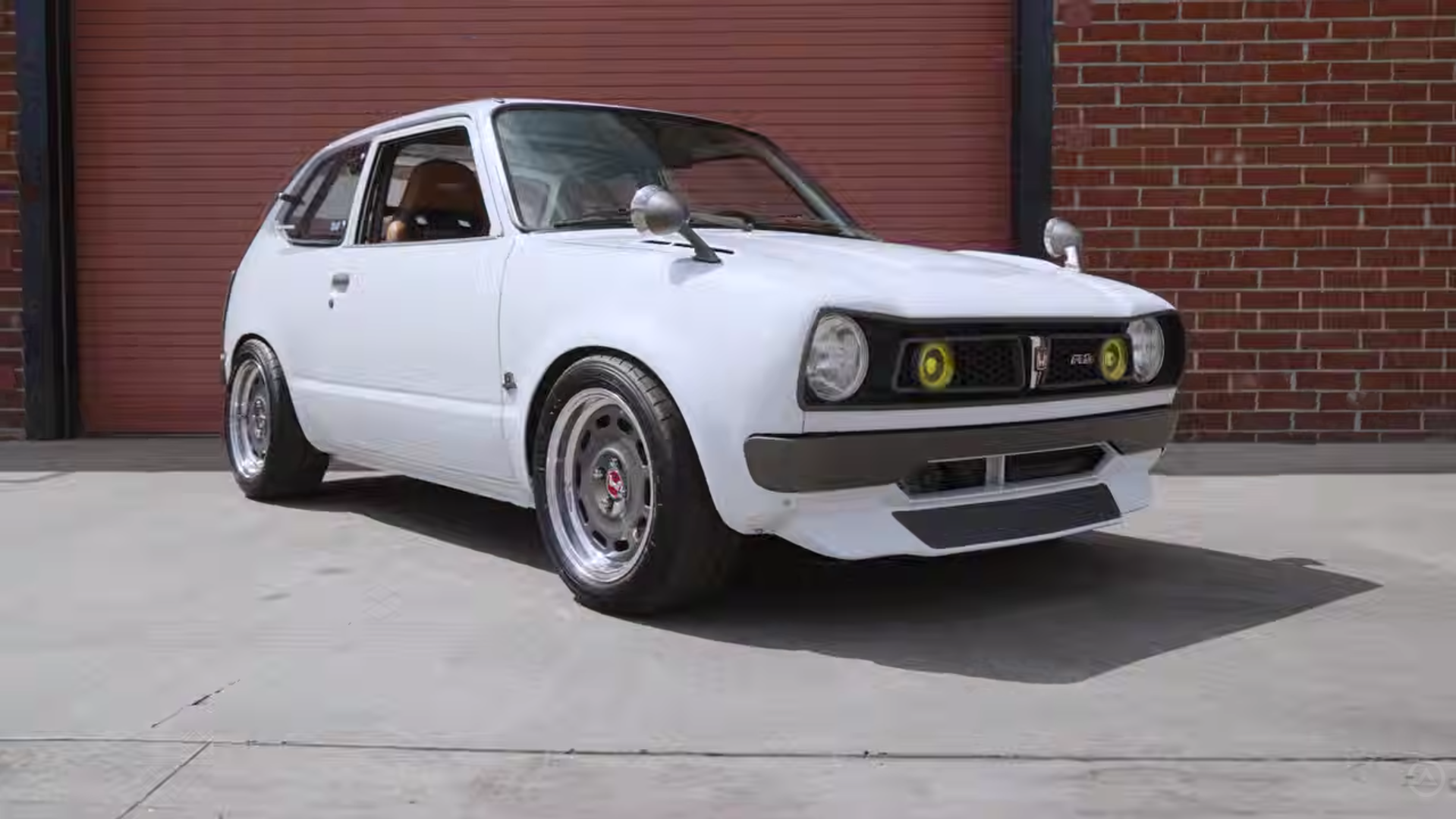
The original Honda Civic helped establish the Japanese automaker’s reputation for building affordable, economical cars. With modest power and lightweight construction, the first-generation model was designed for everyday practicality rather than outright performance.
However, its compact dimensions and distinctive styling have also made it an appealing starting point for enthusiasts. Given the right mechanical upgrades, these little Hondas can become surprisingly capable performance machines.
Mike Jacobs has taken that idea to an entirely different level with his meticulously rebuilt 1974 Civic. Working alongside Utah-based Garage 6, he transformed an incomplete rolling shell into an exceptionally detailed restomod inspired by the Japanese-market Civic RS.
The finished car recently appeared on the Autotopia LA YouTube channel, where its understated appearance concealed some serious engineering. Underneath the vintage bodywork sits a modern Honda Type R powertrain capable of delivering an entirely different driving experience.
A 225-HP Type R Engine In A 2,000-Pound Civic
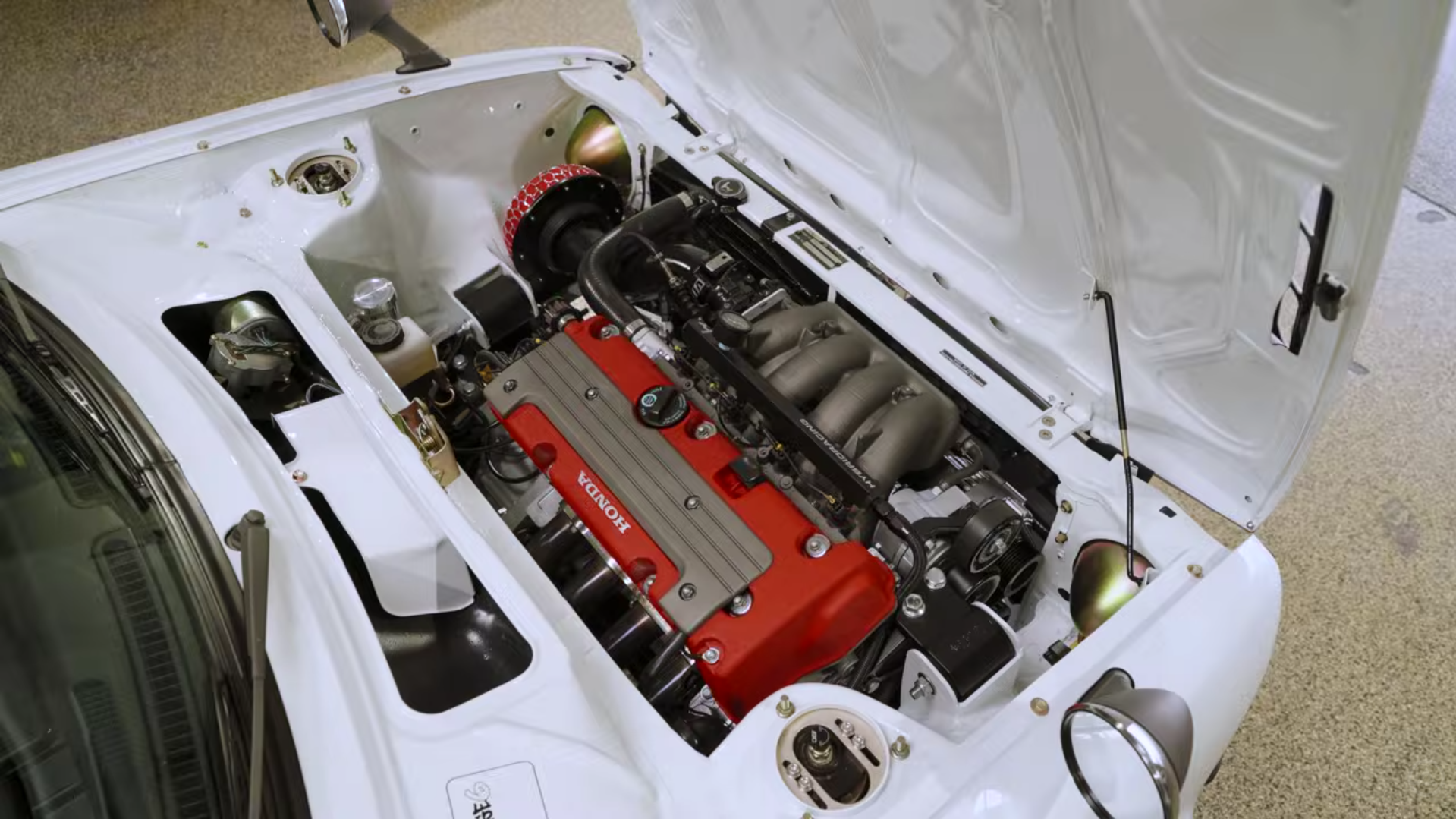
The original 1974 Civic came with a 1.2-liter four-cylinder producing a rather underwhelming 56 horsepower. Jacobs replaced that modest engine with a 2.0-liter K-series four-cylinder sourced from a 2006 Japanese-market Honda Integra Type R (sold as Acura RSX in the States, but it wasn’t available in Type R spec).
The engine produces approximately 225 horsepower and retains its factory internals, although it features a custom exhaust header and upgraded injectors. It also retains the Type R’s six-speed manual transmission and limited-slip differential, with an 8,600-rpm redline adding to its appeal.
With the completed Civic weighing approximately 2,000 pounds, the power-to-weight ratio is particularly impressive. Fitting the larger engine required extensive modifications to the engine bay, including revised mounts and additional structural reinforcement.
Garage 6 Reengineered The Chassis
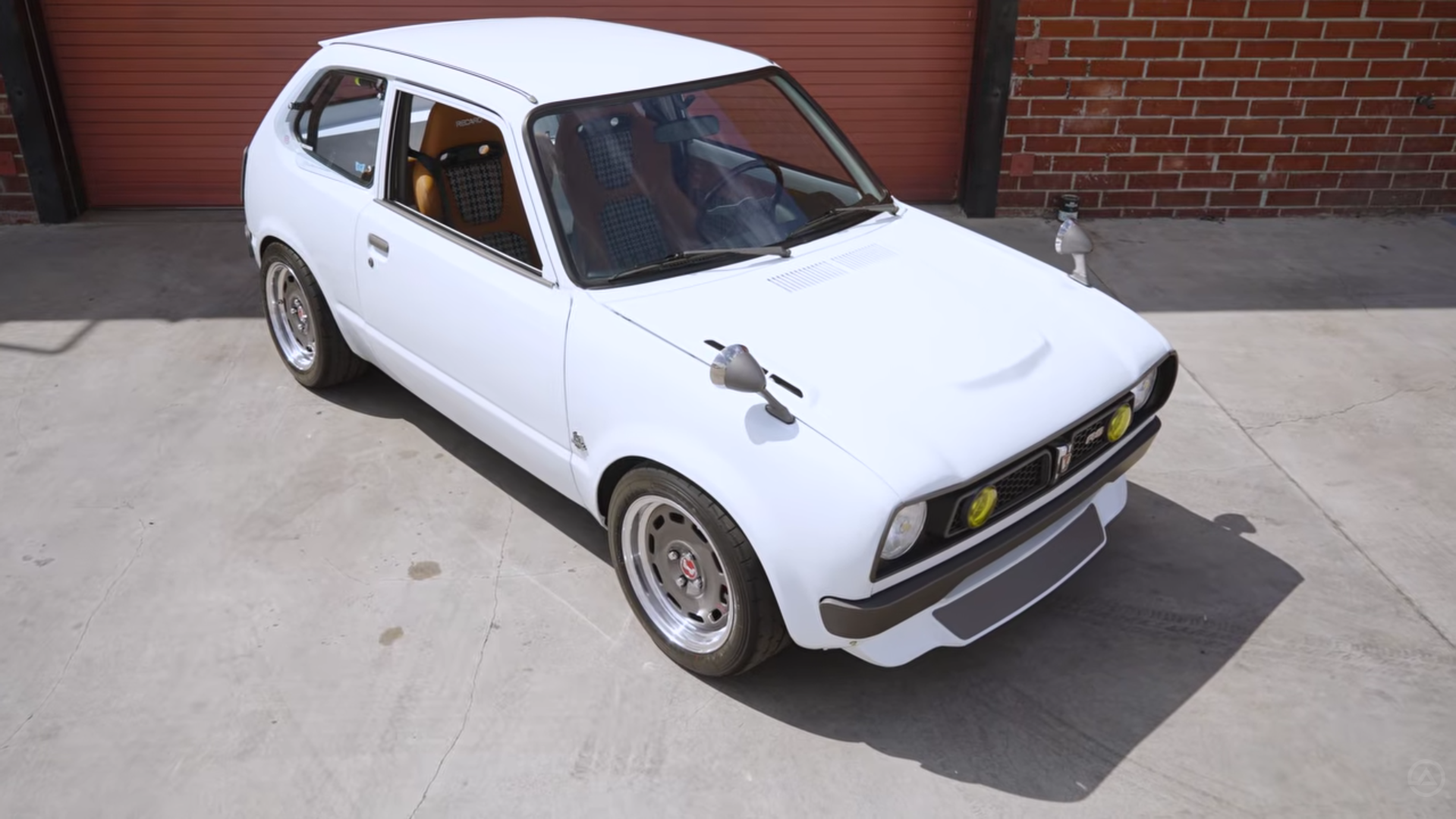
The build involved far greater changes than simply installing a more powerful engine. Garage 6 reinforced the unibody with steel plating, additional structural members, and tubing integrated into the front structure.
The front suspension was redesigned with custom geometry, while BC Racing coilovers and revised spring rates help control the lightweight chassis. Reinforced rear suspension components, Wilwood four-piston brakes, and 11-inch discs complete the mechanical upgrades.
During the road test, Autotopia LA praised the Civic’s responsive handling, strong acceleration, and surprisingly composed driving characteristics. Despite its considerable performance potential, the car is still comfortable enough for ordinary road use.
Classic Styling With Modern Details
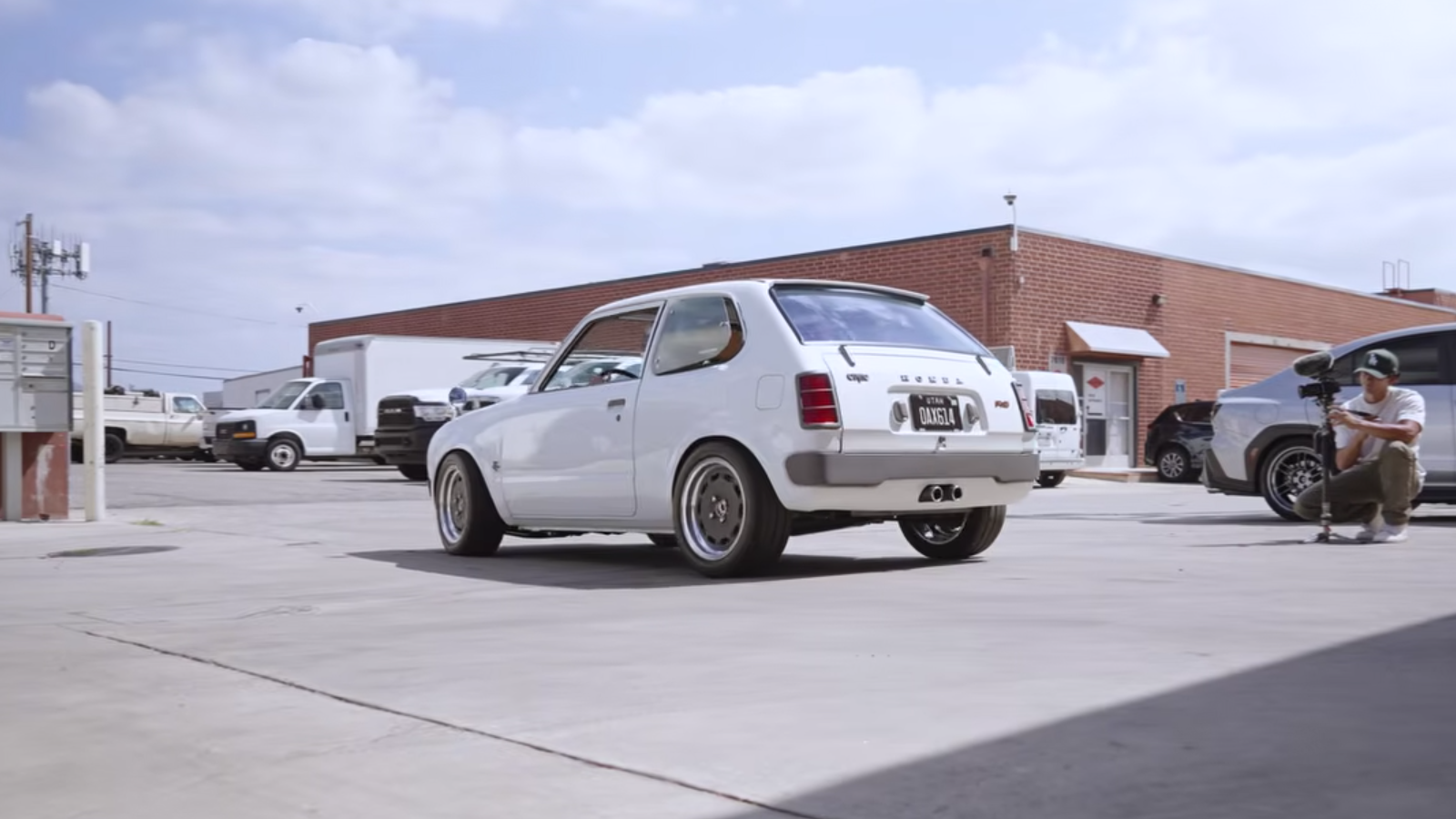
Jacobs wanted the exterior to resemble a factory-developed performance Civic rather than an aggressively modified show car. The Grand Prix White finish, handmade steel bumpers and subtle aerodynamic additions preserve the original design’s character.
Custom 15-inch Rotiform wheels, a redesigned grille, and integrated lighting provide discreet contemporary touches. Several components were developed using 3D scanning and printing, allowing the team to achieve precise fitment without disrupting the vintage appearance.
The build also pays tribute to the original Japanese-market Civic RS, a sportier version of the first-generation hatchback that was never officially sold in the United States. Its understated styling and carefully selected modifications give it the appearance of a factory performance model that Honda could have built in the 1970s.
An Interior Rebuilt Around The Driver
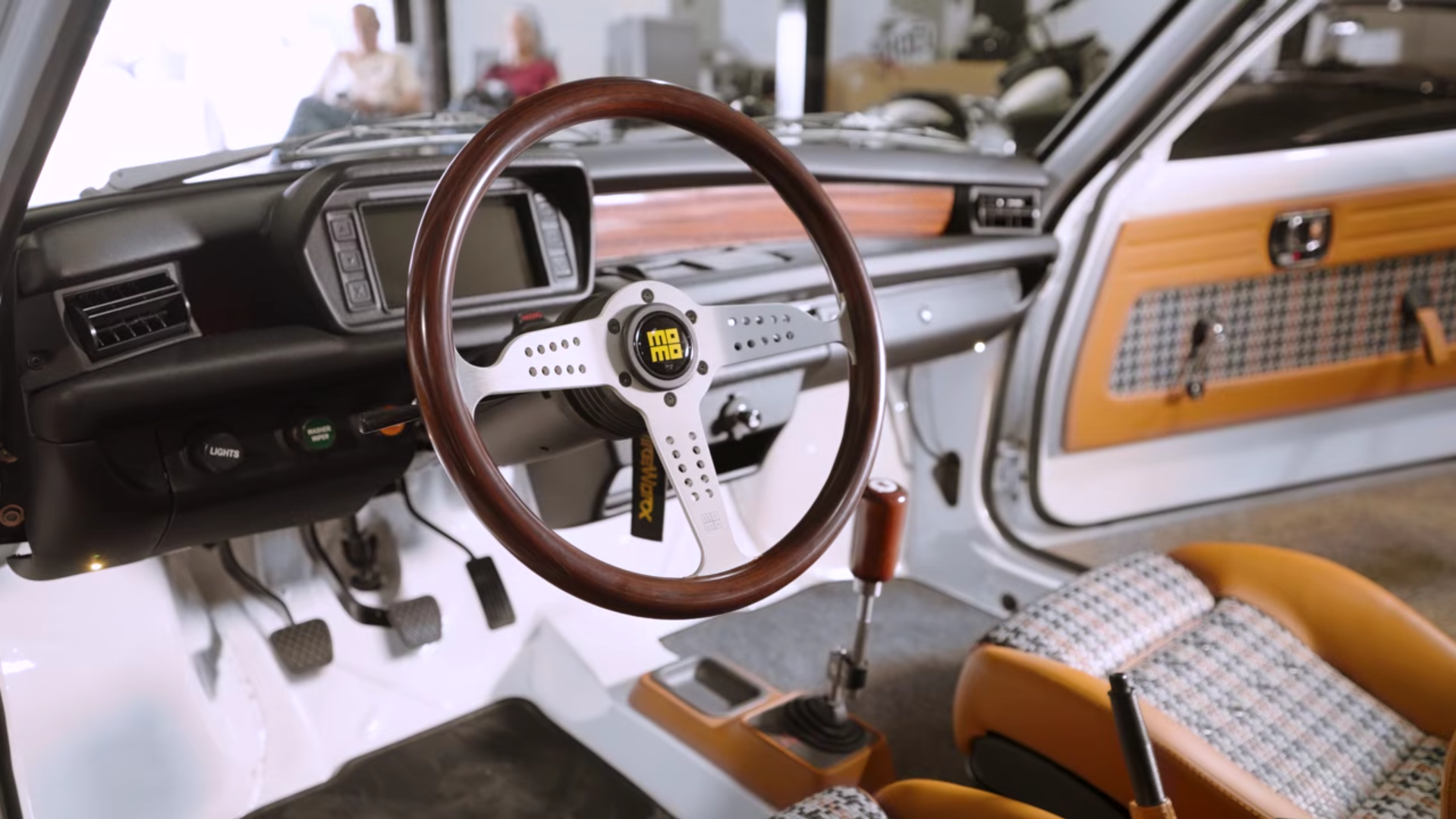
Inside, the original dashboard is still in place, although its appearance has been carefully refined. A Haltech IC-7 digital instrument display replaces the original gauges, while the engine runs on a Haltech Elite 1500 ECU.
Honda Accord Euro R seats feature custom woven leather upholstery, complemented by houndstooth accents and carefully finished interior panels. The team even repositioned the driver’s seating area and modified the floor to improve pedal alignment and ergonomics.
The result is a Civic that combines classic Honda charm with the excitement of a high-revving Type R. Its real achievement, however, lies in how naturally the extensive modifications fit together, making an extraordinary custom build feel remarkably cohesive.