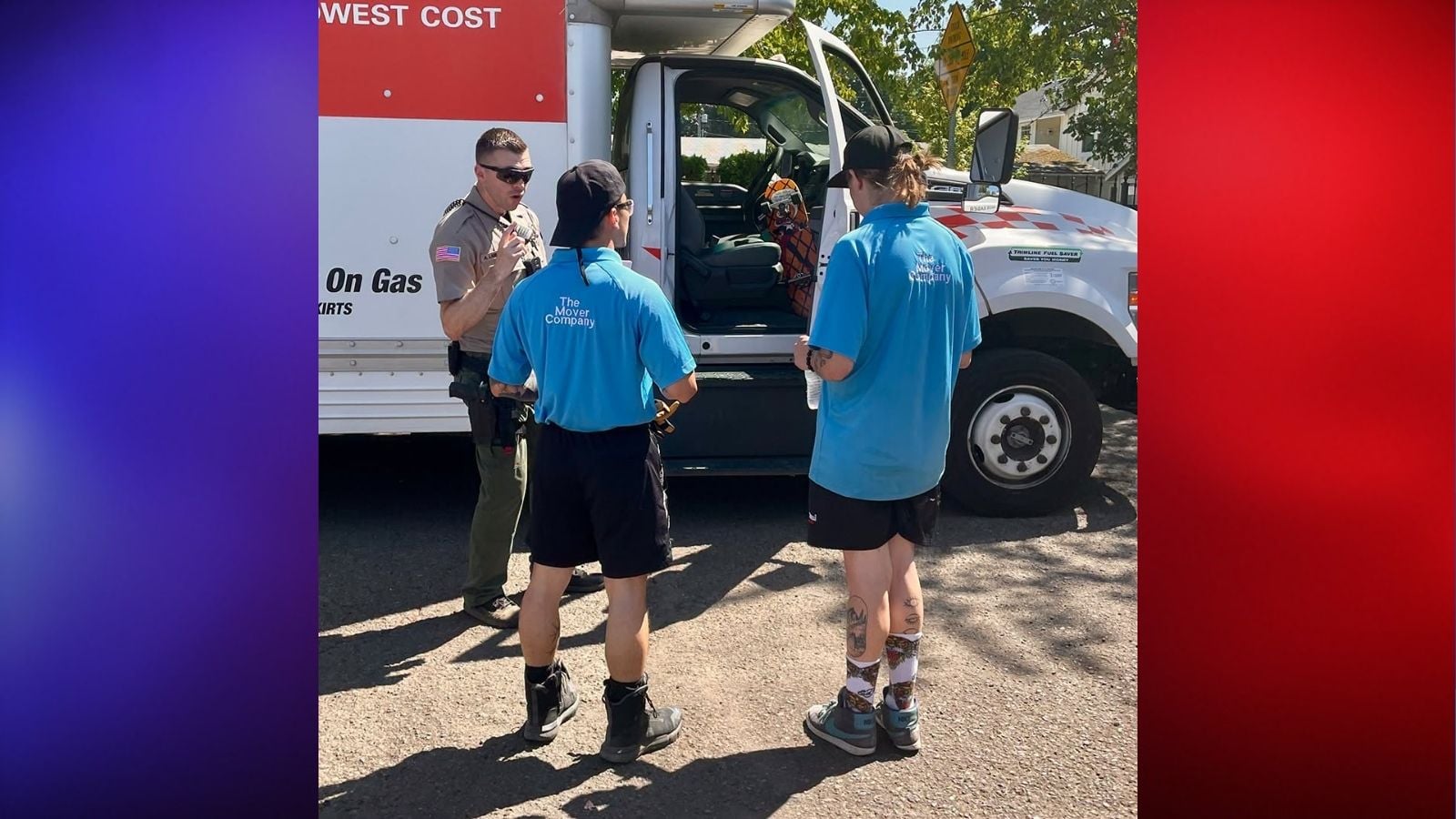

Moving is stressful enough without worrying that the people loading everything you own into a truck might not actually be authorized to do it. That concern prompted the Clackamas County Sheriff’s Office and Oregon Department of Transportation to set up a sting targeting unlicensed household-goods movers in Wilsonville.
The operation took place on August 20 after authorities received reports involving unlicensed movers accused of everything from demanding extra money before unloading property to disappearing with customers’ belongings. Instead of waiting for another complaint, investigators arranged for unlicensed companies to show up at a location where deputies and ODOT agents were waiting.
Four companies were cited during the operation: Marion Mountain Movers, The Mover Company LLC, Portland Movers 24-7, and Your Stuff Movers. Commercial vehicle inspectors also looked over the trucks and checked whether the people behind the wheel met the requirements for operating them.
Those inspections turned up more than just licensing problems. Three drivers lacked the required DOT medical certificates, two companies did not have cargo insurance, and another lacked basic motor vehicle liability insurance for its moving truck.
Oregon Has Rules for Anyone Moving Your Stuff for Money
Household moving is a regulated business in Oregon, meaning companies that transport someone else’s belongings for money must be certified by ODOT. The process includes requirements involving criminal background checks, insurance coverage, approved rates, and other safeguards intended to give customers somewhere to turn when something goes wrong.
That becomes particularly important when the moving truck contains practically everything a customer owns. The sheriff’s office warned that some unlicensed movers have damaged property, demanded additional payments before returning belongings, or simply disappeared with them.
Every company contacted during the sting was given information on how to obtain proper certification if it met the requirements. ODOT also recommended that customers verify a mover’s certification, review reviews closely, and ensure both the company and its vehicles are properly insured before handing over the keys to their household.
A Cheap Move Can Become an Expensive Problem
The dangers aren’t limited to whether the couch makes it to the new living room in one piece. Commercial moving trucks need to meet mechanical standards, while their drivers can be subject to qualifications meant to ensure those vehicles are being operated safely on public roads.
Customers should also be suspicious of companies offering little identifying information or no clear way to resolve a dispute afterward. A low quote becomes considerably less attractive if the company can suddenly demand thousands more once everything you own is already inside its truck.
That exact kind of experience appeared in the response to the sheriff’s post. One commenter described hiring movers for an $8,000 interstate job only to have the crew arrive on moving day and present a new contract for $18,000, forcing the family to send them away and scramble for another truck themselves.
Commenters Say the Sting Shouldn’t Stop With Moving Companies
Plenty of commenters welcomed the operation, with reactions including “Enforcement. It works,” “Great job!” and calls for authorities to “bust more.” Others immediately suggested expanding the same approach to unlicensed contractors, security companies, junk-removal businesses, and companies that offer moving services without presenting themselves primarily as movers.
The rules themselves also surprised some people. One commenter joked, “So Bob down the road can’t help me move with his 1976 Ford if I pay him to help?” while another admitted, “Wow, I never knew,” after learning how heavily regulated household moving can be in Oregon.
The most sobering response came from the customer who said an agreed $8,000 move suddenly became an $18,000 demand on moving day despite carefully documenting everything beforehand. Stories like that help explain why the sheriff’s office is taking unlicensed movers seriously: by the time customers realize something is wrong, their belongings may already be sitting inside someone else’s truck.