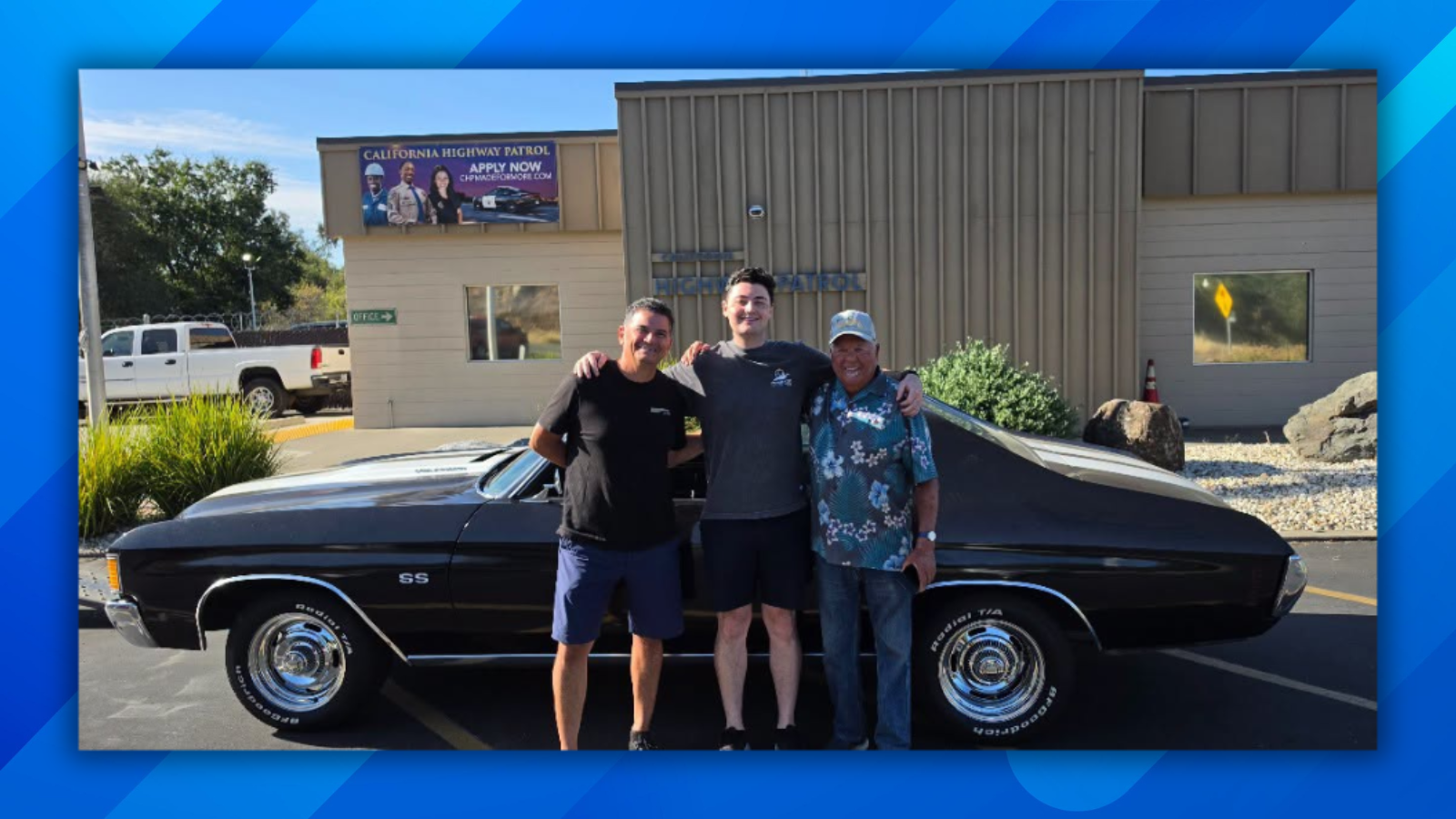
A California man has his 1971 Chevrolet Chevelle back more than three decades after it was stolen, but the remarkable recovery leaves one major part of the car’s story unanswered: where it had been all those years.
The Chevelle was reported stolen in San Mateo County in 1993. Thirty-three years later, California Highway Patrol officers in Auburn encountered the classic car during a VIN inspection and noticed something that warranted a closer look.
Further investigation determined the vehicle was the same Chevelle reported stolen decades earlier. With help from the San Mateo Police Department, investigators confirmed its history and returned the car to its original owner, according to CHP Auburn.
CHP’s account does not explain who had the Chevelle when it was inspected, how that person obtained it, whether it had changed hands during the previous 33 years, or what specifically caught officers’ attention during the VIN inspection.
A 33-Year-Old Theft Raises Questions
CHP celebrated the Chevelle’s return in its Facebook post, saying the classic was finally back with its original owner after more than three decades.
The agency did not identify who had the Chevelle when officers encountered it, explain how that person obtained it, or say whether the vehicle had changed hands during the 33 years it was missing. The report also does not indicate that the person who most recently possessed the car was an unsuspecting buyer.
A stolen classic resurfacing after more than three decades is unusual. Still, the circumstances raise a practical question for anyone buying a used vehicle from a private seller: How can a buyer make sure the person selling a car actually has the right to sell it?
A Few Checks Before Buying From a Private Seller
The National Insurance Crime Bureau recommends checking the VIN, conducting a title search, examining ownership documents, and having a vehicle inspected before buying from an unknown seller.
Buyers can also run the VIN through NICB’s free VINCheck tool to see whether participating insurers have reported the vehicle as an unrecovered theft or salvage vehicle. A clean result is not a guarantee. NICB says VINCheck does not search law-enforcement records, does not include records from every insurer, and should not be relied upon alone when purchasing a vehicle.
At minimum, a private buyer can compare the VIN on the vehicle with its paperwork, verify that the seller has the right to sell it, and investigate discrepancies before handing over money. For an expensive classic or another highly desirable vehicle, purchasing through an established dealer or specialty business may also be worth considering, although it can’t eliminate every possibility of fraud or a title problem.
Commenters Wondered Who Paid to Restore the Chevelle
The Chevelle’s condition in CHP’s photos quickly caught people’s attention.
“Looks like someone spent a ton of money on that car,” one commenter wrote. Another reacted, “To get it back restored is even crazier.”
CHP did not say whether the Chevelle had been restored during the 33 years it was missing, who may have paid for work performed on the car, or what condition it was in when it was stolen in 1993. The agency’s photos show what the car looks like today, but they do not establish when any restoration or modifications were completed.
That uncertainty led some commenters to imagine an uncomfortable possibility: that someone may have spent money on the Chevelle without knowing its history.
“Too bad for the guy who restored it that has no idea it was stolen,” one person wrote, assuming circumstances that CHP has not confirmed. Another commenter similarly speculated that someone had restored and later sold the car, leaving a subsequent buyer with the loss.
Others focused less on the restoration and more on whoever possessed the Chevelle when CHP found it.
“If the guy who was in possession of it thought he had made a legal purchase then someone get him a beer, that’s rough,” one commenter wrote, before adding that getting the car back must have been a “great feeling” for the original owner.
CHP has not said the person who had the Chevelle bought it legitimately, bought it at all, restored it, or was unaware that it had been stolen. Those are questions and assumptions raised in the comments, rather than established details of the case.
One commenter offered a story illustrating why the possibility resonated with some readers. He claimed someone he knew spent nearly $50,000 restoring a 1969 Camaro before a VIN check revealed that the car had been stolen more than 20 years earlier in Long Beach. According to the commenter, the Camaro went back to its original owner, leaving his acquaintance with the loss. That account could not be independently verified.
The reactions underscore how much of the Chevelle’s 33-year absence remains unexplained. CHP has told the public how the story ended, but not who had the car, how they obtained it, what happened to it while it was missing, or whether anyone other than the original theft victim suffered a financial loss when it was finally recovered.