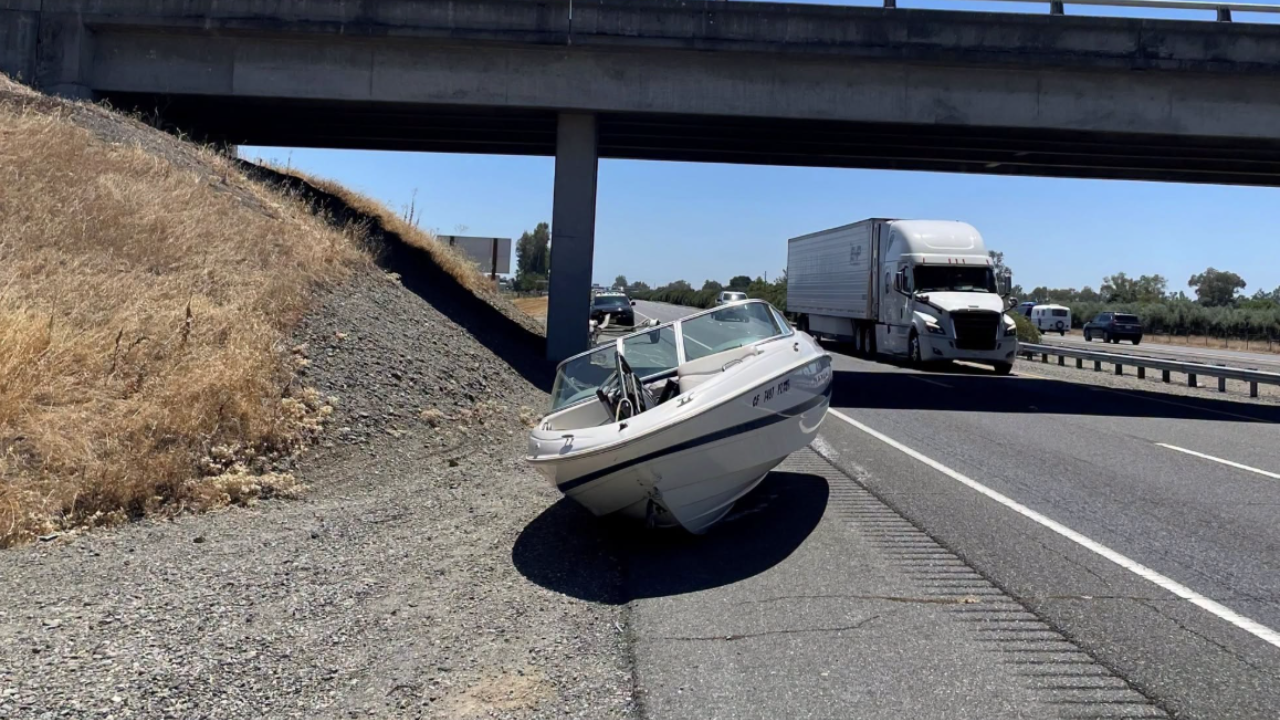
Every so often, the California Highway Patrol shares a photo that makes you do a double take, and this one definitely qualifies. A boat, fully separated from its trailer, ended up parked on the shoulder of a freeway like it decided to go for an independent cruise. No water in sight, no storm surge, just a hull sitting where it absolutely should not be.
According to the CHP Willows office, some folks might assume this was some kind of prep move ahead of the heavy rain expected this winter. It wasn’t. The real explanation is a lot less exciting and a lot more familiar to anyone who has ever towed anything: the trailer became disconnected from the tow vehicle while driving down the freeway. As it bounced along, the boat slid right off and came to a stop on the shoulder.
We’ve all seen the aftermath of a bad hitch job, whether it’s a jet ski left behind at a gas station or a camper doing its own thing in the middle lane. This one just happens to be a boat, which makes it slightly more dramatic simply because of the size. Picture the driver checking the mirror and realizing their watercraft is no longer behind them. That’s a gut-punch moment for any boat owner.
Thankfully, based on what CHP shared, this appears to have ended without anyone getting hurt, which is really the best possible outcome for a situation like this. It’s also a good excuse to talk about why trailers come loose in the first place, and what can be done to keep your gear attached to your vehicle instead of the freeway.
What Actually Went Wrong
Trailer separations like this one almost always trace back to the connection point. Whether it’s a hitch that wasn’t fully latched, a coupler that wasn’t tightened down, or a ball mount that didn’t match the trailer size, the failure point is usually mechanical and preventable.
Add in some highway speed and a few bumps in the road, and a loose connection turns into a full separation fast.
The Safety Chain Matters More Than You Think
CHP’s reminder here is worth repeating: always use a safety chain or cable rated for the weight you’re towing. That chain is the backup plan when the primary connection fails, and it’s the difference between a trailer that drags safely to a stop and one that goes rogue down the freeway.
Crossing the chains under the tongue also helps cradle the trailer if it does come loose, rather than letting it hit the pavement directly.
A Quick Pre-Trip Habit Worth Building
Before any tow, a simple walk-around goes a long way. Check that the coupler is latched and pinned, confirm the chains are connected and sized correctly, and give the trailer a firm tug once it’s hooked up.
It takes maybe two minutes and can save you from becoming the next photo in someone’s “you won’t believe this” folder.
Check Before Driving
Nobody plans on losing a boat on the freeway, and this one is a good reminder that towing safety isn’t just paperwork, it’s the stuff that keeps your gear where it belongs.
A couple minutes of checking connections beats an afternoon explaining to CHP why your boat is on the shoulder.