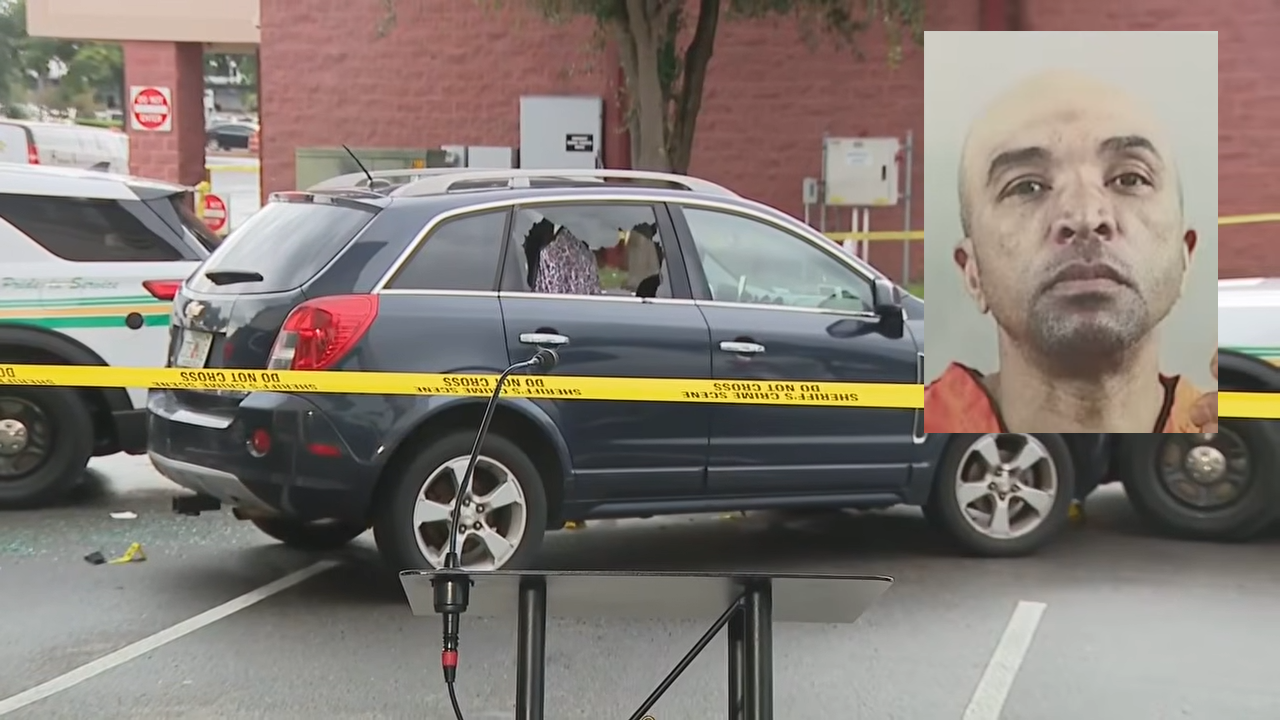
A routine license plate scan turned into a life-or-death encounter for Florida deputies this week, after a flagged warrant led them to a man authorities say was driving for Uber while wanted, armed, and behind the wheel of a vehicle he’d backed into a parking spot to avoid detection. The incident, which unfolded in broad daylight near a strip of stores, ended with deputies opening fire after the driver allegedly reached for a stolen handgun.
The man has been identified as 46-year-old Larry Ronaldo Rouse. According to the sheriff’s office, an automated license plate reader picked up his dark blue Chevy Captiva and flagged an outstanding warrant for violation of probation. Deputies spotted the vehicle near Wabash and Memorial Boulevard, and that’s when things escalated fast.
Rouse’s family told investigators he worked as an Uber driver, and deputies did note a Uber placard in the windshield, reported Fox 13 Tampa Bay. Whether that checks out is still up in the air, since Uber typically won’t confirm driver details without a subpoena. Either way, it’s the kind of detail that makes you pause the next time you request a rideshare.
For those of us who spend our time thinking about cars and how they’re used (and misused), this story has a lot of moving parts worth unpacking.
How the Traffic Stop Unraveled
Deputies say Rouse noticed them and backed his Captiva in, apparently to keep his tag out of view. Three deputies blocked him in and repeatedly asked him to step out. He refused, then began rolling the vehicle forward.
Deputies broke out the heavily tinted windshield and attempted to use a taser, which reportedly didn’t stop him. He then rammed a patrol vehicle while trying to get away.
The Moment Things Turned Deadly
According to the sheriff’s office, Rouse reached into the back seat and began racking a round into a 9mm handgun, one investigators say had been reported stolen out of a vehicle in Lakeland back on June 24. Four deputies were on scene, and three fired, ending the encounter.
Rouse was pulled from the vehicle and given medical aid, but he did not survive.
What We Know About the License Plate Reader Debate
The sheriff used the news conference to push back on privacy concerns around license plate readers, arguing the technology only reads what’s visible from public roadways, the same information any deputy could jot down manually, just faster. It’s a fair point of technology doing grunt work humans already have the authority to do, though reasonable people can still disagree on how that data gets stored and used long term.
Per department policy, the names of the deputies involved won’t be released for 72 hours under a recently passed law, and the investigation remains ongoing.