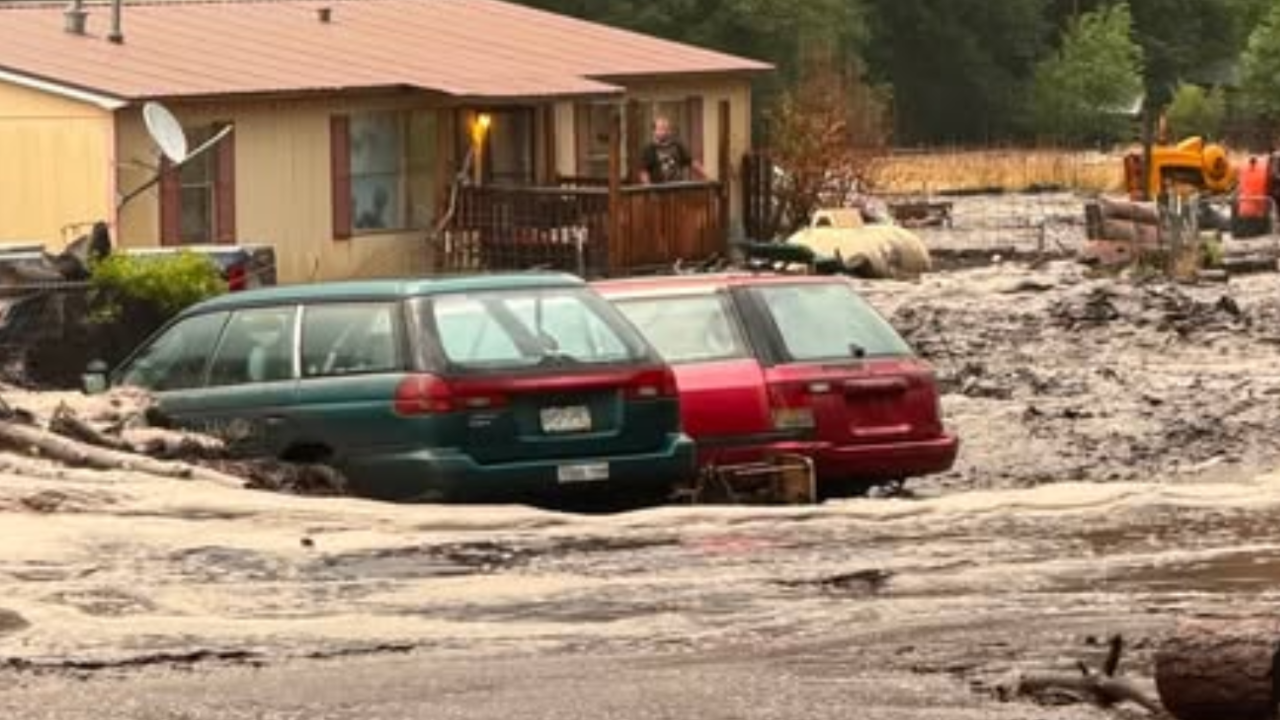
Beulah, Colorado, just can’t get a break. First a massive wildfire tore through more than 100,000 acres west of Pueblo. Now the same ground is getting hammered by flash floods, turning creeks into rivers of black, ash-choked water and burying roads under mud and debris.
For anyone who loves driving through Colorado’s backcountry, this stretch of Highway 78 and Highway 165 near Beulah is normally the kind of scenic route that makes a road trip worth it. Right now, though, it’s anything but. Runoff from repeated thunderstorms has been sweeping burned trees, boulders, and even propane tanks across the pavement, and at least one vehicle was caught in the flooding this week.
The culprit is a phenomenon anyone who’s spent time around wildfire country has probably heard of: burned soil essentially forgets how to soak up water. When fire burns hot enough, soil can become hydrophobic, repelling water instead of absorbing it, which turns even a modest thunderstorm into a flash flood machine. The Aspen Acres fire scorched entire watersheds, so there’s nowhere left for the rain to go but downhill, fast.
This isn’t a one-day story either. Flooding hit the area Tuesday, reported the Colorado Springs Gazette, then came back Wednesday for round two, with officials issuing evacuation orders as rain fell at a rate of over an inch per hour in spots.
The Damage on the Ground
Forecasters warned Wednesday evening that rainfall was expected to continue at 1.5 to 3 inches per hour across the burn scar’s northern and central sections, prompting an emergency evacuation order for the area. North Creek Cutoff Road and stretches of Highway 165 were shut down after debris washed across the pavement, and by Wednesday morning crews were still clearing Northcreek Road, which had been closed overnight.
One resident described the scene to a local news crew as looking almost like Pompeii, with soot turned to mud coating everything in sight.
Roads and Infrastructure Take a Beating
Beyond the closures, the flooding overwhelmed a local water treatment plant after all four creeks feeding into it overflowed at once, sending ash and debris straight through the system. For drivers, the message from officials has been consistent and simple: don’t attempt to cross moving or standing water, no matter how capable your vehicle is.
Debris flows like these can hide washed-out pavement, downed trees, and who knows what else underneath a few inches of muddy water.
The good news, if you can call it that, is forecasters expect the pattern to dry out later in the week, with the next real rain threat not arriving until next Tuesday. The Aspen Acres fire itself was 66% contained as of Wednesday.
Our Take
There’s something almost unfair about a place getting torched by fire and then flooded out before it’s even had a chance to recover.
If you’re the type who plans backroad drives through southern Colorado, this is a solid reminder to check road conditions before you go, burn scars can turn a fun scenic route into a genuine hazard for months, sometimes years, after the flames are out.